
Chevy Volt: A Mom Entrepreneur’s Review (An Honest Look)
Update: Please note that Chevrolet ceased production of the Volt in 2019. This review reflects experiences with the vehicle during its production years and is intended for informational and historical context.
A few years back, my husband and I embarked on a car-buying journey with the intention of embracing hybrid technology. Our initial focus was firmly set on the Honda Civic Hybrid. However, life often takes unexpected turns, and we drove away from the dealership with a Honda Pilot. While the Pilot isn’t excessively large by today’s SUV standards, and certainly not as fuel-hungry as a minivan, it’s safe to say it wasn’t exactly a champion of fuel efficiency.
Chevy Volt: An Electric Car Review from a Mom’s Perspective
Since then, I’ve closely followed the evolution of hybrid and electric vehicles. The progress in this sector has been remarkable in recent years. I recently had the opportunity to test drive a Chevy Volt. As this is primarily a lifestyle blog, I will refrain from delving into highly technical automotive specifications. Instead, I will focus on how the Volt might integrate into the everyday life of a modern mom entrepreneur.

Style and Design: Is the Chevy Volt a Head-Turner?
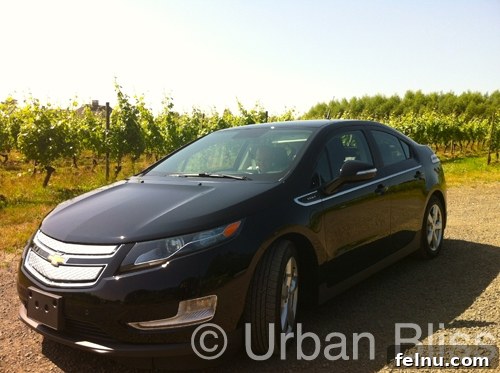
The Volt was available in a range of colors. The black model we test drove had a nice, somewhat sleek appearance, but I wouldn’t describe it as a high-fashion vehicle. It’s cute, but not necessarily adorable. There’s a distinct difference. However, one of the Volt’s standout features is its incredibly quiet and smooth ride, which makes it a pleasure to drive.
Interior Space and Practicality: Can the Volt Handle a Busy Family?
Mom entrepreneurs often require a vehicle with ample space. Between transporting children, pets, work supplies, and everything in between, we tend to haul a lot. I was pleasantly surprised by the amount of legroom in the Volt. My children are a bit older, so they don’t require as much legroom in the back as adults. However, the design of the rear seats, with a slightly partitioned feel, was a hit with my kids. They felt like they had their own designated spaces. If you were to have four adults or two adults and two teenagers in the back, the space might feel a bit cramped.

The trunk space was quite adequate for a car of its size. I appreciated the wide opening into the backseat area. We put it to the test with a grocery shopping trip and were impressed by how much it could hold. Even after purchasing a week’s worth of groceries for a family of four, including me, there was still plenty of room to spare. We also loaded it up for our children’s first fishing lesson, and even with fishing poles, tackle boxes, folding chairs, and coolers, there was still room in the trunk.

Mileage, Charging, and Range: A Critical Factor for Electric Vehicles
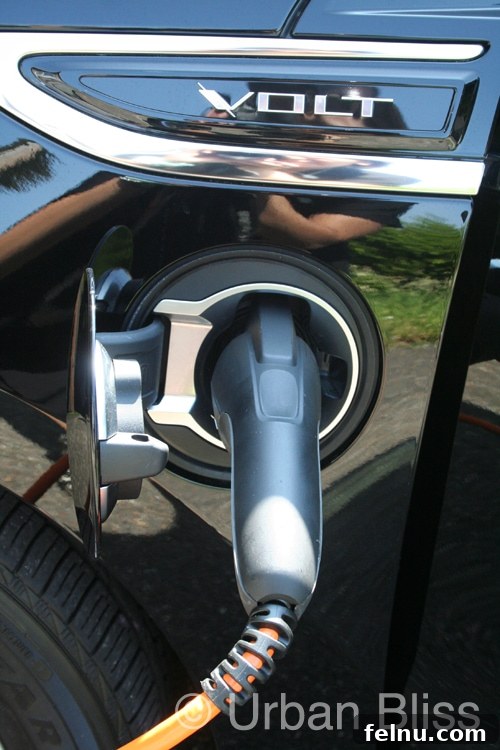
Beyond the initial cost, the Volt’s mileage and charging requirements presented some drawbacks for our family. I had to fully charge the Volt on both nights I had it, using a standard 120V home outlet. The advertised electric range of 20-40 miles was quickly depleted with a simple trip to the grocery store, a coffee run, and a couple of other errands near our home. Chevy claimed that after the electric charge was exhausted, the car should provide approximately 375 miles on a full tank of gas under normal weather conditions. However, my dashboard consistently displayed around 273-275 miles of gas range after the electric portion was used. Given that Portland, Oregon, experiences mild weather year-round, without extreme heat or cold, I expected the electric range to last longer and the gas mileage to be higher.
Furthermore, if waiting 10 hours for a full charge on a standard 120V outlet isn’t feasible, Chevy recommended installing a 240V charging station, which could charge the Volt in as little as four hours. They also stated that a 240V charging station was “strongly recommended for consumers who plan to charge in extreme weather conditions.”
Therefore, in addition to the initial vehicle purchase price, one might also need to factor in the cost of a 240V home charging station, which could cost around $490, plus installation fees, which typically range around $1500.
Cost and Value Proposition: Is the Chevy Volt Worth the Investment?
The Chevy Volt’s starting price was around $31,000. The model we test drove was priced closer to $40,000. For my family, that’s a significant investment for a vehicle that falls short of delivering the advertised convenience and cost savings.
Final Thoughts and Recommendations
My family genuinely enjoyed driving the Chevy Volt. It provided a quiet and smooth ride. My children particularly loved the rear camera that automatically activated when backing up.
However, despite my desire to embrace eco-friendly transportation options, it’s also essential to consider the practicality and cost-effectiveness for everyday life. In this regard, the Volt didn’t quite meet the needs of our busy family of four in terms of cost savings (trading gas costs for electricity costs), overall expenses (repair costs were unclear), space, and convenience.
If you’re in the market for a new car, I highly recommend test driving a Chevy Volt (if you can find a used one). I also advise thoroughly researching the car’s specifications. While the car is no longer in production, Chevrolet’s FAQ page, though dated, may still provide useful information to help you determine if it’s a suitable fit for your family.
More Family Travel Articles
- 40 Best Road Trip Snacks
- Fall Road Trip Essentials
- Where to Stay in Oregon’s Willamette Valley: The Vintages Trailer Resort
- Portland to Vancouver BC Family Road Trip
- We Are the Electric Vehicle (EV) Generation