
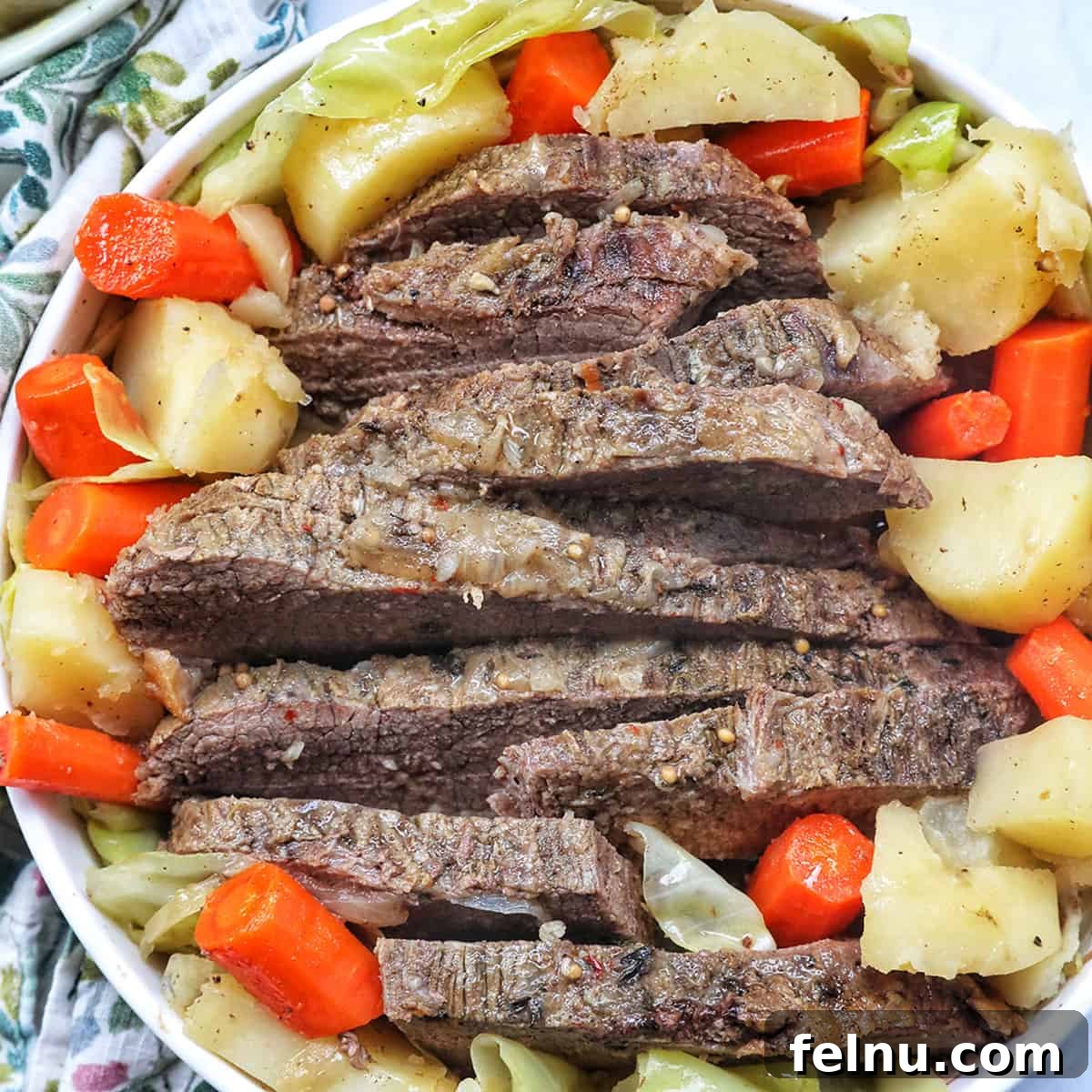
This Dutch Oven Brisket recipe offers a deeply flavorful and wonderfully tender meal, perfect for a cozy Sunday dinner with family and friends. Cooked slowly in a single pot, the beef brisket braises to perfection alongside hearty vegetables, creating a comforting dish that’s both easy to prepare and incredibly satisfying.
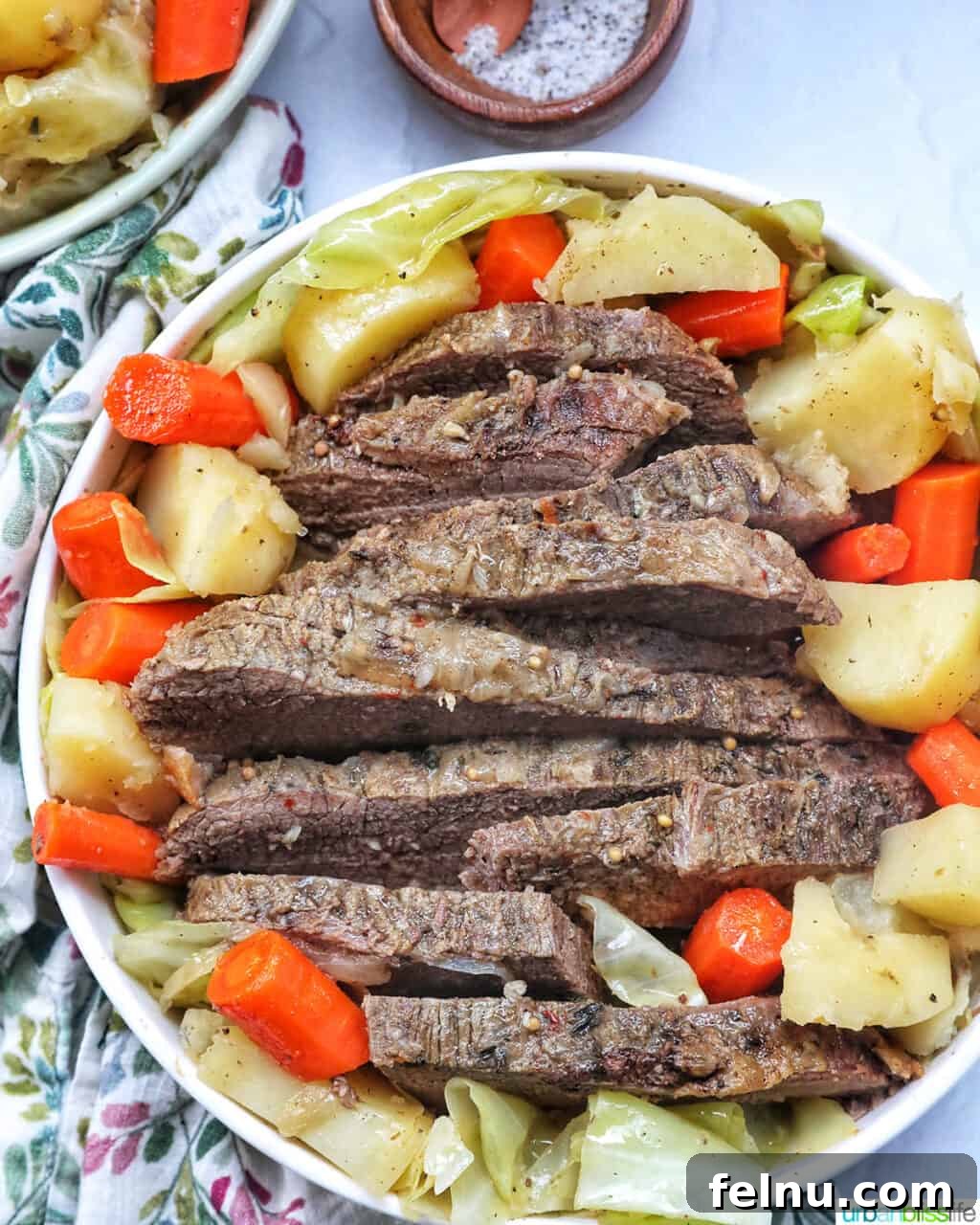
Are you a fan of classic comfort food like corned beef and cabbage, but seeking a fresh twist? Or perhaps, like me, you’ve found yourself searching for corned beef only to discover the shelves stocked exclusively with regular beef brisket. While preparing corned beef from scratch requires a time-consuming brining process, this delicious Dutch Oven Brisket recipe provides an excellent alternative that delivers similar hearty flavors with significantly less salt and effort. It’s an ideal choice if you:
- Prefer the natural, rich flavor of un-cured beef.
- Are having difficulty sourcing ready-made corned beef at your local grocery store.
- Don’t have the extensive time or desire to brine beef brisket from scratch.
This remarkable one-pot meal shares the comforting essence of corned beef and cabbage but shines with a distinct, natural beef flavor. Since it bypasses the brining process, the brisket retains its beautiful dark, rich color and boasts a savory depth that many find even more appealing than corned beef. It’s a truly satisfying dish that will quickly become a cherished favorite in your recipe collection.
🌟 Why This Dutch Oven Brisket Recipe Works
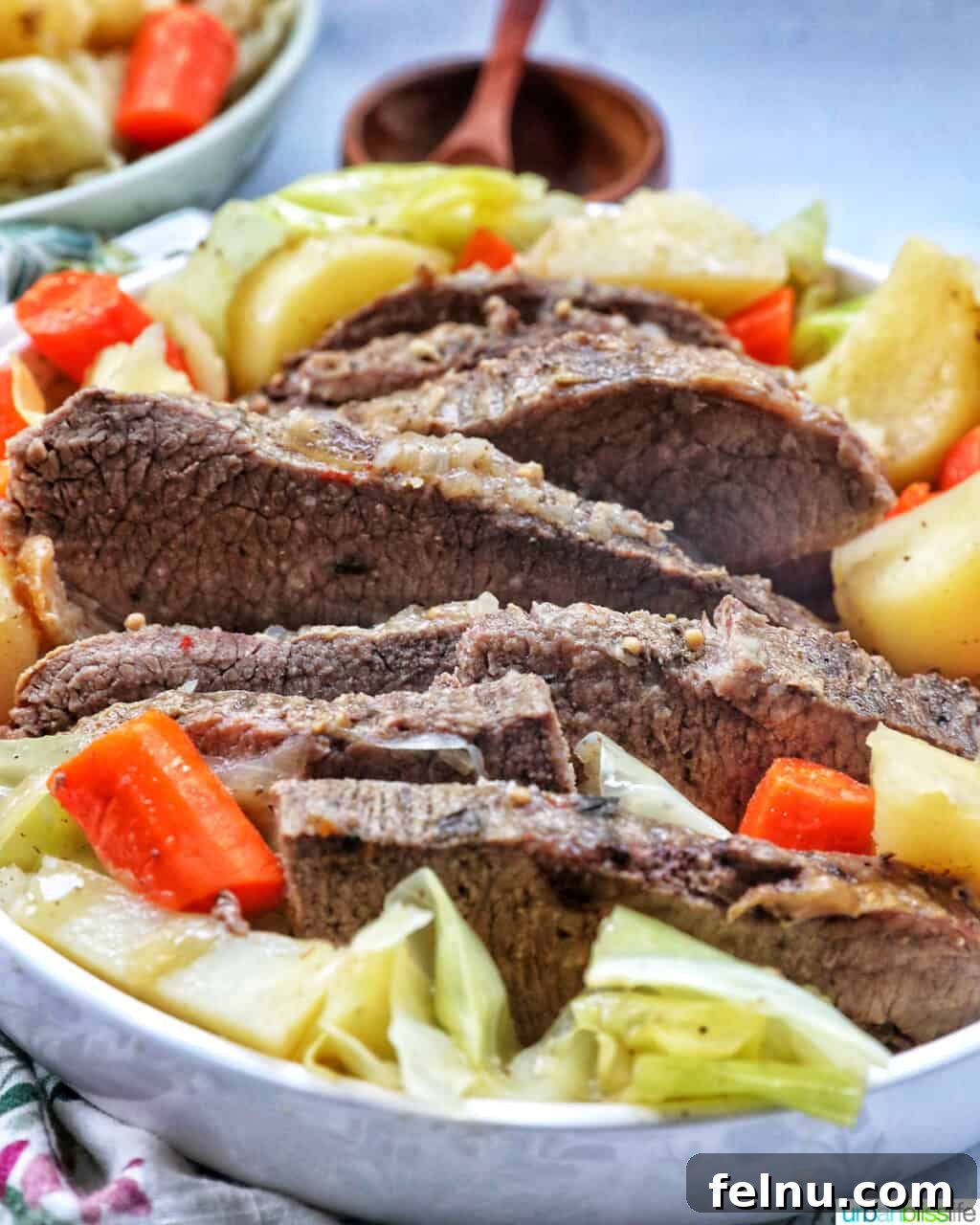
This Dutch Oven Brisket recipe is more than just a meal; it’s a culinary experience designed for ease and maximum flavor, making it perfect for your next family gathering or a cozy Sunday dinner. Here’s why it stands out:
- Effortless One-Pot Cooking: The beauty of this recipe lies in its simplicity. The entire meal – from the succulent beef brisket to the tender vegetables – cooks together in one single Dutch oven. This not only infuses every component with rich, complex flavors but also simplifies cleanup, allowing you more time to enjoy with your loved ones. You’ll go from stovetop to a beautifully presented table with minimal fuss.
- Remarkably Easy to Follow: Don’t let the impressive outcome fool you; this Dutch oven recipe is surprisingly straightforward. It’s designed for home cooks of all skill levels, featuring clear, concise instructions. For added guidance, follow the visual step-by-step directions provided below, ensuring a successful and stress-free cooking experience every time.
- Accessible Ingredients for All: You won’t need to hunt for exotic items for this recipe. All the ingredients are readily available at your local grocery store. From a quality beef brisket to common root vegetables and everyday spices, this recipe champions simplicity without compromising on taste, making it an accessible option for any weeknight or special occasion.
- Unforgettable Flavor Profile: The magic happens as the beef brisket slowly braises for hours in a savory blend of beef broth, Worcestershire sauce, aromatic herbs, and spices. This low-and-slow cooking method breaks down tough muscle fibers, resulting in incredibly tender, fall-apart meat. Meanwhile, the vegetables absorb all the rich cooking liquid, becoming meltingly tender and bursting with savory goodness. Every bite is packed with deep, comforting flavor that will leave a lasting impression.
🛒 Ingredient Notes: Crafting Your Perfect Brisket
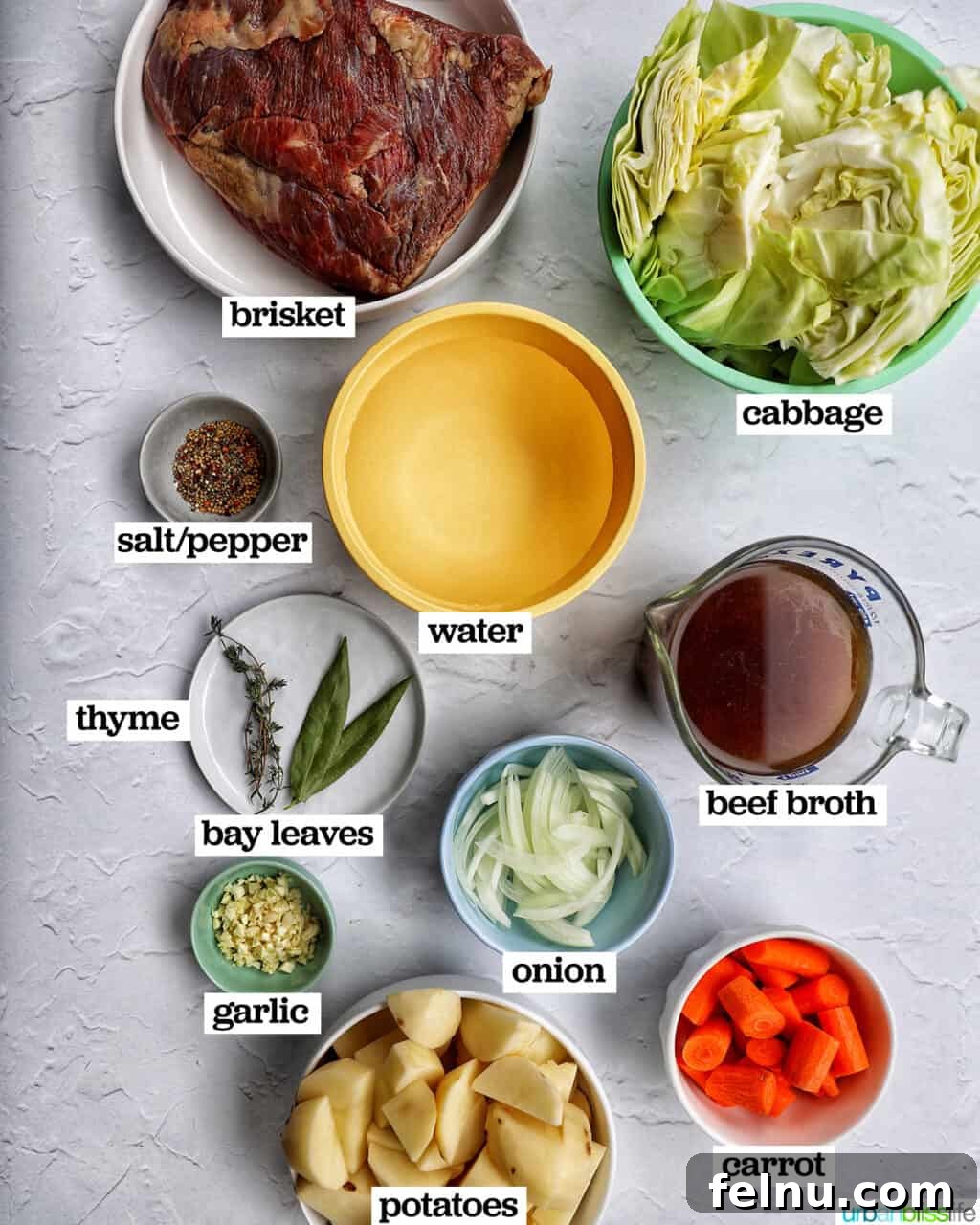
Choosing the right ingredients is key to achieving that perfect, melt-in-your-mouth Dutch Oven Brisket. Here’s a closer look at what you’ll need and some tips for selection:
- Beef Brisket: Opt for a 3 to 4-pound flat cut beef brisket. It’s crucial to select regular beef brisket, NOT corned beef. While both come from the same part of the cow, corned beef has undergone a curing process with salt and nitrates, giving it a distinct flavor and pink hue that is different from what we aim for in this recipe. Depending on your brisket cut, you may wish to trim some of the excess fat. A good fat cap helps keep the meat moist during long cooking, but too much can make the dish overly greasy.
- Hearty Vegetables: We traditionally love adding classic root vegetables like potatoes, carrots, and cabbage to this comforting dish.
- Potatoes: Russet potatoes are excellent for braising as they absorb flavors beautifully and become wonderfully tender without disintegrating. You can also use Yukon Gold or red potatoes.
- Carrots: Chunky slices of carrots add a touch of sweetness and vibrant color. They hold their shape well during the long cook time.
- Cabbage: Green cabbage wedges soften into a tender, flavorful addition that complements the rich beef. Don’t add it too early to prevent it from becoming overly soft.
- Aromatic Herbs and Seasonings: The simple yet potent blend of spices and herbs transforms the brisket into a truly aromatic experience.
- Mustard Seeds: These provide a subtle, earthy, and slightly pungent kick that enhances the beef’s natural flavors.
- Kosher Salt & Ground Black Pepper: Essential for seasoning, bringing out the depth of the meat and vegetables. Adjust to your taste preferences.
- Fresh Thyme Sprigs & Bay Leaf: These classic herbs infuse the braising liquid with an incredible aroma and a herbaceous, savory note that is fundamental to the dish’s character.
- Optional Enhancements: For an extra layer of warmth, consider adding a pinch of cayenne pepper. Whole peppercorns can offer a more complex pepper flavor, and a touch of tarragon can introduce a subtle licorice-like note that pairs well with beef.
- Rich Braising Liquid: The liquid is the foundation of flavor, tenderizing the brisket and creating a delicious sauce.
- Beef Broth or Stock: This is the primary liquid, providing a savory base. Use a high-quality broth for the best flavor.
- Worcestershire Sauce: A small amount adds a fantastic umami depth and tangy complexity, enhancing the overall savoriness of the beef.
- Flavor Boosters (Optional): For an even richer, more complex braising liquid, feel free to stir in a couple of tablespoons of tomato paste when you add the broth. This adds a concentrated, savory sweetness. A half cup of dry red wine (such as a Cabernet Sauvignon or Merlot) can also be added for extra depth, complementing the beef beautifully.
✅ Step-by-Step Instructions: Mastering Your Dutch Oven Brisket
Crafting this tender Dutch Oven Brisket is a straightforward process, resulting in a meal that tastes like it took all day. The full list of ingredients and detailed instructions can be found in the printable recipe card at the bottom of this post. For now, here’s a visual and descriptive step-by-step guide to help you confidently prepare this impressive dish.
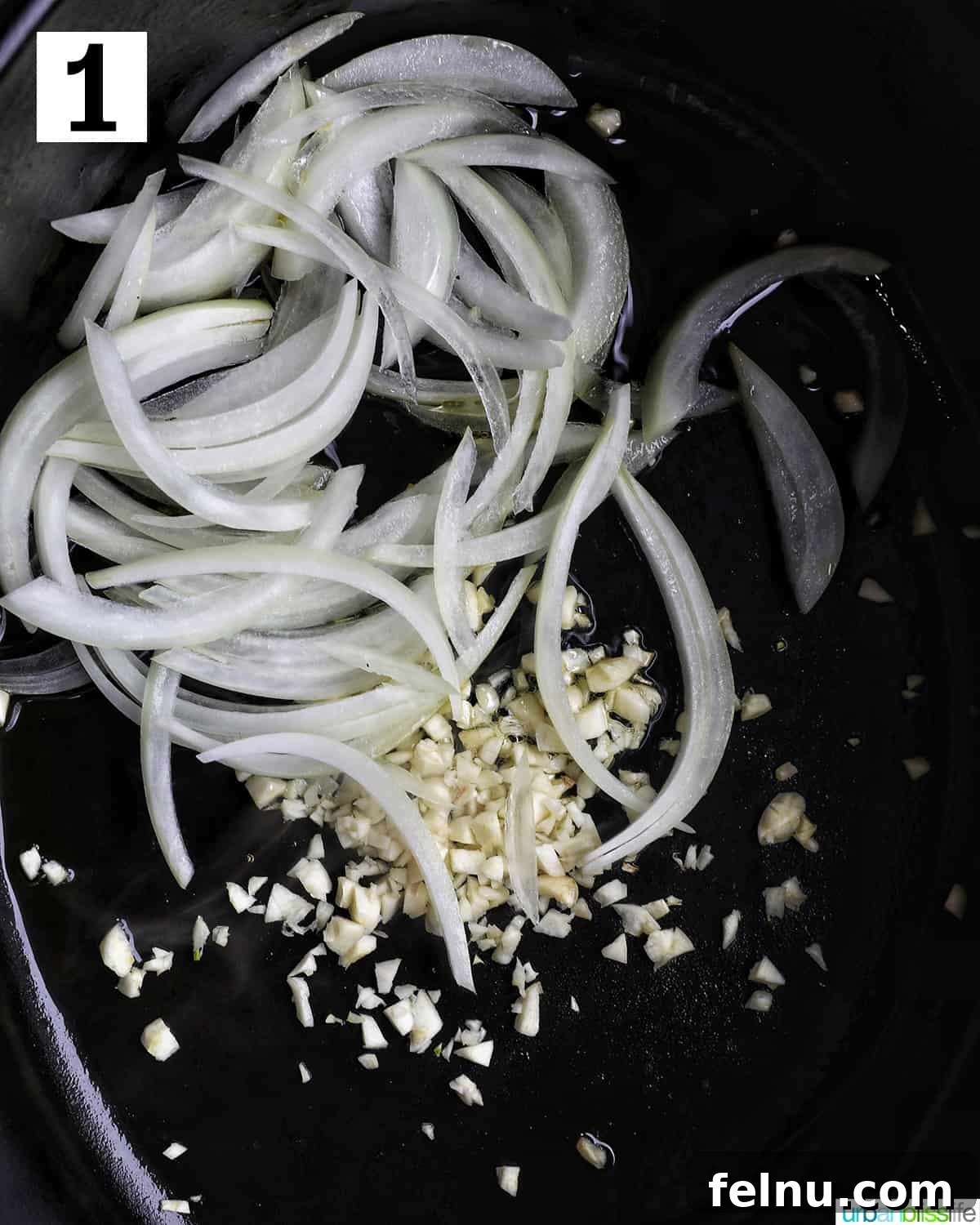
- In a large Dutch oven set over medium heat, add a tablespoon of olive oil. Sauté the minced garlic and sliced onions for approximately 1 minute, stirring occasionally, until they become soft, translucent, and beautifully fragrant. This step builds the aromatic base for your brisket.
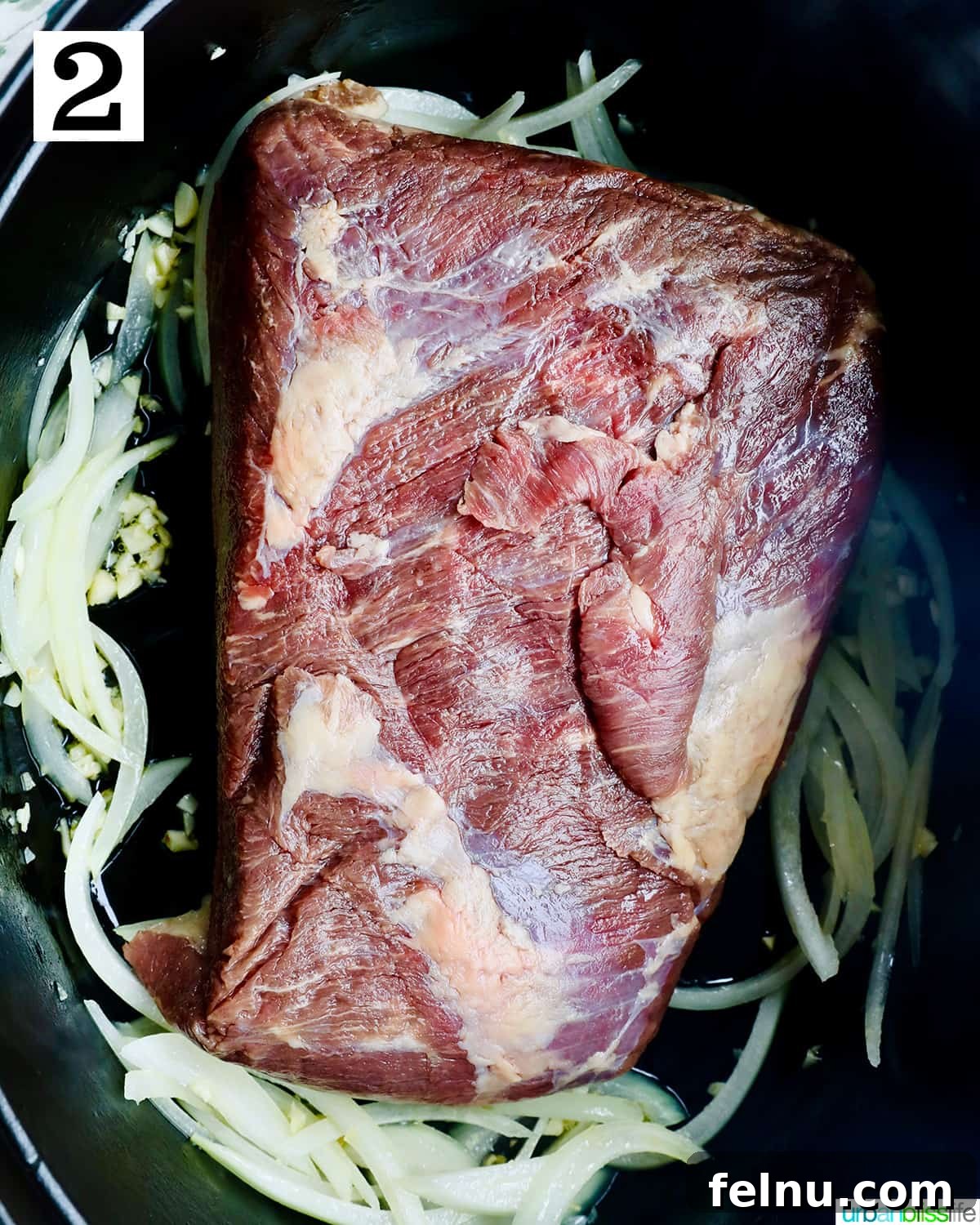
- Carefully place the beef brisket on top of the softened garlic and onions in the Dutch oven.
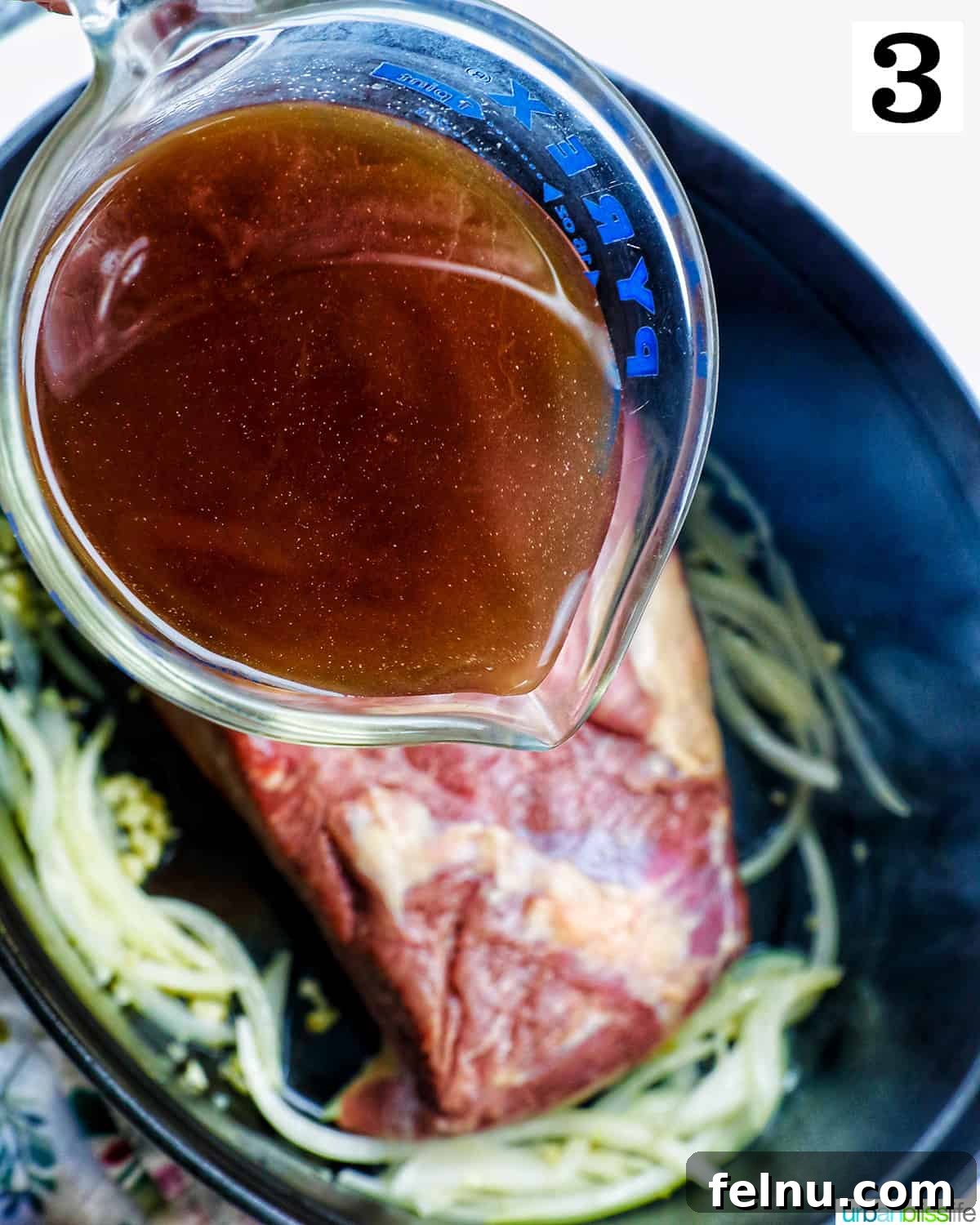
3. Pour in the rich beef broth and Worcestershire sauce, ensuring the liquid mostly covers the brisket. If adding optional tomato paste or red wine, stir them in at this stage.
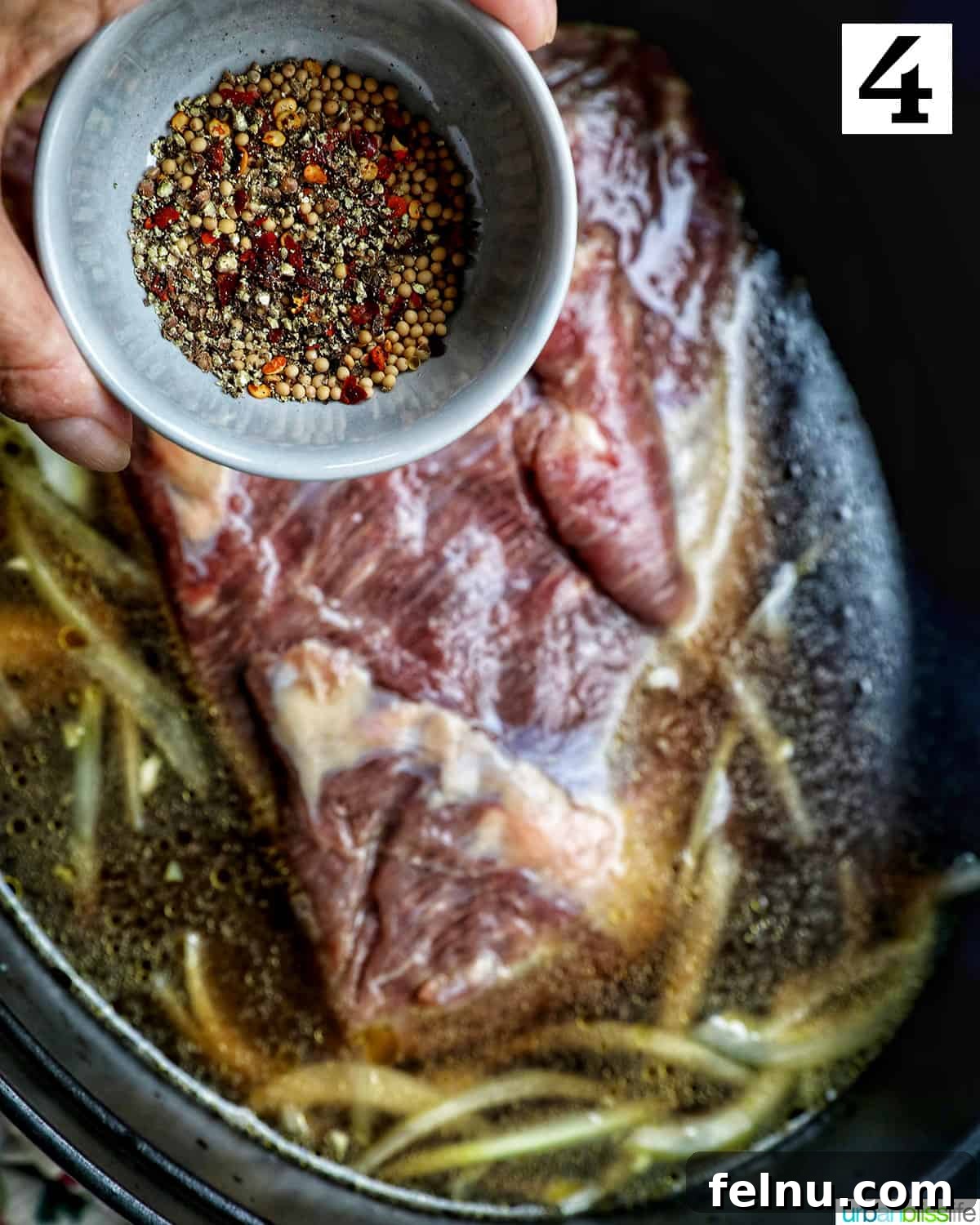
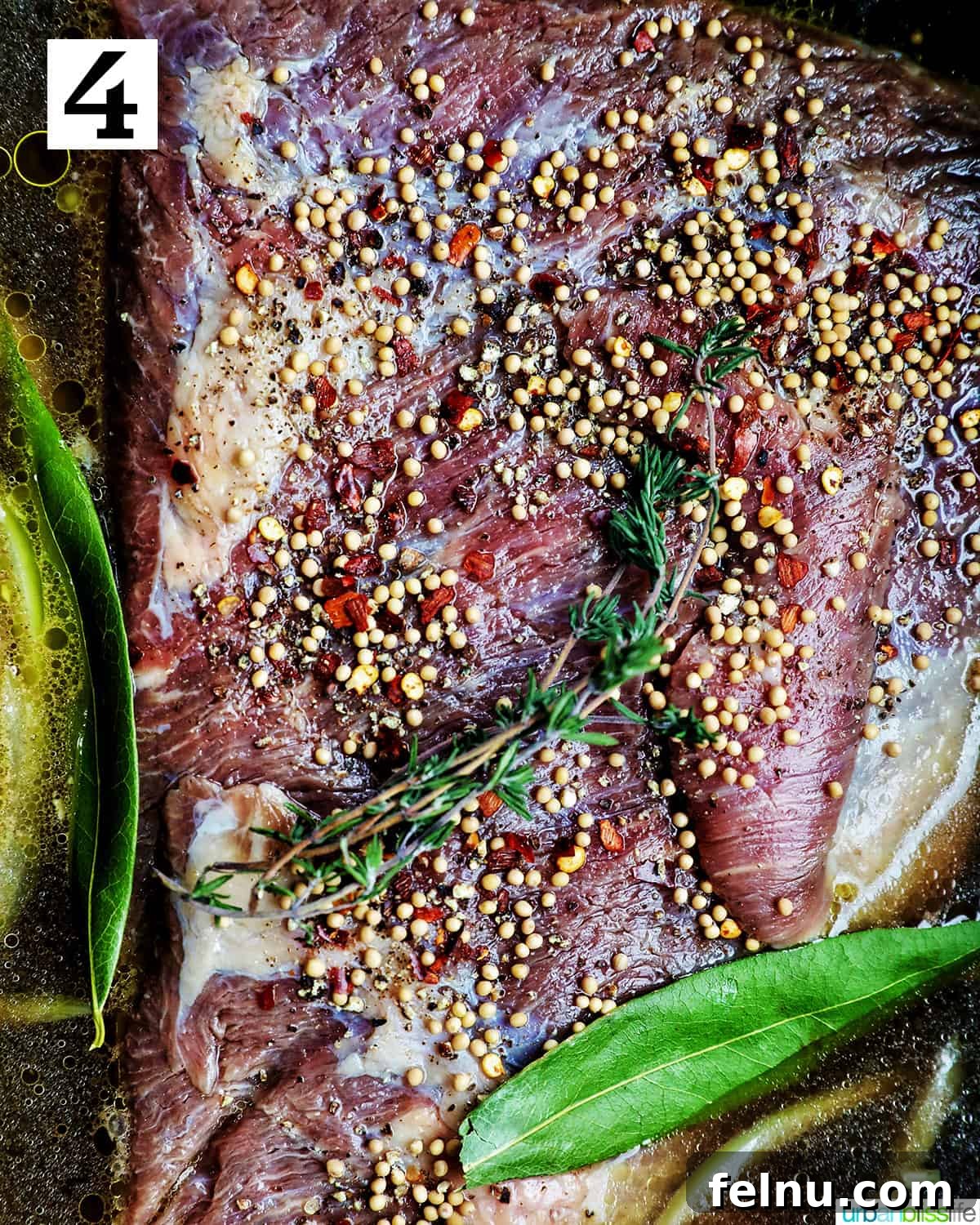
4. Generously sprinkle the mustard seeds, kosher salt, and ground black pepper over the brisket. Then, tuck the fragrant bay leaves and fresh thyme sprigs around the meat, submerging them slightly in the liquid to allow their flavors to meld.
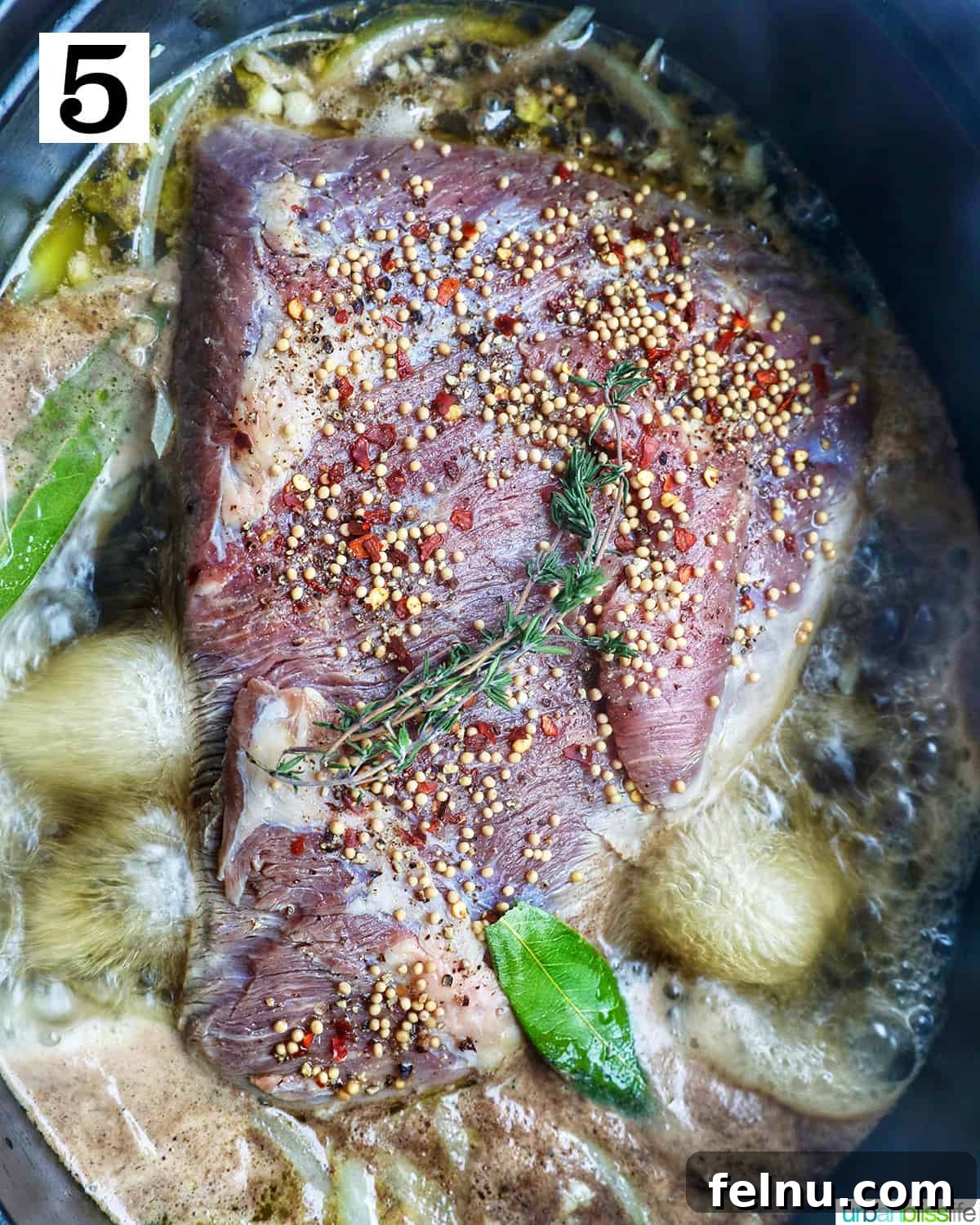
5. Increase the heat to medium-high and bring the liquid to a rolling boil. This initial burst of heat helps to kickstart the braising process. Once boiling, reduce the heat to a low simmer, ensuring a gentle bubble. Cover the Dutch oven tightly with its lid and allow the brisket to cook undisturbed for 3 hours. During this long, slow braise, the meat will become incredibly tender. Every 30 minutes, briefly check on the brisket and ladle some of the flavorful broth over the top to keep it moist and infuse it further with the cooking liquid.
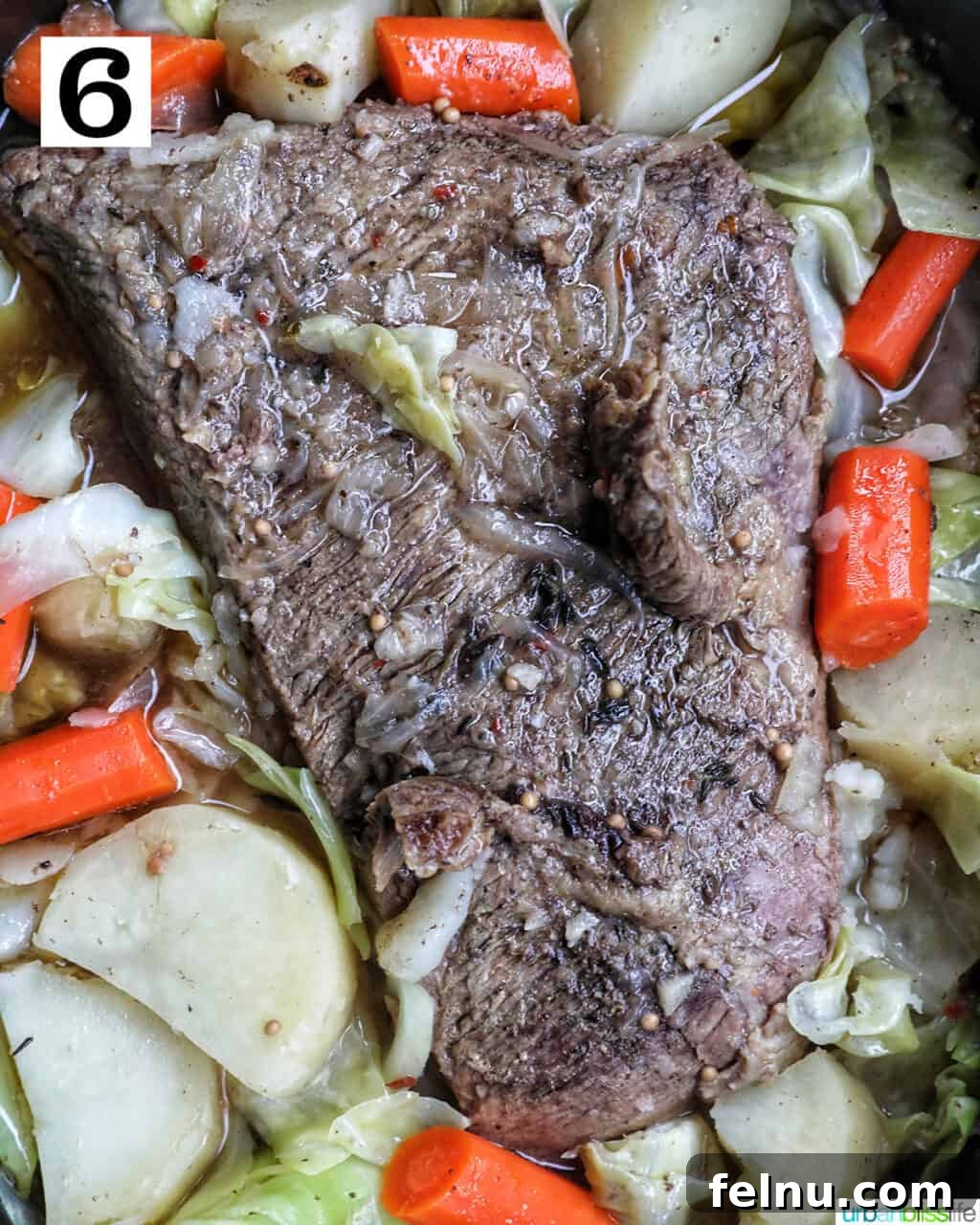
6. After the initial 3 hours of cooking, carefully add the peeled and cubed potatoes and thick-sliced carrots around the brisket in the Dutch oven. Gently try to submerge as much of the vegetables under the braising liquid as possible, ensuring they cook evenly and absorb maximum flavor. Increase the heat once more to bring the liquid back to a boil, then reduce to a simmer and cook for another 15 minutes, or until the potatoes and carrots begin to soften.
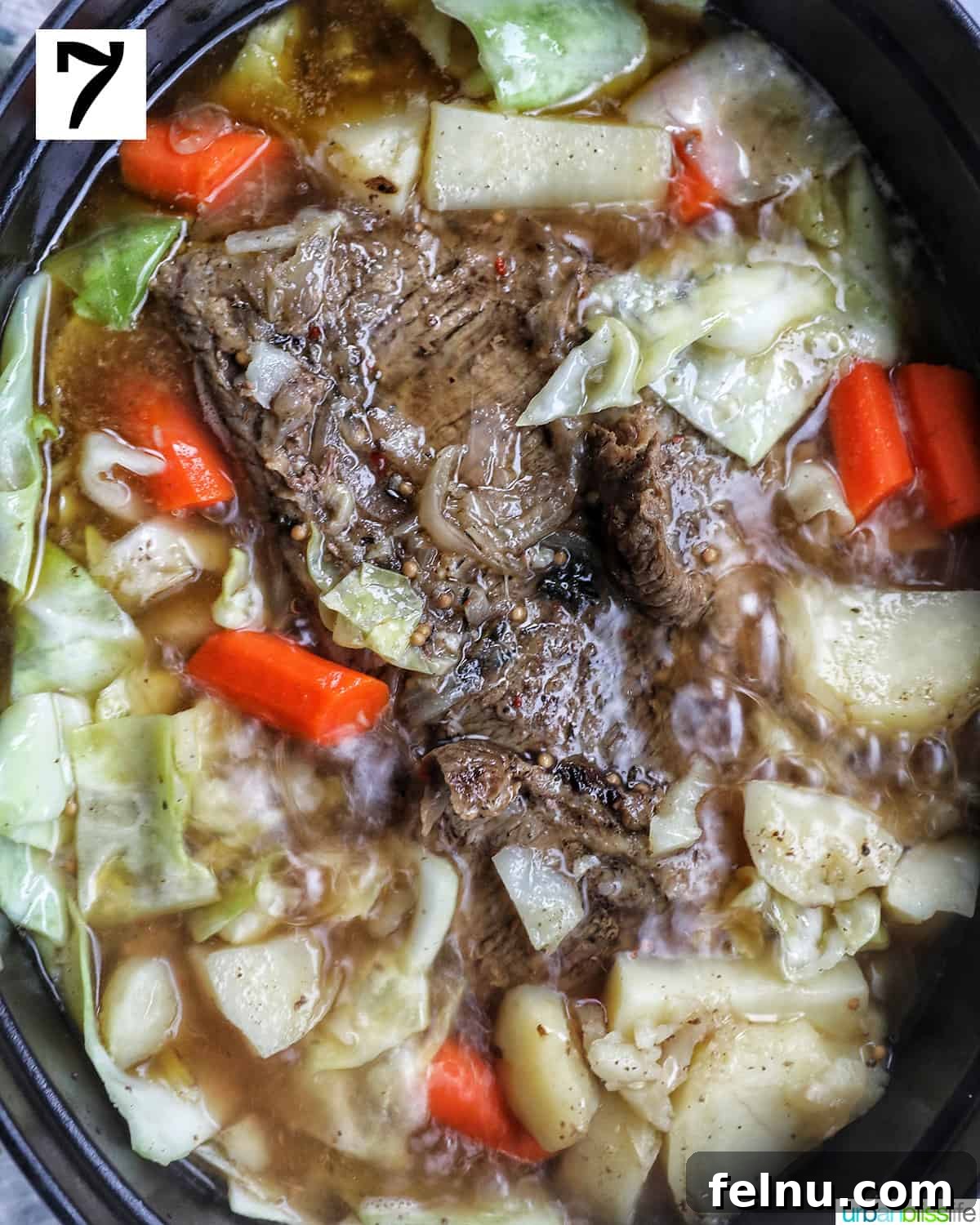
7. Once the potatoes and carrots have softened slightly (after 15 minutes), add the chopped cabbage wedges to the Dutch oven. Bring the liquid back to a boil and cook for an additional 5 minutes, or until the cabbage reaches your desired tenderness – some prefer it with a slight bite, while others enjoy it very soft. The cabbage will absorb the rich flavors, making it a perfect complement to the beef.
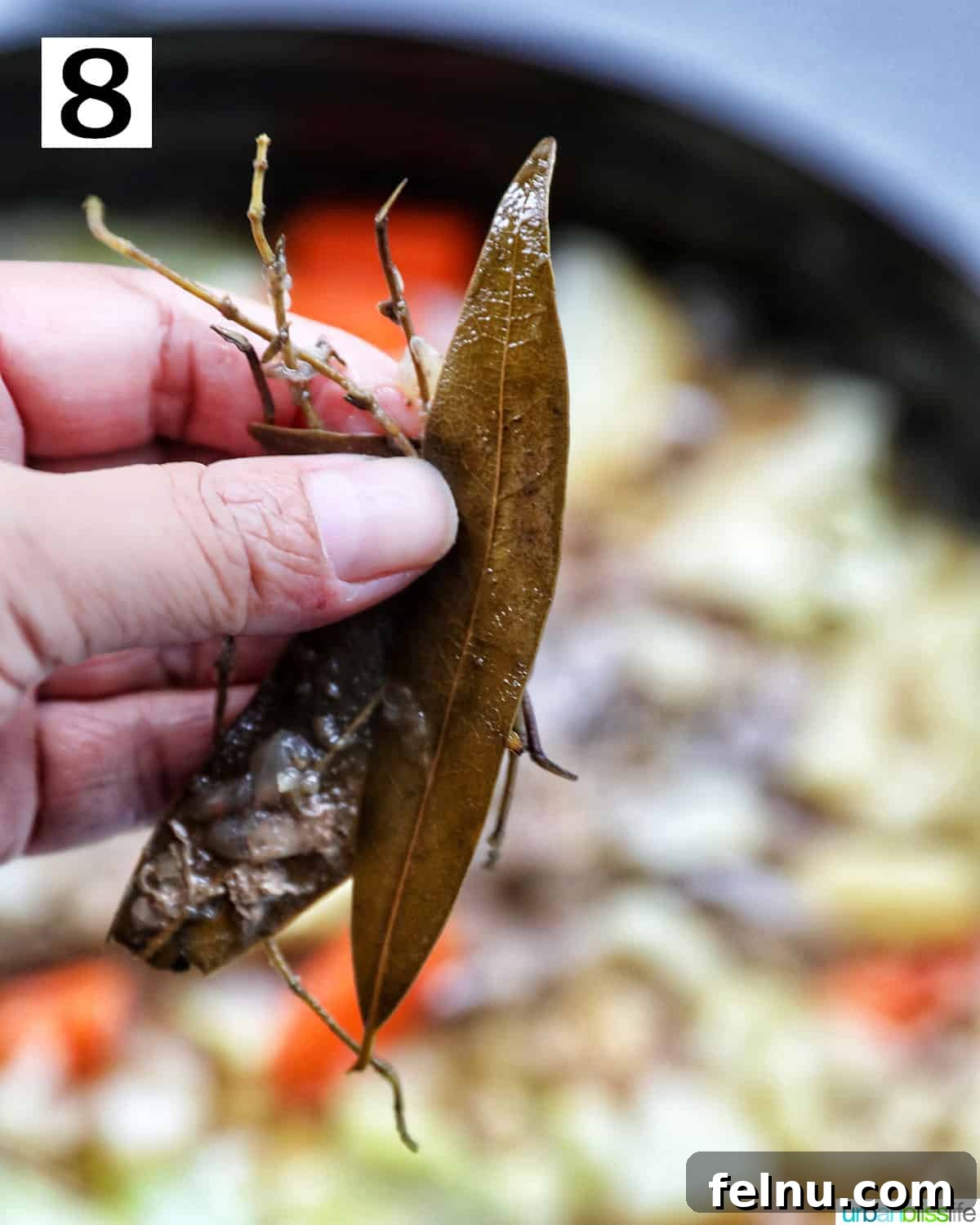
8. Carefully remove the Dutch oven from the heat. Using tongs or a slotted spoon, drain the vegetables and set them aside. Locate and remove the bay leaves and thyme sprigs from the pot and discard them. Crucially, save about ½ cup to 1 cup of the rich braising liquid in a liquid measuring cup or a small bowl; this liquid is packed with flavor and essential for serving or making gravy.
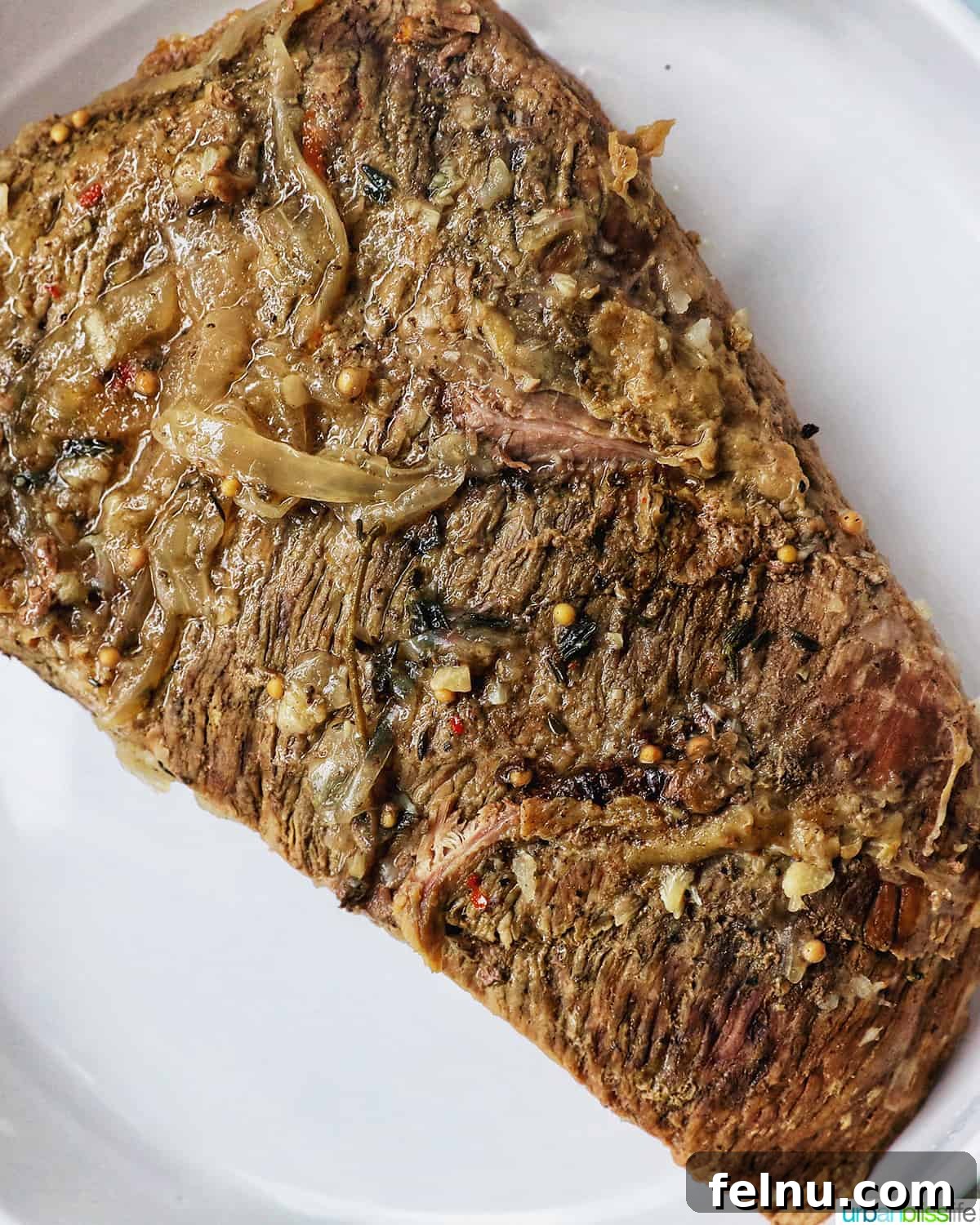
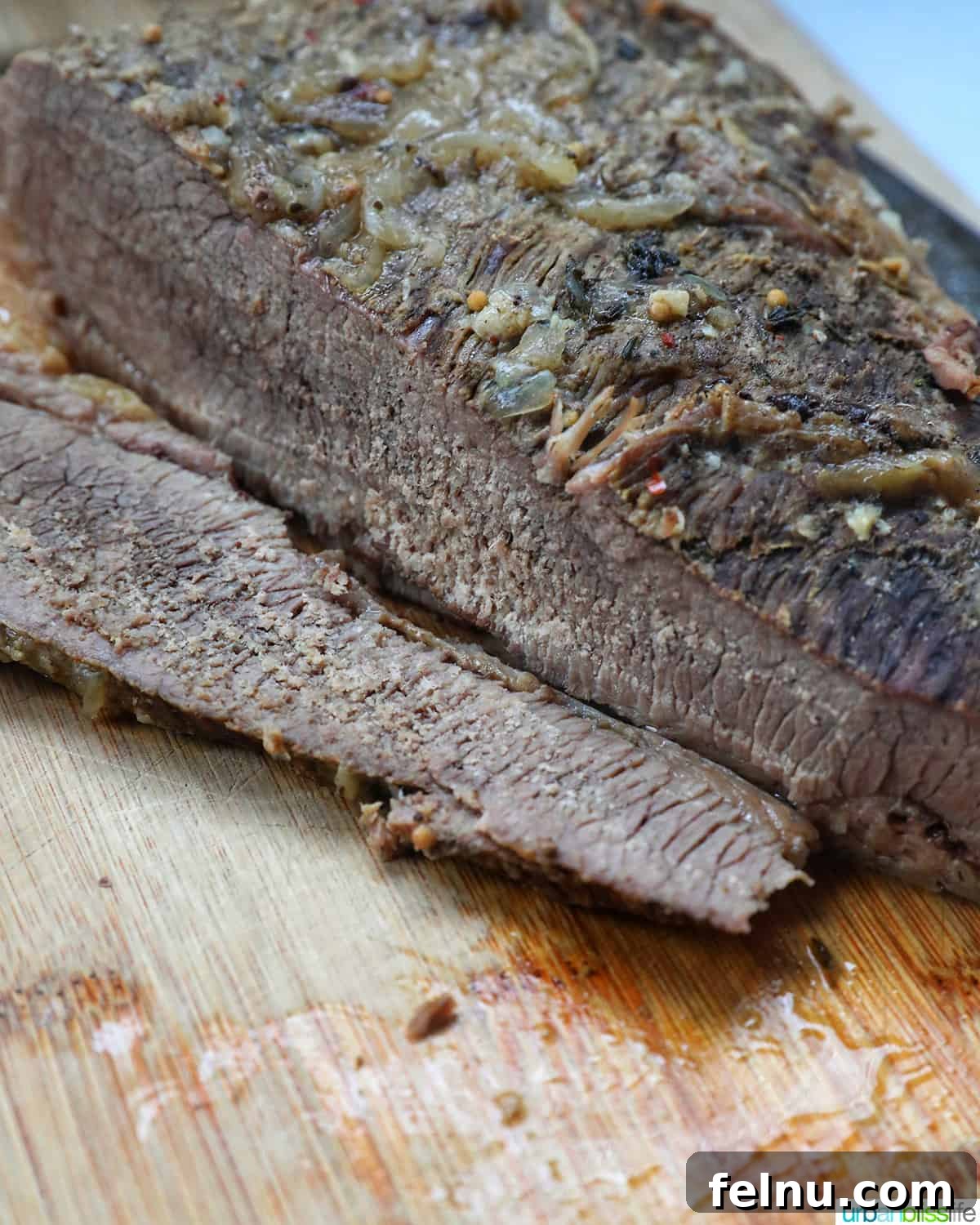
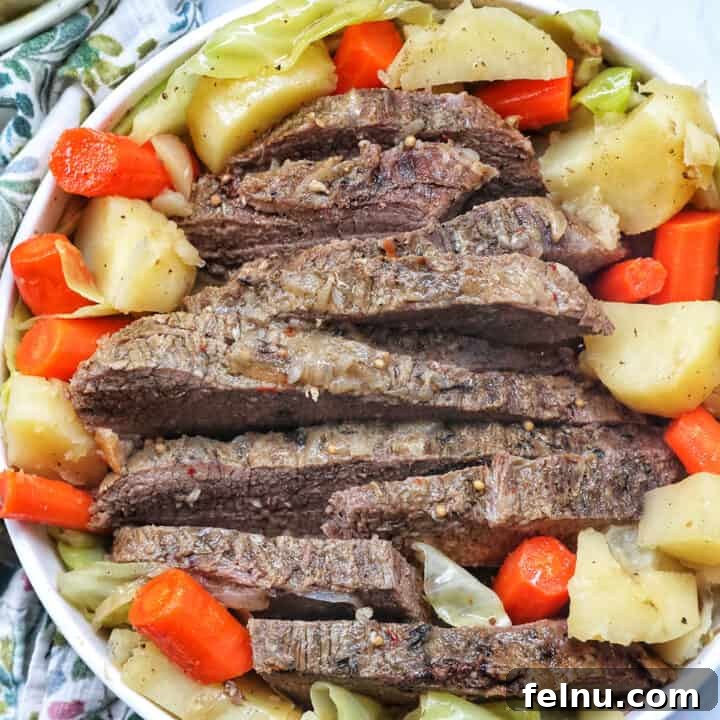
9. Transfer the beautifully cooked brisket to a clean cutting board. Allow it to rest for at least 10-15 minutes. This resting period is vital, as it allows the juices to redistribute throughout the meat, ensuring every slice is incredibly moist and flavorful. To serve, slice the brisket against the grain – this is key to achieving tender, easy-to-chew slices. Arrange the sliced brisket on a serving platter or large plate alongside the cooked vegetables. Just before serving, pour some of the reserved braising liquid over the meat to add extra moisture and enhance the flavors. For a thicker, richer sauce, refer to the Notes section of the recipe card for instructions on making a delicious gravy.
👩🏻🍳 Recipe FAQs: Your Questions Answered
This particular recipe does not require searing the brisket before braising, simplifying the process and making it even more of a one-pot wonder. However, if you prefer, you can certainly sear the meat on all sides for a few minutes prior to adding the other ingredients. Searing creates a beautiful browned crust, which can add an extra layer of complex, caramelized flavor to the exterior of the brisket. It’s ultimately a matter of personal preference and how much time you have.
Beef brisket and corned beef originate from the same cut of beef, but they are prepared differently before they reach your kitchen. Beef brisket refers to the fresh, uncured cut of meat. Corned beef is beef brisket that has been brined (cured) in a saltwater solution containing spices and often nitrates. This curing process gives corned beef its characteristic salty flavor and pink color, and it typically comes with a seasoning packet for cooking.
To properly store leftover beef brisket and vegetables, first allow them to cool down completely to room temperature. Once cooled, transfer them to an airtight container. Store the sealed container in the refrigerator for up to four or five days. For longer storage, see our notes on freezing below.
Absolutely! This recipe adapts beautifully to a slow cooker. To do so, combine all ingredients except the carrots, potatoes, and cabbage into your slow cooker. Cook on the LOW setting for 6-8 hours, or on the HIGH setting for 4-5 hours. When there is approximately 1 hour remaining in the cooking time, add the carrots and potatoes. Then, introduce the cabbage during the last 30 minutes of cooking. This staggered addition ensures all vegetables reach their ideal tenderness without becoming mushy.
Yes, this Dutch Oven Brisket freezes very well! Once the brisket and vegetables have completely cooled, transfer them to freezer-safe containers or heavy-duty freezer bags. If possible, include some of the braising liquid to help keep the meat moist. It can be stored in the freezer for up to 2-3 months. Thaw overnight in the refrigerator before reheating gently on the stove or in the oven, adding a little extra broth if needed.
The key to an incredibly tender brisket lies in the “low and slow” cooking method. Braising for several hours at a gentle simmer allows the tough connective tissues in the brisket to break down slowly, transforming the meat into a fall-apart tender consistency. Ensure your Dutch oven lid is tight to prevent moisture loss, and baste the brisket periodically to keep it hydrated. Don’t rush the cooking process!
🍽 Serving Ideas: Complete Your Comfort Meal
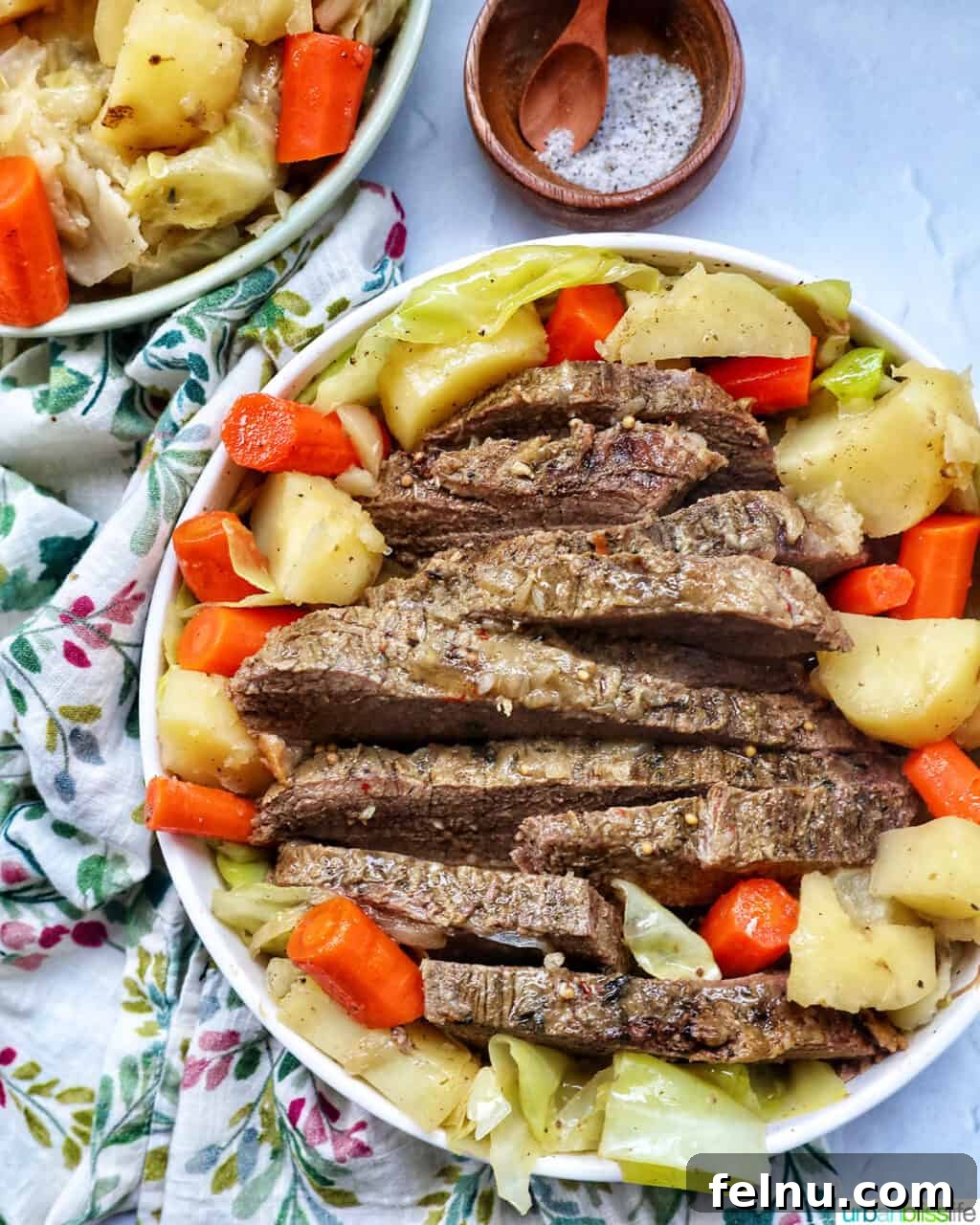
This Dutch Oven Brisket recipe is a wonderfully complete and satisfying meal all on its own, with tender beef and perfectly cooked vegetables. However, there are many delightful ways to enhance your dining experience:
- Rich Gravy: Elevate the meal by transforming the leftover braising liquid into a luscious gravy. After removing the brisket and vegetables, simply create a cornstarch slurry (1 tablespoon cornstarch mixed with 1 teaspoon cold water) and whisk it into the simmering liquid in the Dutch oven. Continue to cook, stirring, until the gravy thickens to your desired consistency. Pour generously over the sliced brisket and vegetables.
- Classic Accompaniments: If you’re looking for extra flavor, consider serving your brisket with a side of your favorite homemade barbecue sauce. Its tangy sweetness provides a fantastic contrast to the savory beef.
- St. Patrick’s Day Alternative: While this isn’t traditional corned beef, its hearty nature and inclusion of cabbage make it a superb and less salty alternative for your St. Patrick’s Day celebration. Remember, corned beef and cabbage as we know it is largely an American-Irish tradition, not an ancient Irish one. Serve it with a slice of rich Guinness Brown Bread for an authentic touch.
- Additional Side Dishes:
- For an extra creamy element, creamy mashed potatoes are always a welcome addition, perfect for soaking up the flavorful braising liquid.
- Crunchy air fryer garlic bread makes an excellent side to scoop up every last drop of the delicious sauce.
- If you desire more greens, a quick side of air fryer broccoli offers a fresh, vibrant contrast.
🍷 🥂 Wine Pairings: Complementing Your Brisket
A perfectly cooked brisket, with its rich, savory notes, pairs wonderfully with the right wine. To complement the depth of this Dutch Oven Brisket without overpowering it, choose a red wine with softer tannins and a good balance of fruit and acidity. Excellent choices include:
- Pinot Noir: Known for its elegance, bright red fruit flavors, and silky tannins, Pinot Noir is a versatile wine that won’t compete with the brisket but rather highlight its savory qualities.
- Grenache/Garnacha: These wines often boast juicy red fruit, spice, and a medium body, providing a delightful counterpoint to the richness of the beef.
- Gamay: Typically light-bodied with vibrant fruit and earthy undertones, Gamay (like those from Beaujolais) offers a refreshing contrast and is an excellent choice for a hearty meal.
🍳 Kitchen Tools and Equipment: Your Essential Gear
Preparing this Dutch Oven Brisket is a joy with the right tools. Here’s a list of essential kitchen equipment that will help you achieve perfect results:
- Dutch Oven: The star of the show! A large, heavy-bottomed Dutch oven (at least 5-7 quarts) is ideal for slow braising. Its even heat distribution and tight-fitting lid are crucial for tenderizing the brisket and retaining moisture. If you don’t have a Dutch oven, any other large, oven-safe cooking pot with a heavy base and a lid will work.
- Cutting Board and Knife Set: You’ll need a sturdy cutting board and a sharp chef’s knife for efficiently chopping the onions, garlic, potatoes, carrots, and cabbage. Important tip: Always use a separate cutting board specifically designated for raw meat to prevent any cross-contamination with vegetables or other ingredients. Have another clean cutting board ready for slicing the cooked brisket.
- Tongs: A good pair of kitchen tongs is invaluable for safely transferring the brisket in and out of the hot Dutch oven and for turning it if needed during cooking.
- Wooden Spoon or Spatula: A wooden spoon or heat-resistant spatula is perfect for sautéing the aromatics and gently stirring the vegetables without scratching your Dutch oven.
- Meat Thermometer: While slow cooking often leads to tender results, a reliable meat thermometer is the most accurate way to ensure your brisket is cooked to a safe internal temperature and is fork-tender. The internal temperature for a well-done, shreddable brisket is typically around 200-205°F (93-96°C).
More Delicious Beef Recipes to Explore
If you loved this comforting Dutch Oven Beef Brisket, you’re in for a treat! We have a variety of other hearty and flavorful beef recipes that are perfect for any occasion. From simple weeknight dinners to impressive roasts, you’ll find inspiration here:
- One-Pan Garlic Rosemary Sirloin Tip Roast and Potatoes
- Instant Pot Mexican Shredded Beef
- Dutch Oven Pot Roast
- Beef Mechado (Filipino Beef Stew)
Did you make this recipe? Don’t forget to leave a 5-Star 🌟🌟🌟🌟🌟 rating in the recipe card, and if you really loved it, please leave a comment further down on the page. Thank you!
Dutch Oven Beef Brisket
Print Recipe
Brisket is tender and flavorful, cooked with vegetables, making it an easy one-pot meal for the whole family.
Equipment
- 1 Dutch Oven
Ingredients
- 1 beef brisket (3-4 pounds)
- 1 small yellow onion, sliced
- 3 garlic cloves, minced
- 2 bay leaves
- 4-5 thyme sprigs
- 1 teaspoon mustard seeds
- ½ teaspoon kosher salt
- ½ teaspoon ground black pepper
- 2 cups beef broth
- 2 Tablespoons Worcestershire sauce
- 2 cups water
- 4 medium russet potatoes, peeled and cubed
- 3 medium to large carrots, chopped into thick 2″ slices
- ½ small head of cabbage, chopped into small wedges
Instructions
- In a Dutch oven over medium heat, add the oil. Sauté the garlic and onions for about 1 minute, just until they are soft and fragrant.
- Place the brisket on top of the garlic and onions.
- Pour in the broth and Worcestershire sauce.
- Sprinkle the mustard seeds, salt, and pepper over the brisket. Add the bay leaves and thyme sprigs.
- Increase the heat to medium-high heat and bring to a boil.
- Once the water is boiling, reduce to a low simmer, cover, and cook for 3 hours. Every 30 minutes, check on the brisket and ladle the broth over the brisket.
- After 3 hours, add the potatoes and carrots around the brisket. Try to submerge as much of the vegetables under the water as possible. Increase the heat and bring the liquid to a boil. Cook for 15 minutes.
- After 15 minutes, add the cabbage to the Dutch oven. Boil and cook for 5 more minutes, or until the cabbage is softened to your preferred tenderness.
- Remove the Dutch oven from the heat. Transfer the brisket to a cutting board and allow it to rest for at least 10-15 minutes.
- Drain the vegetables, saving some of the liquid (½ cup to 1 cup) in a liquid measuring cup or a bowl.
- To serve, slice the meat against the grain. Serve with the vegetables. Pour some of the broth over the meat just before serving.
Notes
Makes 6 servings
Gravy: If you want to make a thicker gravy to serve over the brisket, make a cornstarch slurry (1 tablespoon of cornstarch + 1 teaspoon water) and whisk into the remaining broth in the Dutch oven after removing the brisket and vegetables. Bring to a low boil and allow to cook until the gravy thickens.
Storage: Allow the food to cool then store in an airtight container in the refrigerator for up to four or five days.
Nutrition
Carbohydrates: 36g,
Protein: 68g,
Fat: 23g,
Saturated Fat: 8g,
Polyunsaturated Fat: 1g,
Monounsaturated Fat: 11g,
Cholesterol: 187mg,
Sodium: 777mg,
Potassium: 1902mg,
Fiber: 5g,
Sugar: 6g,
Vitamin A: 5206IU,
Vitamin C: 41mg,
Calcium: 93mg,
Iron: 8mg
Nutrition information is automatically calculated, so should only be used as an approximation.
Please leave a star rating and comment! Then snap a pic of your dish and share it on social media. Tag @UrbanBlissLife and #UrbanBlissLife!