
Understanding the profound impact of wine glass selection is crucial for fully appreciating the intricate aroma, unique texture, nuanced flavor, and enduring finish of any wine. For enthusiasts eager to deepen their wine knowledge and enhance their tasting experiences, attending a specialized Riedel wine glass class offers an unparalleled opportunity to meticulously observe and truly comprehend how the precise shape of your glass intricately influences the wine you drink. This insightful journey promises to transform your perception, elevating every sip into a more profound encounter.
For years, like many wine lovers, I gave minimal thought to the vessel holding my cherished vino. My understanding of wine glasses extended to the basic distinctions: specific shapes for white wines, red wines, and the elegant flutes for champagne. Beyond these general categories, the intricate world of glassware remained largely unexplored territory for me. However, a single transformative experience at a Riedel wine glass class, graciously hosted at the esteemed Dobbes Family Estate, completely revolutionized my appreciation for wine, proving just how vital the right glass can be.
The class wasn’t merely an informational session; it was an eye-opening demonstration of sensory perception. It was here that I discovered the meticulous science and art behind Riedel’s crystal designs, which are engineered to perfectly complement specific grape varietals. This revelation profoundly changed not only how I select my glassware but also how I approach every wine-tasting moment, moving beyond simple enjoyment to a deeper, more analytical understanding of the wine’s true character.
Discover the Magic of a Riedel Wine Glass Class
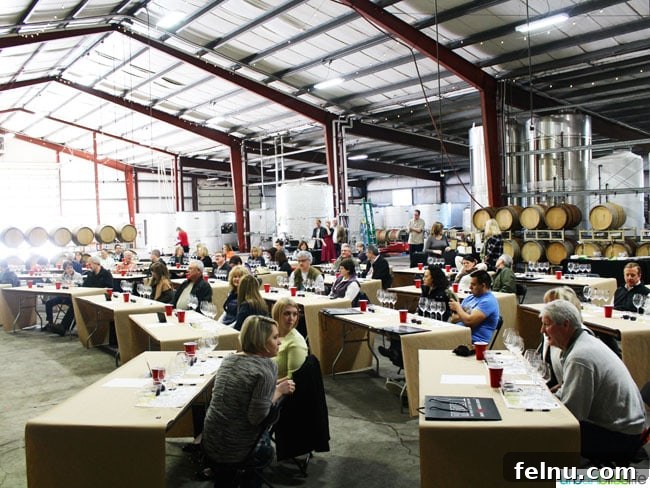
The particular Riedel wine glass class I attended was a special collaboration between Dobbes Family Estate and Riedel, a partnership that brought together exceptional Willamette Valley wines with centuries of glassware expertise. Dobbes Family Estate, renowned for producing some of the region’s finest wines, joined forces with Riedel, the world-leading crystal glassware manufacturer since 1776, to offer this enlightening experience. The event attracted approximately 50 passionate wine lovers, a diverse group ranging from casual drinkers to seasoned wine club members and even professional sommeliers, all gathered at the beautiful Dobbes Family Estate winery in Dundee, Oregon. This immersive two-hour class, designed to educate and entertain, concluded with a delightful spread of light appetizers, allowing attendees to further discuss their newfound insights.
The atmosphere was one of eager anticipation and shared curiosity. As we settled into our seats, it was clear that everyone was ready to challenge their preconceived notions about wine and glassware. The Riedel representative, a master of sensory education, guided us through an engaging presentation, meticulously explaining the intricate design philosophy behind each glass and how it directly impacts the wine’s journey to our palate. This class was more than just a tasting; it was a masterclass in appreciating the subtle artistry that connects the winemaker’s craft to the consumer’s experience.
The Exceptional Wines Showcased
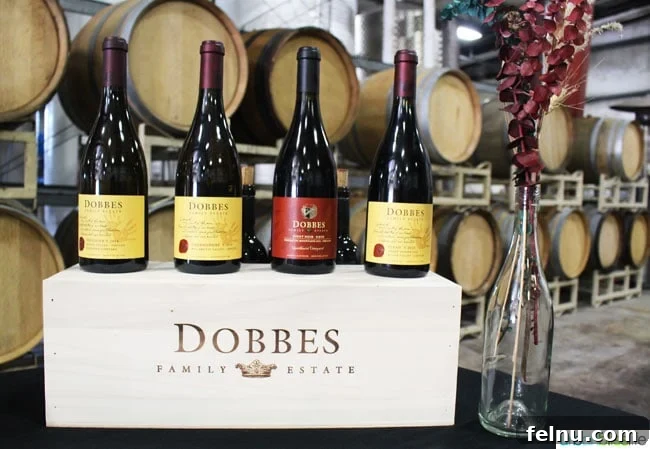
To provide a comprehensive demonstration of how specific glass shapes enhance different varietals, the class featured a carefully curated selection of Dobbes Family Estate wines. Each wine was chosen to highlight distinct characteristics and demonstrate the transformative power of Riedel’s specialized glassware. The lineup included:
- 2012 Chardonnay ($32): A classic white, perfect for illustrating the impact of glass shape on oak and fruit integration.
- 2014 Viognier ($28): Aromatic and floral, this wine showcased how the right glass can amplify delicate bouquets.
- 2010 Quailhurst Vineyard Pinot Noir (Library wine, $75): A refined red, chosen to highlight subtleties in structure and acidity.
- Early Release: 2012 Grand Assemblage Syrah ($28): A bold red, ideal for demonstrating how glass design can enhance powerful fruit and spice notes.
- 2010 Mirror Image Port-Style Syrah (Library wine, $46): A dessert-style wine, proving that even richer, fortified wines benefit from specific glass architecture.
This diverse selection allowed us to explore the full spectrum of wine styles, from crisp whites to robust reds and even a rich dessert wine. Each pour served as a vivid example of Riedel’s philosophy in action, making the learning experience both educational and incredibly enjoyable.
The Transformative Testing the Glasses Experience
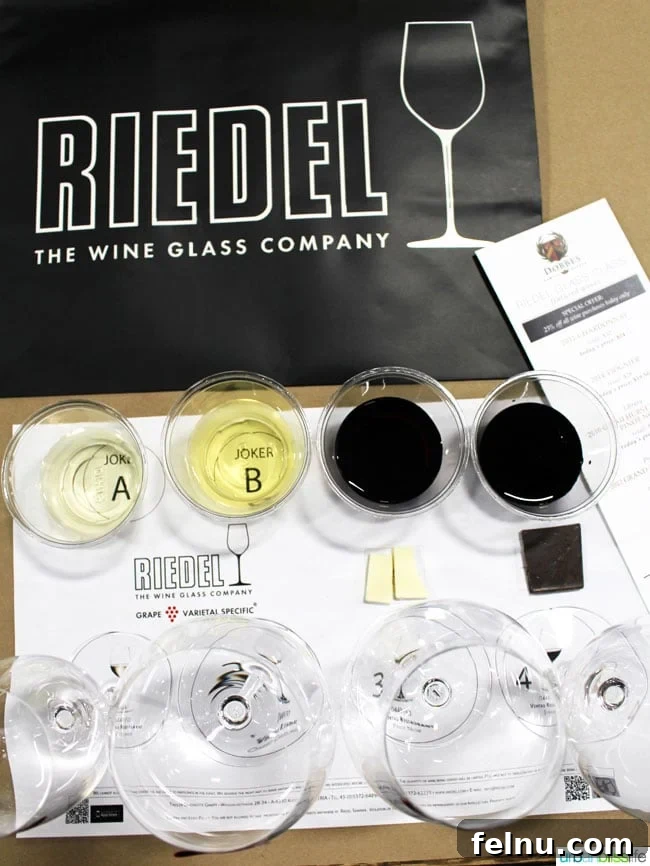
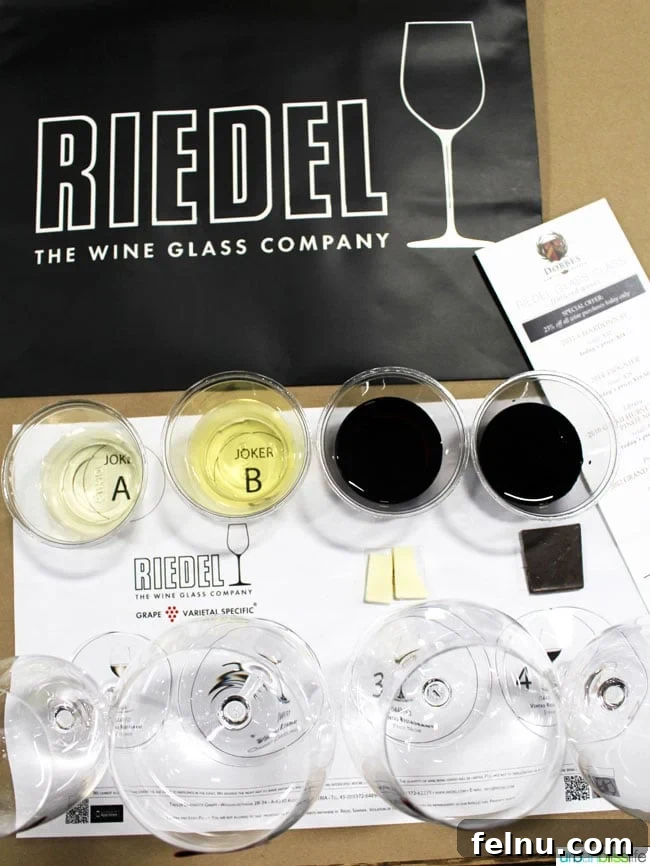
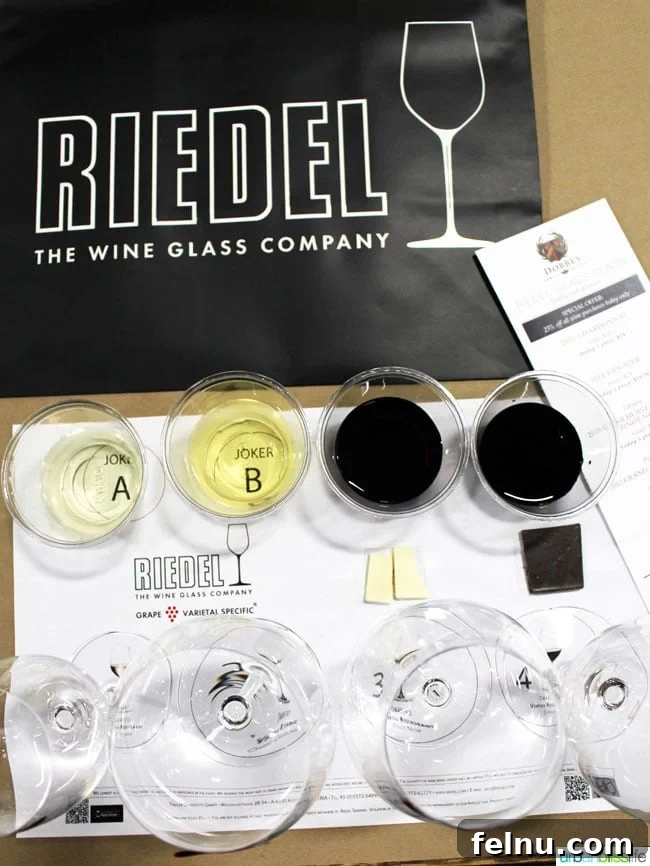
Upon entering the classroom, each attendee was presented with an intriguing place setting. It featured four “joker” plastic cups, serving as control vessels for the wines, alongside four distinct Riedel crystal glasses from their renowned Veritas Collection. The class was expertly guided by a Riedel representative who introduced us to the brand’s fundamental principle: understanding how we perceive wine. This process, they explained, begins not just with taste, but with a multi-sensory engagement: first, with our eyes, observing the wine’s color and clarity; then, by touch, feeling the weight and contour of the glass; next, by nose, inhaling the complex aromas; and finally, by taste, experiencing the wine on the palate.
Our journey began with a simple yet profound exercise: tasting water. We poured a small amount of water into each of the four Riedel glasses and were instructed to pay close attention to how the water hit different areas of our tongue and palate. The results were immediate and astonishing. In glass #1, specifically designed for Viognier with a smaller opening, the water made initial contact primarily at the tip of the tongue, emphasizing sweetness. Conversely, with glass #2, a Chardonnay glass featuring a wider bowl, the water spread broadly across the sides of the mouth, enhancing perceptions of acidity and creaminess. Glass #3, the Pinot Noir glass, directed the water towards the front of the palate before engaging the sides, highlighting fruit and acidity. Finally, glass #4, tailored for Syrah, funneled the water directly to the back of the throat, designed to minimize bitterness and accentuate fruit and tannins.
This simple water exercise was a revelation. It laid bare the scientific precision behind Riedel’s designs, demonstrating unequivocally how the glass shape dictates the flow of liquid and, consequently, the initial sensory impact on our taste buds. It was a detail I had never consciously noticed in my many years of wine drinking, and it instantly piqued my fascination and readiness for the actual wine tasting.

Moving from water to wine, the real magic began. The initial comparison involved the white wines – the Chardonnay and the Viognier – tasted first in the “joker” plastic cups, then in an inappropriate Riedel glass, and finally, in their varietal-specific Riedel crystal glass. The transformation was nothing short of remarkable. For years, I had considered myself largely ambivalent towards heavily oaked Chardonnays. Yet, when the 2012 Dobbes Chardonnay was poured into its designated Riedel Chardonnay glass, its structure blossomed. The oak influence became beautifully integrated, the fruit flavors were amplified, and the wine presented itself with an unexpected elegance that genuinely captivated me. I, a self-proclaimed non-fan of big oaky Chardonnays, found myself genuinely enjoying and wanting more of this particular wine when presented in the correct vessel.
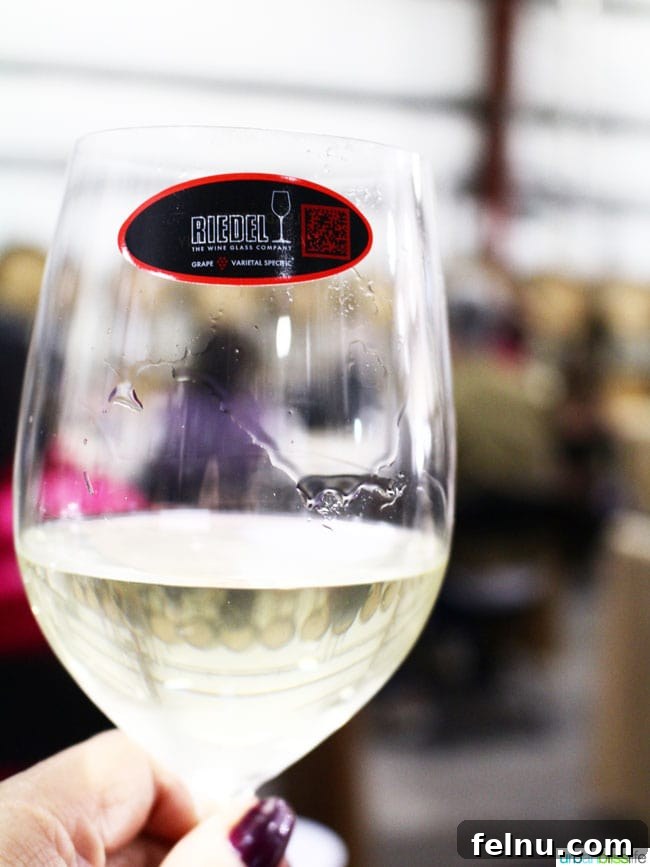
The 2014 Viognier offered an equally compelling demonstration. In the Viognier-specific glass, its inherent delicate floral notes and soft, luscious texture were dramatically enhanced, creating an exquisite aromatic profile and a harmonious mouthfeel. The wine, which was already delightful, became truly magnificent – so much so that I promptly decided to purchase two bottles to bring home, eager to replicate the experience.
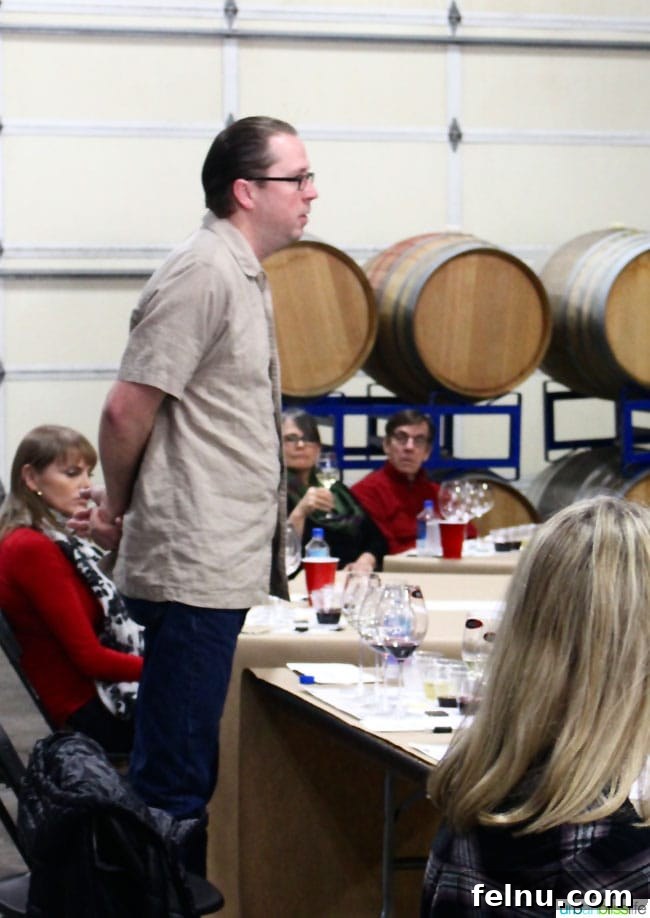
Throughout each tasting, Dobbes Production Winemaker Travis Proctor enriched the experience by sharing fascinating insights into the winemaking process of each varietal. This bonus information provided valuable context, allowing us to connect the winemaker’s intentions with the glass’s ability to express them. Learning about the specific fermentation techniques, barrel aging, and vineyard characteristics for each wine made the tasting even more profound. It wasn’t just about experiencing the finished product, but understanding the journey from grape to bottle, and how the Riedel glass acted as the ultimate conduit for that story.
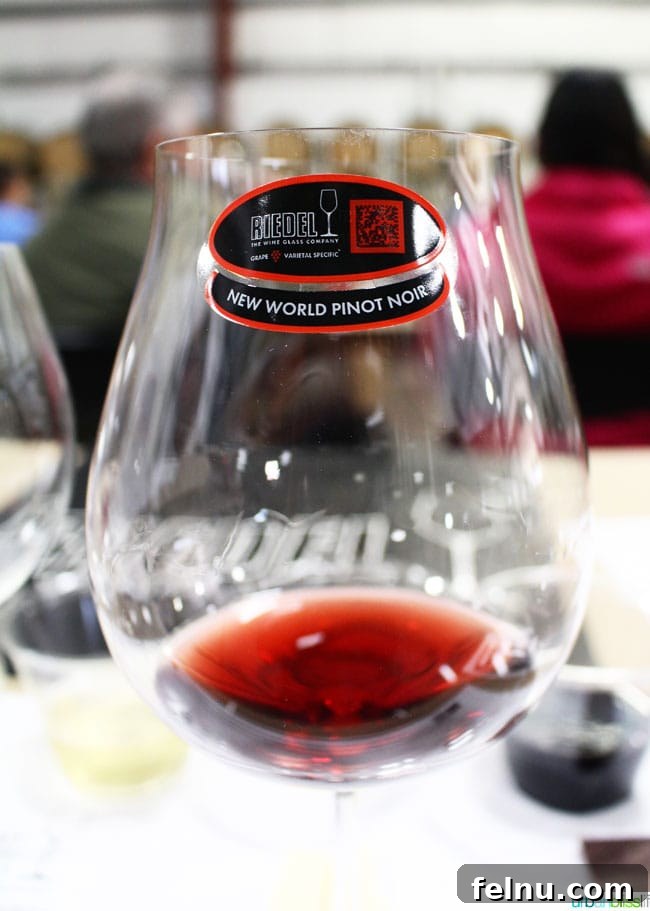
While the distinctions with the white wines were stark and immediate, the differences observed with the red wines were more subtle, yet equally significant. For me, the most striking contrast was evident with the 2010 Quailhurst Vineyard Pinot Noir. When tasted in its designated Riedel Pinot Noir glass (glass #3), the wine presented with vibrant fruit, balanced acidity, and a smooth, integrated finish. However, when the same Pinot Noir was poured into the Riedel Syrah glass (glass #4), designed for a bolder, more tannic wine, the acidity became immediately pronounced, causing a noticeable puckering sensation on my tongue. This demonstrated how the wrong glass could accentuate undesirable characteristics and mask the wine’s true elegance.
Conversely, the Early Release 2012 Grand Assemblage Syrah behaved dramatically differently in the various glasses. In the Pinot Noir glass (glass #3), which has a smaller bowl and opening, the Syrah’s robust nose was surprisingly muted, failing to reveal its characteristic dark fruit and spice notes. Yet, when poured into its appropriate Syrah glass (glass #4), the wine truly sang. The big, bold dark fruit aromas burst forth, followed by a rich, complex palate that perfectly expressed the winemaker’s intent. These red wine comparisons, though more nuanced, powerfully underscored the principle: the glass is not merely a container, but an integral part of the wine-tasting experience, directing and concentrating the wine’s bouquet and flavor profile to optimal effect.
A Delightful Detour: Wine and Chocolate Pairing
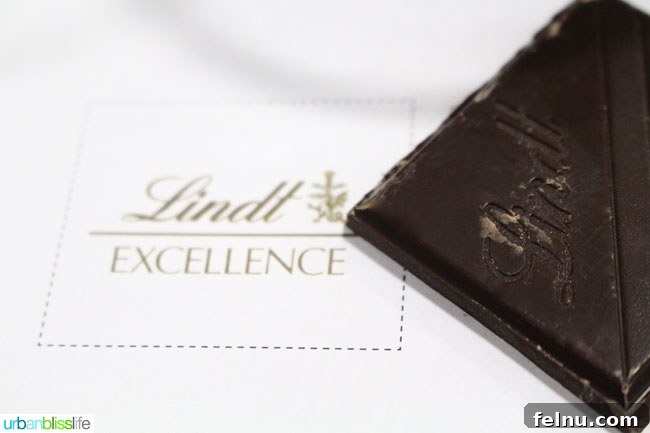
Adding another layer of sensory delight to the class, we were also treated to an intriguing segment on wine and chocolate pairings. Riedel, a distinguished Austrian company, shares a long-standing and sweet partnership with Lindt, the renowned Swiss chocolatier. This collaboration is a testament to the synergistic relationship between fine wine and premium chocolate, both of which offer complex flavor profiles that can be either enhanced or diminished depending on their pairing. For me, this segment held a special charm, as my husband’s family visits the Lindt factory in Switzerland whenever we are there, confirming their chocolate truly is unparalleled! We learned about the key principles of successful pairings, such as matching intensity, considering sweetness levels, and avoiding clashes between tannins and bitter chocolate. It was a delicious reminder that the art of appreciation extends beyond the glass.
The Virtues of Decanting: A Deep Dive
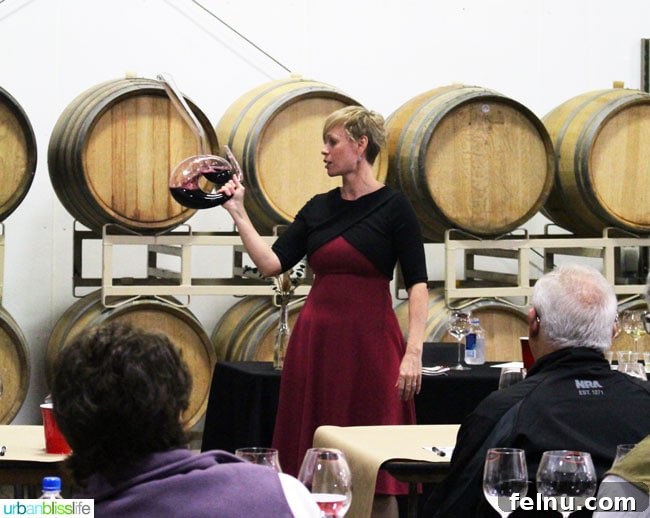
As the class neared its conclusion, our focus shifted to another vital aspect of wine service: decanting. We explored the manifold virtues of decanting, understanding not only when it makes a significant difference but also the various types of decanters available on the market and their specific functionalities. The Riedel representative explained that decanting serves two primary purposes: separating sediment from older wines and aerating younger wines to allow them to “breathe” and fully develop their aromas and flavors. This aeration process can soften tannins, round out rough edges, and unlock complex layers that might otherwise remain hidden.
We were then treated to a mesmerizing demonstration of one of Riedel’s most iconic decanters, the “Eve.” Retailing for $525, this exquisite piece of hand-blown crystal art is not just a functional tool but a stunning sculptural masterpiece. The Eve decanter, with its serpentine curves and elegant design, is specifically engineered to maximize aeration as the wine flows through its intricate chambers. Observing the wine swirl and unfurl within its dramatic silhouette was a visual testament to Riedel’s commitment to both form and function. While the price point, even with the special class discount, placed it beyond my immediate reach, its superior craftsmanship and breathtaking design left a lasting impression. It served as a clear example of the pinnacle of wine accessories, a dream addition for any serious wine collector with a passion for both aesthetics and optimal wine expression.
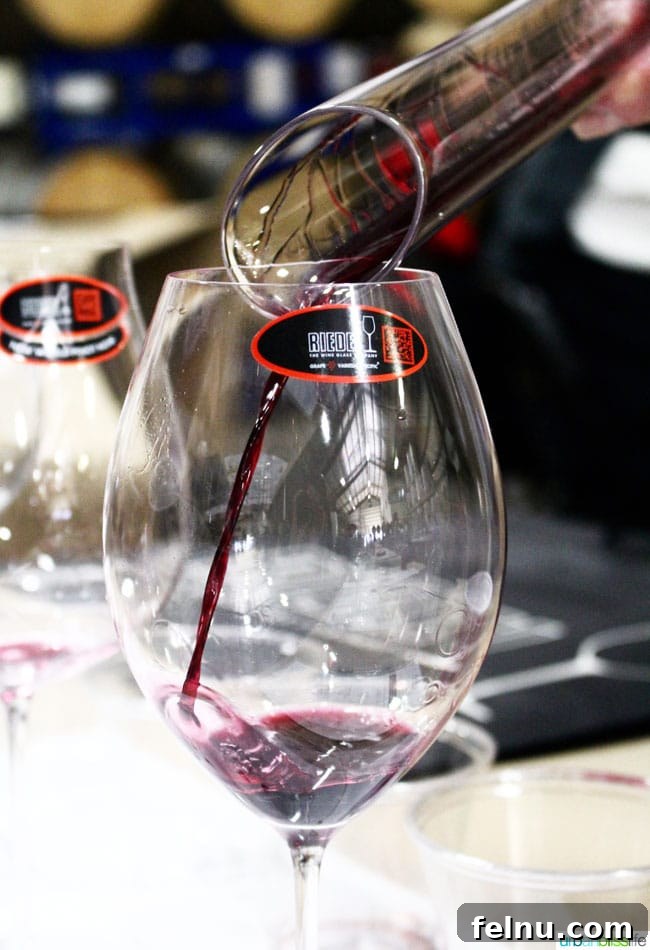
Though not everyone went home with an Eve decanter, each class attendee was gifted a fantastic set of four Riedel crystal glasses from their Veritas collection – the very glasses we had used during the tasting. This generous takeaway ensured that we could immediately apply our newly acquired knowledge at home. Furthermore, we were offered exclusive special pricing on all the featured Dobbes Family Estate wines. I enthusiastically took advantage of this opportunity, purchasing two bottles of the delightful Viognier, the expressive Grand Assemblage Syrah, and the sophisticated 2010 Quailhurst Vineyard Pinot Noir. If you ever have the chance, I wholeheartedly recommend visiting Dobbes Family Estate to experience these incredible wines for yourself; they are truly exceptional, and even more so when enjoyed in the appropriate Riedel glass.
Wrap Up: The Enduring Impact of Wine Glass Selection
Reflecting on the Riedel wine glass class, I must admit my amazement at the profound and often stark differences observed in the nose and taste of the wines, simply by changing the glass. The Chardonnay, in particular, was an astonishing revelation. As someone who generally avoids oaked Chardonnays, I was genuinely surprised to find myself not just tolerating but actively desiring more of this specific Chardonnay when served in its varietal-specific glass. This experience profoundly altered my perception of a wine style I thought I understood. While the differences with the red wines were, for me, more subtle, it’s precisely these nuances that often elevate a wine from merely “okay” to absolutely sublime, depending on one’s personal palate and preferences.
The fundamental truth unveiled by this class is that great wine glasses are meticulously manufactured to faithfully bring out the original intent of the winemakers. Every aspect of their design is purposeful: the unique shapes of each bowl, the elegant architecture of the stems, the precise thickness of the crystal, and the carefully crafted widths of the lips – all are considered with utmost care. Each characteristic plays a vital role in defining and enhancing the final smell and taste profile of the wine you drink, acting as a crucial bridge between the winemaker’s vision and your sensory experience.
This class is an invaluable experience that I wholeheartedly recommend to any wine drinker. It is particularly beneficial for those who possess a genuine appreciation for wine and are eager to deepen their understanding and enhance their enjoyment even further. Consider signing up with a friend or two and making a delightful day of it – perhaps combining the class with a winery tour or a meal. You can actively search for wine glass classes in your local area, either hosted by regional wineries or through dedicated wine education centers. Given the popularity and success of this event, it’s certainly worth keeping an eye out to see if Dobbes Family Estate offers this highly educational and enjoyable class again in the future!
Have you ever had the opportunity to attend a wine glass class, or have you personally noticed the significant difference specific wine glasses can make in your overall wine drinking experience? Share your thoughts below!
Many thanks to Dobbes Family Estate for the gracious invitation to attend this insightful glass class. All opinions expressed and photos shared in this article are, as always, entirely my own. I am committed to writing only about places, products, experiences, events, and services that I personally enjoy and genuinely believe will resonate positively with my readers.