
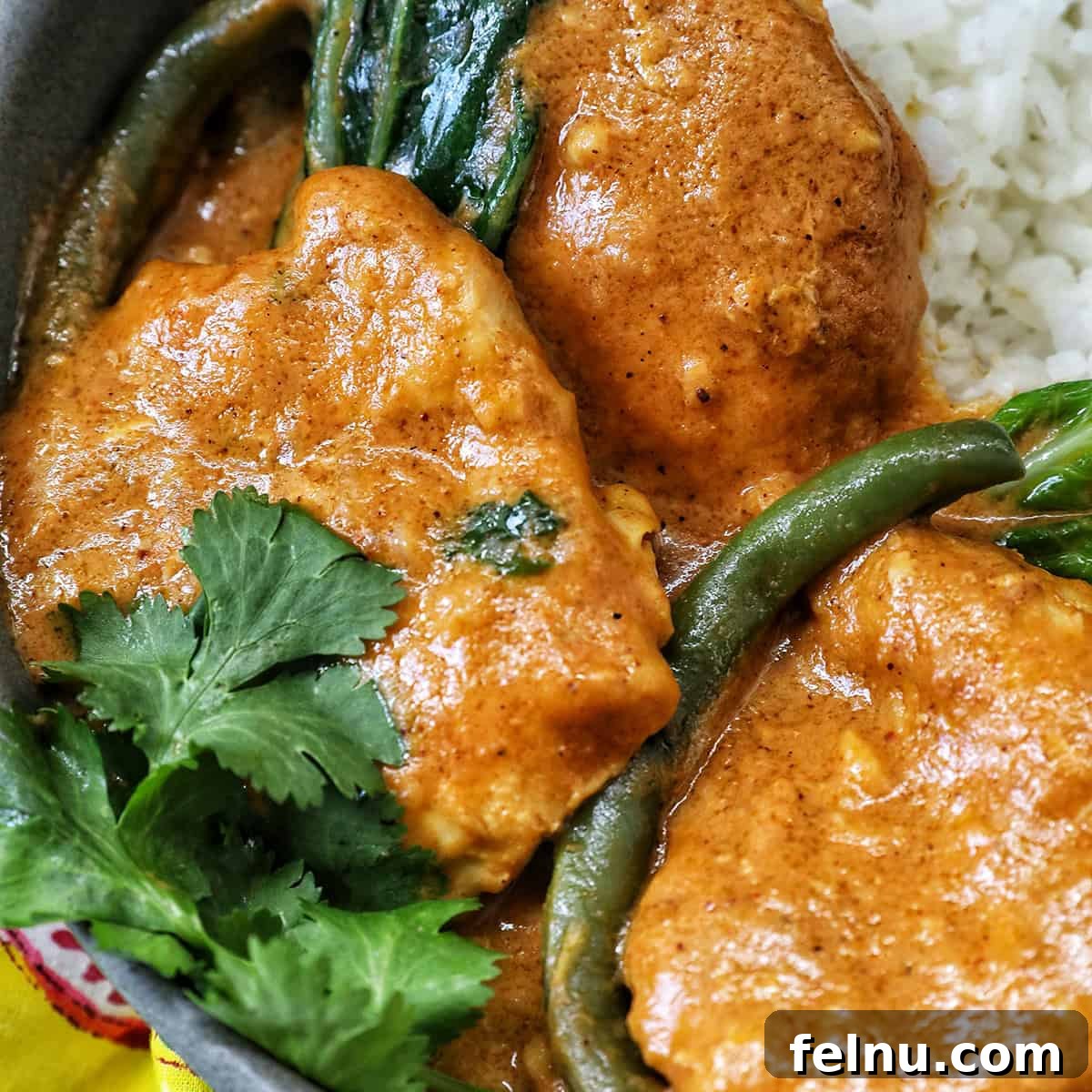
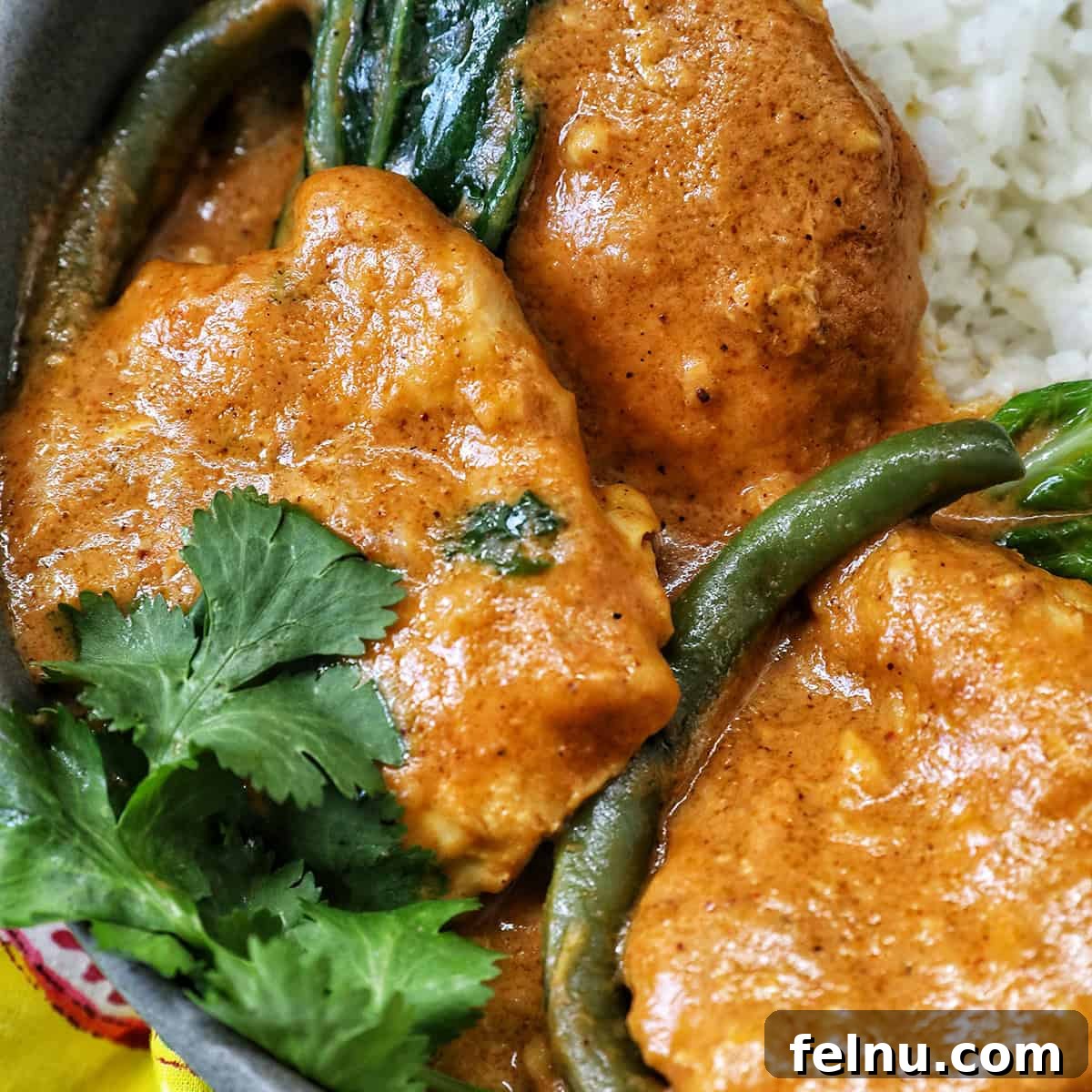
Indulge in the rich, savory, and slightly sweet embrace of Filipino Chicken Kare Kare, a delightful stew that brings authentic Filipino flavors right to your kitchen. This recipe transforms ordinary chicken into a culinary masterpiece, cloaked in a creamy, golden peanut sauce that promises comfort in every spoonful. While traditional Kare Kare often features oxtail or tripe, this simplified chicken version ensures everyone can enjoy this beloved classic with readily available ingredients, without sacrificing an ounce of its signature taste.

Forget everything you thought you knew about chicken stew. This is a dish that transcends the everyday, offering a truly unique and deeply satisfying experience. If you’ve yet to discover the magic of Filipino Chicken Kare Kare, prepare for a revelation. Each spoonful delivers a symphony of textures and tastes: the tender, succulent chicken, the velvety smooth peanut sauce, and the satisfying crunch of fresh vegetables.
The golden hue of the peanut sauce, derived from the natural color of peanuts and a hint of annatto, invites you into a world of rich, nutty, and subtly sweet flavors. This soulful Filipino classic is designed to comfort and nourish, leaving a lingering warmth and depth of flavor that will have you craving more. It’s a hearty dish perfect for a cozy family dinner, yet elegant enough to grace any special occasion or celebratory feast. It truly captures the essence of Filipino hospitality and culinary artistry.
Table of Contents
- About Kare Kare
- Why You’ll Love This Recipe
- Ingredient Notes
- Step-by-Step Instructions
- Recipe Tips for Success
- Recipe FAQs
- Serving Suggestions
- Wine Pairings
- More Filipino Recipes to Explore
- Filipino Chicken Kare Kare Recipe
About Kare Kare
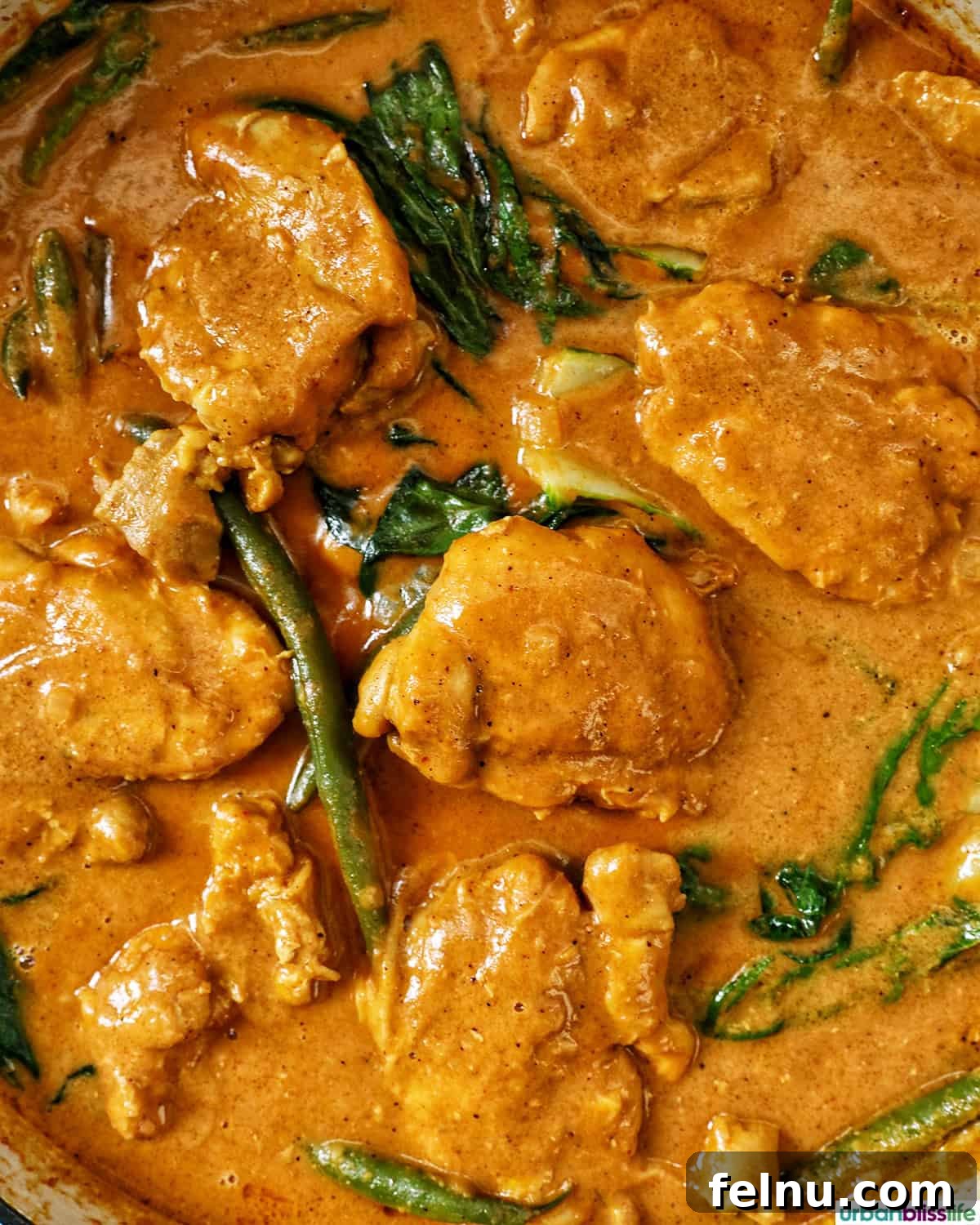
Kare Kare is more than just a stew; it’s a culinary cornerstone of Filipino cuisine, deeply rooted in the country’s rich gastronomic heritage. Believed to have originated in Pampanga, a province renowned as the “Culinary Capital of the Philippines” just north of Manila, Kare Kare embodies the heart and soul of Filipino cooking. The dish’s history is as rich and layered as its flavor, with various theories about its origins, including influences from Indian curries (hence the name “Kari” or “Kare”) or even from the Mores who settled in the region.
Traditionally, Kare Kare is distinguished by its use of oxtail, tripe, and sometimes even pig’s feet, all slow-cooked until incredibly tender in a thick, savory peanut sauce. This traditional preparation results in a deeply flavorful and gelatinous broth, reflecting the Filipino penchant for rich and satisfying textures. My family, like many others, always prepared it this way, making it a staple at special gatherings and Sunday feasts. However, as culinary traditions evolve and adapt to modern palates and accessibility, variations featuring other proteins like chicken, pork, or even seafood have become increasingly popular.
What truly sets Kare Kare apart is its signature peanut-based sauce, which is not only flavorful but also visually striking with its characteristic orange-yellow hue, traditionally achieved with annatto seeds. This unique sauce is almost always served alongside bagoong (fermented shrimp paste), which provides a pungent, salty counterpoint to the sweetness and richness of the peanut stew. This pairing is non-negotiable for many Filipinos, as the bagoong cuts through the richness and balances the overall taste profile, creating a truly unforgettable Filipino experience. This chicken version, while a modern adaptation, still holds true to the essence of what makes Kare Kare so beloved, offering a comforting and authentic taste of the Philippines.
Why you’ll love this family favorite recipe!

- Rich and creamy peanut sauce: This isn’t just a sauce; it’s the heart and soul of Kare Kare. Crafted from natural peanut butter, it delivers a deeply satisfying, velvety texture and a complex flavor profile that is both savory and subtly sweet, truly tasting like comfort in a bowl.
- Easier and lighter: By opting for boneless, skinless chicken thighs instead of traditional oxtail or beef, this recipe significantly reduces cooking time and simplifies preparation, making it a weeknight-friendly option. It also offers a slightly lighter take on the classic without compromising on its robust flavor.
- Packed with bright, colorful vegetables: Fresh green beans and tender bok choy add essential freshness, vibrant color, and a pleasant textural contrast to the rich sauce and tender chicken. These vegetables not only enhance the dish visually but also contribute vital nutrients, making it a well-rounded meal.
- A fun way to explore authentic Filipino flavors: For those new to Filipino cuisine or looking to expand their culinary horizons, this Kare Kare recipe is an accessible and delicious entry point. It introduces iconic Filipino ingredients and flavor combinations in a familiar stew format.
- Perfect for sharing with family and friends: This generous stew is a crowd-pleaser, ideal for family dinners, gatherings, or any occasion where you want to serve a warm, hearty, and impressive meal. Its comforting nature fosters a sense of togetherness around the dining table.
Ingredient Notes
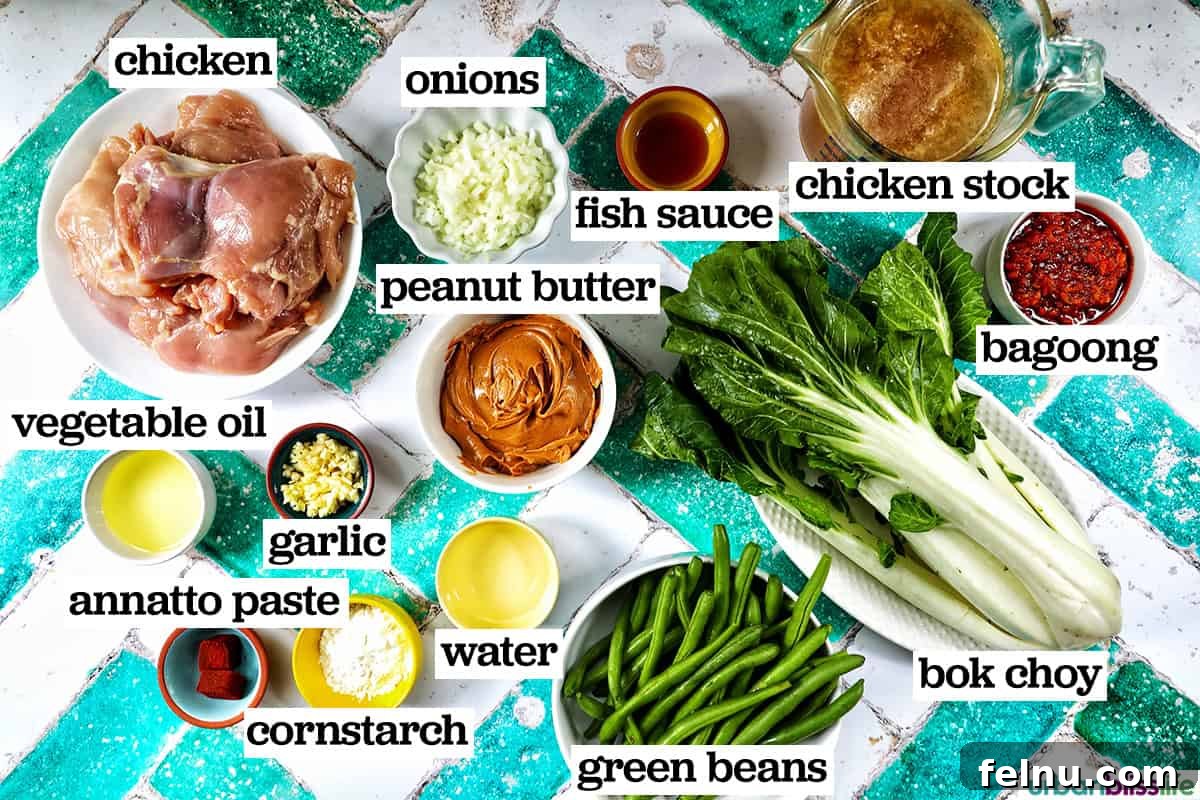
This recipe is a heartfelt homage to my family’s authentic Kare Kare, thoughtfully adapted to make it more approachable for home cooks in the US, UK, and other regions where traditional ingredients might be harder to source. I’ve made strategic ingredient swaps to ensure convenience without sacrificing that quintessential Filipino flavor. However, if you have access to a well-stocked Asian market or specialty store, I encourage you to seek out the traditional options mentioned below for an even more authentic experience.
- Chicken: I highly recommend using boneless, skinless chicken thighs for this recipe. Their inherent tenderness and rich flavor hold up beautifully to the stewing process, resulting in incredibly succulent bites. You could also use bone-in thighs or drumsticks for a deeper, more traditional flavor, but be prepared for a slightly longer cooking time. Traditionally, Kare Kare is made with oxtail, which lends a distinct richness and gelatinous texture; if you’re adventurous and can find it, it’s a fantastic, albeit more time-consuming, alternative.
- Peanut butter: The star of the sauce! Opt for unsweetened, natural, creamy peanut butter. This ensures the sauce has a pure, robust peanut flavor without unwanted added sugars that can throw off the balance of sweet and savory. Avoid sugary or hydrogenated peanut butters, as they will drastically alter the taste and texture.
- Annatto paste: This ingredient is primarily responsible for Kare Kare’s signature appetizing orange-red color and contributes a very subtle, earthy, nutty flavor. You can often find annatto paste or achiote paste in the Mexican food section of many local grocery stores in the US, or at Asian and Latin American markets. If using annatto seeds, you’ll need to infuse them in hot oil to extract the color. A small amount goes a long way.
- Vegetables: While traditional Kare Kare features long beans (yardlong beans) and sometimes eggplant, this recipe makes it easier by calling for readily available green beans and bok choy. These vegetables add freshness, texture, and vibrant color. Feel free to add diced eggplant (sautéed briefly before adding to the stew) if you wish to include it for a more traditional touch. Other leafy greens like spinach or kale can also be substituted for bok choy if preferred.
- Aromatics: Freshly minced garlic and diced onions form the essential aromatic base for this stew, infusing the dish with fragrant, foundational flavors. Don’t skimp on these; they are crucial for building depth.
- Fish sauce: A cornerstone of Southeast Asian cuisine, fish sauce provides a vital umami depth and savory saltiness that is indispensable in Kare Kare. A good quality fish sauce will elevate the overall flavor profile.
- Cornstarch: Used to create a slurry with water, cornstarch is key for thickening the peanut sauce to its ideal silky, rich consistency. It helps achieve that luscious mouthfeel without making the sauce overly heavy.
- Optional: Bagoong (fermented shrimp paste): This is perhaps the most defining condiment for Kare Kare. Bagoong is a pungent, savory, and salty fermented shrimp paste that is traditionally served on the side, allowing diners to add it to taste. It cuts through the richness of the peanut sauce beautifully. While it was once subject to import restrictions in the US, it is no longer fully banned but can still be challenging to find in mainstream grocery stores. Your best bet is a Filipino or Asian supermarket. If authentic bagoong is unavailable, you can substitute with other types of shrimp paste found in Asian markets, but be aware that the flavor profile may vary. If no shrimp paste is available, a sprinkle of sea salt can offer some of the necessary salinity, though it won’t replicate the unique umami.
Step-by-Step Instructions
Below, you’ll find comprehensive step-by-step photos and detailed instructions to guide you through making this incredible Filipino dish. The full list of ingredients with precise measurements and more in-depth guidance is available in the printable recipe card at the bottom of this post.
Follow these visual and textual cues to create a rich and flavorful Chicken Kare Kare that will impress everyone at your table:
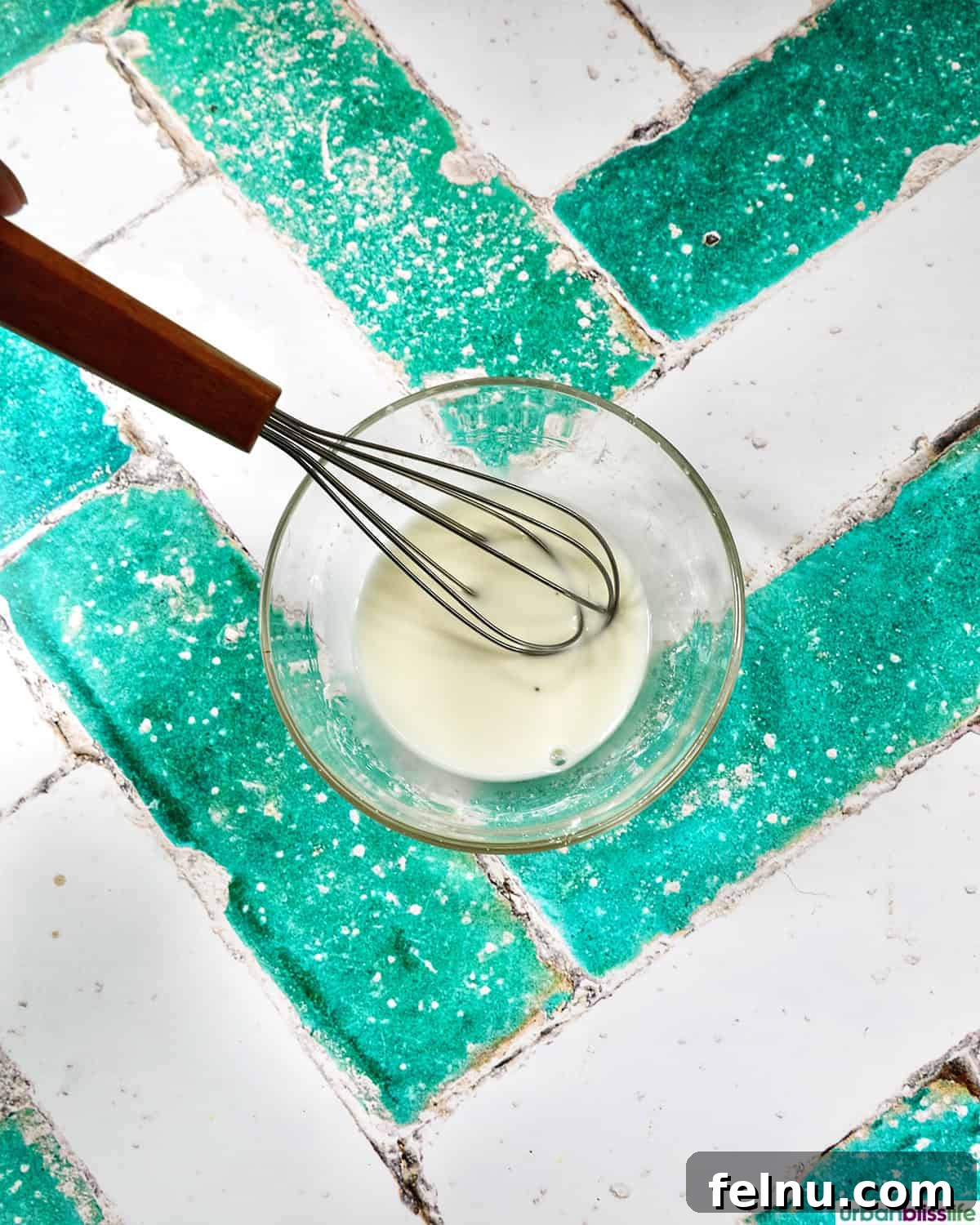
- Prepare the cornstarch slurry: In a small bowl, combine the cornstarch and water. Whisk thoroughly until no lumps remain. This slurry will be added later to thicken the sauce, so setting it aside ensures it’s ready when needed.
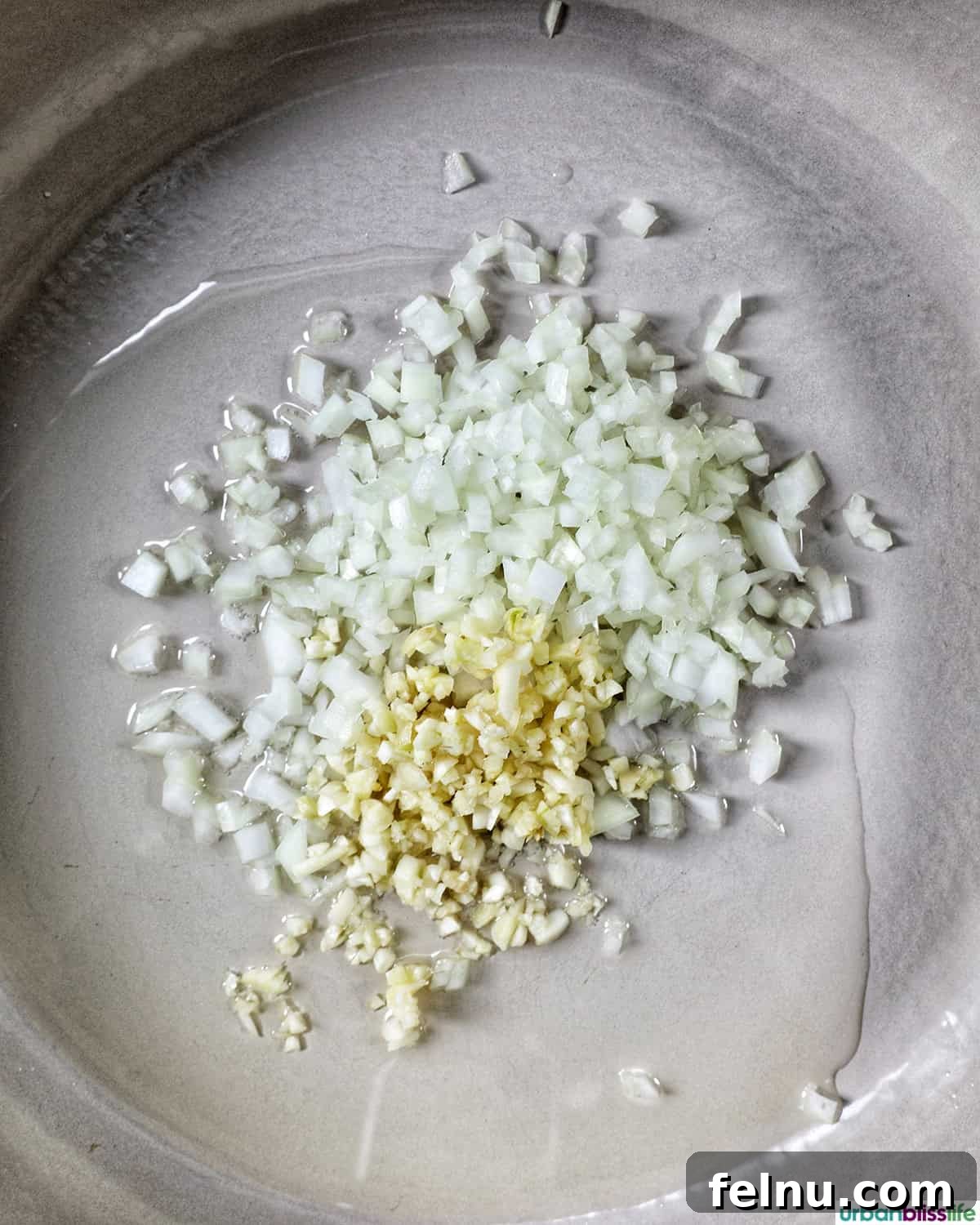
- Sauté the aromatics: Heat the oil in a large Dutch oven or a high-sided pan over medium heat. Add the diced onions and minced garlic. Sauté for 1-2 minutes, stirring frequently, until the onions are soft and translucent, and the garlic is fragrant. Be careful not to burn the garlic, as this can make the dish bitter.
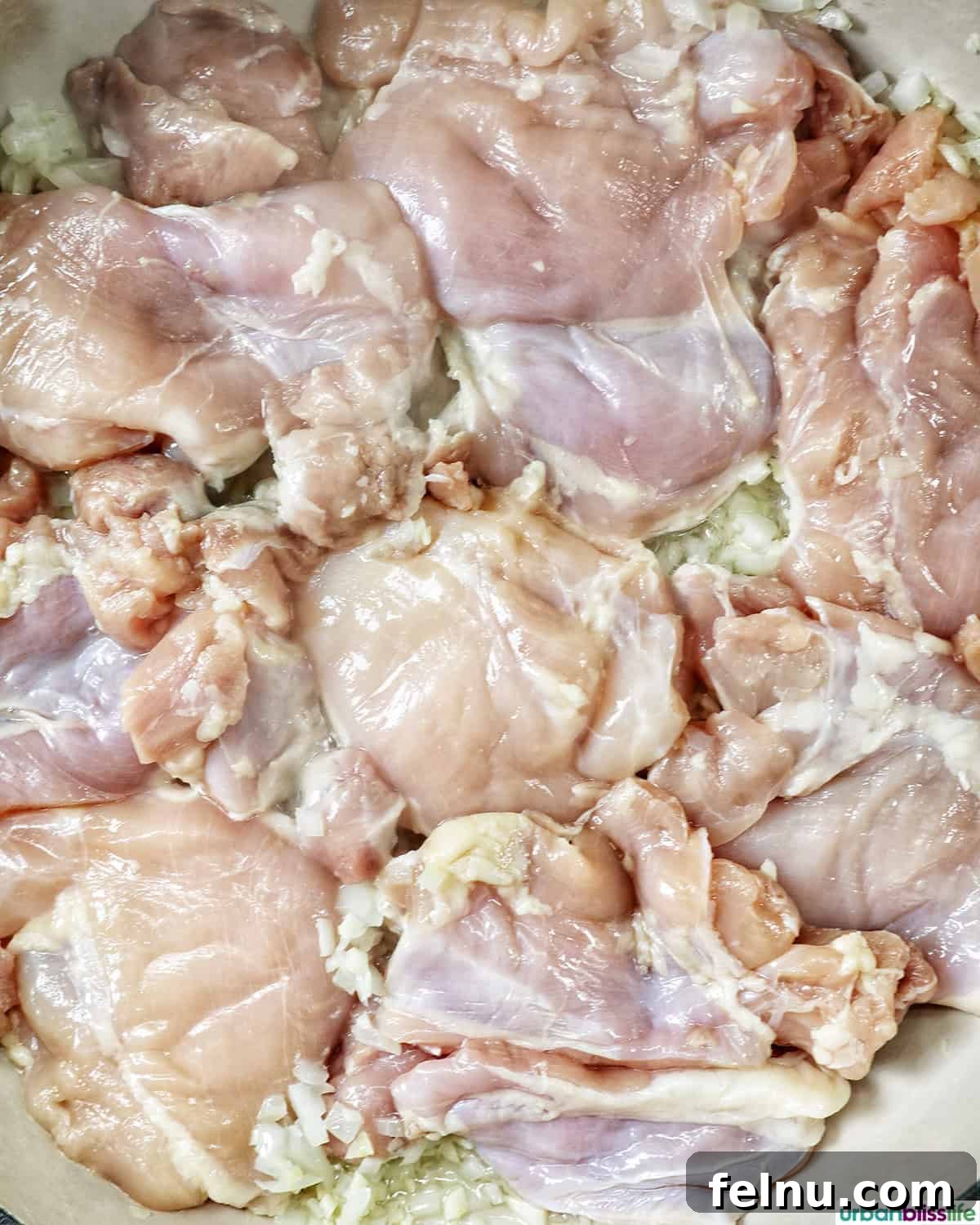
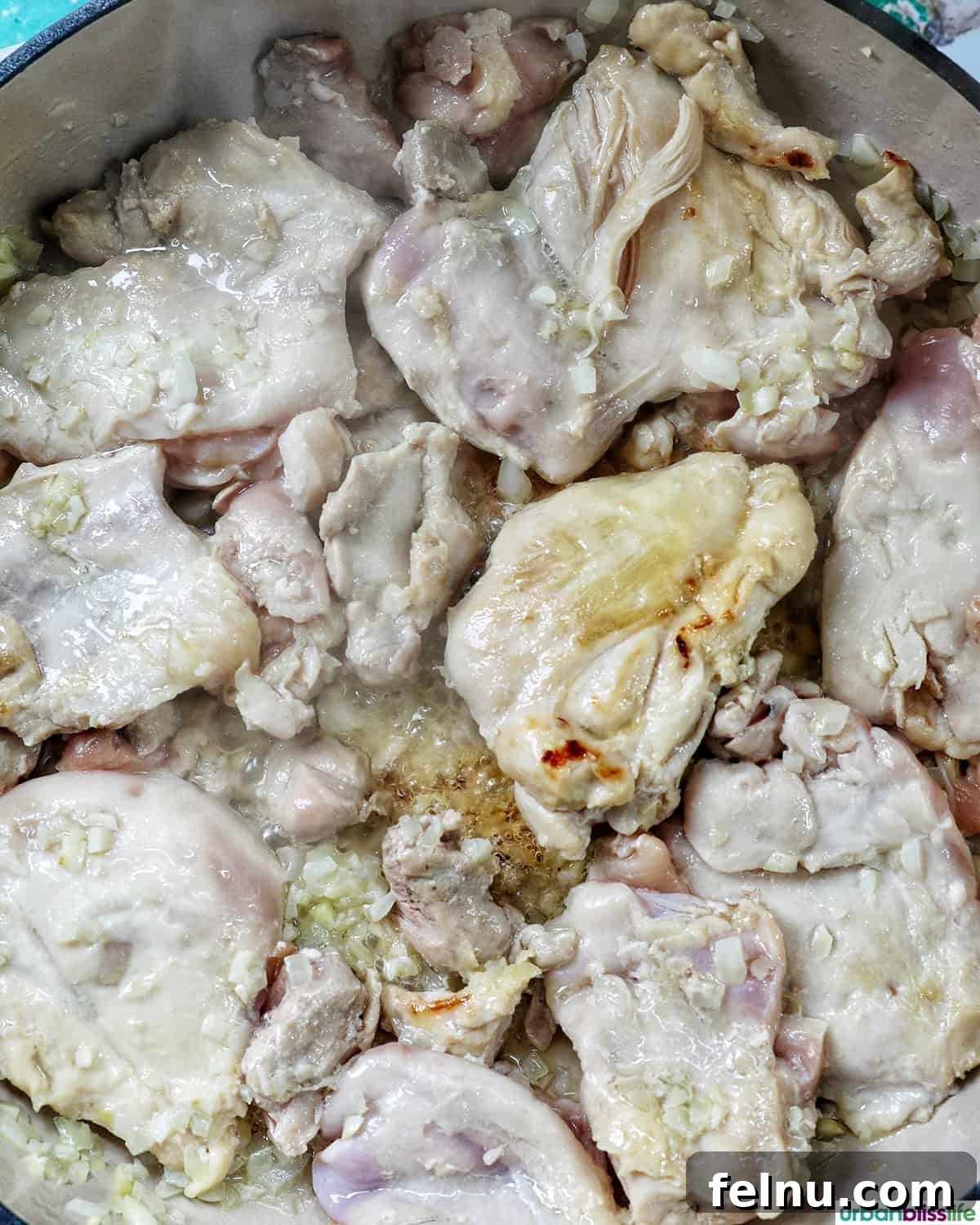
- Brown the chicken: Add the boneless, skinless chicken thighs to the pan. Cook for 4-5 minutes on each side, until lightly browned. This step is crucial for developing a richer flavor in the chicken and adding depth to the stew.
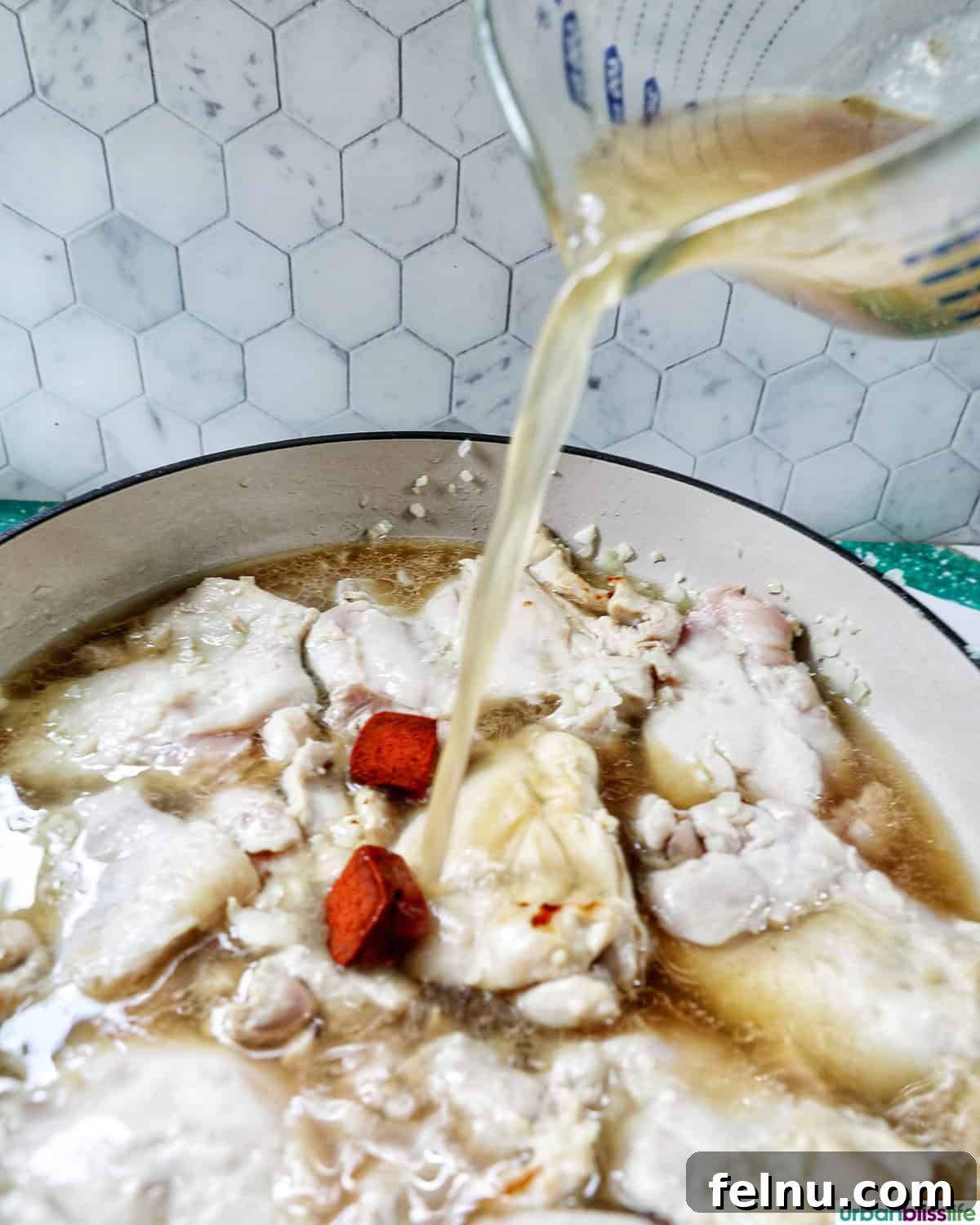
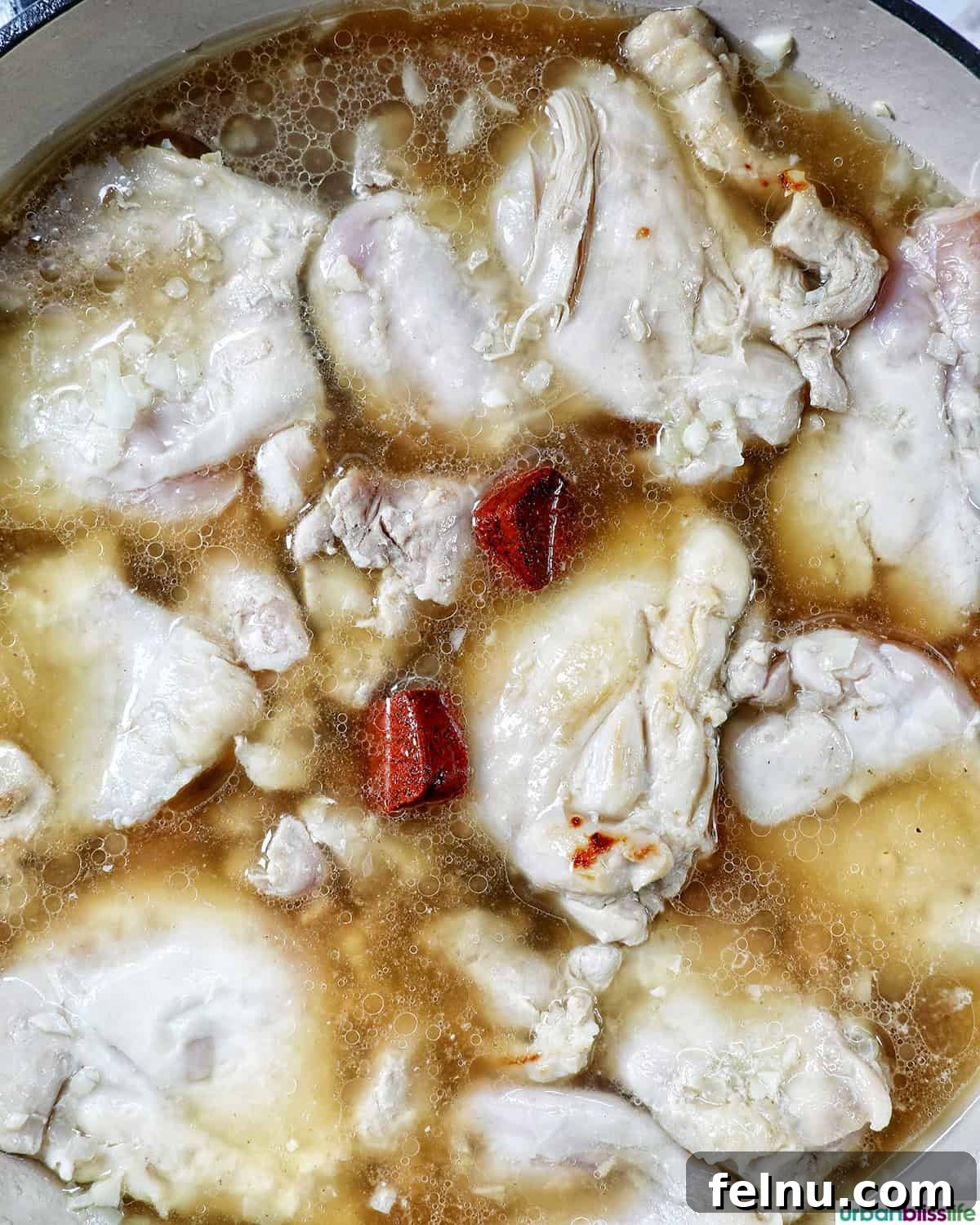
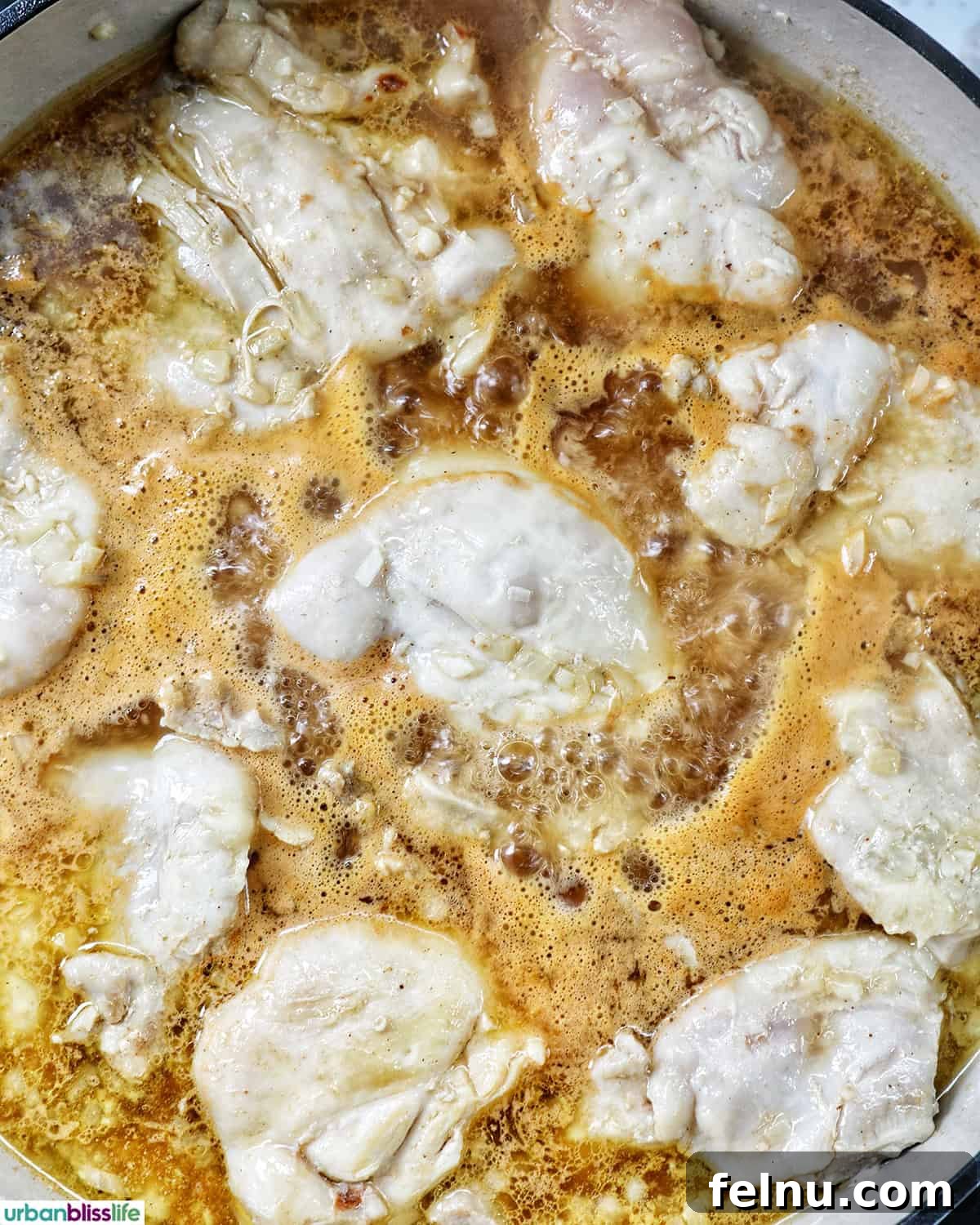
4-6. Simmer the chicken in flavorful broth: Pour in the chicken broth, add the fish sauce, and stir in the annatto paste. Bring the mixture to a rolling boil over medium-high heat. Once boiling, reduce the heat to low-medium, cover the pan, and let it simmer for 25-30 minutes, or until the chicken is cooked through and fork-tender (an internal temperature of 165°F or 74°C). Simmering allows the chicken to absorb all the wonderful flavors of the broth and annatto.
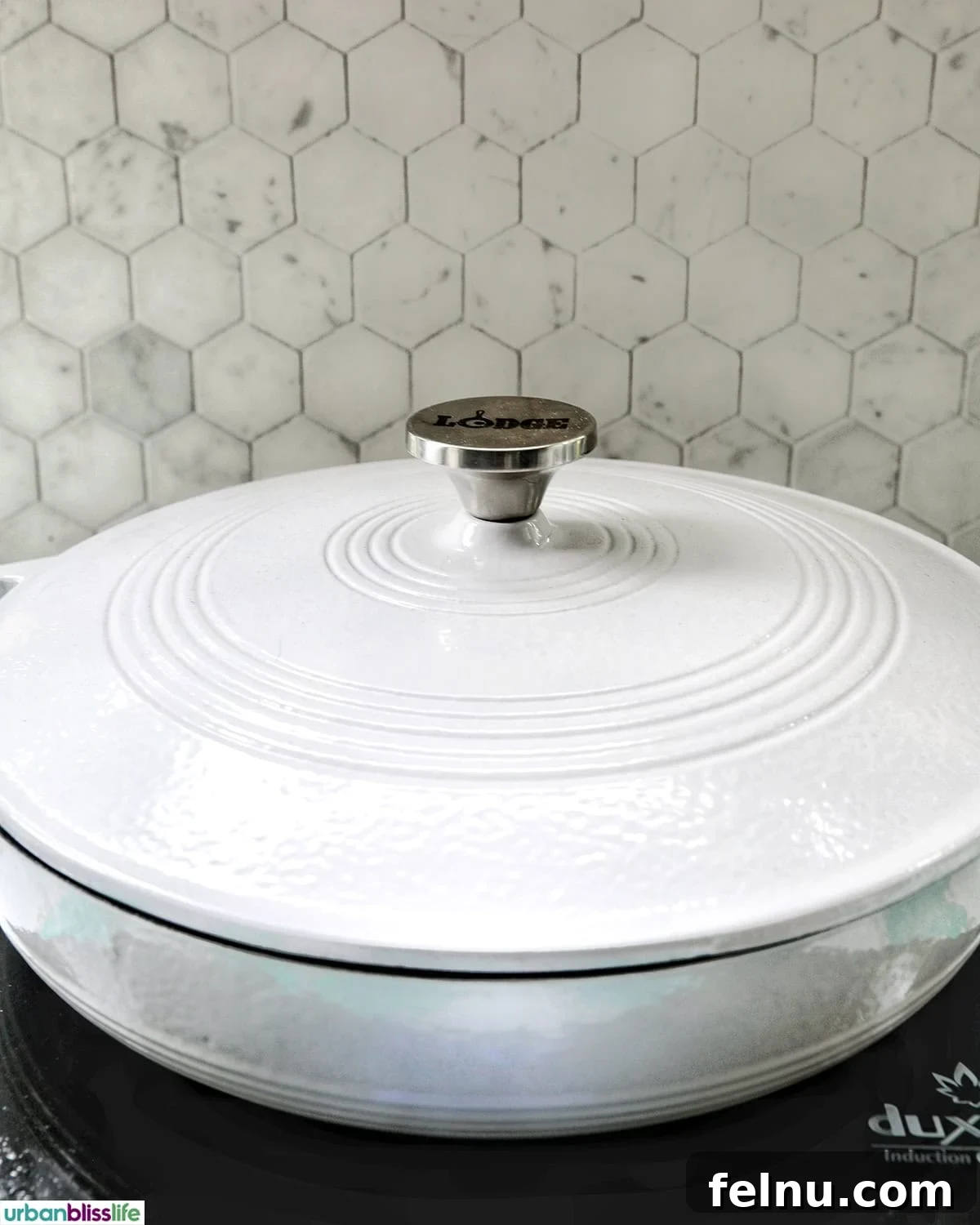
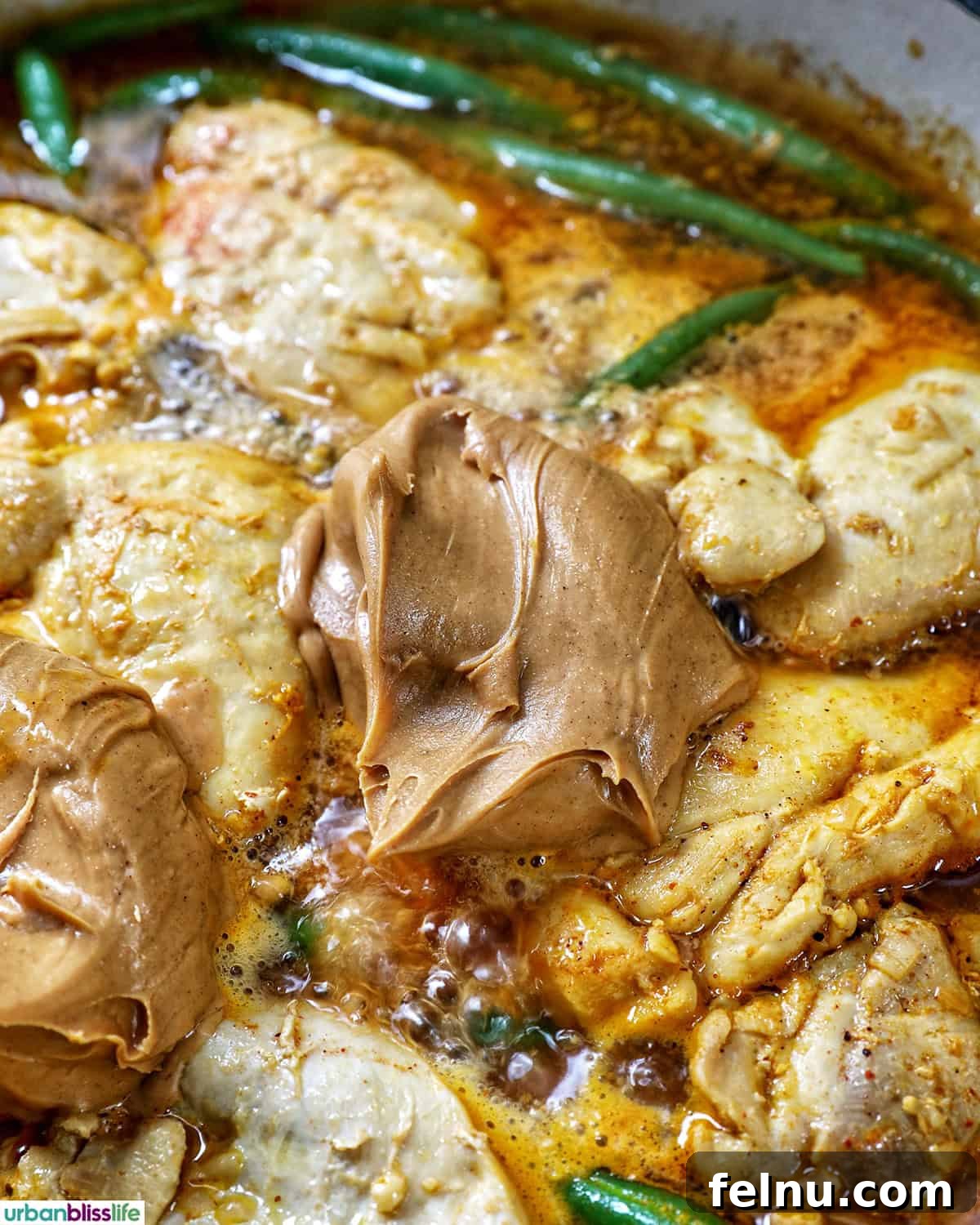
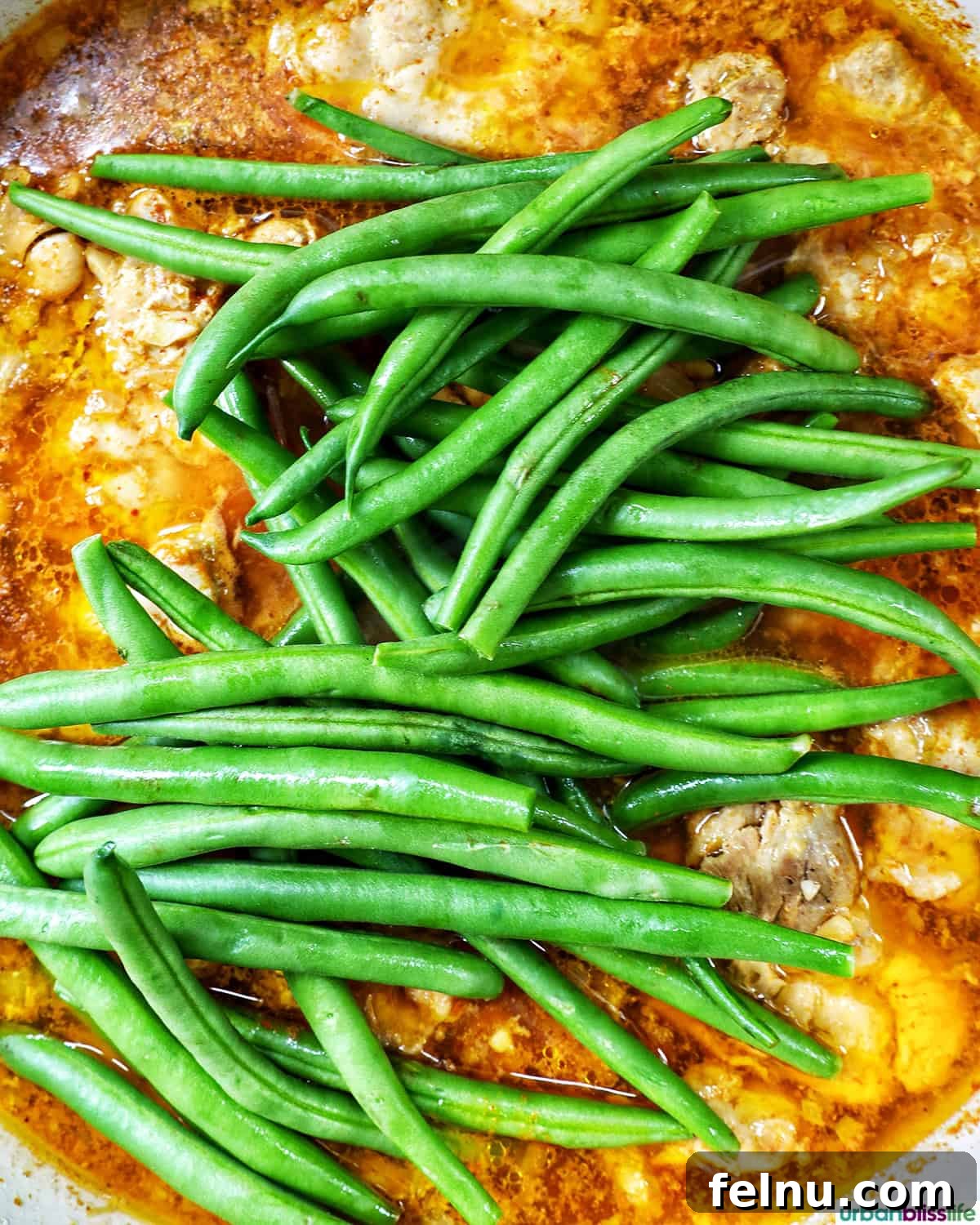
7. Thicken the sauce and add green beans: Once the chicken is cooked, uncover the pan. Stir in the peanut butter until it is completely melted and smoothly incorporated into the sauce. Next, give your cornstarch slurry a quick re-whisk and pour it into the stew, stirring continuously until the sauce visibly thickens to a luxurious consistency. Add the green beans, gently pushing them down into the liquid so they are mostly submerged.
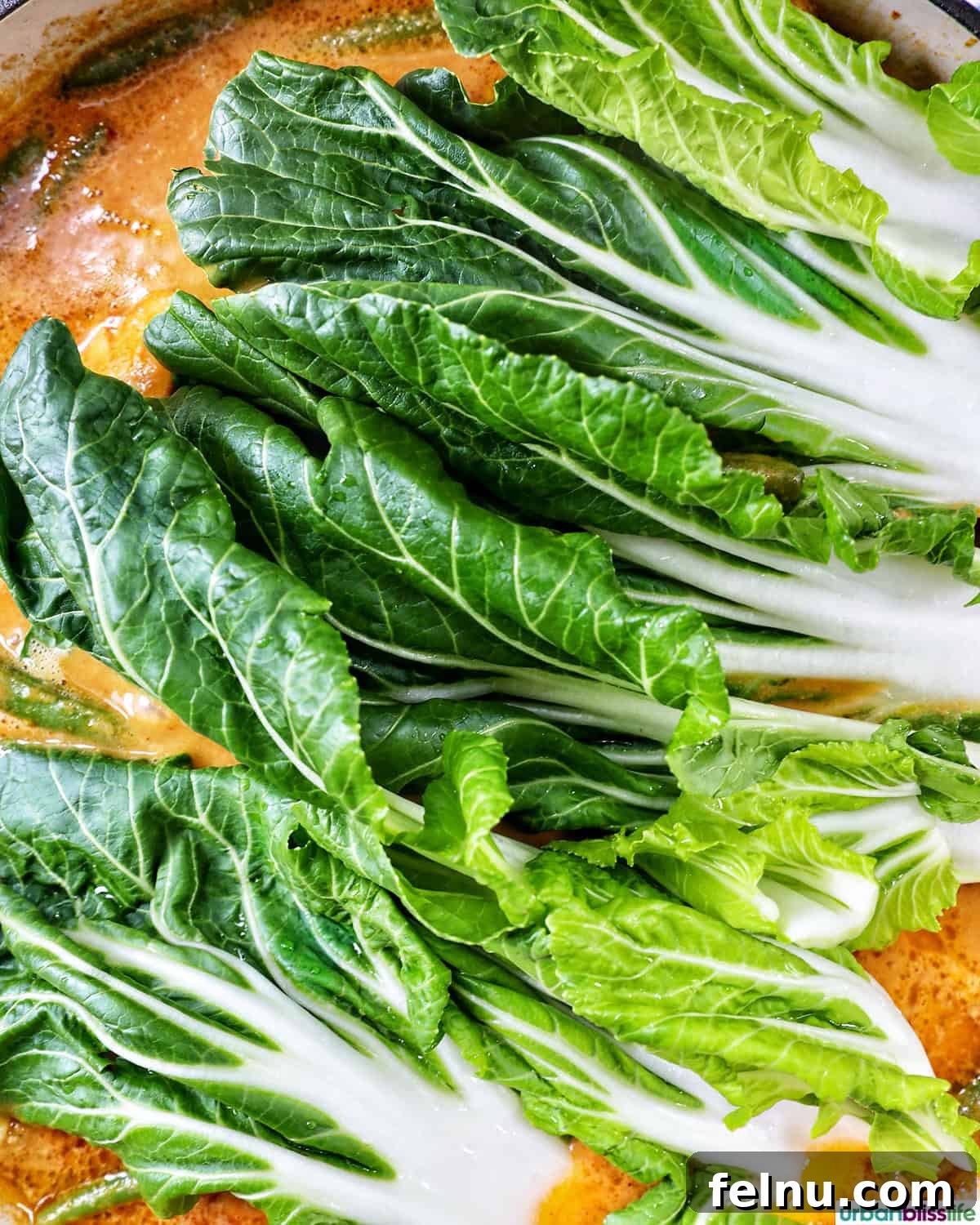
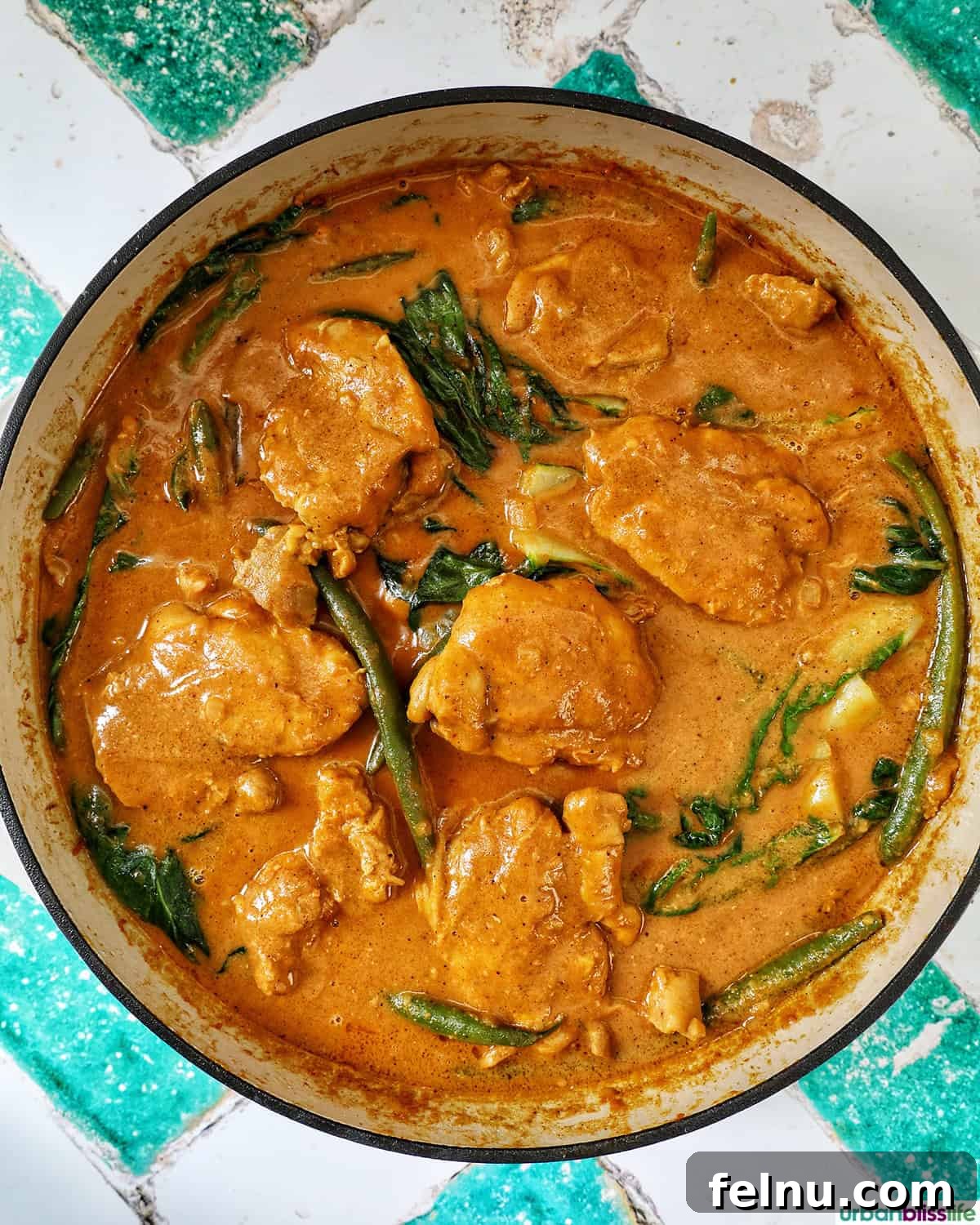
8. Cook remaining vegetables and serve: Cover the pan once more and cook for 5 minutes, allowing the green beans to become tender-crisp. Uncover, then add the bok choy. Stir it into the liquid, cooking for just 2 more minutes until the bok choy has slightly wilted but still retains a bit of its bite. This preserves its vibrant color and freshness.
9. Serve your magnificent Chicken Kare Kare hot, preferably with a generous side of steamed white rice and a small bowl of bagoong (shrimp paste) for individual seasoning. Enjoy the authentic flavors!
Marlynn’s Tip
Recipe Tips for Success
- Bok Choy Preparation: While some prefer larger pieces of bok choy for visual appeal, you can certainly give the bok choy a rough chop into smaller, more manageable pieces before adding it to the stew. This can make it easier to eat and integrate into each spoonful.
- Garnish for Extra Flair: For an elevated presentation and an added layer of flavor and texture, consider garnishing your Kare Kare just before serving. A sprinkling of chopped roasted peanuts will enhance the nutty notes, while thinly sliced green onions (scallions) add a fresh, mild oniony bite and a pop of green.
- Adjusting Sauce Consistency: If your sauce appears too thick after adding the slurry and peanut butter, you can thin it out with a little extra chicken broth or water, stirring until you reach your desired consistency. If it’s too thin, you can cook it uncovered for a few more minutes to reduce, or make a very small additional cornstarch slurry (1 tsp cornstarch to 1 Tbsp water) and stir it in.
- Spice it Up: Kare Kare is traditionally mild, but if you enjoy a touch of heat, you can add a pinch of red pepper flakes or a sliced chili pepper during the sautéing of the aromatics, or serve with a side of chili garlic oil.
- Chicken Cut Versatility: While thighs are recommended for their flavor and tenderness, you can use chicken breast if preferred. Just be mindful that breast meat cooks faster and can dry out easily, so adjust simmering time accordingly and aim for an internal temperature of 165°F (74°C).
Recipe FAQs
Absolutely! This recipe is highly adaptable. To make it vegetarian, simply swap the chicken with firm tofu (pan-fried or baked until golden), hearty mushrooms (like oyster or shiitake), or a combination of both. Use vegetable stock instead of chicken stock. For a vegan version, ensure your peanut butter is vegan-friendly (most natural ones are), use vegetable stock, and replace fish sauce with a vegan fish sauce alternative or a dash of soy sauce and a squeeze of lime to replicate some of the umami.
This recipe is inspired by and faithfully rooted in my Filipino family’s traditional Kare Kare recipe, honoring its core flavors and spirit. However, I’ve made thoughtful ingredient substitutions to make it more accessible for home cooks in the US, UK, and other regions where traditional components like oxtail or specific long beans might be hard to find. It’s a delicious “Filipino-American” rendition that captures the authentic taste with modern convenience. If you have easy access to more traditional ingredients (refer to the Ingredient Notes section), feel free to incorporate them for an even closer replication of the classic!
Yes, Kare Kare is one of those magical dishes that often tastes even better the next day! The flavors have more time to meld and deepen overnight, resulting in a more complex and harmonious stew. Simply prepare the dish as instructed, then allow it to cool completely before transferring it to an airtight container. When ready to serve, reheat gently on the stovetop over low heat, adding a splash of broth or water if the sauce has thickened too much.
Store any leftover Chicken Kare Kare in a tightly sealed, airtight container in the refrigerator. It will keep well for up to 4 to 5 days. For longer storage, Kare Kare freezes remarkably well. Portion it into freezer-safe containers or bags and freeze for up to 2-3 months. Thaw overnight in the refrigerator before reheating on the stovetop or in the microwave.
If the sauce is too thin, create another small cornstarch slurry (1 teaspoon cornstarch with 1 tablespoon water), whisk it into the simmering stew, and cook for another minute or two until it reaches your desired consistency. If the sauce becomes too thick, simply stir in a splash of chicken broth or water until it thins out to your preferred richness.
Serving Suggestions
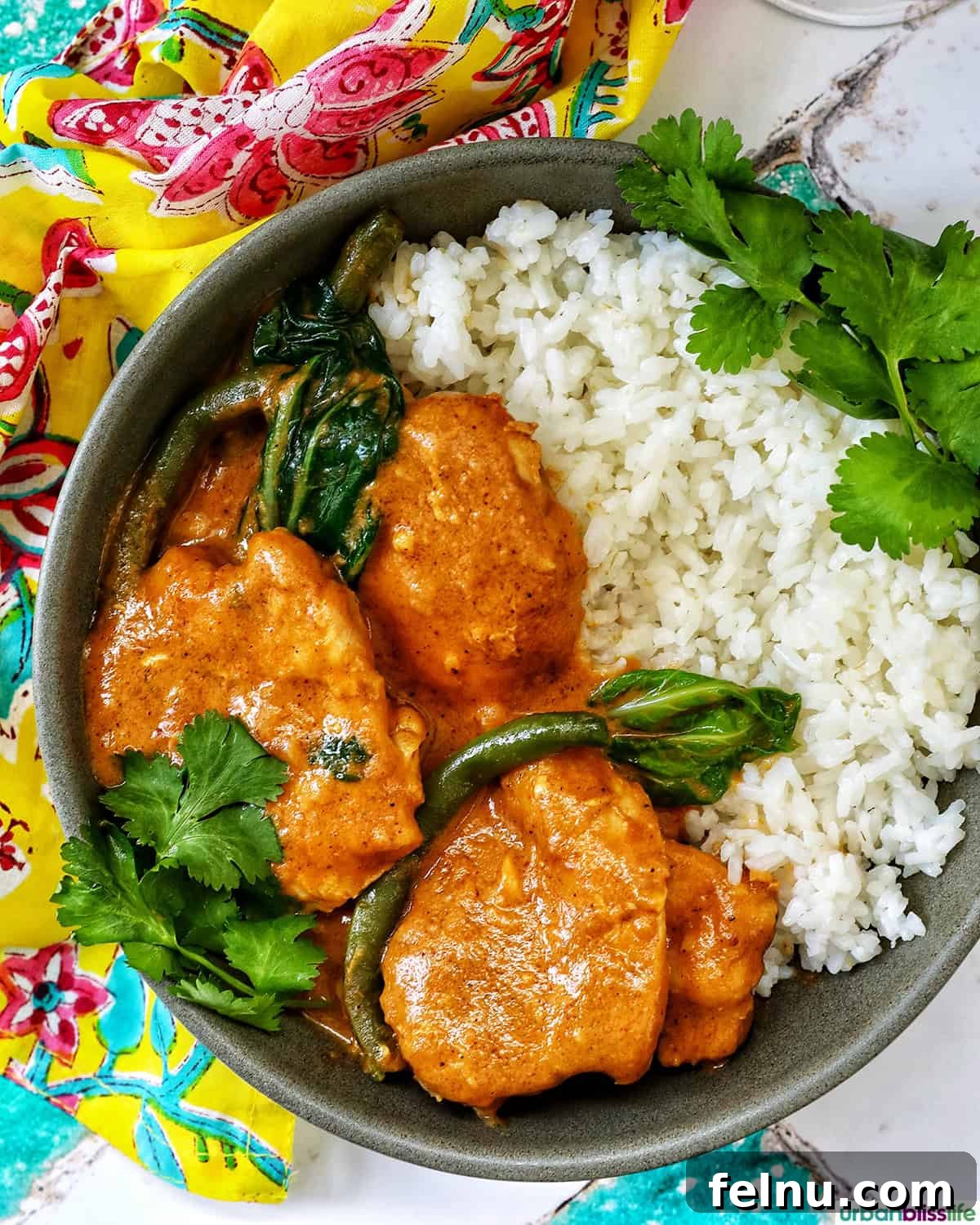
Chicken Kare Kare, with its rich, complex flavors, is a meal in itself, but it truly shines when paired with the right accompaniments. The traditional and most beloved pairing is undoubtedly plain steamed white rice, which provides the perfect neutral canvas to soak up every drop of that luscious peanut sauce. For an extra layer of flavor, we particularly love serving it over Instant Pot garlic rice, which adds a fragrant, savory dimension that complements the stew beautifully.
To cut through the richness and add a refreshing contrast, consider a light side salad. A crisp cucumber dill salad offers a tangy, cooling balance that is simply delightful. If you’re hosting a Filipino feast, elevate your meal by serving Kare Kare alongside other crowd-favorite dishes such as crispy lumpia (Filipino spring rolls), flavorful pancit bihon (rice noodle stir-fry), and soft, fluffy pandesal (Filipino bread rolls) for dipping.
And no Filipino meal is complete without a sweet ending! For dessert, indulge in this easy biko recipe, a sticky rice cake, or the supremely creamy and caramelized Filipino leche flan. Each of these pairings helps create a comprehensive and authentic dining experience that celebrates the breadth of Filipino cuisine.
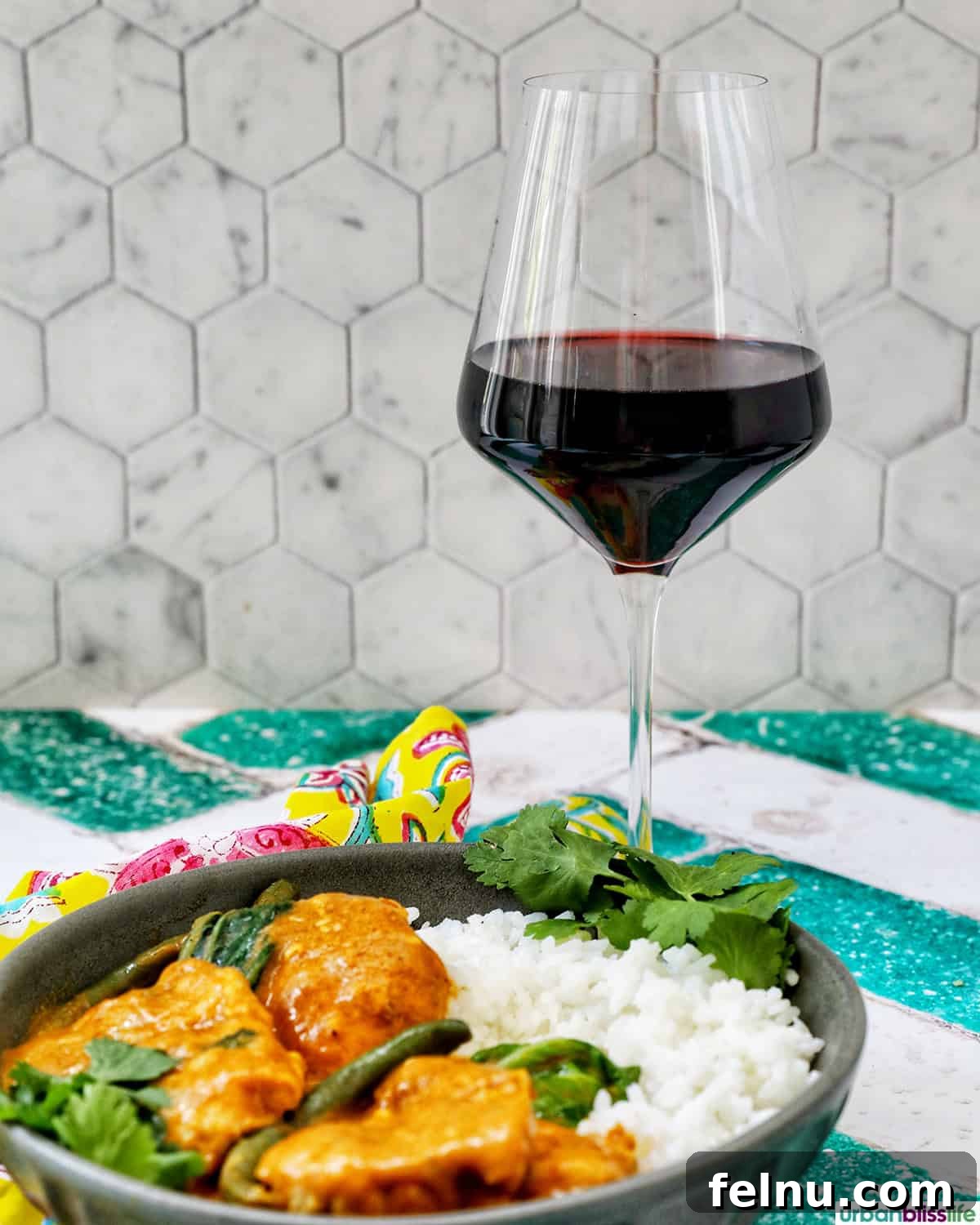

Wine Pairings
Pairing wine with Filipino cuisine can be a delightful adventure, and Kare Kare, with its unique blend of sweet, savory, and nutty flavors, offers excellent versatility. Like many rich and flavorful Filipino recipes, this chicken Kare Kare can beautifully complement both white and red wines that offer balance and enhance its complexity:
- Chenin Blanc: A crisp, vibrant Chenin Blanc is an excellent choice. Its bright acidity and notes of honeyed fruit, sometimes with a hint of minerality, act as a refreshing counterpoint, expertly cutting through the richness and creaminess of the peanut sauce. Look for a dry or off-dry style to best complement the dish without overwhelming it.
- Grenache: For red wine enthusiasts, a light to medium-bodied Grenache is a fantastic pairing. Its soft tannins, juicy red fruit flavors (like raspberry and cherry), and often spicy undertones beautifully complement the savory-sweet depth of the stew. Grenache won’t overpower the delicate balance of flavors in Kare Kare, making it a harmonious match.
- Other Considerations: You might also consider other aromatic whites like an off-dry Riesling for its acidity and sweetness balance, or a light-bodied Pinot Noir if you prefer reds with more earthy notes.
More Filipino Recipes to Explore
Filipino Recipes
Chicken Kare Kare
Dive deeper into the world of Kare Kare with another take on this classic, showcasing how versatile and beloved this peanut stew truly is in Filipino homes.
Filipino Recipes
Filipino Pork Adobo
The national dish of the Philippines, Pork Adobo is a must-try. Its tangy, savory, and slightly sweet flavor profile, with tender pork simmered in vinegar, soy sauce, garlic, and peppercorns, is iconic.
Filipino Recipes
Chicken Inasal
Experience the vibrant flavors of the Visayas region with Chicken Inasal, a grilled chicken dish marinated in vinegar, calamansi, ginger, and annatto oil, giving it a distinct yellowish-orange hue and smoky flavor.
Filipino Recipes
Filipino Ube Desserts
Explore the fascinating world of ube (purple yam) with a collection of the best Filipino ube desserts. From vibrant ice cream to soft cakes, ube offers a unique flavor and stunning color.
Did you make this recipe? Don’t forget to leave a 5-Star 🌟🌟🌟🌟🌟 rating in the recipe card below, and if you really loved it, please leave a comment further down on the page. Your feedback is greatly appreciated!
Filipino Chicken Kare Kare
Marlynn Schotland
15
40
55
6
servings
Equipment
-
1 Dutch Oven or other large high sided pan
Ingredients
- 2 teaspoons cornstarch
- 2 Tablespoons water
- 2 Tablespoons vegetable oil, or other cooking oil
- ½ cup diced onion
- 4 garlic cloves, minced
- 2½ pounds boneless, skinless chicken thighs
- 2 cups chicken broth
- 1 Tablespoon fish sauce
- 1½ teaspoons annatto paste
- ¾ cup peanut butter
- ½ pound green beans
- 1 bunch bok choy
- bagoong or other shrimp paste, for serving
Instructions
-
Make the cornstarch slurry: in a medium bowl, whisk together the cornstarch and water. Set aside.
-
Heat the oil in a Dutch oven or other high-sided pan over medium heat.
-
Add the onions and garlic and sauté for 1-2 minutes, until soft and fragrant.
-
Add the chicken and cook about 4-5 minutes on each side, lightly browning on all sides.
-
Add the chicken broth, fish sauce, and annatto paste. Stir. Increase heat to medium-high and bring to a boil.
-
Once boiling, lower the heat to low-medium and cover and simmer for 25-30 minutes, just until the chicken is tender and around 155-160°F.
-
Uncover and stir in the peanut butter until well combined.
-
Add the cornstarch slurry and stir to combine.
-
Add the green beans and gently push them so they are mostly under the liquid.
-
Return the cover and cook, covered, for 5 minutes.
-
Uncover, add the bok choy, and cook for 2 more minutes, just until the bok choy has slightly softened.
-
Serve with a side of bagoong* or shrimp paste.
Notes
*Bagoong is a traditional Filipino paste made from fermented fish or shrimp that was temporarily banned in the US. Although no longer fully banned, it is actually challenging to find in the US. So if you are in the United States, you can use any jar of shrimp paste that you might find at your local Asian supermarket instead.
You can substitute kale or spinach for the bok choy.
Traditional Filipino Kare Kare is made with oxtail, eggplant, and long string beans. So this recipe is my Filipino-American version that is absolutely delicious!
- Instead of oxtail, we use chicken, which is common enough and easy to find in any grocery store in the US.
- This recipe leaves the eggplant out. Feel free to add it to the recipe if you wish.
- Long string beans can be tricky to find sometimes depending on where you live, even in local Asian supermarkets, so this recipe uses regular green beans. They are just as delicious!
Nutrition
Calories:
504
kcal
,
Carbohydrates:
16
g
,
Protein:
47
g
,
Fat:
29
g
,
Saturated Fat:
6
g
,
Polyunsaturated Fat:
8
g
,
Monounsaturated Fat:
12
g
,
Trans Fat:
0.1
g
,
Cholesterol:
181
mg
,
Sodium:
927
mg
,
Potassium:
1128
mg
,
Fiber:
4
g
,
Sugar:
7
g
,
Vitamin A:
6564
IU
,
Vitamin C:
69
mg
,
Calcium:
205
mg
,
Iron:
4
mg
Nutrition information is automatically calculated, so should only be used as an approximation.
Tried this recipe?
Please leave a star rating and comment! Then snap a pic of your dish and share it on social media. Tag @UrbanBlissLife and #UrbanBlissLife!
Follow on Instagram
Follow