
Whether you’re just starting your journey into the world of wine or have already amassed a cherished collection, understanding the fundamentals of how to store wine at home is paramount. Proper wine storage isn’t just about preserving your investment; it’s about ensuring every bottle delivers the delightful experience it was crafted to provide. Here are essential wine storage tips to help you protect your wines and savor them for years to come!
There’s nothing quite as disappointing as uncorking a bottle of wine you’ve been looking forward to, only to find it tastes flat, oxidized, or just plain “off.” This common frustration often stems from improper storage, which can compromise the wine’s delicate flavors and aromas, turning what should have been a blissful experience into a letdown.
Having dedicated the past six years to professionally studying and writing about wine – not to mention enjoying countless bottles and visiting numerous wineries for far longer – I’ve personally learned the profound importance of how to store wine at home, sometimes through trial and error. The good news is that with a few basic, yet crucial, proper wine storage tips, you can avoid these pitfalls and ensure your wines remain in peak condition until you’re ready to enjoy them. I’m excited to share these hard-earned insights to help you get the most out of every bottle.
Heat: The Primary Threat to Your Wine Collection
My number one rule for how to store wine at home is unwavering: always keep wine away from heat and direct sunlight. This isn’t just a recommendation; it’s a critical directive. Wine exposed to temperatures consistently above 70 degrees Fahrenheit (21 degrees Celsius) can undergo accelerated aging and irreversible damage. Prolonged exposure to high temperatures can literally “cook” the wine, leading to a breakdown of its delicate compounds. When wine gets cooked, it loses its vibrancy and fruit characteristics, often developing unpleasantly stewed, nutty, or vinegary notes that cannot be reversed.
A classic cautionary tale often shared among wine enthusiasts involves accidentally leaving bottles in a hot car. It’s an easy mistake to make, but one that can quickly ruin your prized purchases. Never leave wine in your vehicle, especially on warm spring or hot summer days. If you’re planning a day of wine tasting or anticipate buying wine while running other errands on a warm day, it’s incredibly smart to bring a cooler with you. This simple step will help keep your wines chilled and protected in your car, ensuring your new acquisitions don’t spoil before they even make it home.
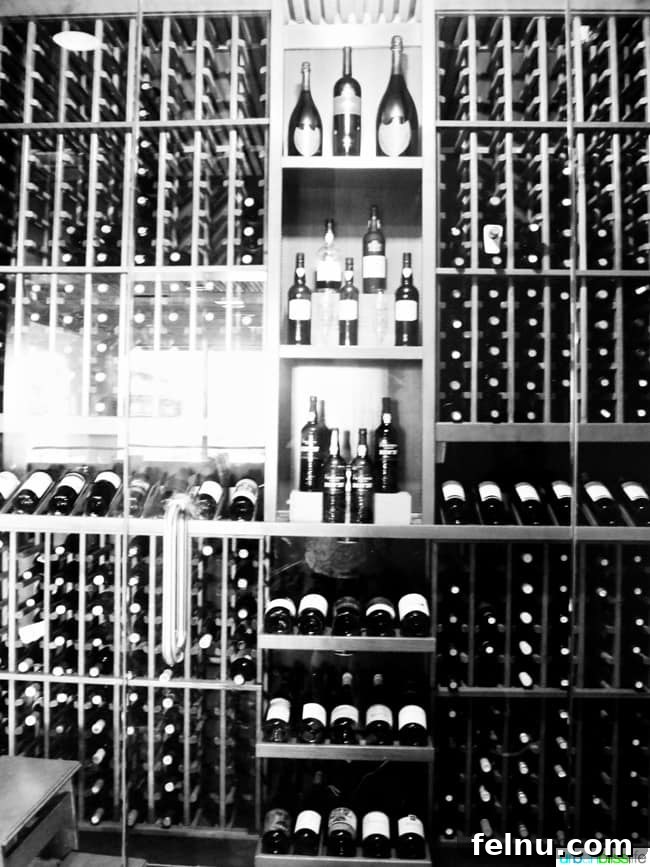
The same principle applies to your home environment. Avoid storing wine bottles in naturally hot areas of your house. Kitchens, often subject to fluctuating temperatures from cooking, and laundry rooms, which can become warm and humid, are distinctly NOT good places for wine storage. Instead, you’ll want to keep wines stored in a dark, cool, and stable spot. Ideal locations include a basement or a dedicated wine cellar. If these aren’t options, a specialized wine cooler or wine refrigerator is an excellent alternative that provides controlled conditions.
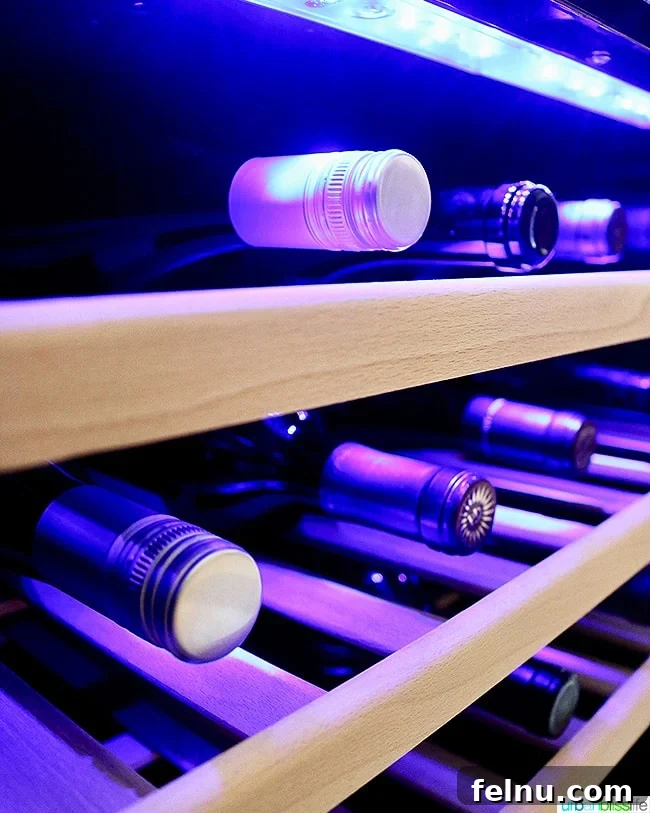
Furthermore, when it comes to bottles sealed with traditional corks, it’s essential to store them on their side. This isn’t merely a space-saving technique; it serves a crucial function. Storing corked wine horizontally ensures that the wine itself is in constant contact with the cork, keeping it moist and expanded. A dry cork can shrink, allowing air to seep into the bottle. This exposure to oxygen can lead to premature oxidation, which will quickly diminish the wine’s quality and flavor. For wines with screw caps or synthetic corks, horizontal storage is not strictly necessary for cork preservation, though it remains a space-efficient method.
Finding the Sweet Spot: Ideal Home Wine Storage Temperatures
So, what are the optimal temperatures for storing your cherished wines? While there are slight variations depending on the wine type, consistency and moderation are key.
Generally, white wines and sparkling wines thrive in slightly cooler conditions, ideally stored between 40° and 55° F (4° to 13° C). These temperatures help preserve their crisp acidity and delicate aromatic profiles. Red wines, on the other hand, typically prefer a slightly warmer range, best stored at 55° to 65° F (13° to 18° C), which allows their tannins to integrate gracefully without accelerating aging too rapidly. However, a widely accepted consensus among many wine experts is that 55° F (13° C) is the “sweet spot” for all wines. This temperature strikes an excellent balance, allowing both reds and whites to age gracefully without risk of damage or premature development. For this reason, if you can afford it, the most reliable and convenient solution for maintaining ideal conditions at home is to store your wines in a dedicated wine cooler or wine refrigerator.
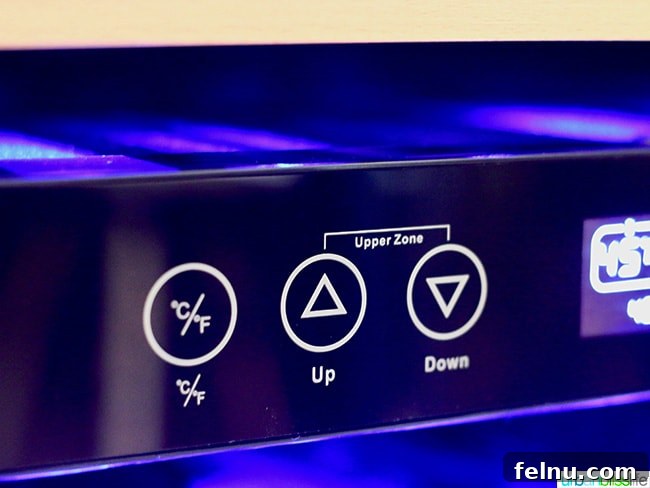
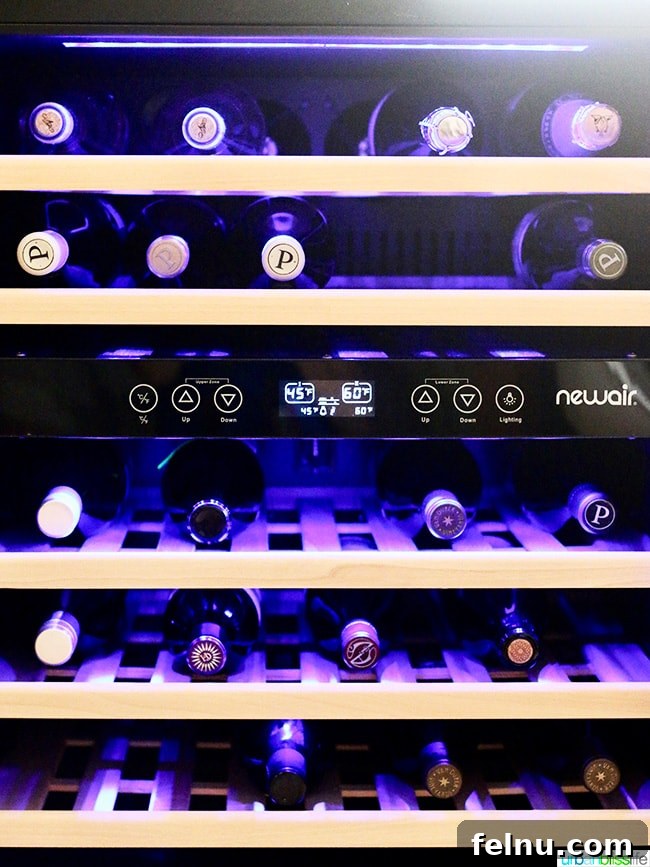
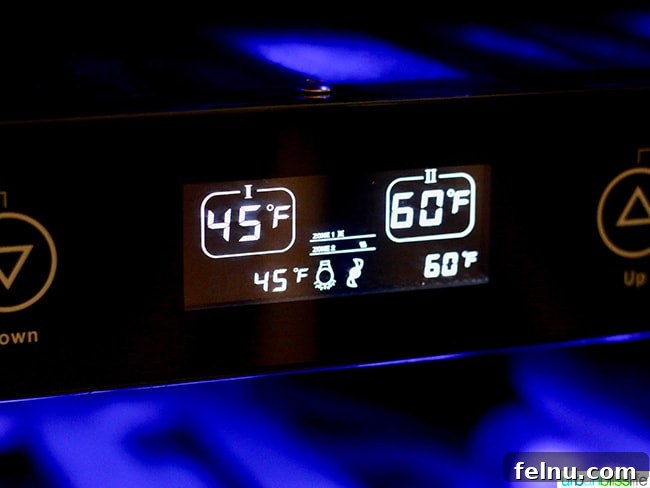
Many modern wine coolers offer advanced features to cater to diverse collections. For instance, our wine cooler boasts two separate sections, allowing us to precisely control the climate for both white and red wines. In our dual-temperature wine cooler, we typically set the upper section for white wines between 45° and 50° F (7° to 10° C), while the bottom section is kept slightly warmer for red wines, around 55° to 60° F (13° to 16° C). This dual-zone capability offers the flexibility to store a varied collection optimally, ensuring each bottle is perfectly preserved according to its specific needs.
Beyond Temperature: The Indispensable Benefits of a Wine Cooler
While a cool, dark basement or a dedicated cellar might seem like the dream for wine storage, the reality for most homeowners is that these spaces are either nonexistent or difficult to maintain at consistent, optimal temperatures and humidity levels. This is precisely why a wine cooler becomes an invaluable asset for any serious wine enthusiast. It provides a controlled environment, taking the guesswork and worry out of proper storage, ensuring your wines are always in ideal conditions. We rely on our wine cooler to guarantee our wines are perfectly stored, and I absolutely love the peace of mind it provides!
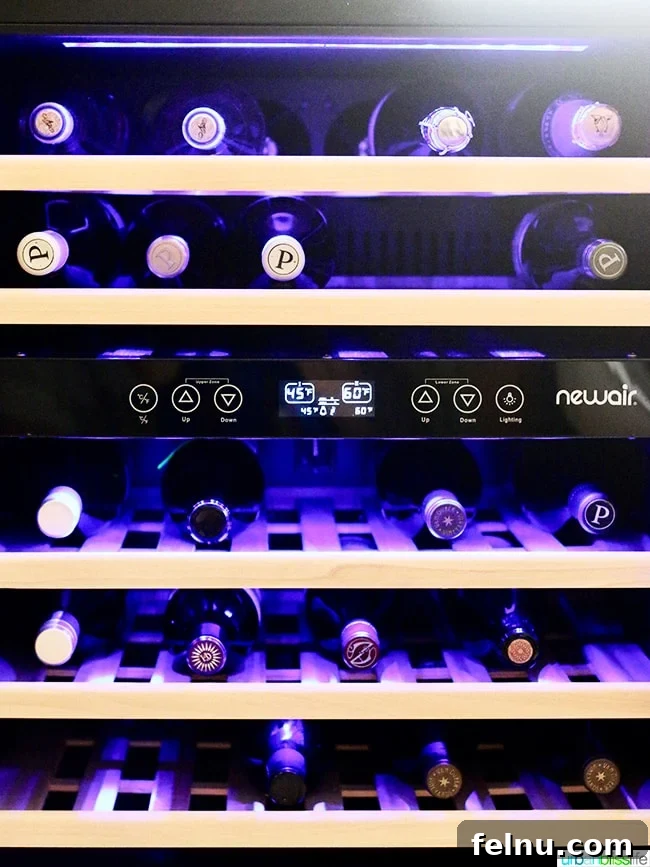
A common misconception is that a regular kitchen refrigerator can suffice for wine storage. This is simply not true. Refrigerators and wine coolers are designed for entirely different purposes and operate on fundamentally different principles. Standard refrigerators are built to keep a wide variety of foods fresh, which often means maintaining temperatures well below the ideal 45°F (7°C) minimum for white wines. Moreover, refrigerator temperatures are prone to significant fluctuations, often varying by as much as 15% due to frequent opening and closing, defrost cycles, and compressor activity. While this inconsistency is generally fine for most food items and non-wine beverages, it is detrimental to the delicate chemistry of wine.
Wine coolers, on the other hand, are meticulously engineered to maintain a consistent temperature and a stable environment for wine. They achieve this through superior insulation, specialized cooling systems (often quieter thermoelectric or vibration-dampening compressors), and precise thermostat controls. The air temperature inside a quality wine cooler will typically fluctuate by less than 5%, which translates to an even more remarkable stability for the wine itself – often less than a 1% temperature variation within the bottles. This unwavering consistency is paramount for preserving wine, preventing premature aging, oxidation, and flavor degradation, allowing your wine to remain super fresh for much longer.
Beyond temperature, wine coolers also address other crucial storage factors. They typically offer UV-resistant glass doors or solid doors to block harmful light. They are also designed to minimize vibration, which can disturb sediment and accelerate undesirable chemical reactions in wine. Furthermore, many models offer precise humidity control, which is essential for keeping corks from drying out and ensuring an airtight seal. Without adequate humidity (ideally between 50-70%), corks can shrink, letting oxygen in and causing oxidation. A wine cooler tackles all these elements holistically, providing a truly optimized environment for your valuable collection.
Introducing the NewAir Dual Zone 46-Bottle Wine Cooler: A Closer Look
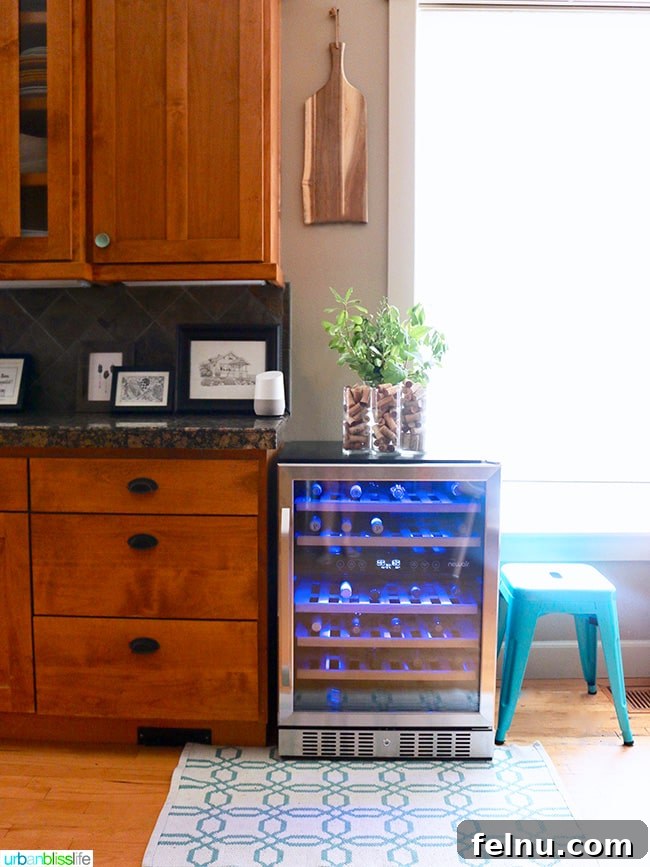
Recently, NewAir graciously sent me their NewAir AWR-460DB Dual Zone 46-Bottle Wine Cooler, which arrived at the perfect time, just as we had a series of wine club pick-ups needing proper storage! This impressive unit retails for approximately $820 and offers versatile installation options: it can be seamlessly built into your existing cabinet space for a sleek, integrated look, or used as a freestanding unit, as we have it positioned in our home.
Wine coolers come in an extensive array of shapes, colors, and sizes, catering to every need and aesthetic preference, with price points ranging from a couple of hundred dollars to several thousands. Given our location right next to prime wine country, and my profession as a food and wine photographer and writer, a wine cooler of this capacity and functionality makes perfect sense for our household. The NewAir AWR-460DB also effortlessly complements our home’s aesthetic. I particularly appreciate its chic stainless steel exterior combined with elegant hardwood shelves, which not only look sophisticated but also provide gentle support for the bottles.
In terms of operation, the unit does produce a sound when running, as all appliances do, but it is remarkably quiet. We find it to be significantly less noisy compared to other common household appliances like our dishwasher or washing machine and dryer, ensuring it doesn’t disrupt the tranquility of our living space.
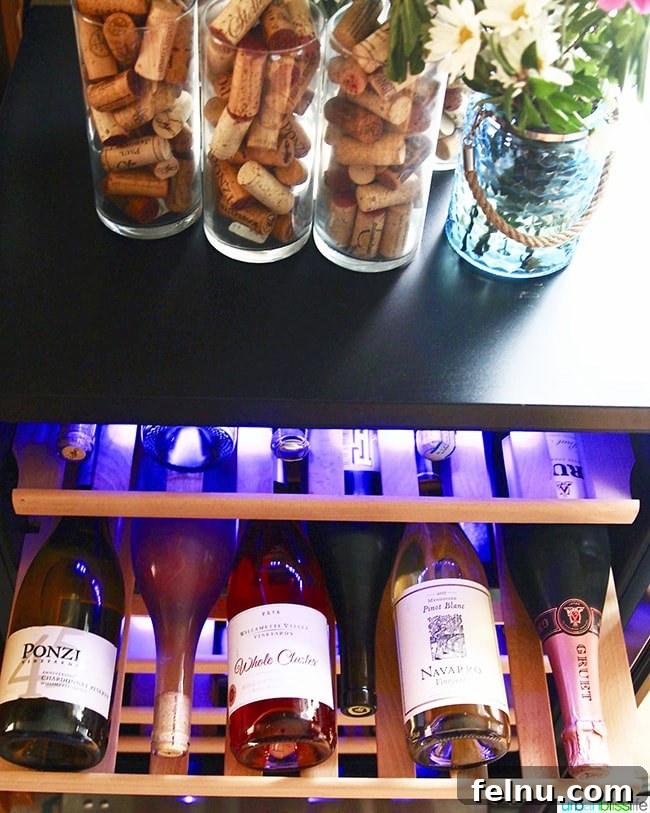
One of the standout features of this NewAir model is its versatility in accommodating various bottle sizes. From slender dessert wine and Riesling bottles to classic Bordeaux-style bottles, and even more bulbous Pinot Noir bottles and standard sparkling wine bottles, it handles them all with ease. Living in Oregon, I initially had concerns about whether our typically larger Pinot Noir bottles would fit comfortably, but these worries were unfounded. We consistently store several Pinot Noir bottles in the cooler, and it has never posed a problem, demonstrating its thoughtful design and ample internal spacing. Most importantly, I love the peace of mind that comes with knowing our wines are stored perfectly, ready to be opened and enjoyed whenever the moment strikes. That’s an invaluable benefit that truly enhances our wine experience!
Exclusive Savings: Save 20% on New Air Wine Coolers!
I sincerely hope these essential proper wine storage tips have been insightful, providing you with a clearer understanding of why investing in optimal storage conditions is so vital. If you’re going to put in the effort to select and purchase wines you love, it only makes sense to ensure they are stored correctly. This guarantees that when you’re finally ready to uncork and enjoy them, they will deliver the exquisite experience you anticipated, right?
If you’re now convinced and eager to explore the excellent range of wine cooler options available, I have fantastic news for you! You can use this exclusive link: https://bit.ly/2k0Dsjj to browse NewAir’s collection. As a special offer for Urban Bliss Life readers, you can also use the code URBANBLISS at checkout to save a generous 20% off your new wine cooler! If you were considering purchasing the NewAir AWR-460DB Dual Zone 46-Bottle Wine Cooler featured in this post, that’s an impressive savings of approximately $160 or more! Don’t miss this opportunity to safeguard your wine collection and elevate your home wine experience.
Wrap Up: Storing for Today and Tomorrow
To conclude, it’s important to remember a key point about modern wine production: the vast majority of wines made today, especially those from the United States, are crafted to be enjoyed relatively young – typically within a year or two of purchase. These wines are designed for immediate pleasure, showcasing fresh fruit flavors and vibrant aromas. While it’s true that the highest quality wines, often those with a higher price tag and specific characteristics like high acidity, good tannin structure, and concentrated fruit, possess the potential to age gracefully for 10, 20, or even 30 years or more, most of the average-priced wines you’ll find on store shelves are intended for proper storage and relatively prompt consumption with friends and family.
For this reason, some dedicated wine enthusiasts opt for a dual-cooler system: one smaller unit for wines intended for short-term consumption (within a month or two), and a larger, more stable unit for longer-term aging. In our household, we store the wines we plan to drink sooner in our primary wine cooler, while any overflow or bottles earmarked for longer keeping are placed in the coolest, darkest part of our pantry, well away from the heat and fluctuations of the kitchen. However, I’ve noticed we are already outgrowing our current wine fridge and am actively shopping around for our second unit to accommodate our ever-expanding collection! This illustrates that even with good planning, a growing passion for wine often necessitates expanding your storage solutions over time.
Discover More Wine Insights
Delve deeper into the fascinating world of wine with these additional articles:
A Day in the Life of a Wine Judge: Unveiling the Tasting Process
How to Throw the Perfect Summer Food & Wine Pairing Soiree
Rosé Wines to Drink in 2018: A Look Back at Summer Favorites
Food Bliss in Wine Country: Catelli’s in Sonoma County, CA – A Review
This comprehensive guide to wine storage has been sponsored by NewAir. As always, all opinions expressed and photographs included are entirely my own. I genuinely love this NewAir wine cooler and wholeheartedly believe that it would be a fantastic addition to your home, enhancing your enjoyment and preservation of wine!