Wine glass selection plays an important role in affecting the smell, texture, flavor, and finish of any wine. Attending a Riedel wine glass class can help you learn to recognize how the shape of your glass affects the the wine that you drink.
Have you ever noticed how the shape of your wine glass can transform the taste of the wine you are drinking?
In all of the years of wine drinking (and yes, there are too many years to count now), glass selection has been one of the last items We considered when it came to the opinion of specific wines. We knew there were white wine glasses, red wine glasses, and champagne flutes; We understood the difference in those three general distinctions, but beyond that, We hadn't thought much else of the vessels that carried the wine.
Then, We attended a Riedel wine glass class hosted at Dobbes Family Estate that rocked the wine drinking world.
[feast_advanced_jump_to]Riedel wine glass class
Dobbes Family Estate, a well-respected producer of some of (in the opinion) the finest Willamette Valley wines, teamed up with Riedel, a world leader in glassware since 1776, to host this class. Approximately 50 wine lovers, from occasional wine drinkers to wine club members to somms, attended the class at Dobbes Family Estate in Dundee, Oregon. It lasted approximately two hours and included light appetizers at the end.
The wines
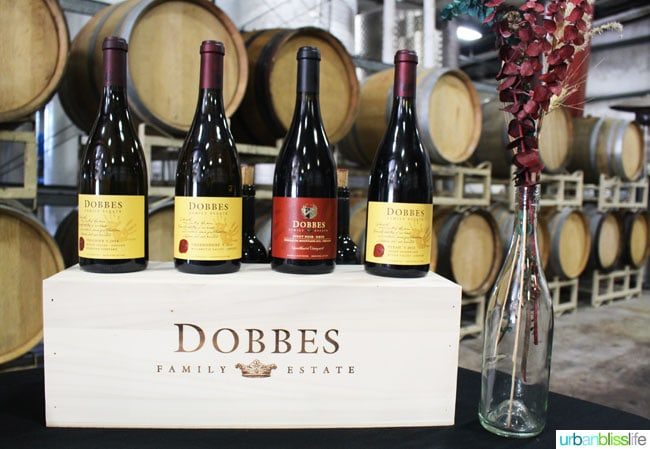
For this wine glass class, we tasted the following Dobbes Family Estate wines:
- 2012 Chardonnay ($32)
- 2014 Viognier ($28)
- 2010 Quailhurst Vineyard Pinot Noir (Library wine, $75)
- Early Release: 2012 Grand Assemblage Syrah ($28)
- 2010 Mirror Image Port-Style Syrah (Library wine, $46)
Testing the glasses
At the start of the class, we were each given place settings with four joker plastic cups to hold the wines and four distinct Riedel crystal glasses. Our tastings were done using the Riedel Veritas Collection. The class was led by a Riedel representative, who started us off by becoming in tune with how we drink wine: first with our eyes, then by touch (touching of the glass), by nose, and finally, by taste.
We began by getting our palates ready with water. We poured some in each glass and were asked to notice how the water was different per glass. For instance, in glass #1, the Viognier glass with a small opening, the water hit first on the tip of the tongue whereas with glass #2, a Chardonnay glass with a wider opening, the water hit all around the sides of the mouth. Glass #3, the Pinot Noir glass, the water hit the front of the palate first before hitting the sides, and glass #4, the Syrah glass, it goes straight to the back of the throat.
These are all details We honestly have never noticed when using different glasses of wine. We was fascinated.
We then moved on to the wine. We won't go into too much detail, but simply by tasting the Chardonnay and Viognier in both white wine glasses, We became a believer in the importance of wine glass selection when serving good wine.
The difference was remarkable. We am not a fan of big oaky Chardonnays, and We actually liked this Chardonnay when it was in the right glass.
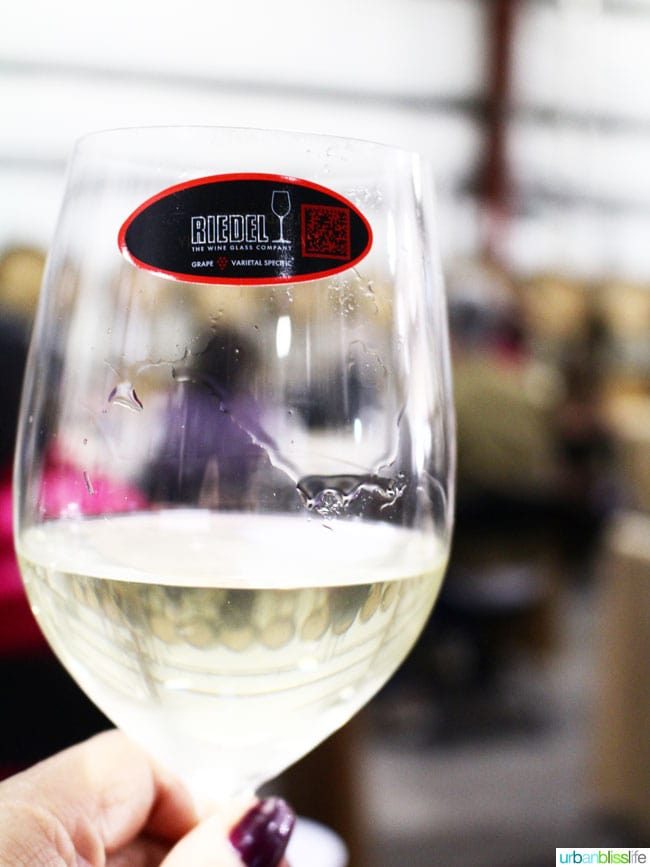
The Viognier was soft and floral – simply beautiful when poured into the Viognier glass. We loved it so much, We bought two bottles to take home with me.
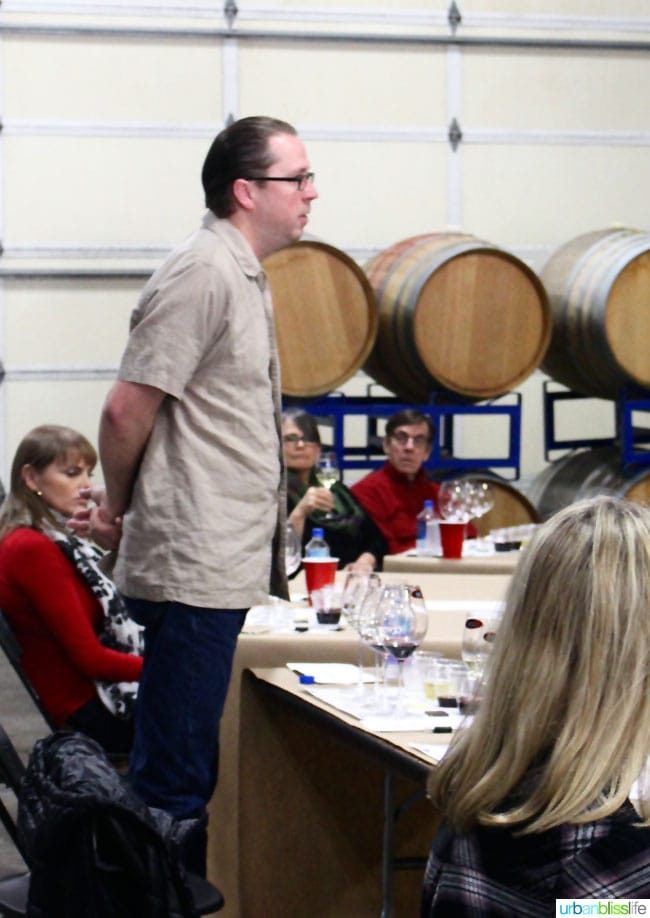
Throughout each tasting, Dobbes Production Winemaker Travis Proctor shared notes about each wine, which We thought was a nice bonus to this class. Not only did we each walk away learning more about how different glasses affect the bouquet and the taste of each wine, but we also learned a lot more about how each wine we were tasting was made, which always makes wine tasting more enjoyable for me.
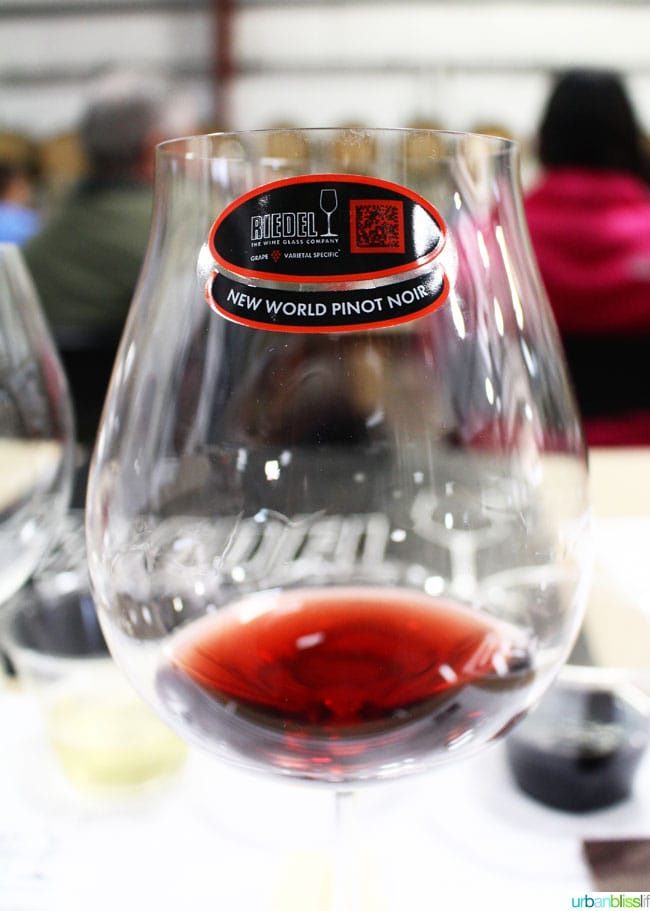
The red wine differences were there, but more subtle for me than the white wines we tasted. The most noticeable difference, for me, was how the Pinot Noir behaved in each glass. When poured into glass #3, the Pinot Noir glass, the Quailhurst Pinot Noir was brighter and well balanced, whereas when poured into glass #4, the Syrah glass, the acidity hit right away and caused the tongue to curl almost instantaneously.
With the Syrah, the nose was almost muted in glass #3, the Pinot Noir glass, whereas the big, bold dark fruits were deliciously present when poured into the right glass.
Wine + chocolate
Riedel, a German company, has a longstanding partnership with Lindt, a Swiss company (we visit their factory whenever we go back to visit the husband's family…and their chocolate truly is the best!). So we were also given the opportunity to learn a little more about chocolate and wine pairings.
Decanting
Toward the end of the class, we also discussed the virtues of decanting: when it makes a difference, and the different types of decanters on the market.
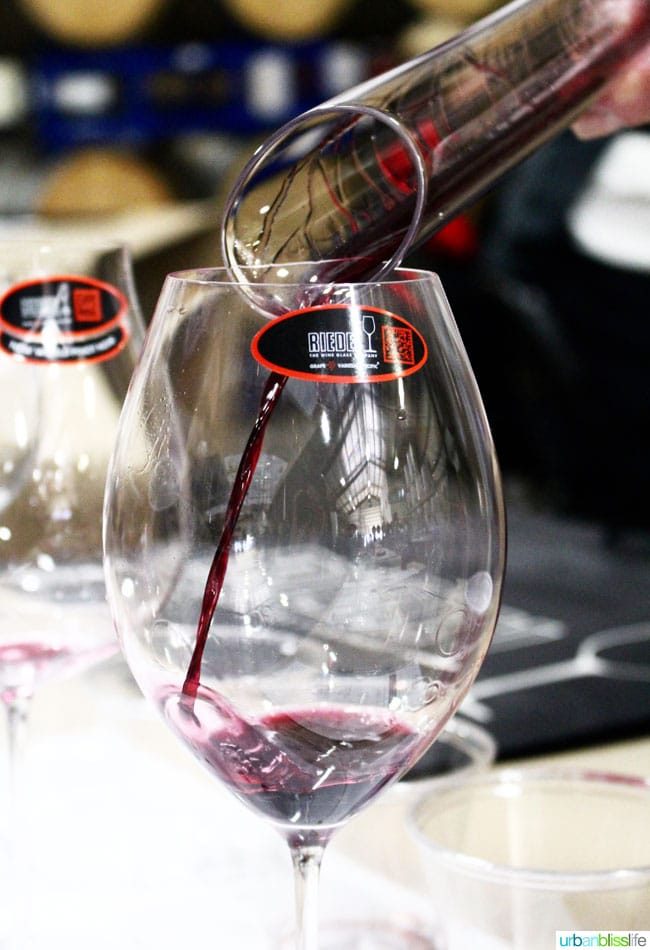
We were given a demonstration of one of Riedel's decanters, Eve, which retails for $525. Even at the special discounted price we were offered at the class, We personally can't imagine paying that much for a decanter. However, it is a lovely, exquisite decanter clearly made with superior craftsmanship, and if We were a millionaire with a wine hobby, that decanter would be in the collection.
While we didn't all go home with an Eve decanter, each class attendee did go home with a set of four Riedel crystal glasses from their Veritas collection, and we were offered special pricing on all of the wines featured during the class. We purchased two of the Viognier, the Grand Assemblage Syrah, and the 2010 Quailhurst Vineyard Pinot Noir. If you haven't been out to Dobbes Family Estate to try any of these wines, We highly recommend it. They're incredible.
Wrap up
We have to admit: We was amazed at the stark difference in the nose and the taste of some of the wines in different glasses. The Chardonnay, in particular, was a big surprise, as We am not normally a fan of oaked Chardonnay and We found myself wanting more of this particular Chardonnay served in the Chardonnay glass. While the differences were more subtle for me with the red wines, We do know that subtleties sometimes draw the line as to whether you think a wine is simply okay or absolutely sublime, based on your personal taste.
Great wine glasses are manufactured to help bring out the original intent of the winemakers. The different shapes of each glass, the architecture of the stems, the thickness of the glass, and the different widths of the lips of each glass – these are all considered carefully when making specific wine glasses and each characteristic helps define the final smell and taste of the wine you drink.
This is a class that We would recommend to any wine drinker, but especially those who truly have an appreciation for wine and want to understand how to appreciate wine even more. Sign up with a friend or two and make a day of it. You can search for wine glass classes in your area, either through wineries or through wine education centers. Dobbes has held this class before, so be on the lookout to see if they hold this class again in the future!
Have you ever attended a wine glass class or have you noticed the difference specific wine glasses make in your wine drinking experience?
Many thanks to Dobbes Family Estate for the invitation to attend this glass class. All opinions and photos are, as always, the own. We only write about places, products, experiences, events, and services that We personally enjoy and believe you will as well!