
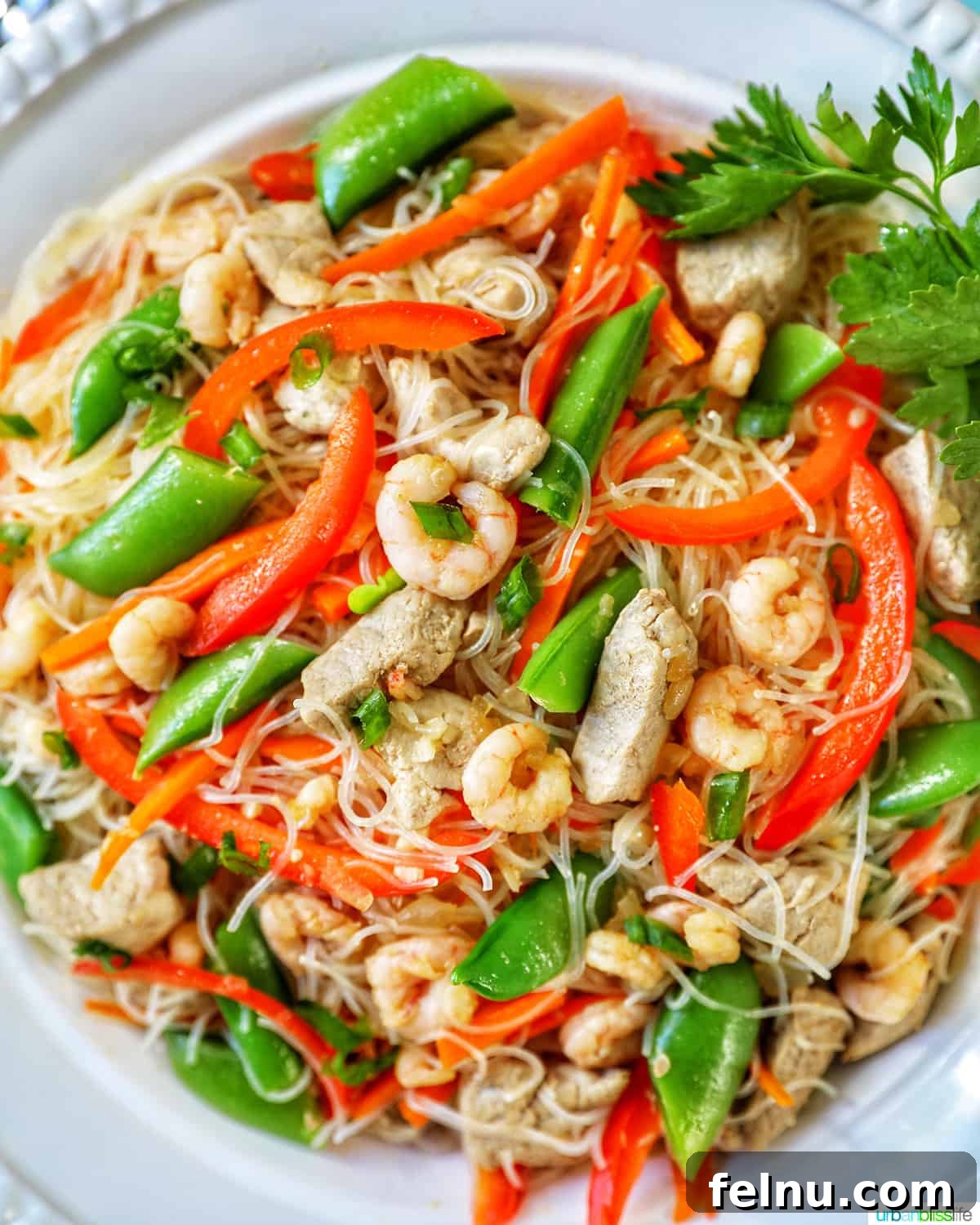
Pancit Bihon is a beloved Filipino noodle dish, bursting with savory flavors from meat, vegetables, and a delicate blend of seasonings. This Filipino Pancit Bihon recipe is crafted to yield 8 to 10 generous main course servings or 12 to 16 ample side servings, making it ideal for family meal planning, festive special occasions, or a satisfying and easy weeknight dinner!
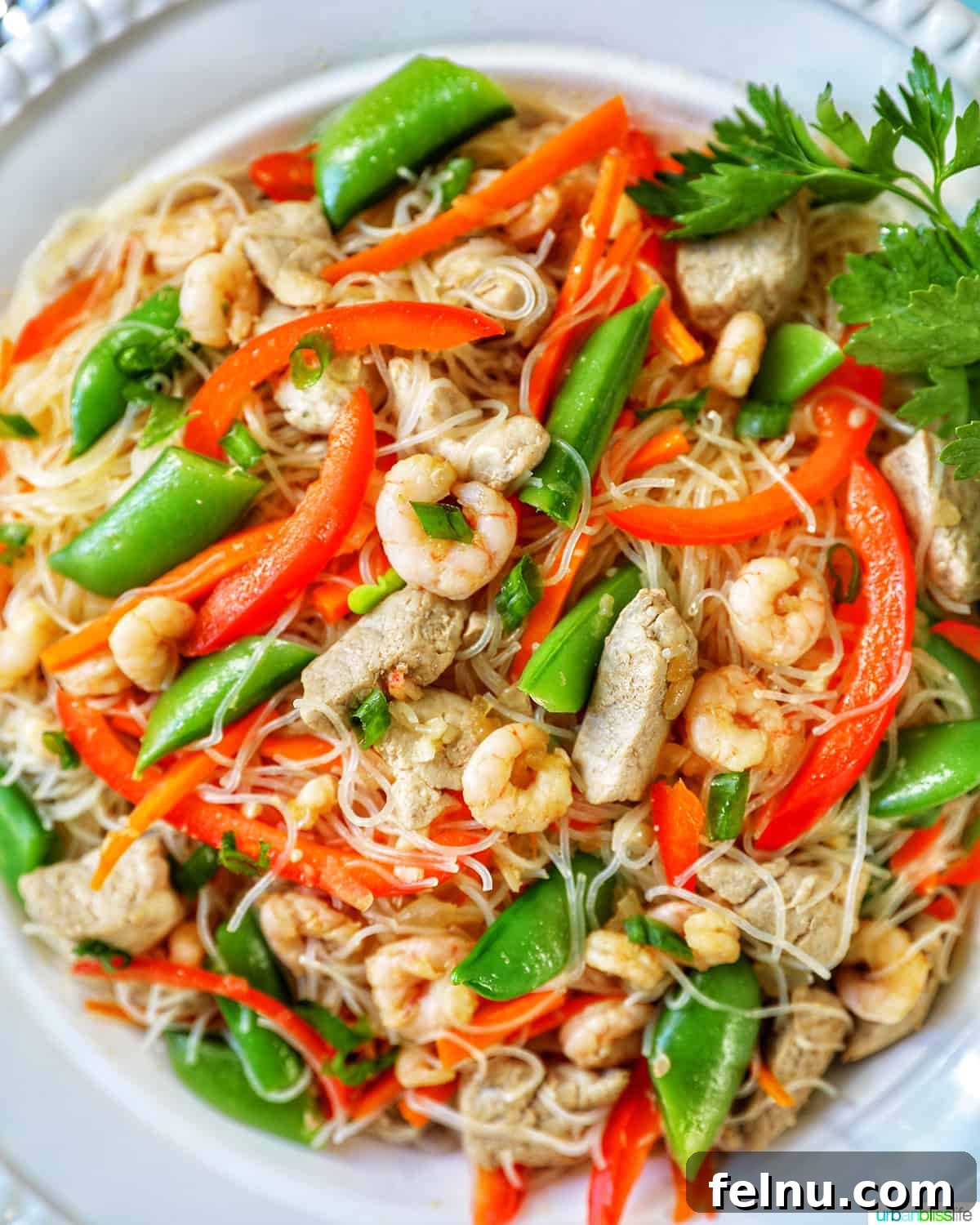
Growing up immersed in Filipino culture, certain dishes were consistently present at family dinners and gatherings with friends and relatives. My parents deeply valued the act of feeding others, and Filipino comfort food always held a special place in our home. Pancit was a frequent guest at our table.
Our meals often featured these classic Filipino staples: Filipino Chicken Adobo, Lumpia Shanghai, Filipino Macaroni Salad, Filipino Garlic Rice, and, of course, Pancit. These are all recipes designed to feed large groups (8 to 12 people), which also makes them perfect for efficient meal preparation!
What is Filipino Pancit Bihon?
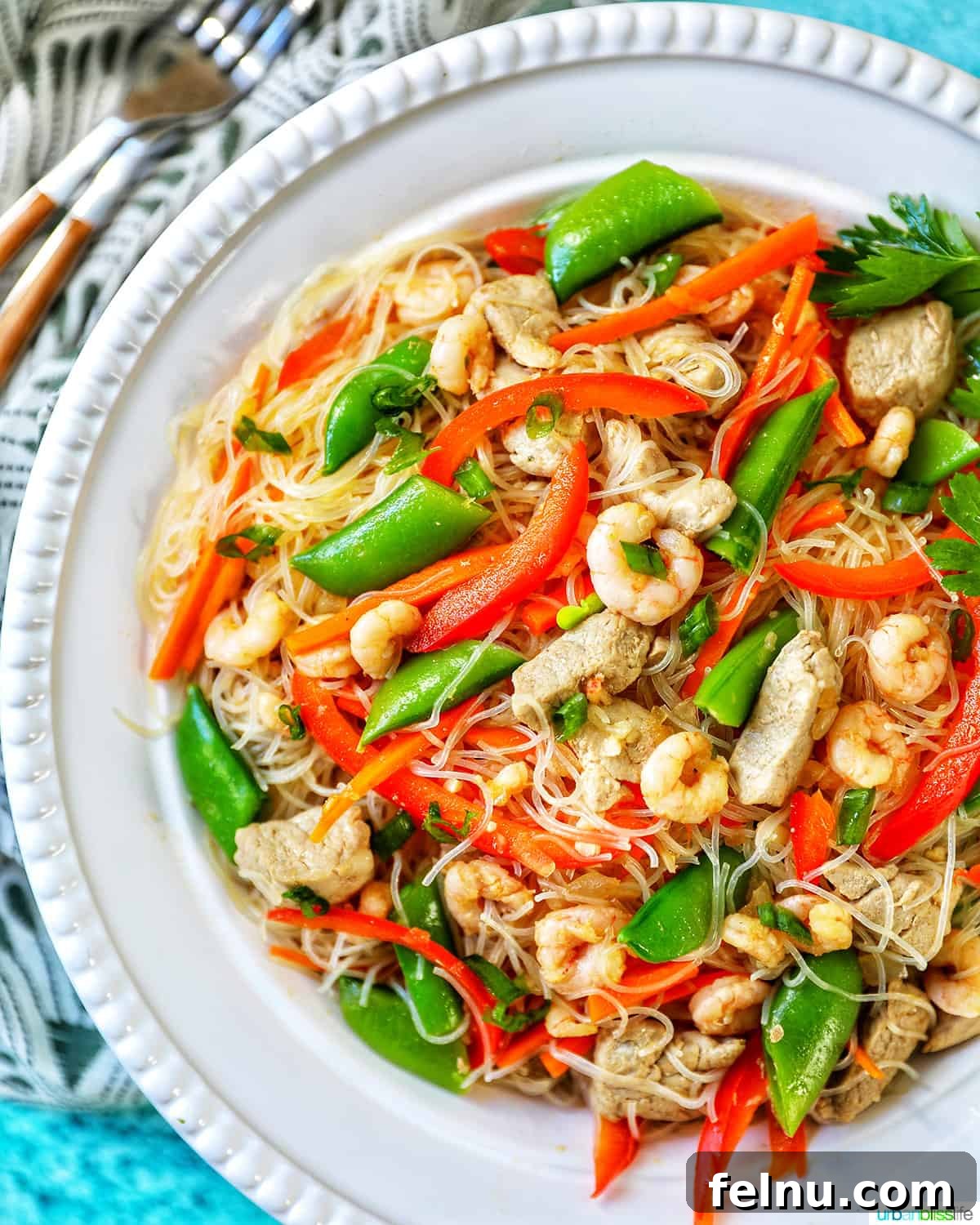
Pancit is one of the many culinary treasures that the Chinese brought to the Philippines over the centuries. Filipinos then artfully adapted it into the popular and much-loved noodle dish that it is today. If you’ve ever dined in a Filipino home or attended a Filipino celebration, you’ve likely been treated to Pancit.
Similar to how adobo and lumpia have countless variations, there are also different types of Pancit dishes in Filipino cuisine. The two most common and well-known varieties are Pancit Bihon and Pancit Canton.
Pancit Bihon vs. Pancit Canton: What’s the Difference?
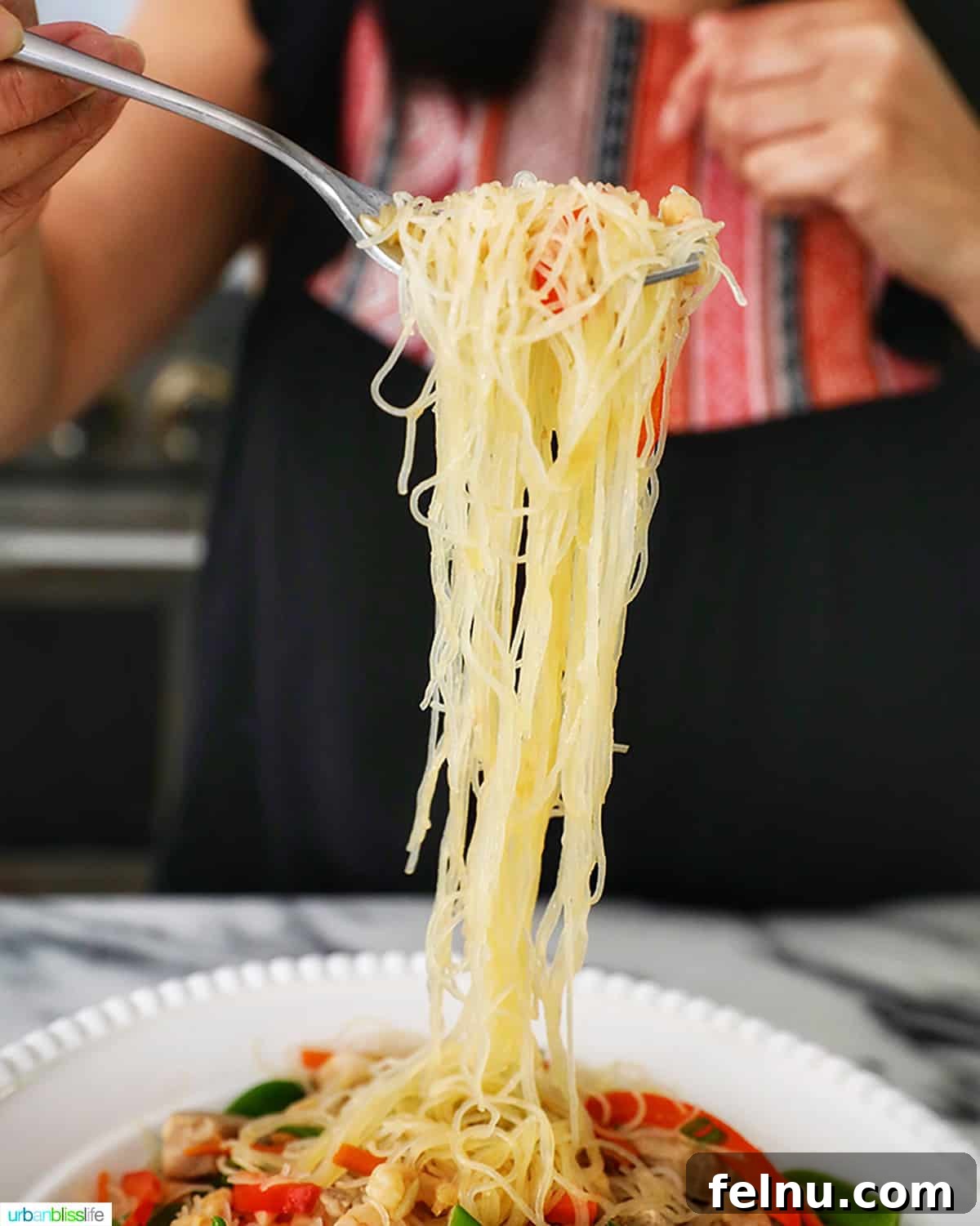
My family enjoyed preparing and serving both Pancit Bihon and Pancit Canton regularly. Both noodle dishes include an array of meats, seafood, and vegetables. The primary distinction lies in the type of noodles used.
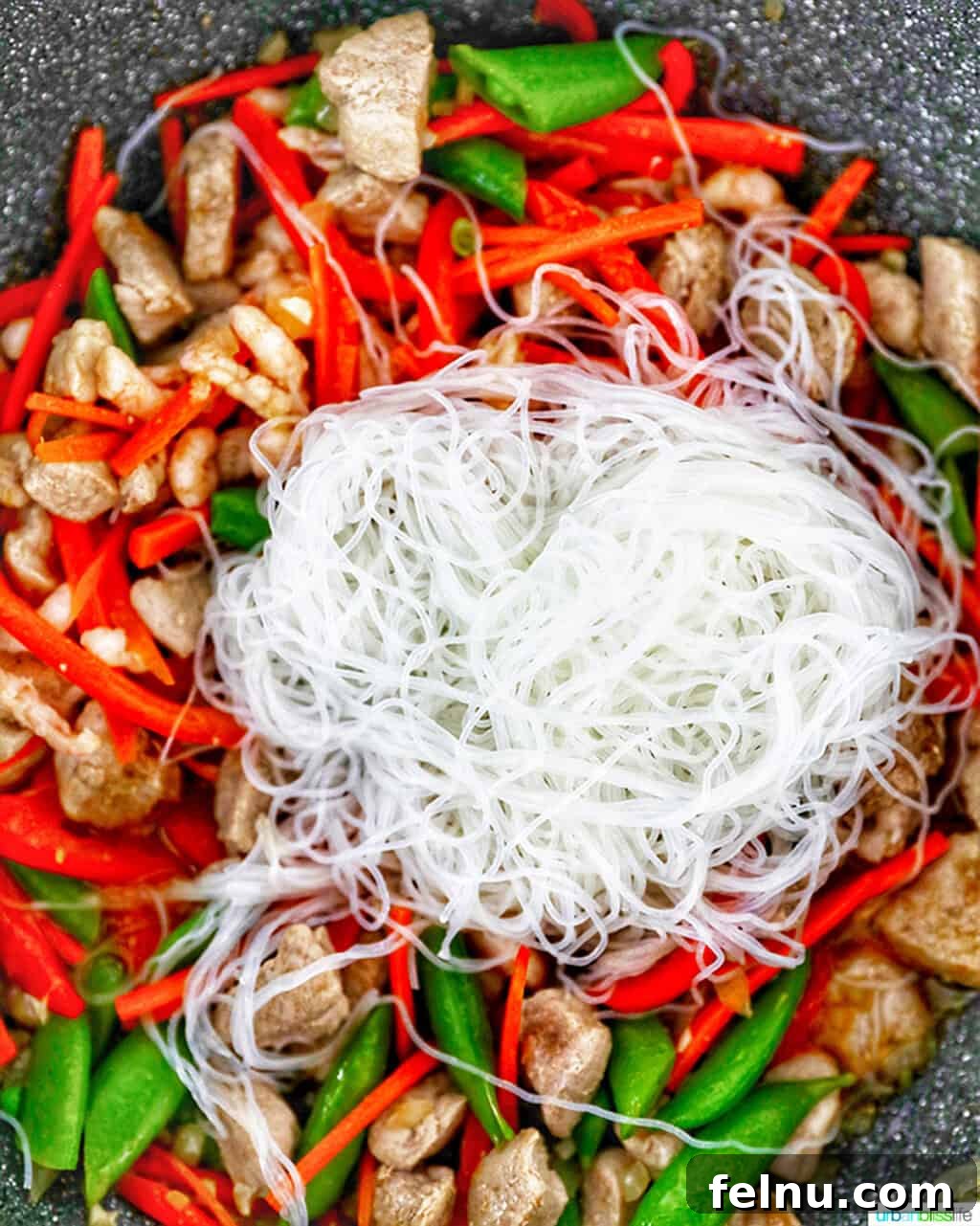
Pancit Bihon features translucent, thin rice noodles (as seen in the photo above).
Pancit Canton Noodles, on the other hand, are made with thicker egg noodles. Some consider this version a Filipino adaptation of Chinese Lo Mein or Chinese Chow Mein.
Furthermore, there are also variations like Pancit Palabok and Pancit Malabon. These versions typically incorporate pork rind, shrimp paste sauce, and smoked fish.
If you’re new to the delicious world of Pancit, this Bihon recipe is an excellent starting point. It’s a simple recipe to follow, easily customizable to your personal preferences, and fairly forgiving. You can serve it as a side dish or a complete, fulfilling meal.
So, let’s begin cooking this Filipino classic!
Ingredient Spotlight: What You’ll Need for Pancit Bihon
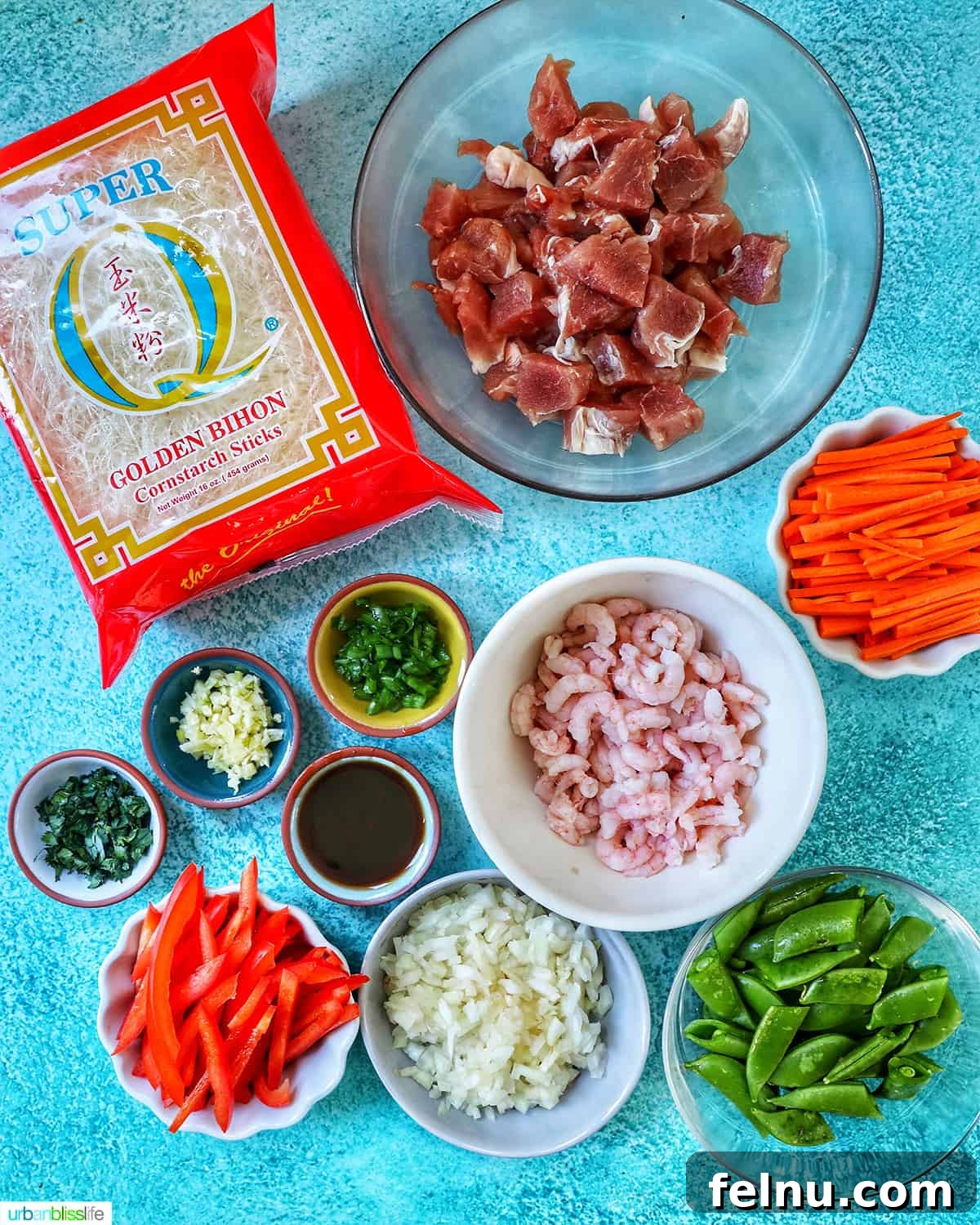
- Dried rice noodles: These thin noodles are the traditional choice for Pancit Bihon, providing a light and delicate base for the other ingredients. You can find them in most Asian markets or well-stocked grocery stores.
- Bay shrimp: Shrimp contributes a healthy dose of protein to this recipe. You can use fresh or frozen bay shrimp, depending on availability.
- Pork: Boneless pork loin, cut into 1-inch cubes, adds a rich and savory flavor. You can substitute chicken or tofu for a different protein option.
- Onions and garlic: Yellow or white onions, finely diced, provide an aromatic base. The recipe calls for 3 minced garlic cloves, but adjust to your liking.
- Soy sauce: This adds depth and umami to the meat as it cooks. Use a low-sodium soy sauce to control the salt content.
- Chicken broth: The broth infuses moisture and flavor into the ingredients as they cook. Use a low-sodium chicken broth for a healthier option.
- Red bell pepper: For added color and a subtle sweetness.
- Carrots: Julienned or shredded carrots contribute a satisfying crunch and vibrant color.
- Sugar snow peas or snap peas: These add a refreshing crunch and sweetness. Slice them diagonally for visual appeal.
Making Filipino Pancit Bihon: A Step-by-Step Guide
You can find the complete list of ingredients with measurements, along with more detailed instructions, in the printable recipe card at the bottom of this post. But, here’s a quick overview of how to make delicious Pancit Bihon.
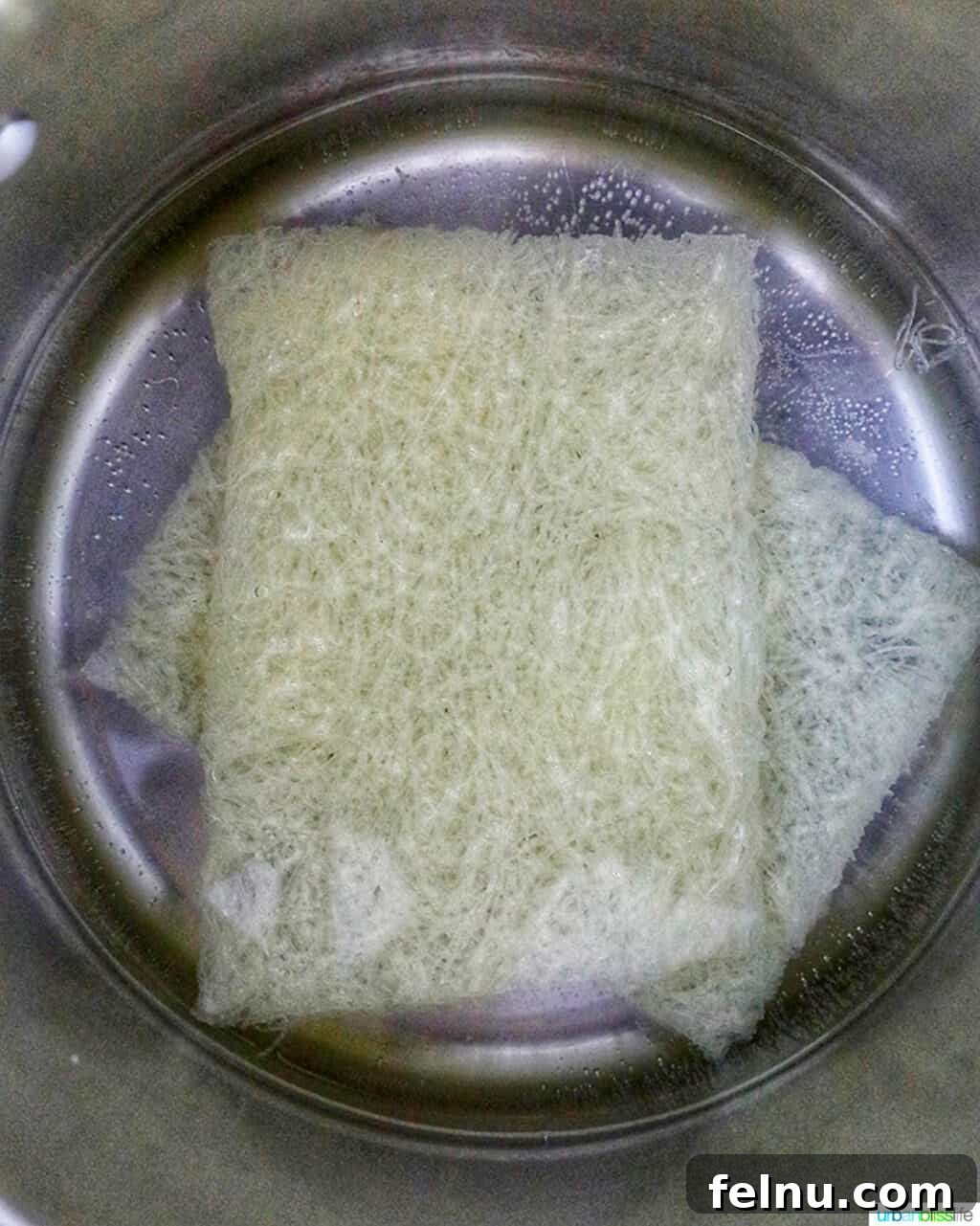
Step 1 – Prepare the Noodles: Begin by boiling enough water to fully submerge the noodles. Soak the rice noodles in the hot water until they soften, usually around 10 to 15 minutes. While the noodles are soaking, you can prepare the other elements of the dish!
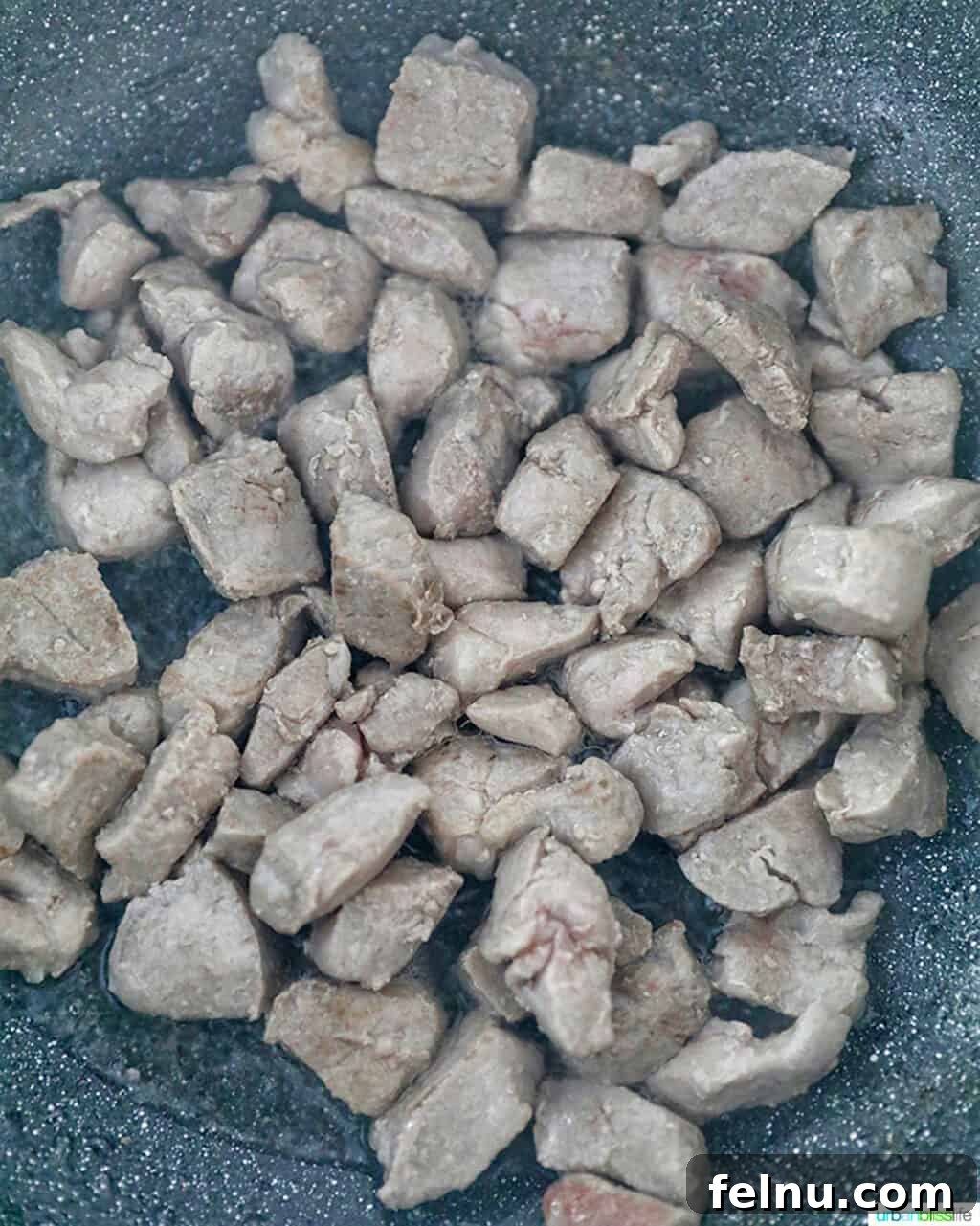
Step 2 – Cook the Pork: In a large wok or skillet, heat vegetable oil (or olive oil, if you prefer) over medium-high heat. Once the oil is hot, add the pork and cook until browned on all sides and thoroughly cooked. Remove the pork from the wok and set aside on a plate or in a bowl.
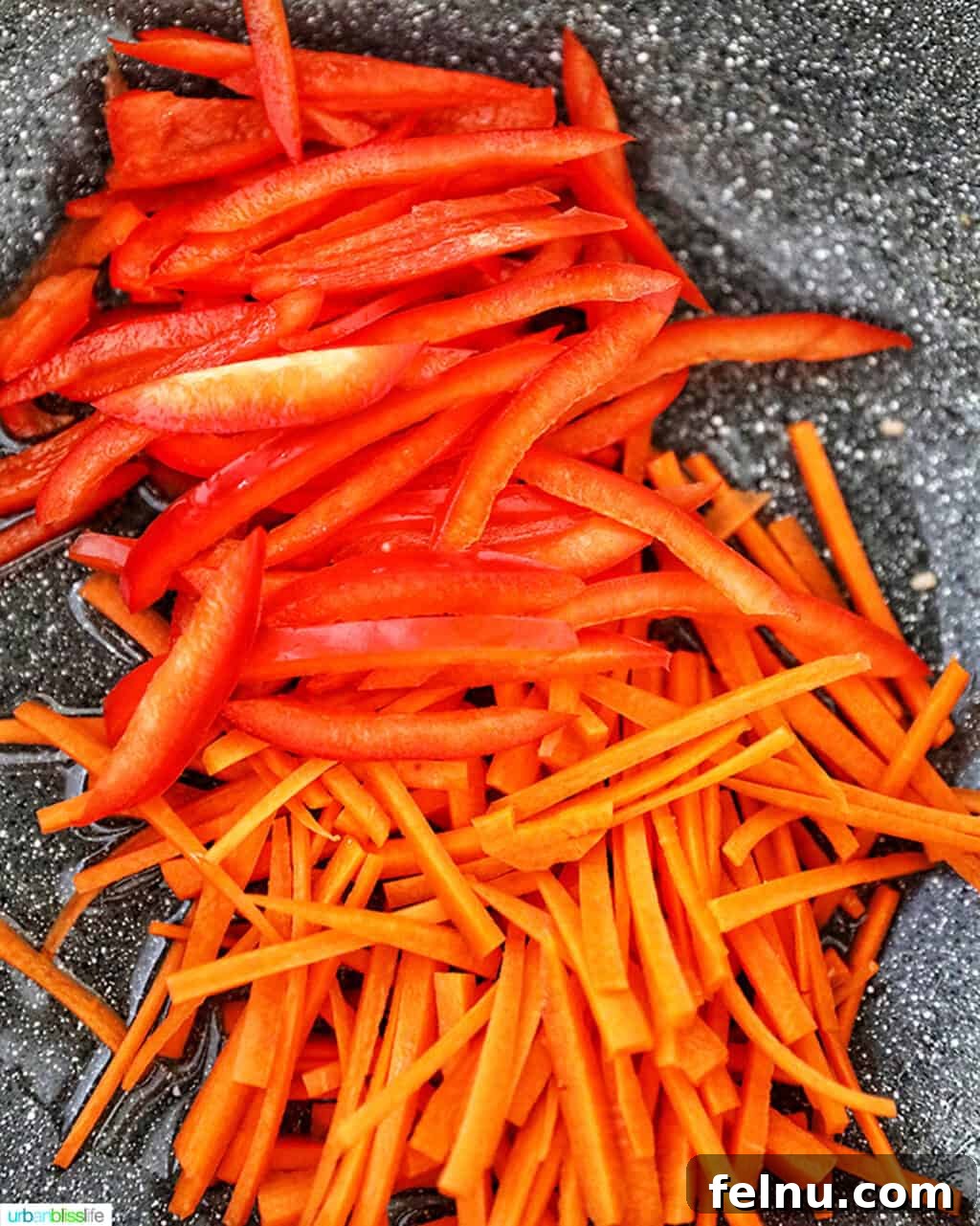
Step 3 – Sauté the Vegetables: Add the remaining oil to the wok, followed by the carrots, bell peppers, and sugar snap peas. Stir-fry for about 2 minutes. Then, add the onions, garlic, and ginger to the wok and cook, stirring constantly, for another 2 minutes, until the garlic becomes soft and fragrant.
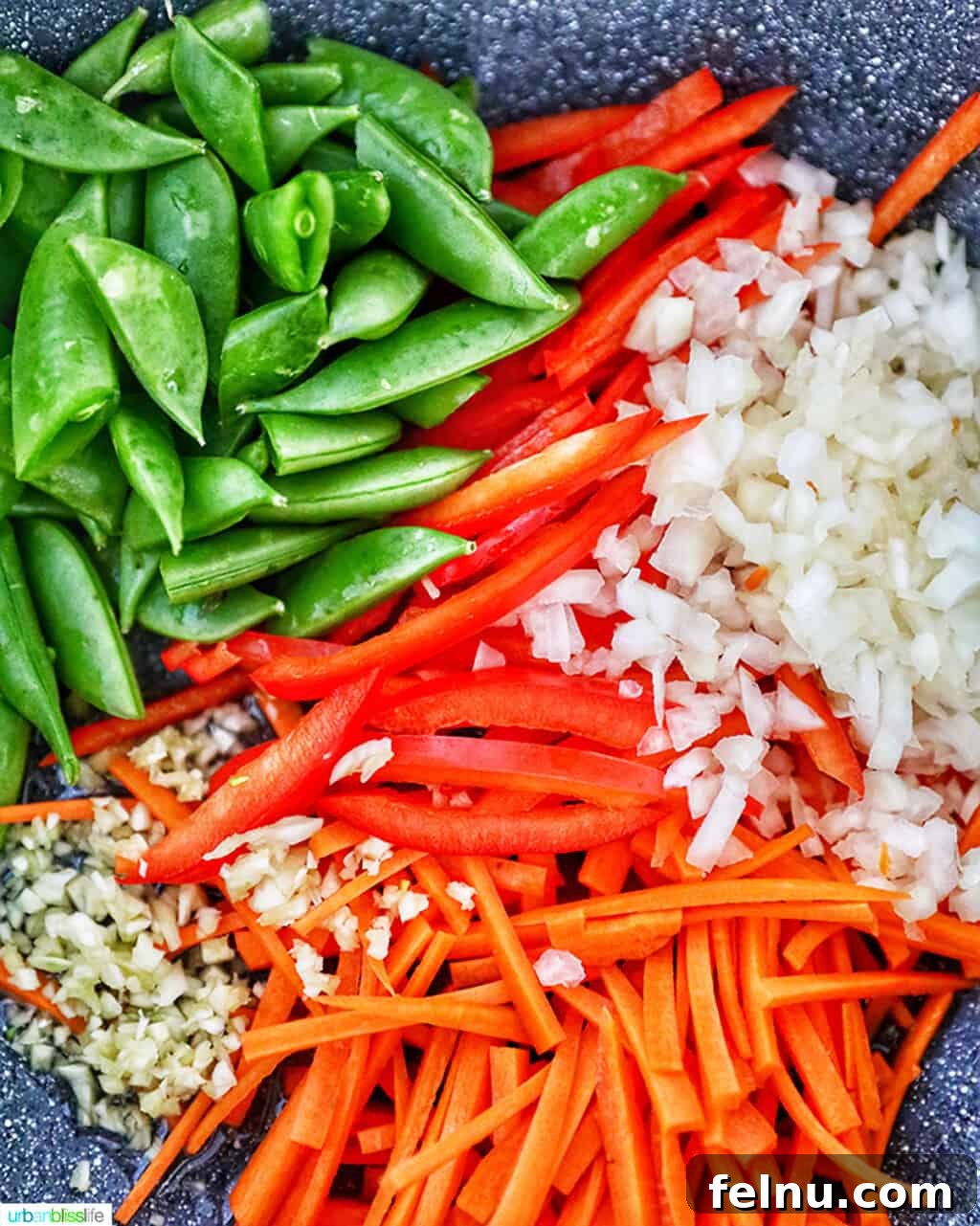
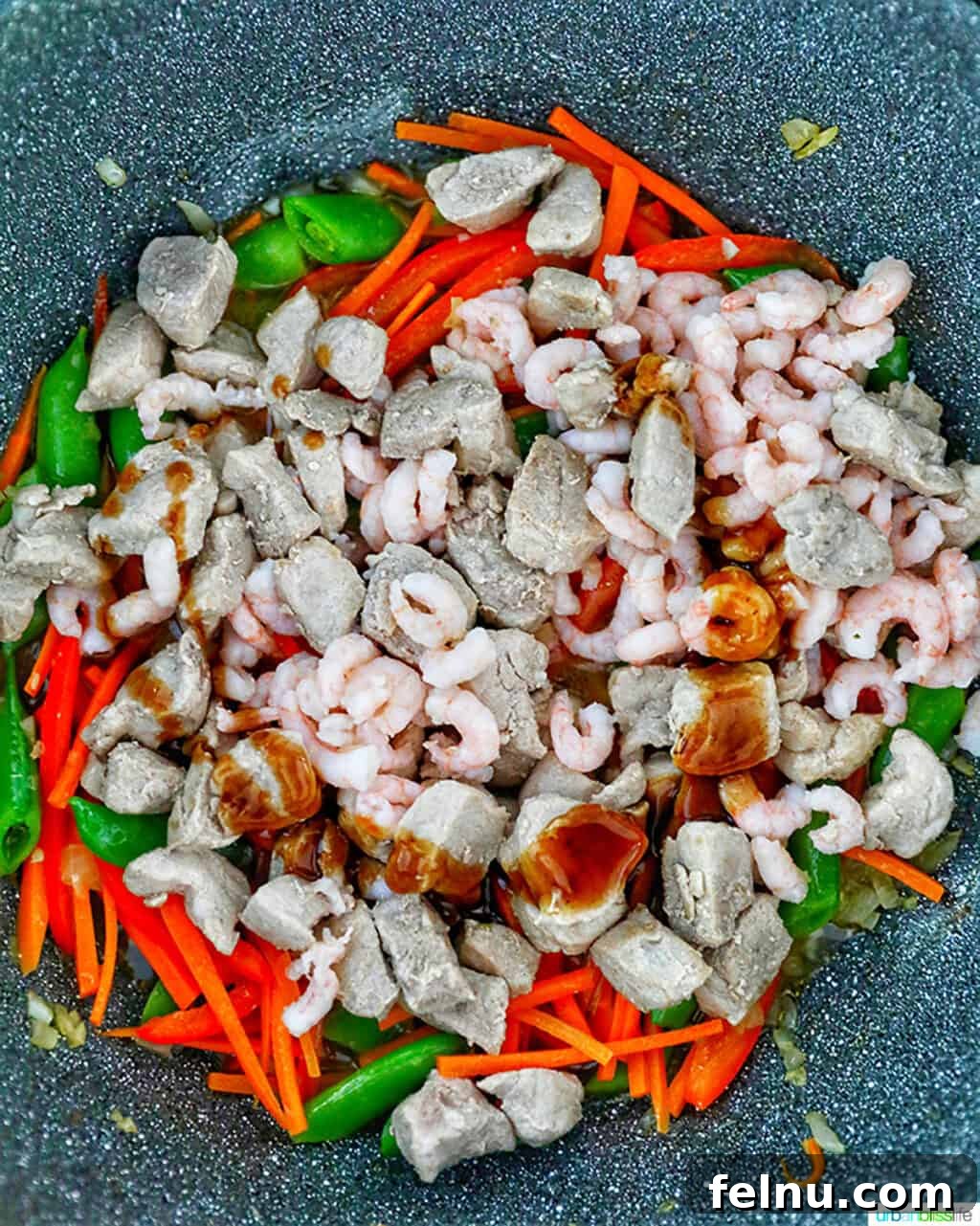
Step 4 – Combine Meats and Sauces: Return the cooked pork to the wok, then add the bay shrimp. Pour in the chicken broth, soy sauce, and oyster sauce. Stir to coat all the ingredients evenly, and cook for approximately 2 to 3 minutes.
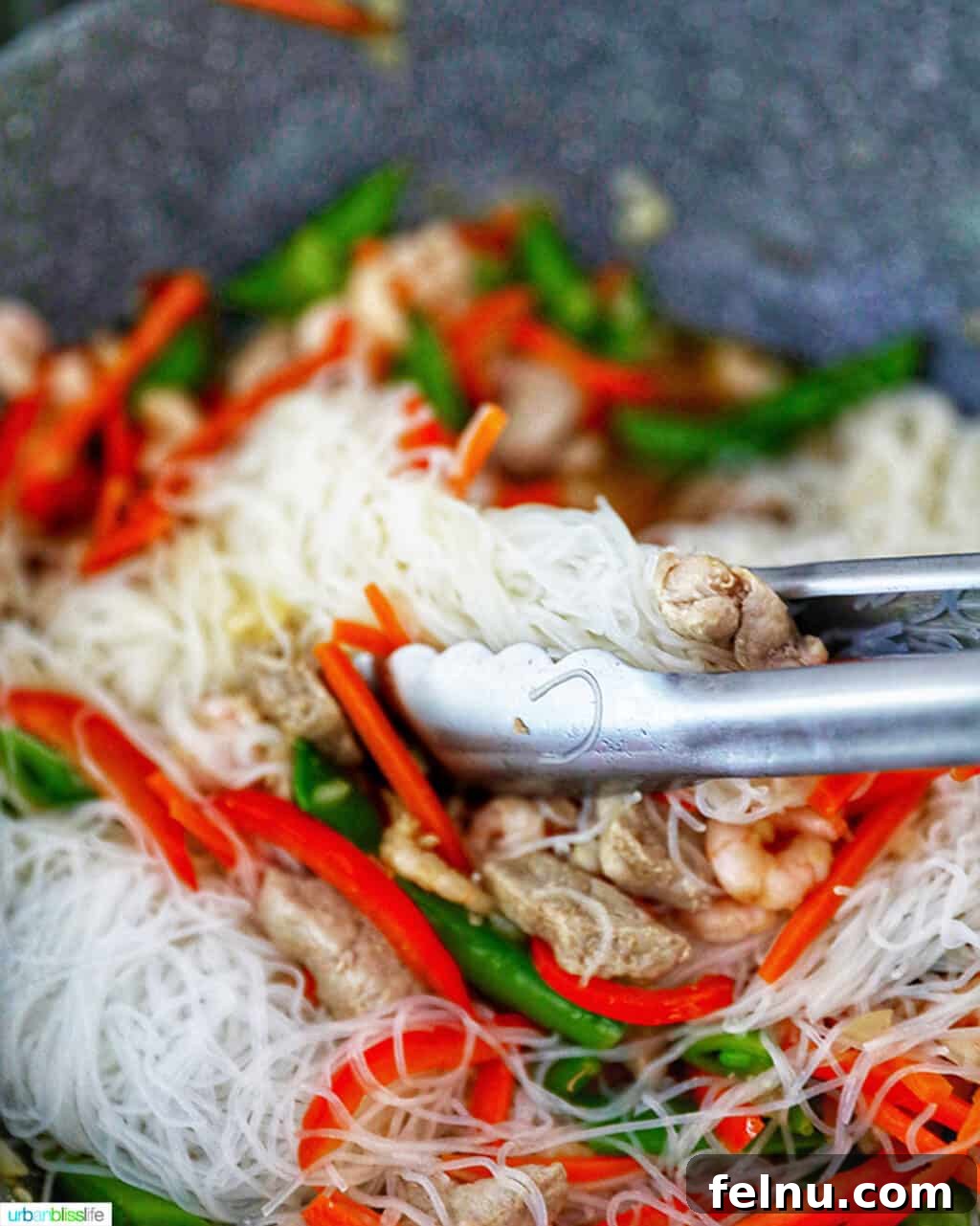
Step 5 – Add the Noodles and Serve: Drain the soaked rice noodles and add them to the wok. Using tongs, gently lift and stir the noodles into the vegetables and savory sauce, ensuring they are fully coated. Continue stirring and folding until all ingredients are well combined. Garnish with chopped green onions and serve immediately in a large serving bowl. Season with salt and black pepper to taste, if desired.
Customizing Your Pancit Bihon: Substitutions and Additions
Feel free to tailor this recipe to your preferences! You can use chicken instead of pork, omit the shrimp, or add other vegetables you enjoy.
Consider adding about 1/2 cup of extra vegetables, such as thinly sliced green cabbage or red cabbage, for added texture and nutrition. My mother often includes dried Shiitake mushrooms in the vegetable mix, which imparts a wonderful deep and rich flavor. While I don’t always have them on hand, I encourage you to experiment and tell me what you think!
Meal Prep and Storage Tips for Pancit Bihon
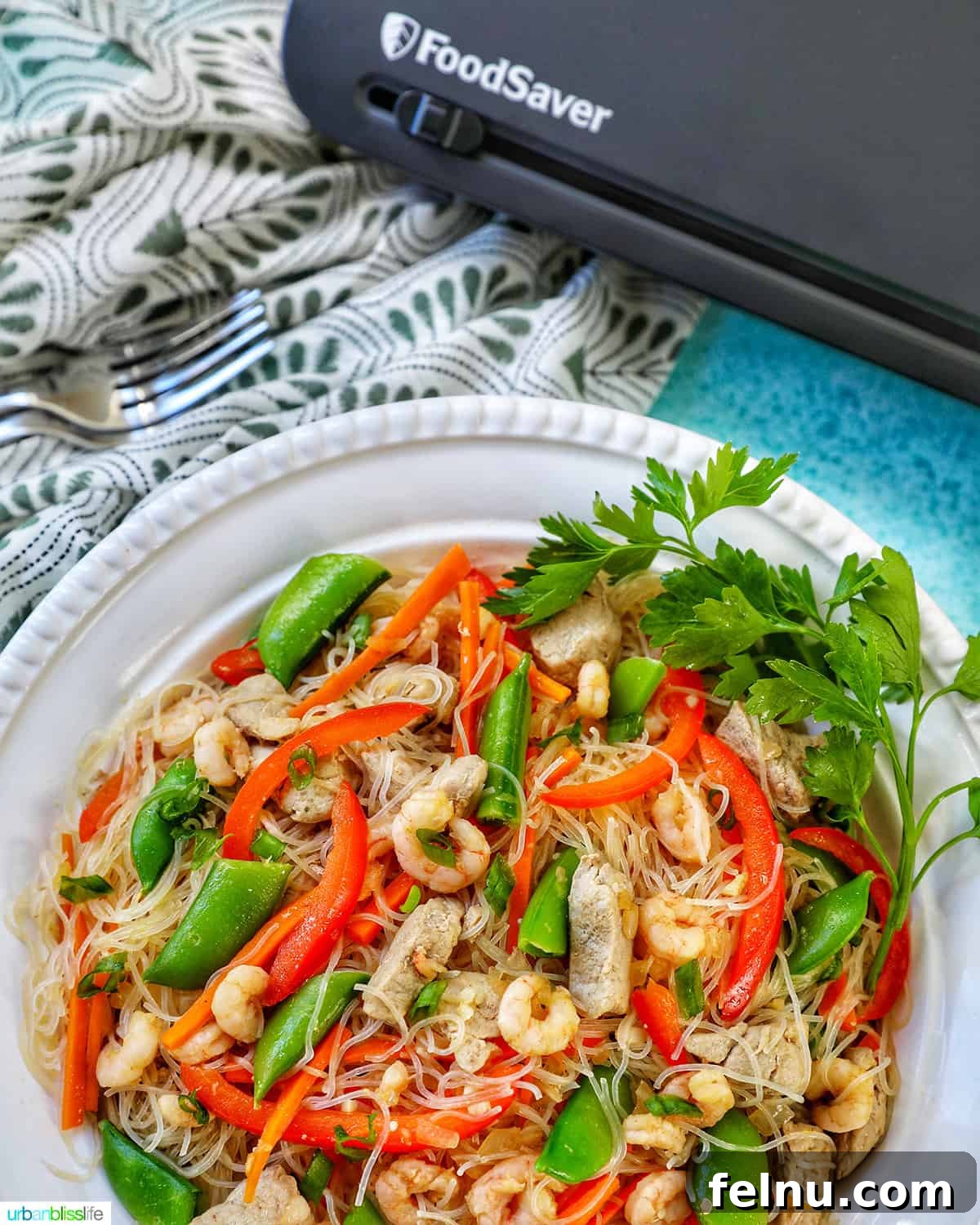
This Pancit Bihon recipe is designed to yield approximately 8 to 10 generous main course servings or 12 to 16 side dish portions. It’s perfect for feeding a crowd or for efficient meal prep.
I often make half of the recipe to serve my family during the week, and then freeze the remaining half for later use.
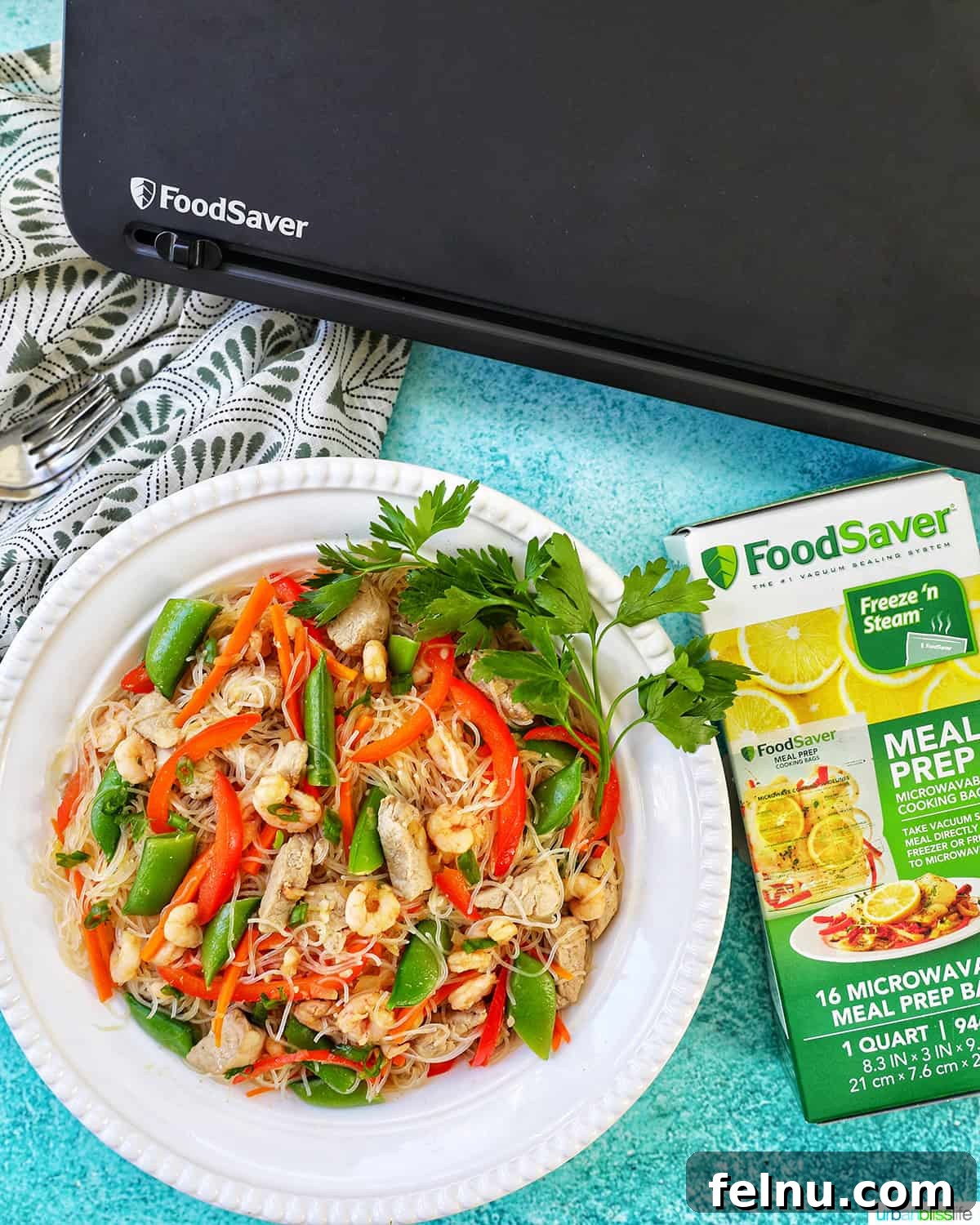
To preserve the freshness and flavor of the Pancit Bihon, I use a FoodSaver® VS3110 Food Preservation System and FoodSaver® Microwavable Meal Prep Bags to refrigerate, freeze, and reheat this cherished family recipe. When sealing food that contains liquid, as this Pancit Bihon does, the FoodSaver® VS3110 includes a removable drip tray to collect any excess liquid that might be squeezed out during the sealing process. Remember to remove and clean the tray after each use.
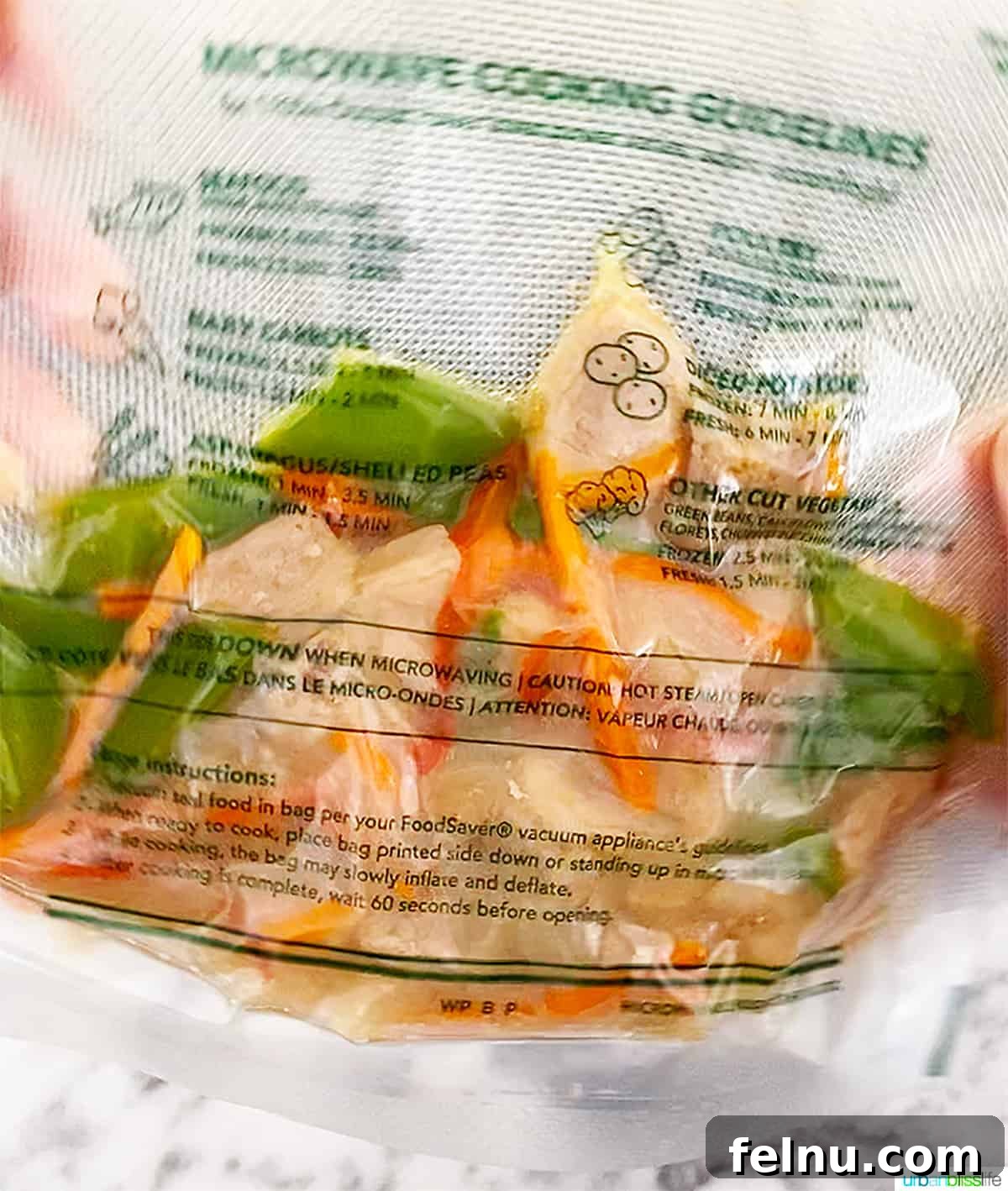
The Microwavable Meal Prep Bags are a game-changer because they can go directly from the refrigerator or freezer to the microwave. These BPA-free bags feature ventilated sides, making them safe for reheating food. They are an invaluable tool for streamlined meal preparation!
I usually store about 4 bags, each containing 1-2 servings, in the refrigerator for my family to easily grab and enjoy throughout the week. The remaining Pancit is stored in bags in the freezer for future meals.
More Authentic Filipino Recipes to Explore
- Filipino Chicken Adobo
- Lumpia (Filipino Egg Rolls)
- Filipino Macaroni Salad
- Filipino BBQ Pork Skewers
For an even wider selection of Filipino recipes, explore my cookbook: Modern Filipino Cooking, my 55-page e-Book brimming with authentic Filipino recipes that I’ve carefully adapted for today’s modern kitchen!
Did you make this recipe? Don’t forget to leave a 5-Star 🌟🌟🌟🌟🌟 rating in the recipe card, and if you really loved it, please leave a comment further down on the page. Thank you!
Filipino Pancit Bihon Recipe
Ingredients:
- 8 ounces dried rice noodles
- 5 tablespoons vegetable oil, divided
- 1½ cups pork, chopped into equal small 1″ pieces
- 1 medium red bell pepper, julienned
- 1 cup carrots, shredded or julienned
- 1½ cups sugar snow peas or snap peas, sliced in half
- 1 small onion, finely diced
- 3 garlic cloves, minced
- 1 teaspoon ginger, minced
- 1½ cups fully cooked, frozen bay shrimp, thawed
- ¼ cup chicken broth
- ¼ cup soy sauce
- ¼ cup oyster sauce
- 3 stalks green onions, sliced diagonally
Instructions:
- Soak the noodles in warm water until soft.
- Heat 3 tablespoons of oil in a wok. Cook pork until browned; set aside.
- Add remaining oil, peppers, carrots, and peas to the wok. Cook for 2 minutes.
- Add onions, garlic, and ginger; cook for 2 minutes.
- Return pork to wok; add shrimp. Cook for 1 minute.
- Pour in chicken broth, soy sauce, and oyster sauce; stir to combine.
- Drain noodles and add to the wok. Stir until noodles are coated.
- Cook for 2-3 minutes. Serve immediately, garnished with green onions.
Notes:
- Ensure shrimp is pre-cooked and thawed.
- Store leftovers in the refrigerator for up to 4 days or freezer for up to 1 month.
- Substitute chicken for pork, omit shrimp, or add other vegetables.
Nutrition:
Calories: 295kcal, Carbohydrates: 25g, Protein: 16g, Fat: 15g
This post is sponsored by FoodSaver®. All photos, recipes, and opinions are my own.