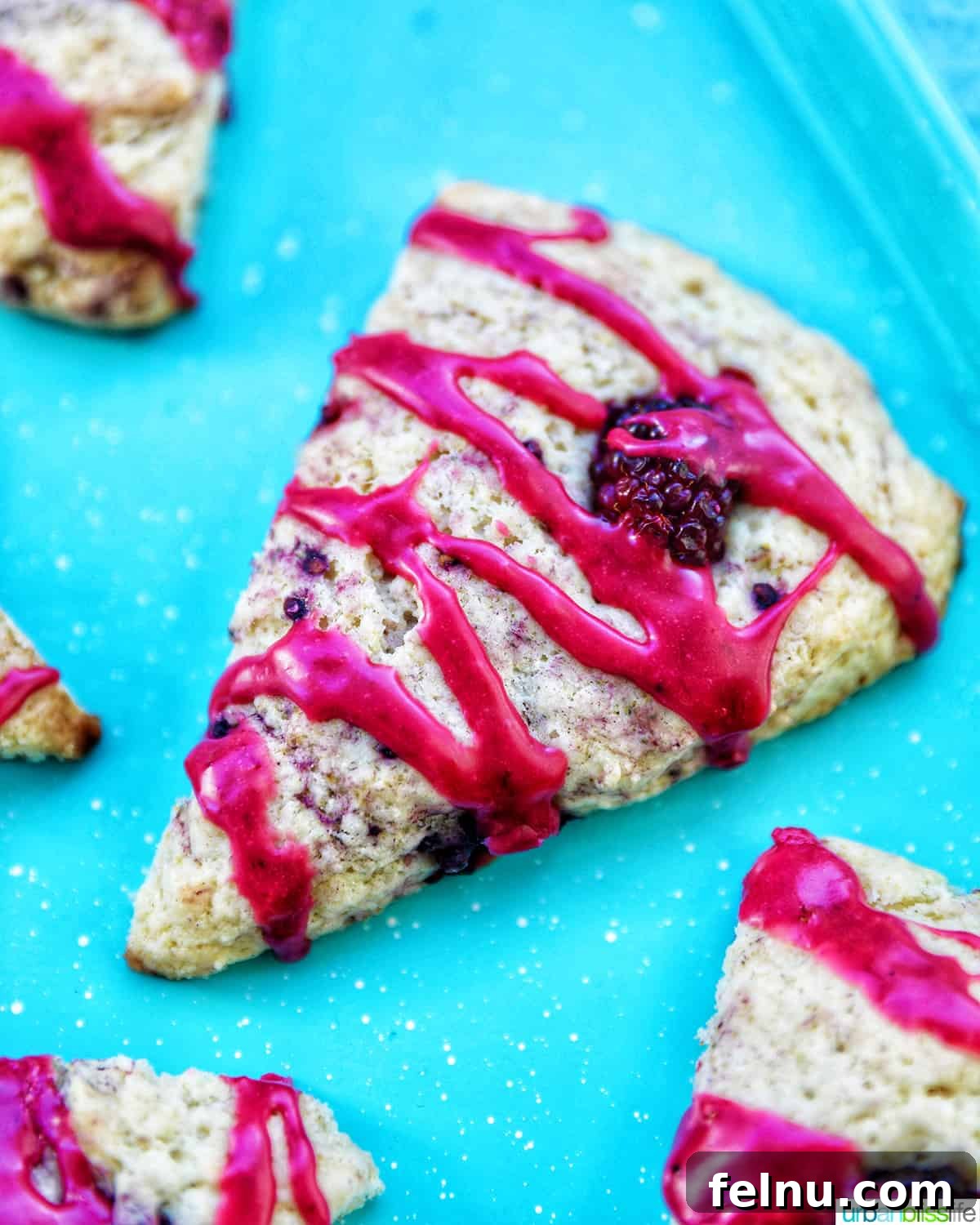
Homemade Blackberry Scones with Blackberry Glaze offer that irresistible bakery aroma and deliver an even better taste when crafted from scratch! This simple baking recipe lets you indulge in warm, freshly-baked scones in just 30 minutes.
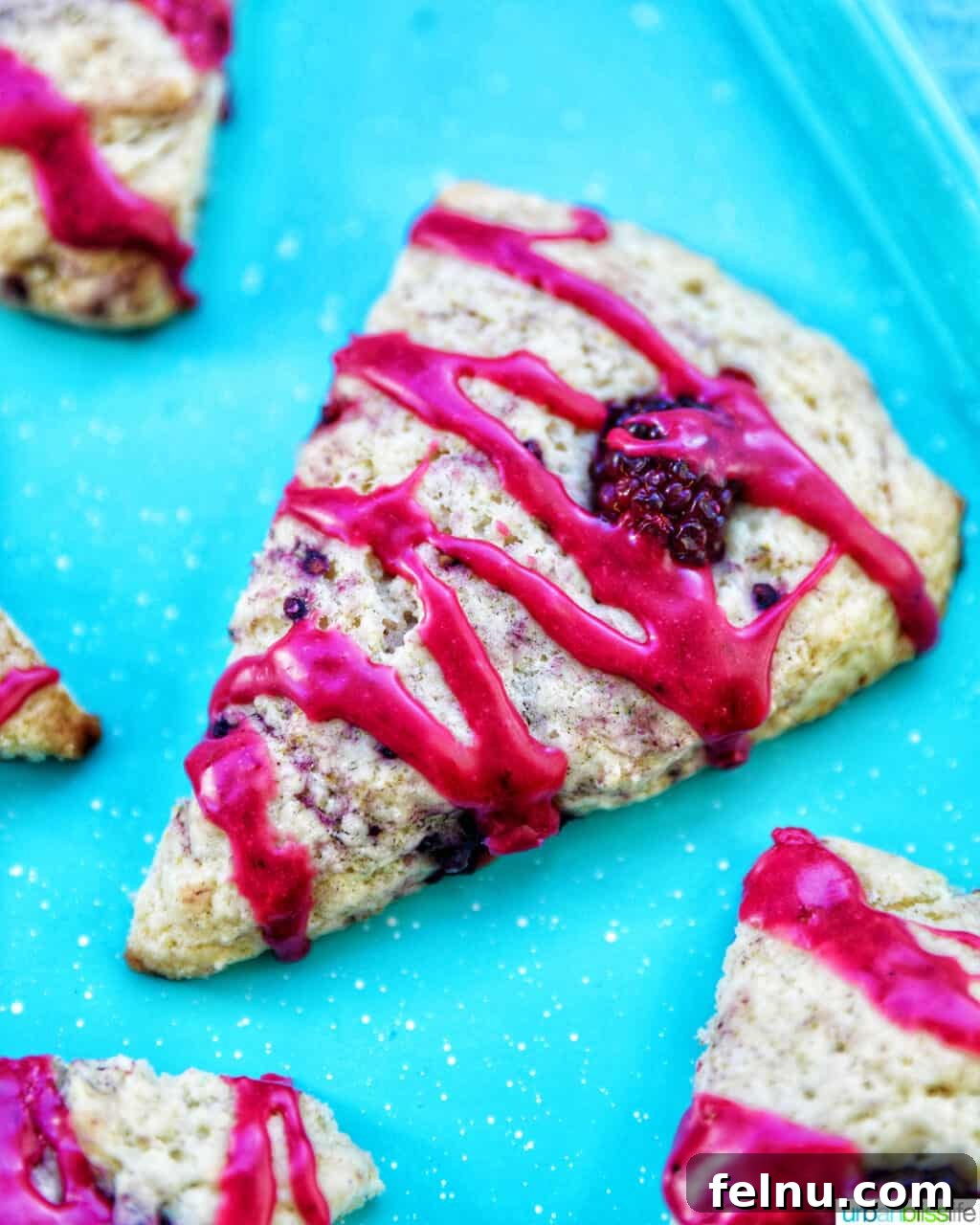
I used to think scones were complicated to make. But they are surprisingly easy to bake at home. They are forgiving, and allow for many variations!
You’ll absolutely adore these Blackberry Scones with Blackberry Glaze! Here’s why:
- Only about 15 minutes of active preparation time is needed.
- They bake in the oven for around 15 minutes.
- The recipe is straightforward and easy to follow, suitable for novice bakers, kids, and teens alike!
- These blackberry scones are delicious with or without the glaze.
- The glaze recipe yields a generous amount, perfect for using on other baked goods later on.
- The unglazed scones freeze beautifully, allowing you to enjoy some now and save some for later.
What are Scones?
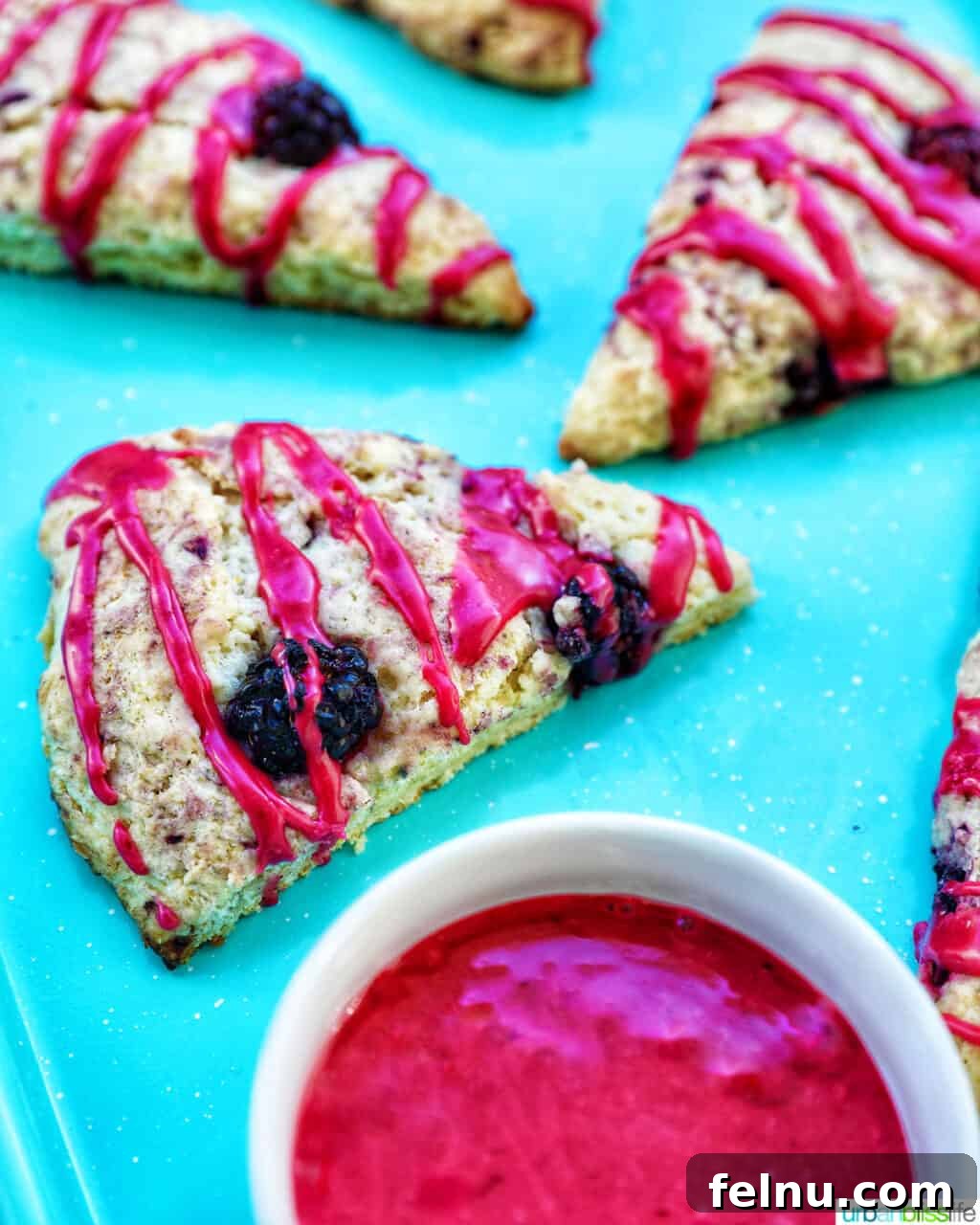
The term “scone” can mean different things in different parts of the world. However, scones are always baked goods made with flour and a leavening agent.
In the United States, a scone is usually a sweet, dense pastry with a dry and crumbly dough before baking. American scones are often triangle-shaped and resemble what the British refer to as “rock cakes.” They often come in a variety of flavors and with different mix-ins, ranging from sweet to savory.
British scones, on the other hand, are typically round, taller than their American counterparts, and contain less butter. American scones tend to be richer due to the higher butter content and are often enjoyed on their own. British scones are usually plainer, designed to be eaten with butter, cream, and/or jam.
This recipe, similar to my Mocha Chocolate Chip Scone recipe, is an American scone. It makes large, triangle-shaped scones packed with juicy blackberries and topped with a luscious blackberry glaze. So delicious!
Essential Kitchen Tools and Equipment
You’ll only need a few basic kitchen tools to make this recipe:
Baking Sheet: A reliable baking sheet is a must. For effortless cleanup, line the sheet with parchment paper.
Mixing Bowls: You’ll need two large mixing bowls to prepare the scone dough and glaze.
Whisk: A sturdy whisk is ideal for mixing the dry and wet ingredients together.
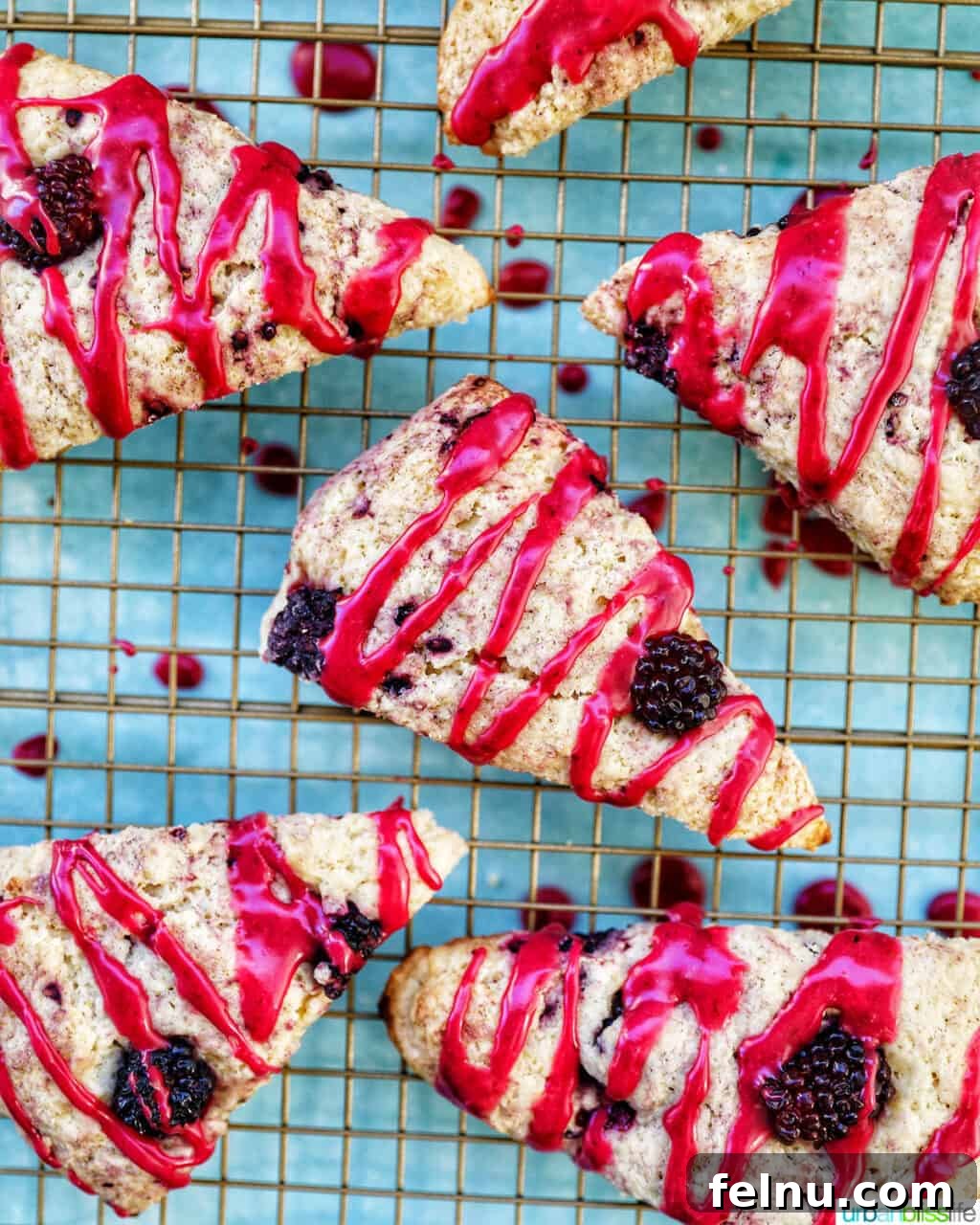
Cooling Rack: Allowing the scones to cool completely on a cooling rack is important. This also makes glazing easier, as excess glaze can drip onto paper towels or parchment paper placed underneath.
Scone Ingredients: What You’ll Need
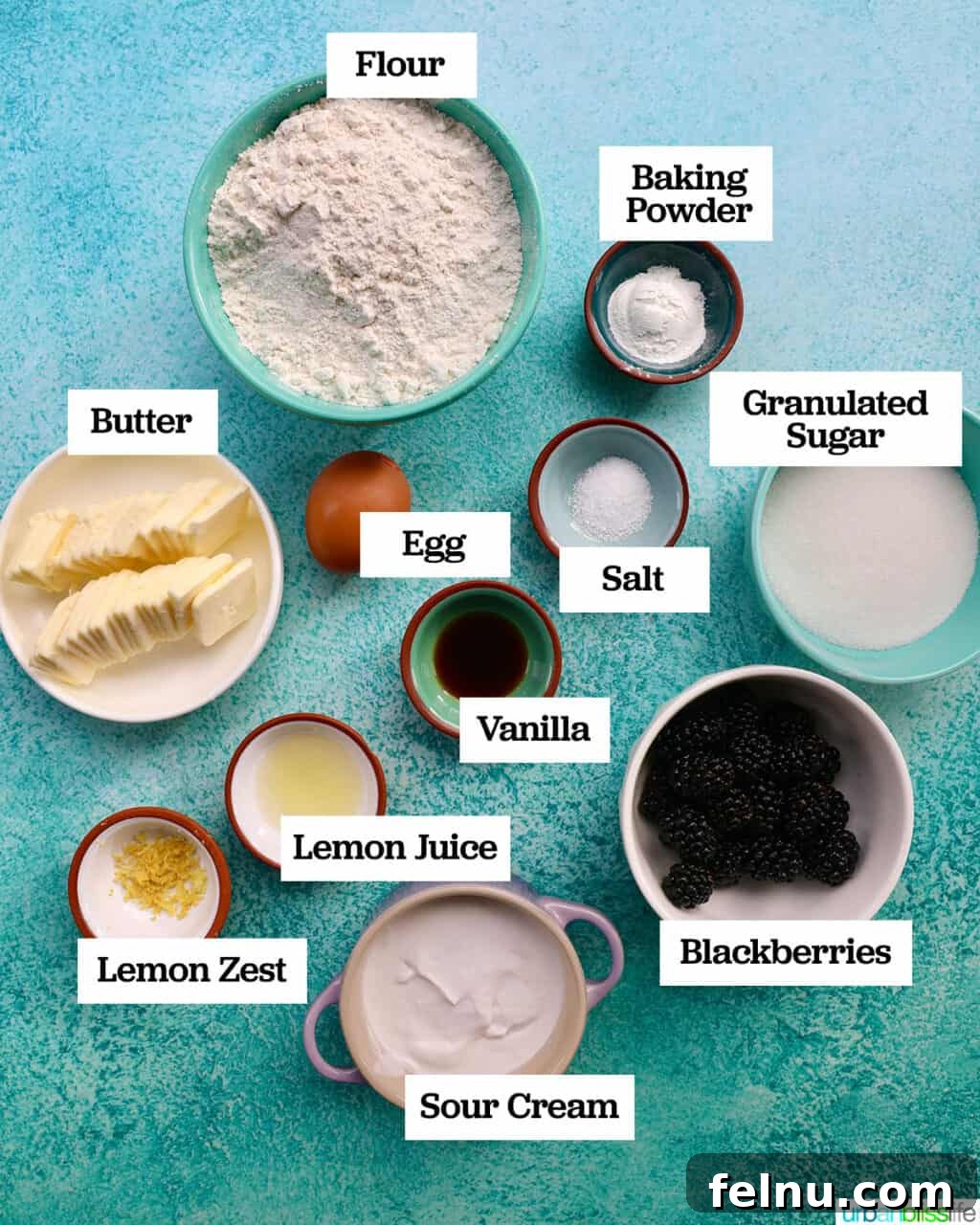
To craft the perfect batch of blackberry scones, gather the following ingredients:
Flour: All-purpose flour is what I use for scones. Using other types of flour may lead to varying results. Feel free to experiment and let me know how it turns out.
Baking Powder: Baking powder is essential for light, fluffy scones.
Salt: A good kosher salt enhances the flavors. You can also substitute regular table salt in a 1:1 ratio.
Butter: It is important to use cold, unsalted butter, thinly sliced. Slice the butter, arrange the slices on a plate, cover with plastic wrap, and refrigerate until ready to incorporate into the dough.
Sugar: Use granulated sugar for the perfect sweetness.
Eggs: Large, organic, free-range eggs work best. Take the eggs out of the refrigerator about 30 minutes before baking. This allows them to come to room temperature, which helps them mix smoothly into the batter.
Lemon Zest: Adds a bright, zesty flavor that complements the tanginess of the sour cream.
Sour Cream: Sour cream adds moisture without thinning the batter.
Vanilla Extract: Pure vanilla extract provides that classic bakery aroma and flavor that makes baked goods irresistible.
Blackberries: Fresh, seasonal blackberries are the best choice. Frozen blackberries also work well.
Glaze Ingredients: Simple and Delicious
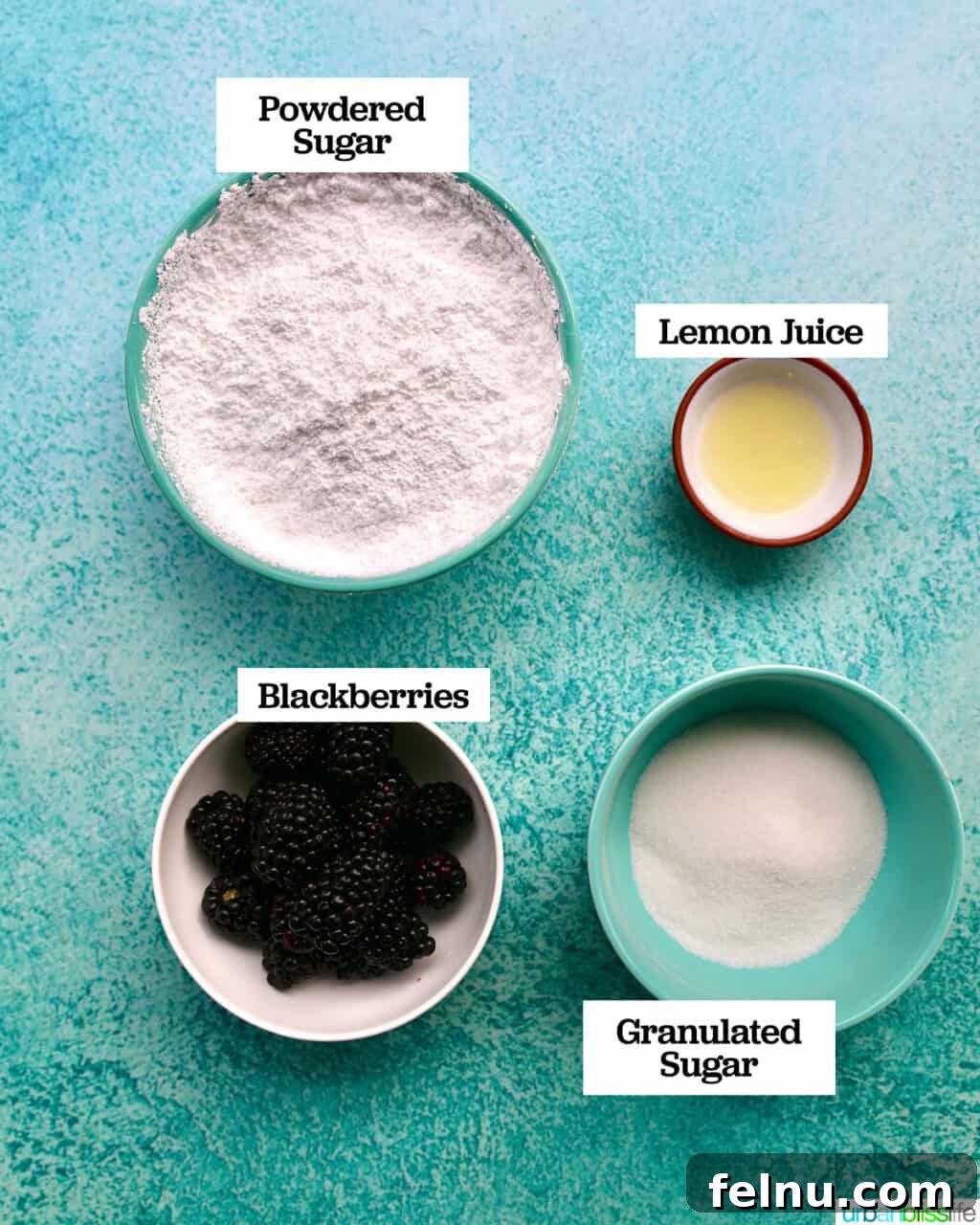
The blackberry glaze is a simple one-bowl mixture of:
- Granulated sugar
- Lemon juice
- Powdered sugar
- Fresh or frozen Blackberries
Step-by-Step Baking Instructions: A Detailed Guide
Find ingredient measurements and detailed instructions in the printable recipe card at the end of this post. Here are some helpful tips to guide you through the process.
Preheat oven to 400°F (200°C). Line a baking sheet with parchment paper.
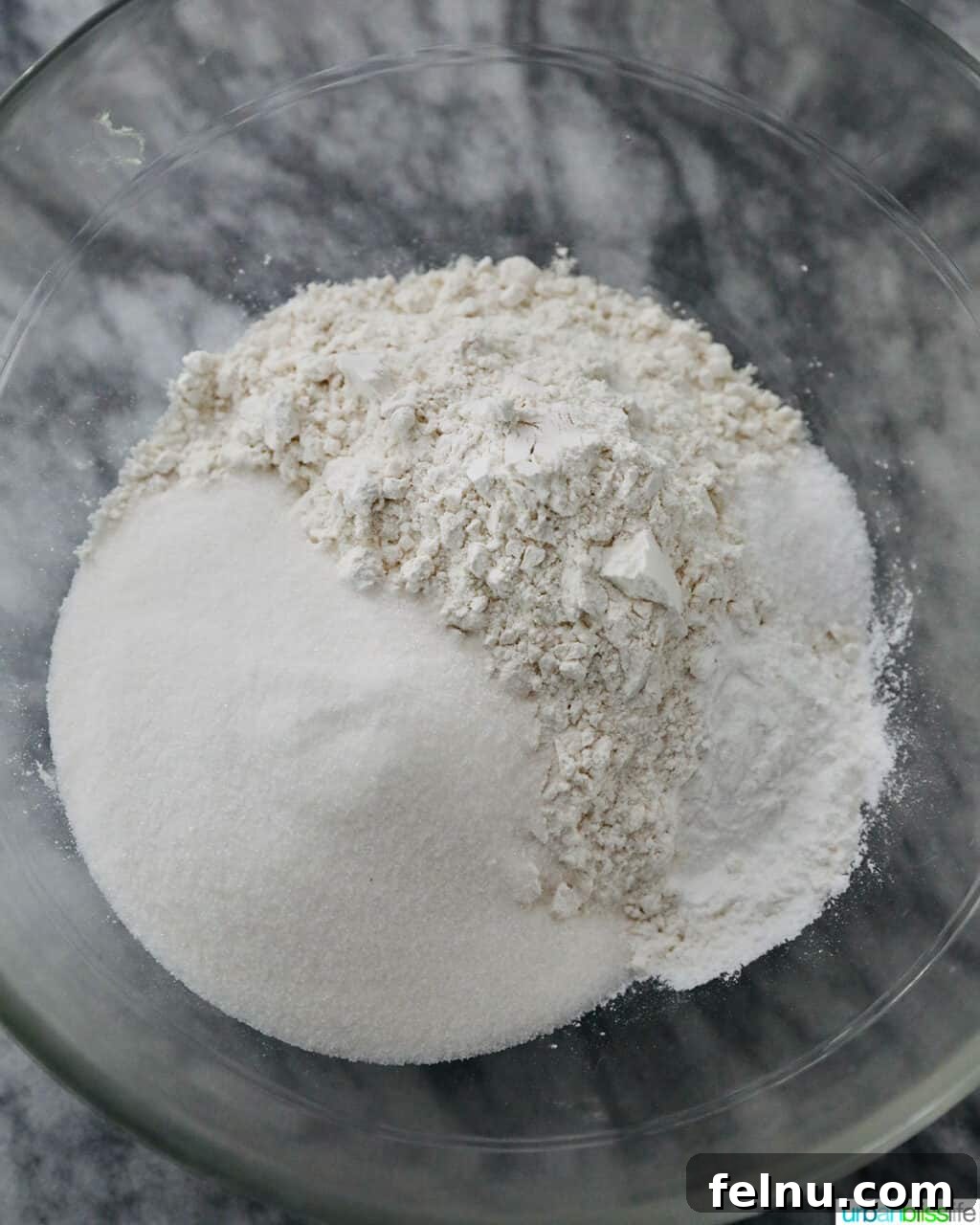
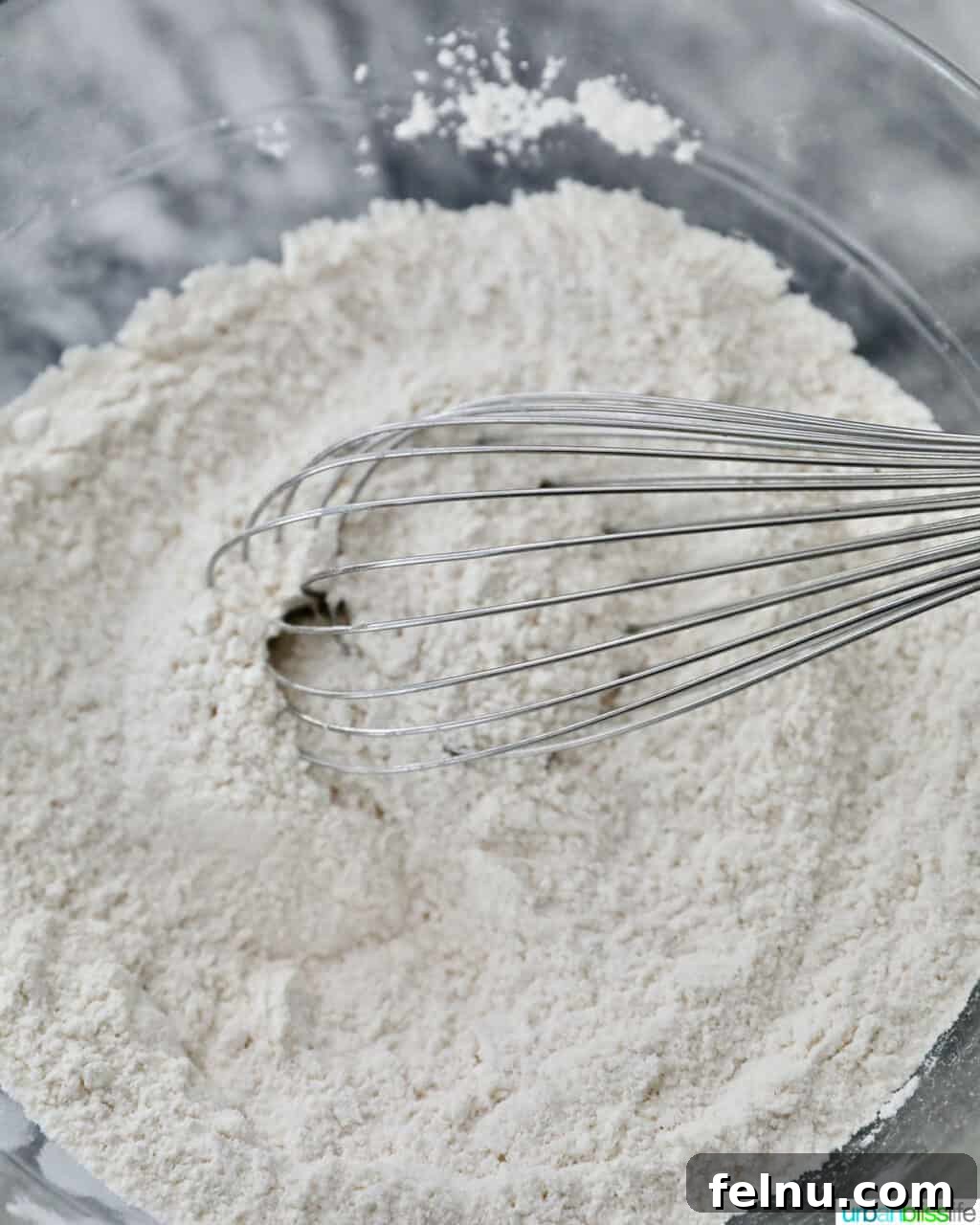
In a large bowl, whisk together the flour, granulated sugar, baking powder, and salt.
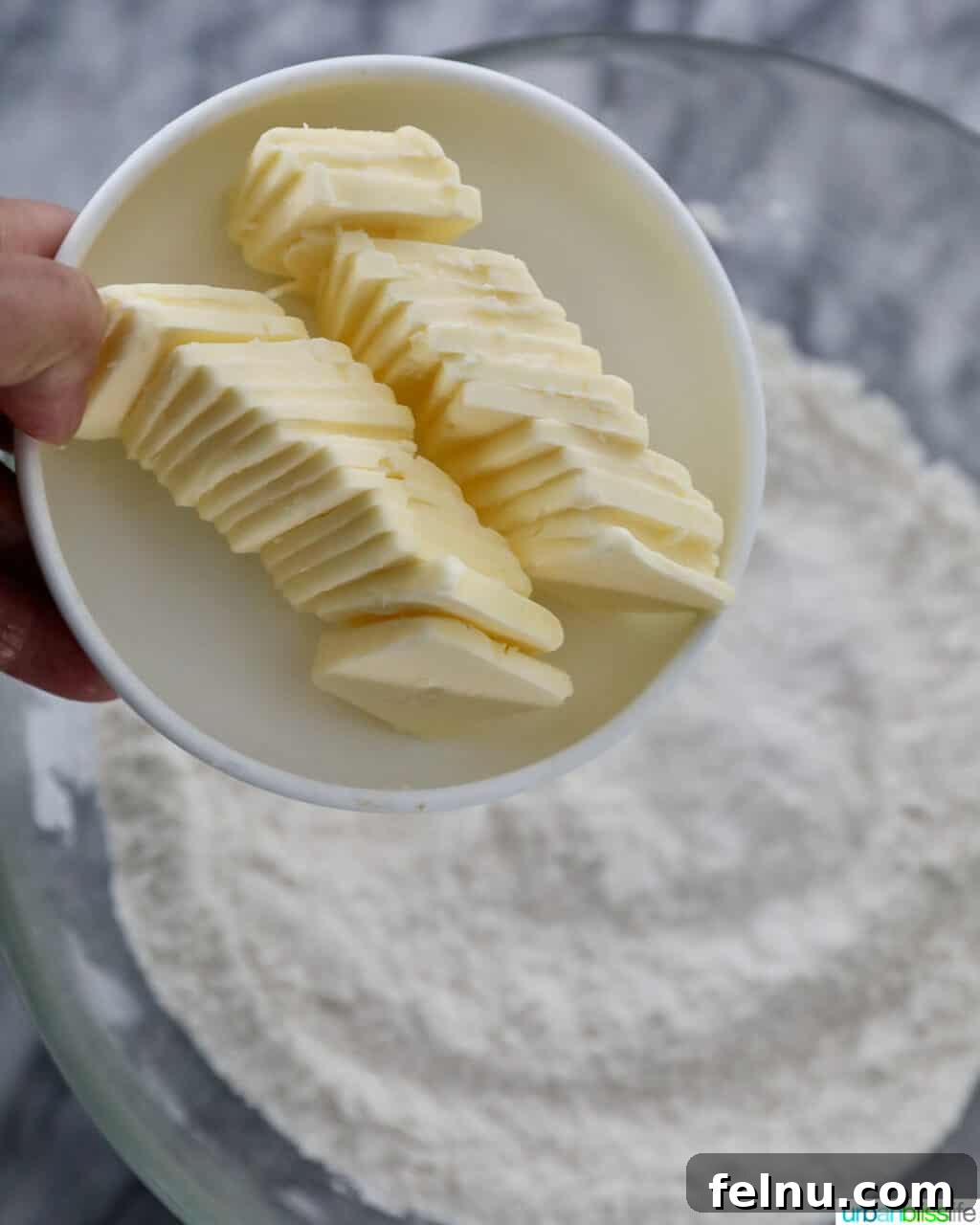
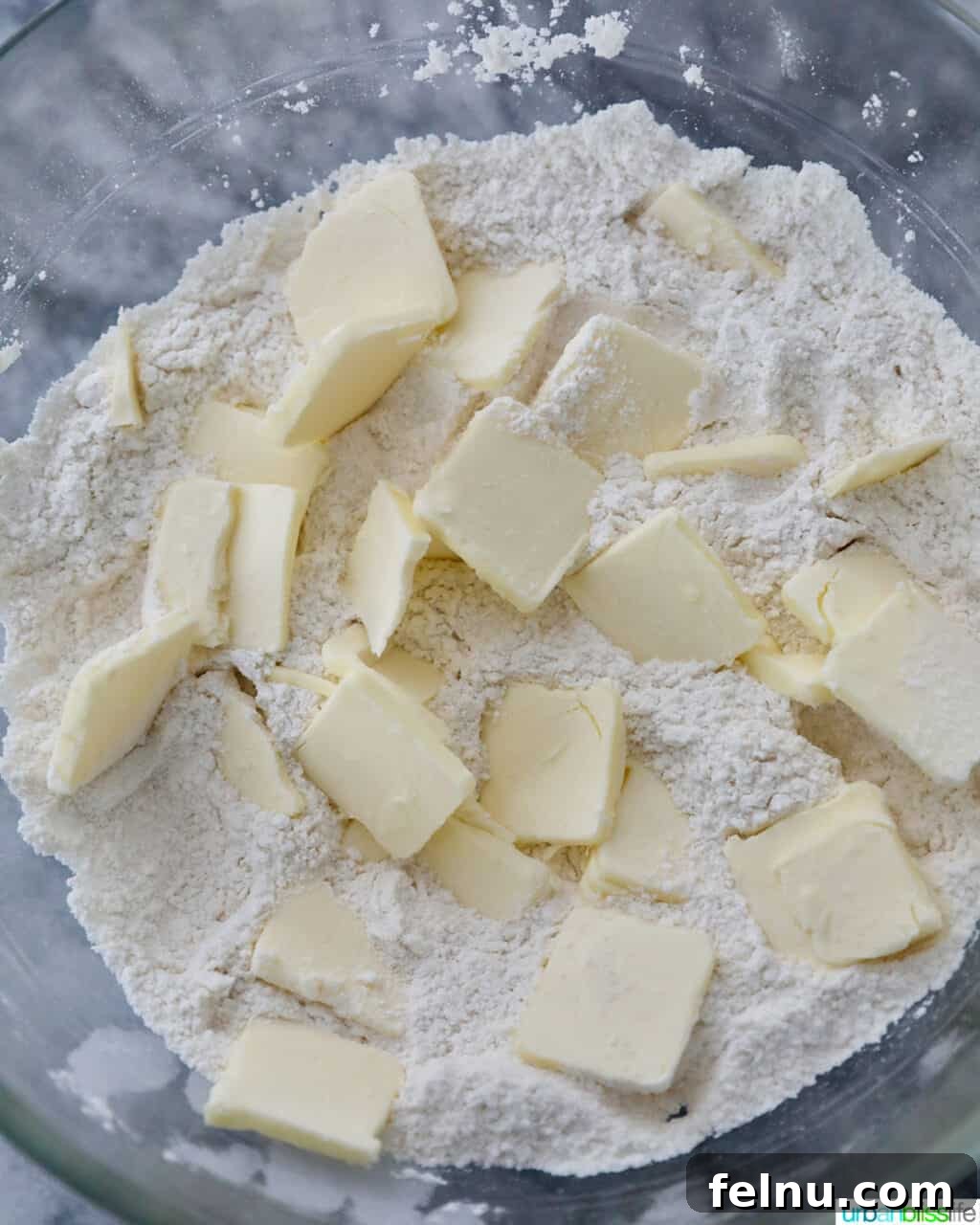
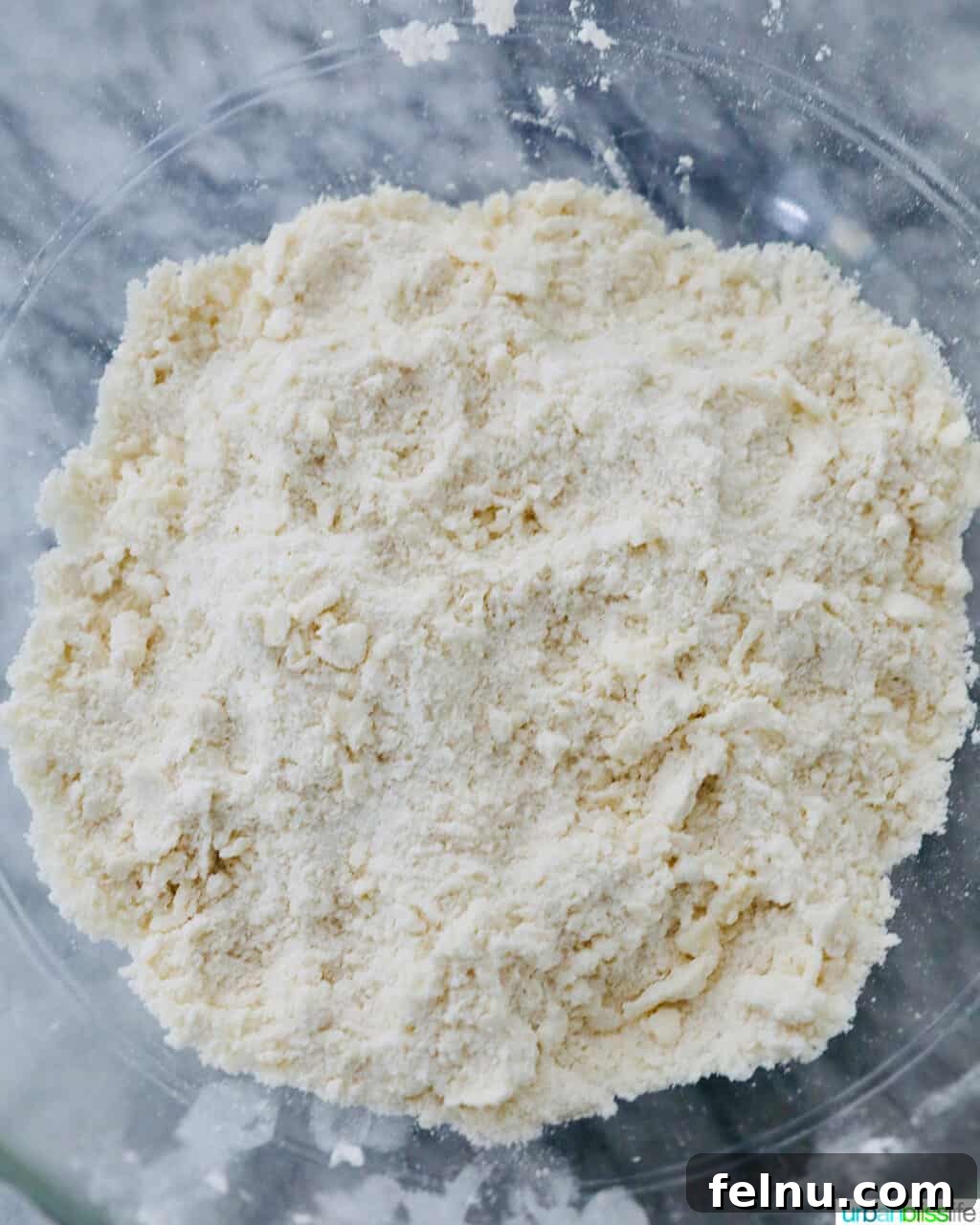
Using your hands or a pastry blender, cut in the slices of cold butter until the mixture resembles coarse crumbs.
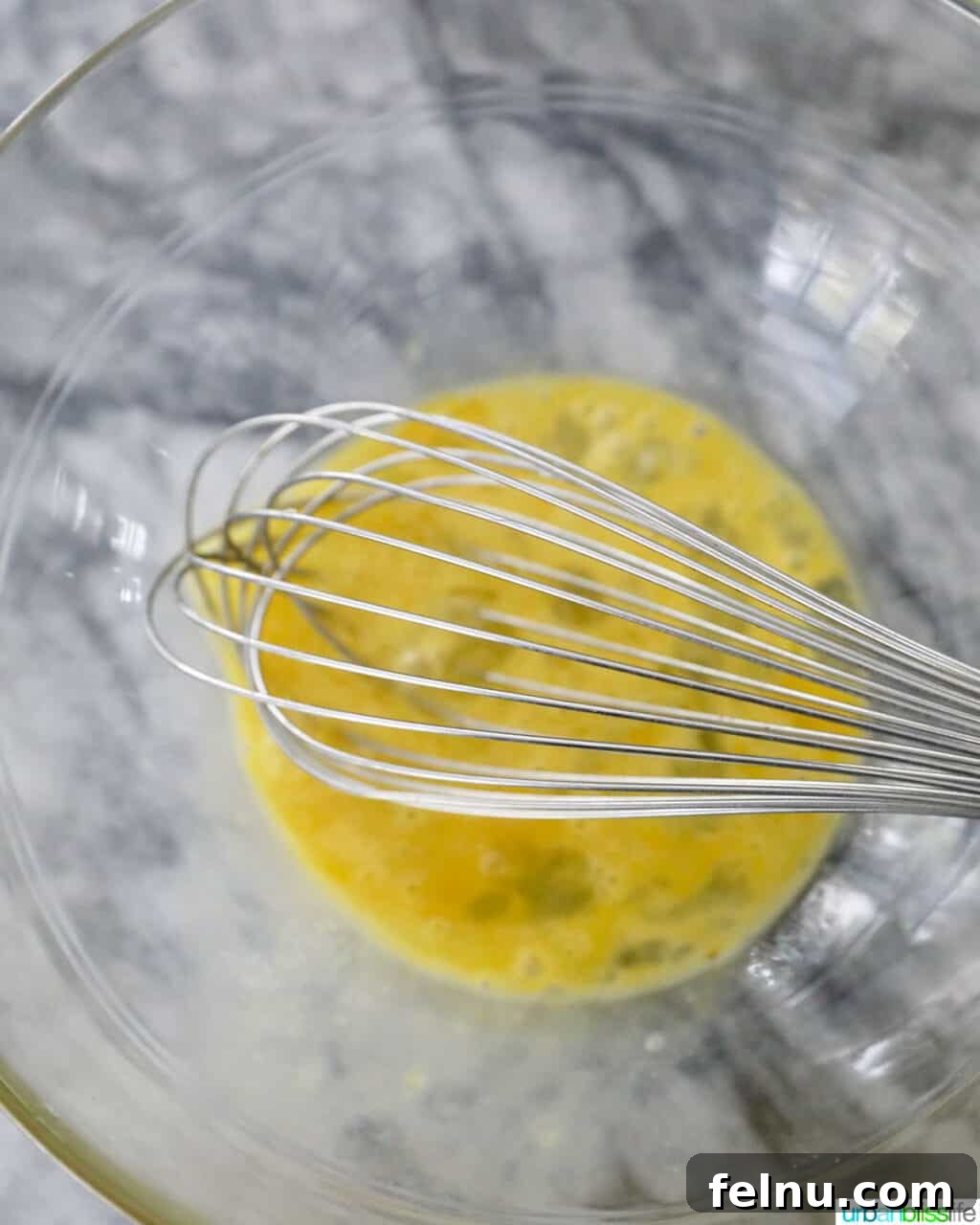
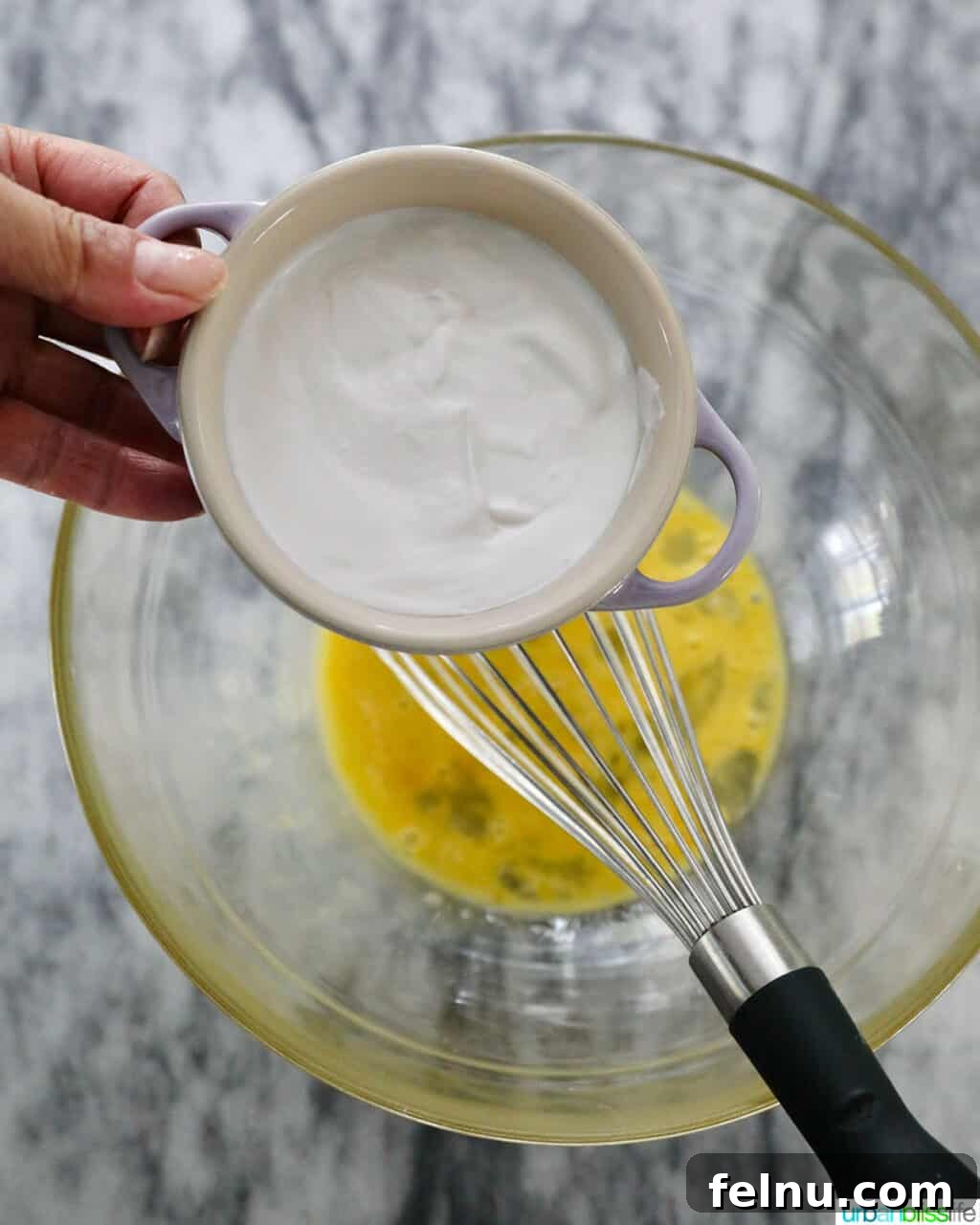
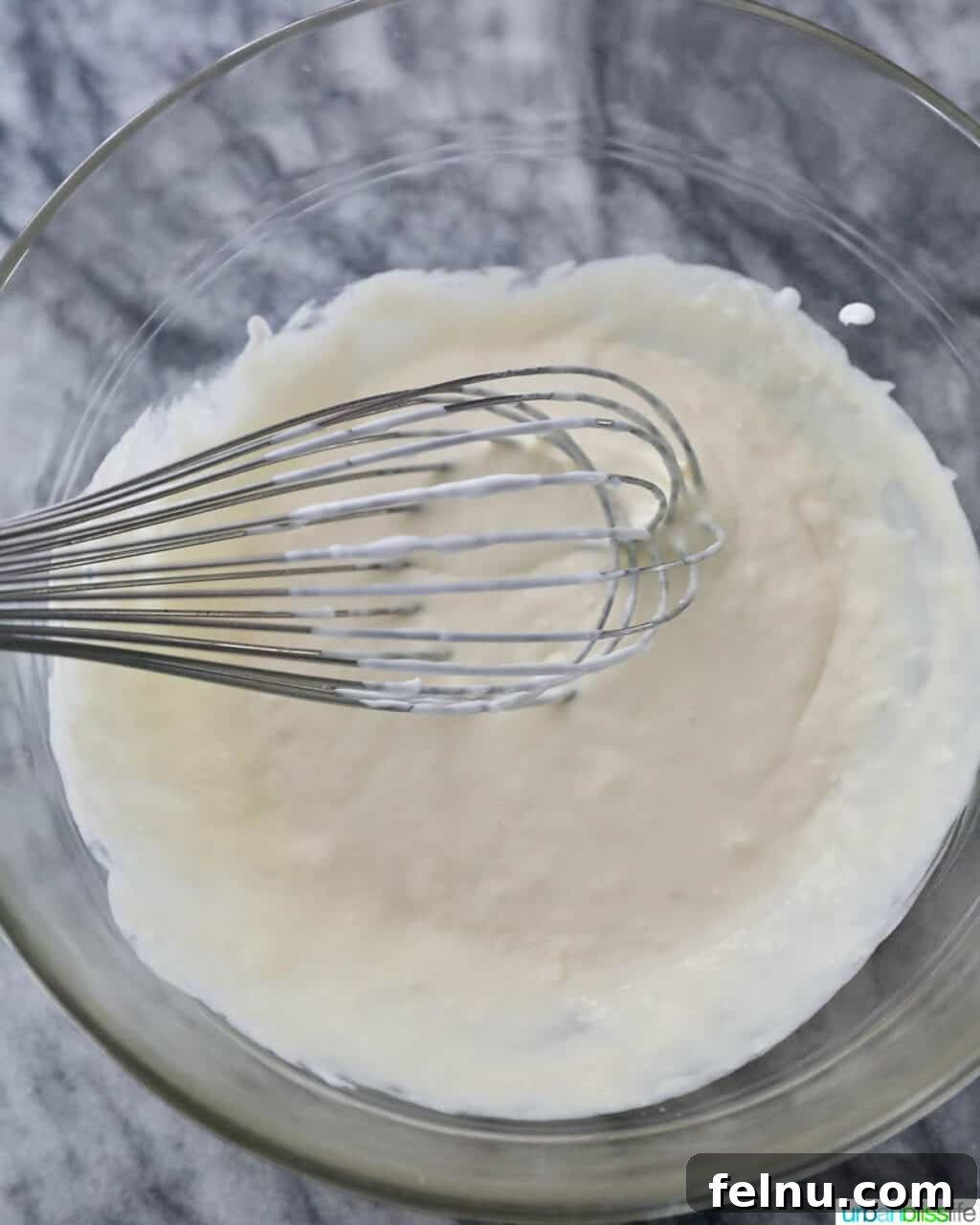
In a separate bowl, whisk together the coconut milk, egg, vanilla, lemon zest, and lemon juice.
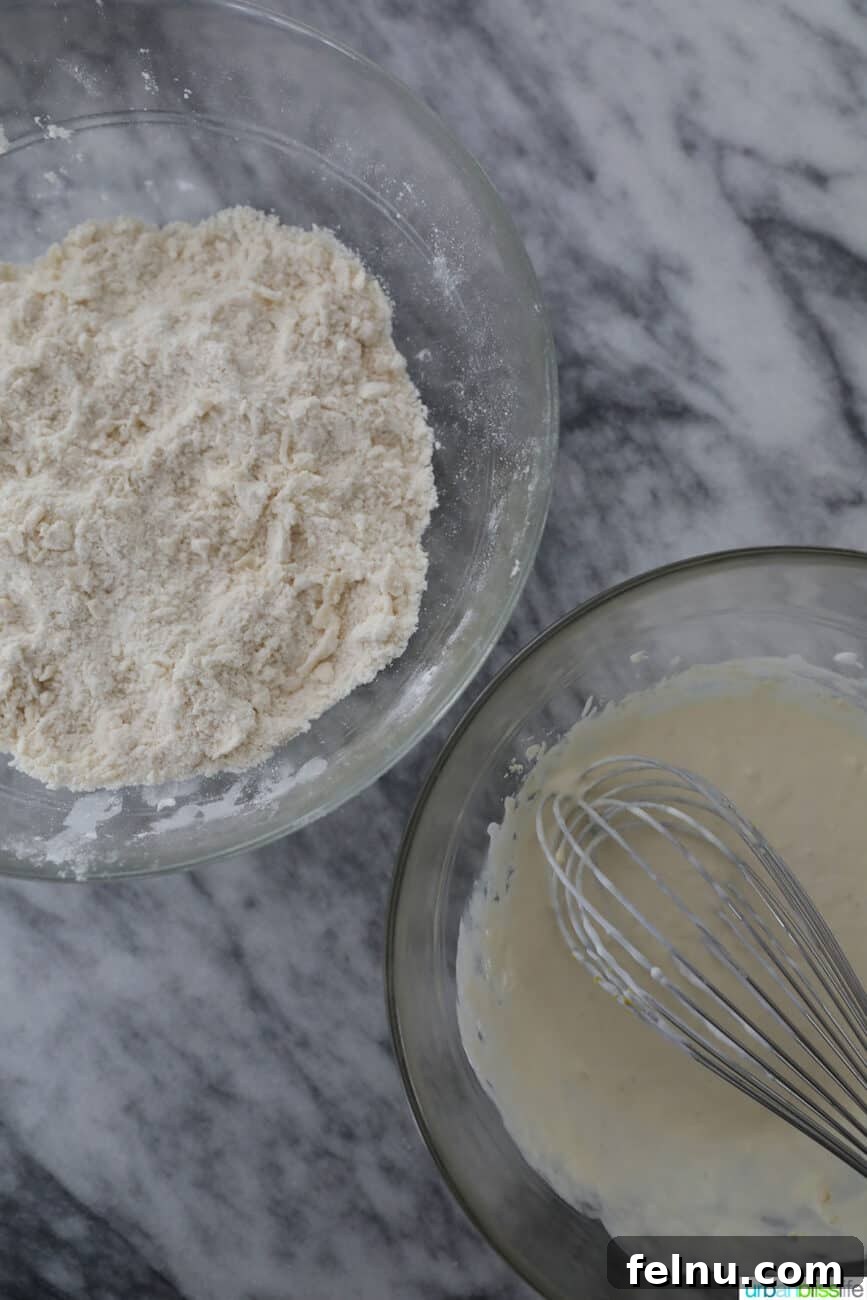
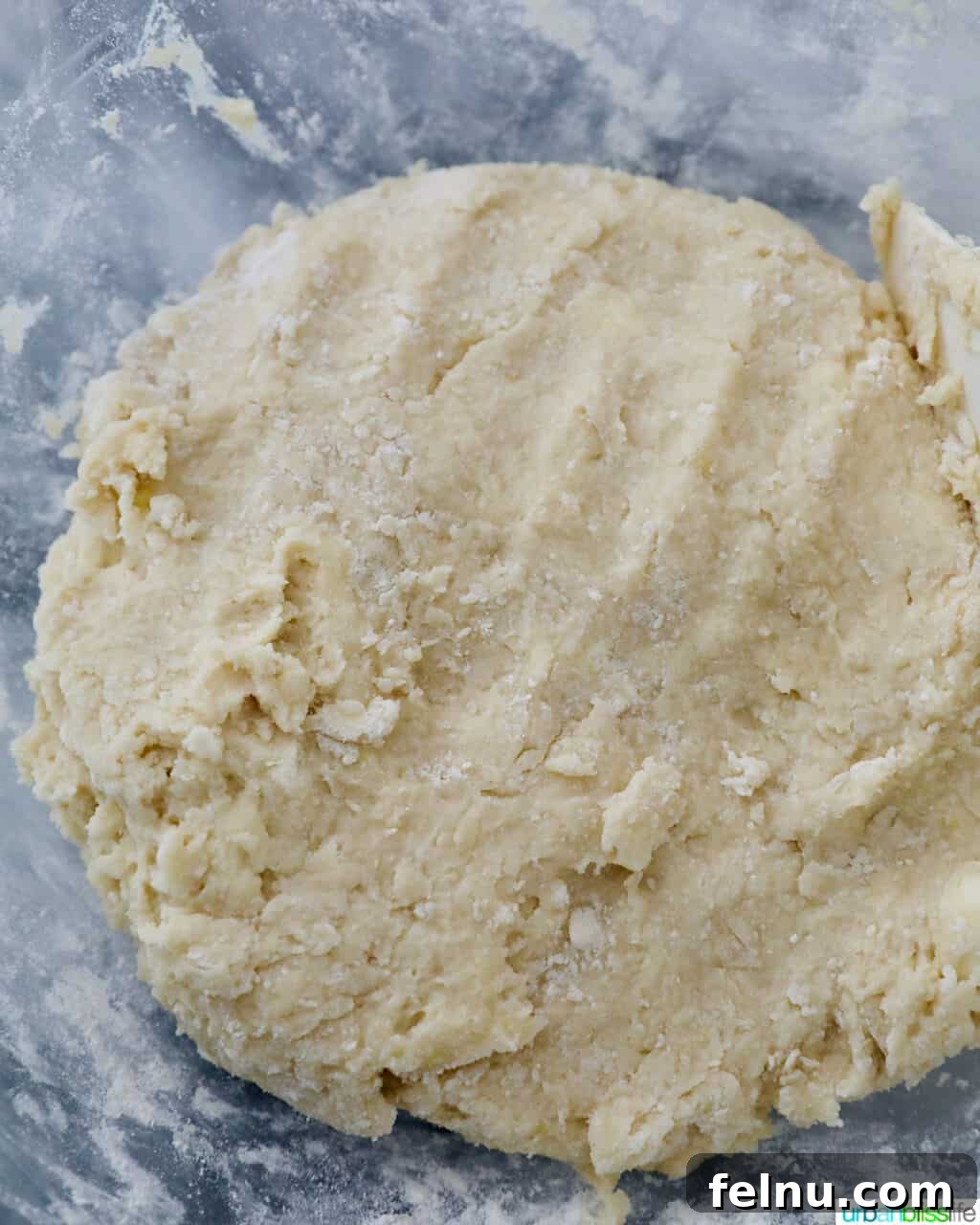
Add the wet ingredients to the dry ingredients, first by whisking and then using a silicone spatula to fold the final ingredients together until just combined. Be careful not to overmix.
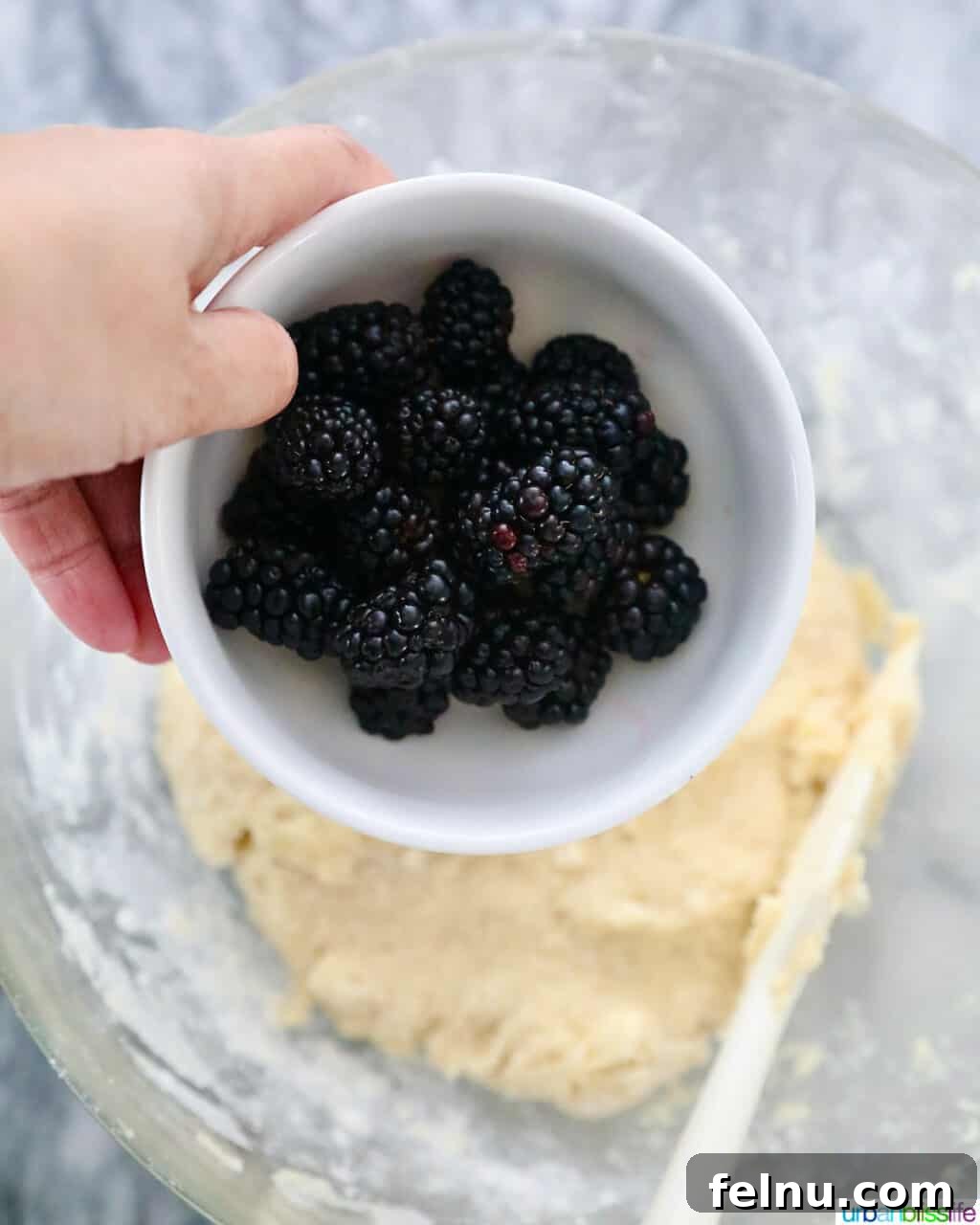
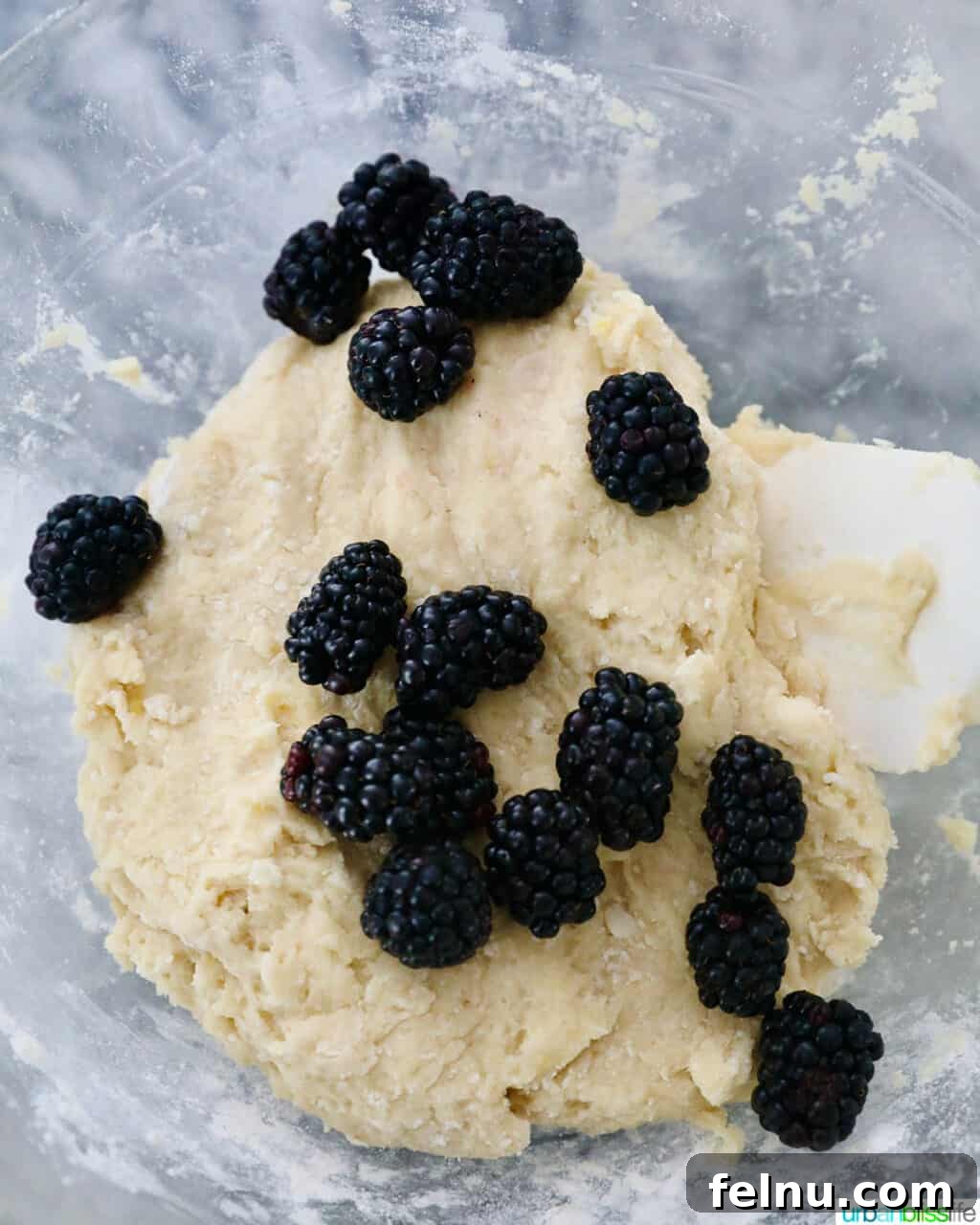
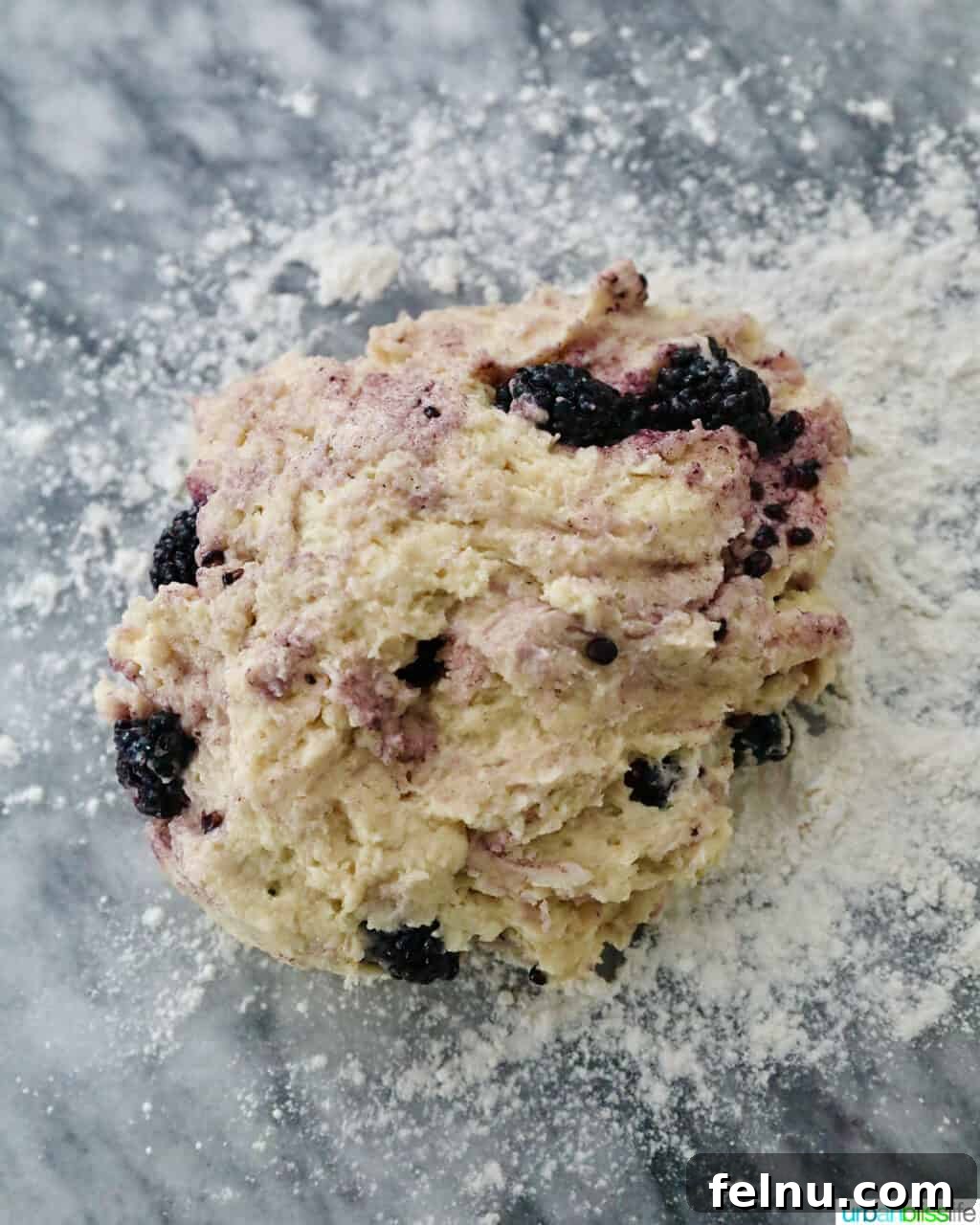
Gently fold in the blackberries using the spatula, distributing them evenly throughout the dough.
On a lightly floured surface, turn out the dough and form a round disc about 9 to 10 inches in diameter. Pat it down to about 1.5 inches thick.
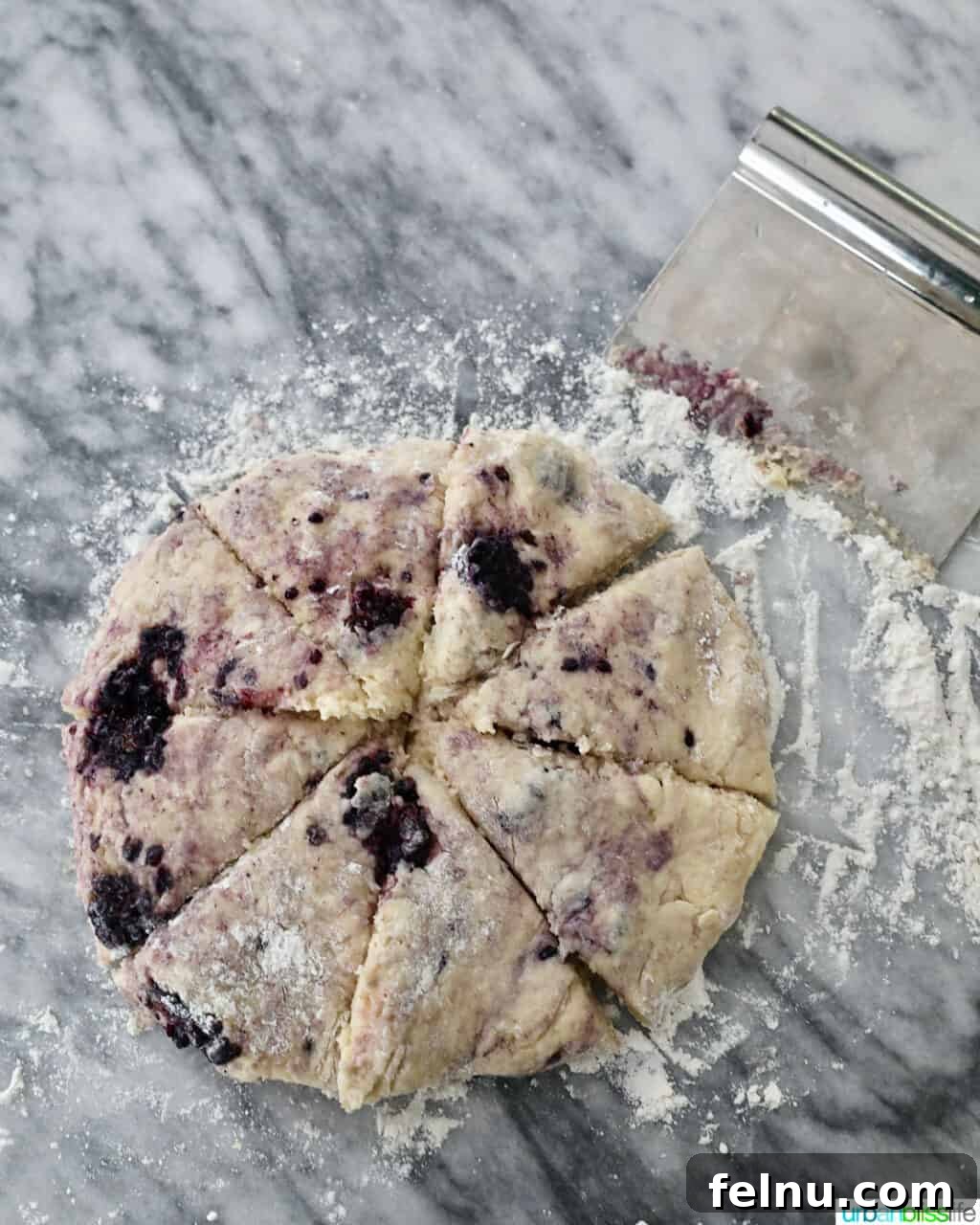
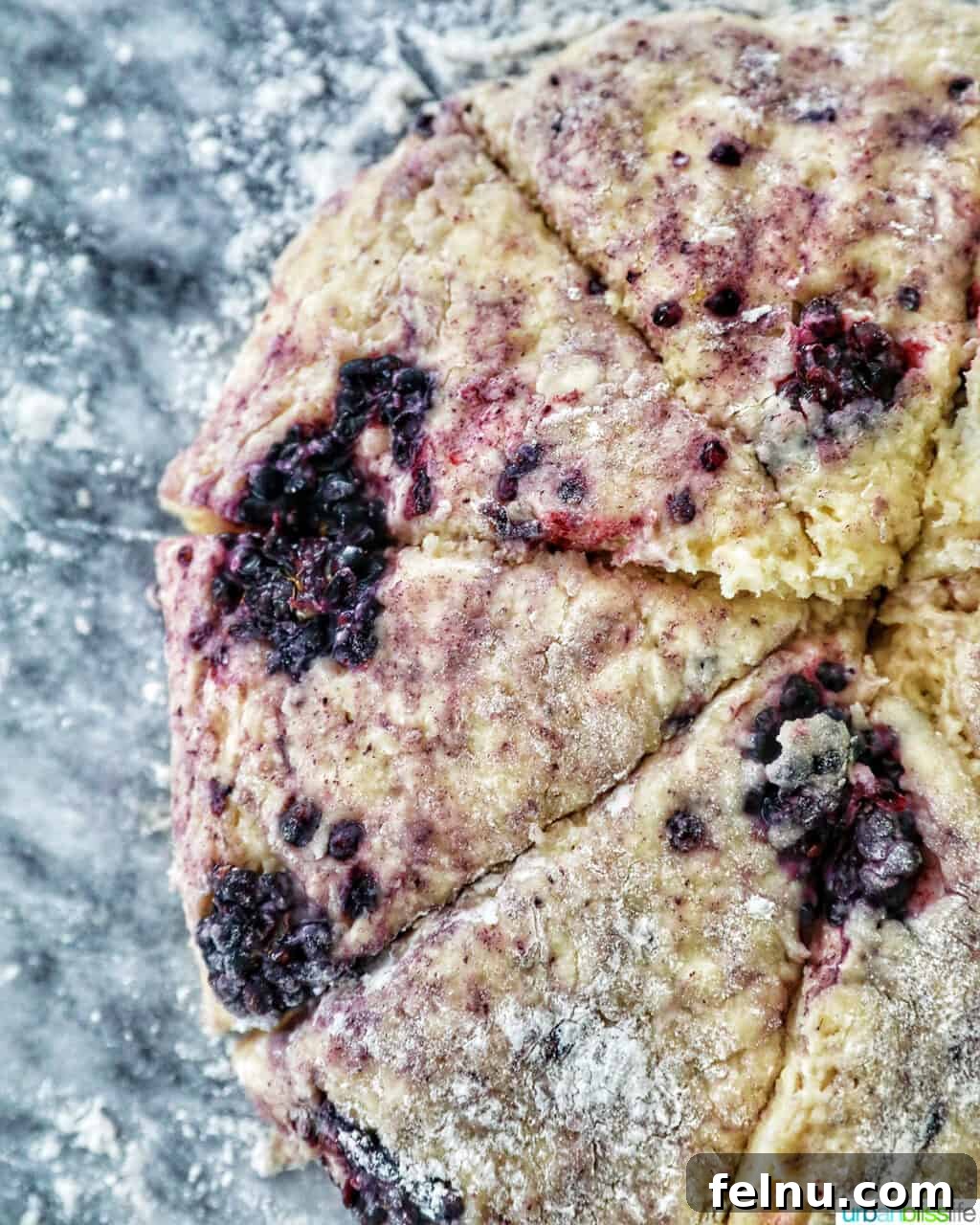
Slice the disc into 8 equal triangles, and place them onto the prepared lined baking sheet, about 2 inches apart from each other.
Bake at 400°F (200°C) for 15 to 20 minutes, or until golden brown.
While the scones are baking, prepare the glaze.
Making the Blackberry Glaze: A Simple Process
Refer to the printable recipe card at the end of this post for the exact measurements and full recipe details. The step-by-step photos and instructions below will guide you towards the best scones.
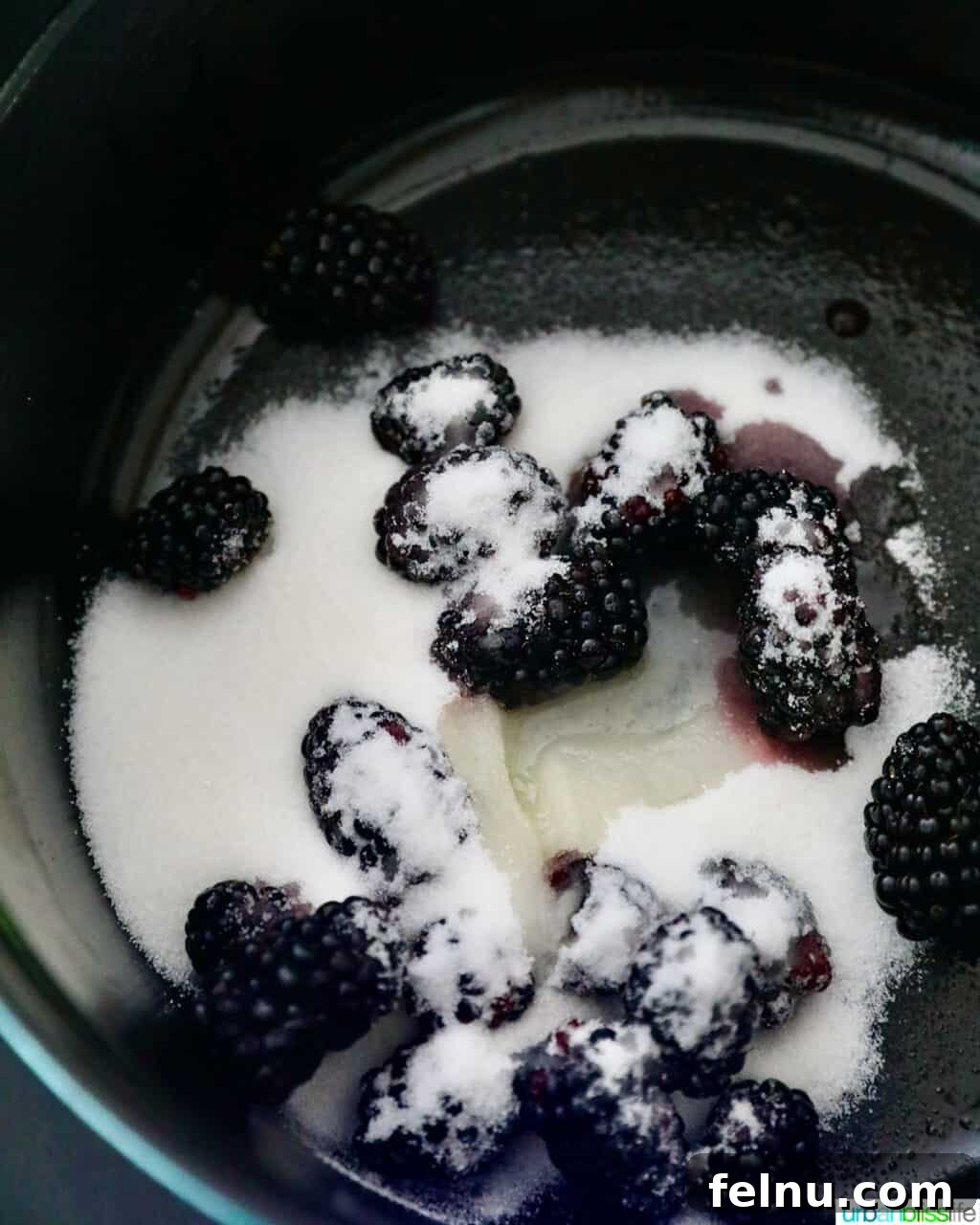

In a small saucepan, combine the blackberries, sugar, and lemon juice and bring to a boil. Simmer for 2 minutes, until the blackberries soften and release their juices.
Remove from the heat and pour into a blender.
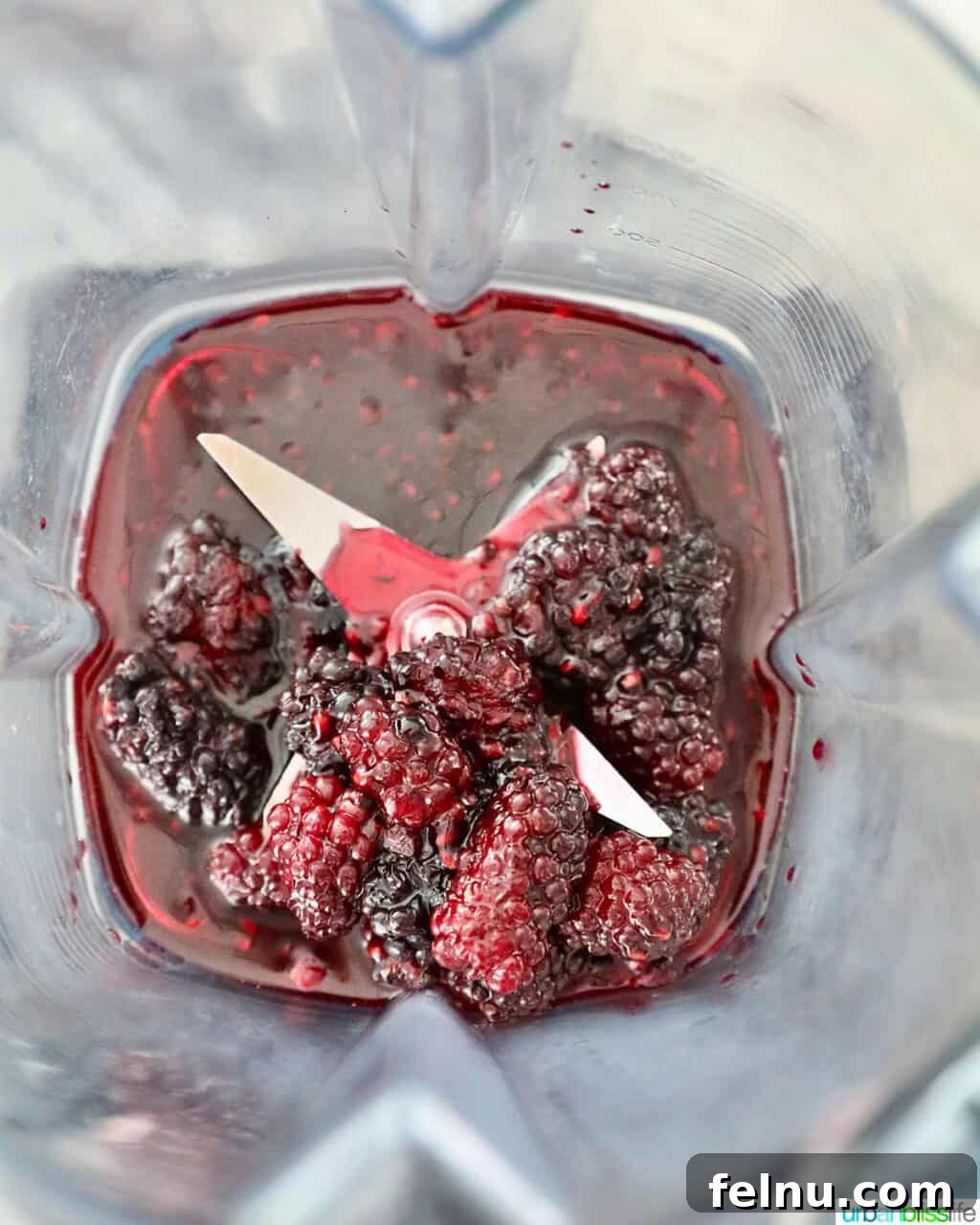
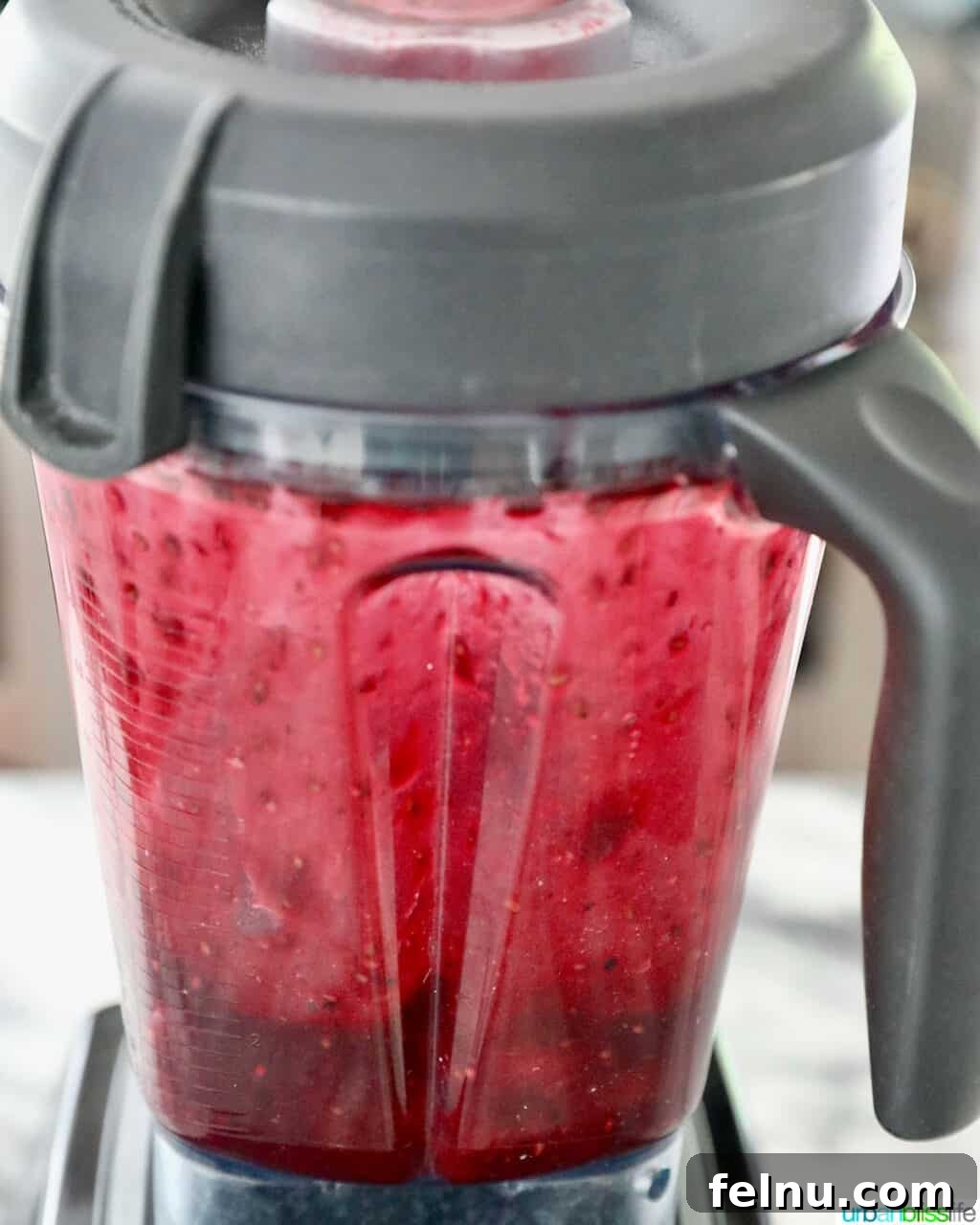

Blend for 1 to 2 minutes, until smooth. Then, strain the mixture through a fine-mesh sieve over a large bowl to remove the seeds.
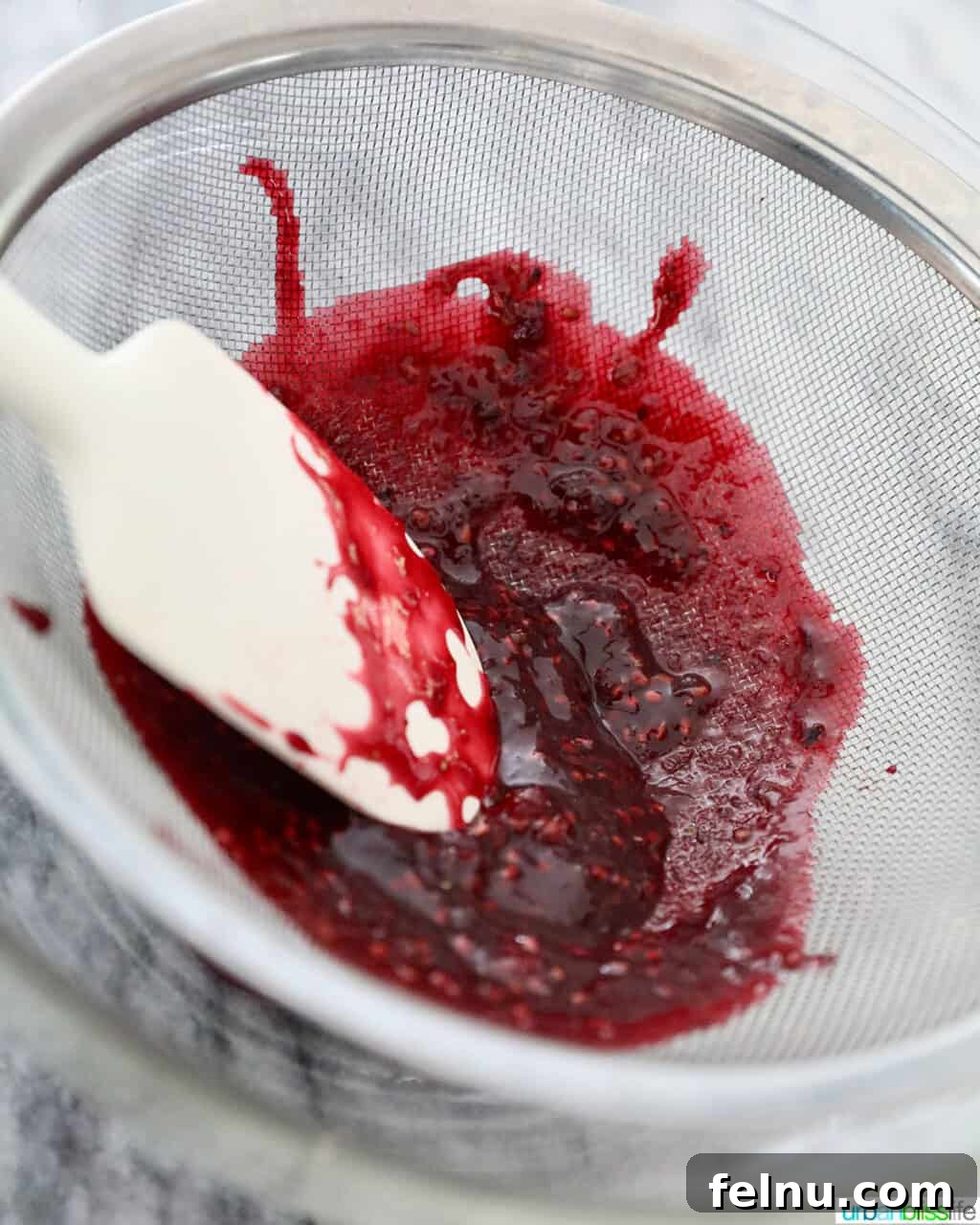
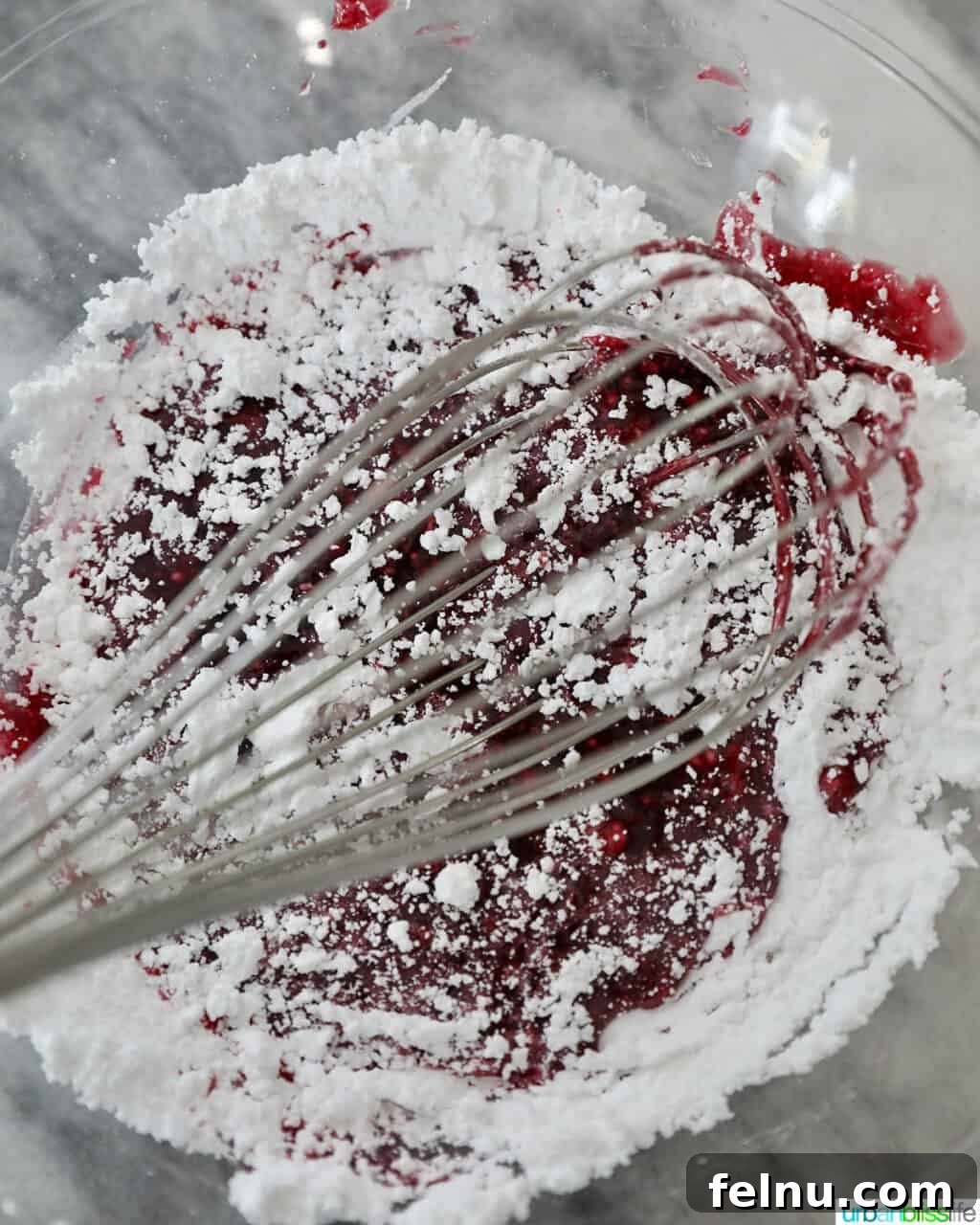
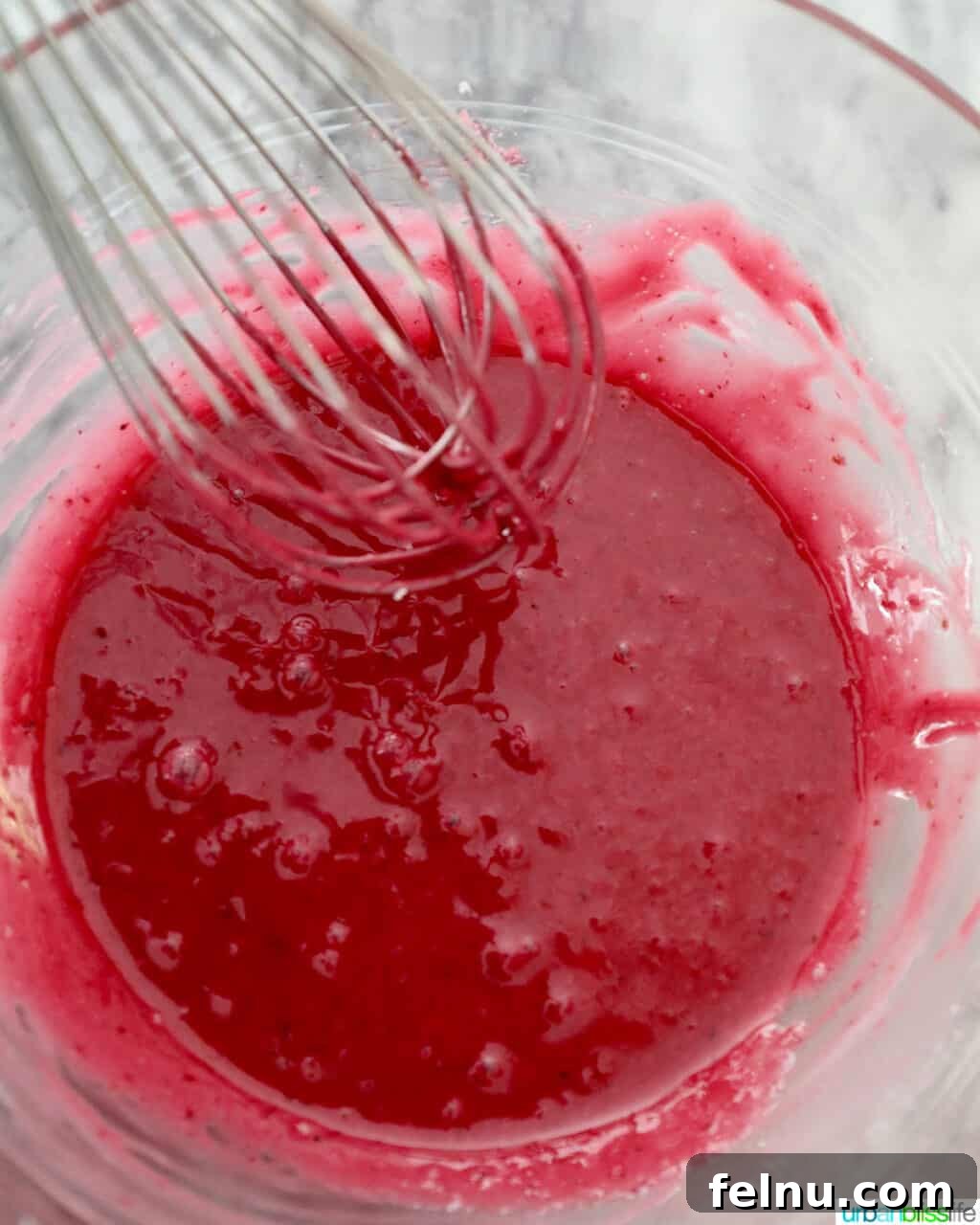
To the remaining blackberry liquid in the large bowl, whisk in the powdered sugar, 1/2 cup at a time, until smooth and lump-free.
Continue whisking until the glaze reaches your desired consistency.
For a thinner glaze: Use less powdered sugar.
For a thicker glaze: Add more powdered sugar until the glaze reaches the consistency you prefer.
Baking Tips and Recipe FAQs: Troubleshooting and Guidance
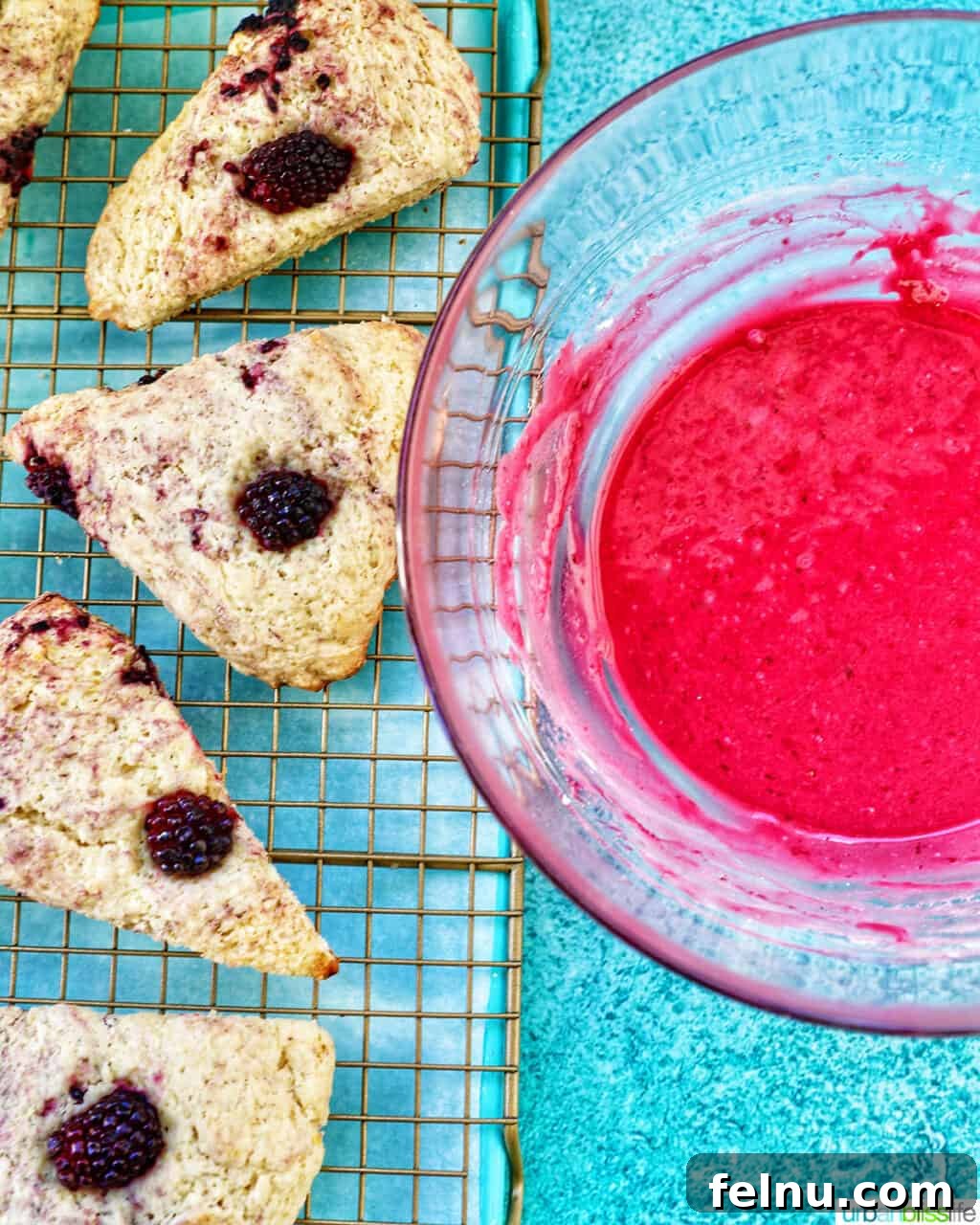
Allow the scones to cool at room temperature until they are cool to the touch. Then you can drizzle or pour the glaze over the scones.
Allow the scones to cool completely to room temperature, and then store in an airtight container at room temperature for up to 5 days. You can also store in the refrigerator for up to 7 days.
Yes, you can freeze scones! Allow the scones to cool completely to room temperature, then store in an airtight, freezer-safe bag or container in the freezer for up to two months.
What to Serve with Blackberry Scones: Pairing Ideas
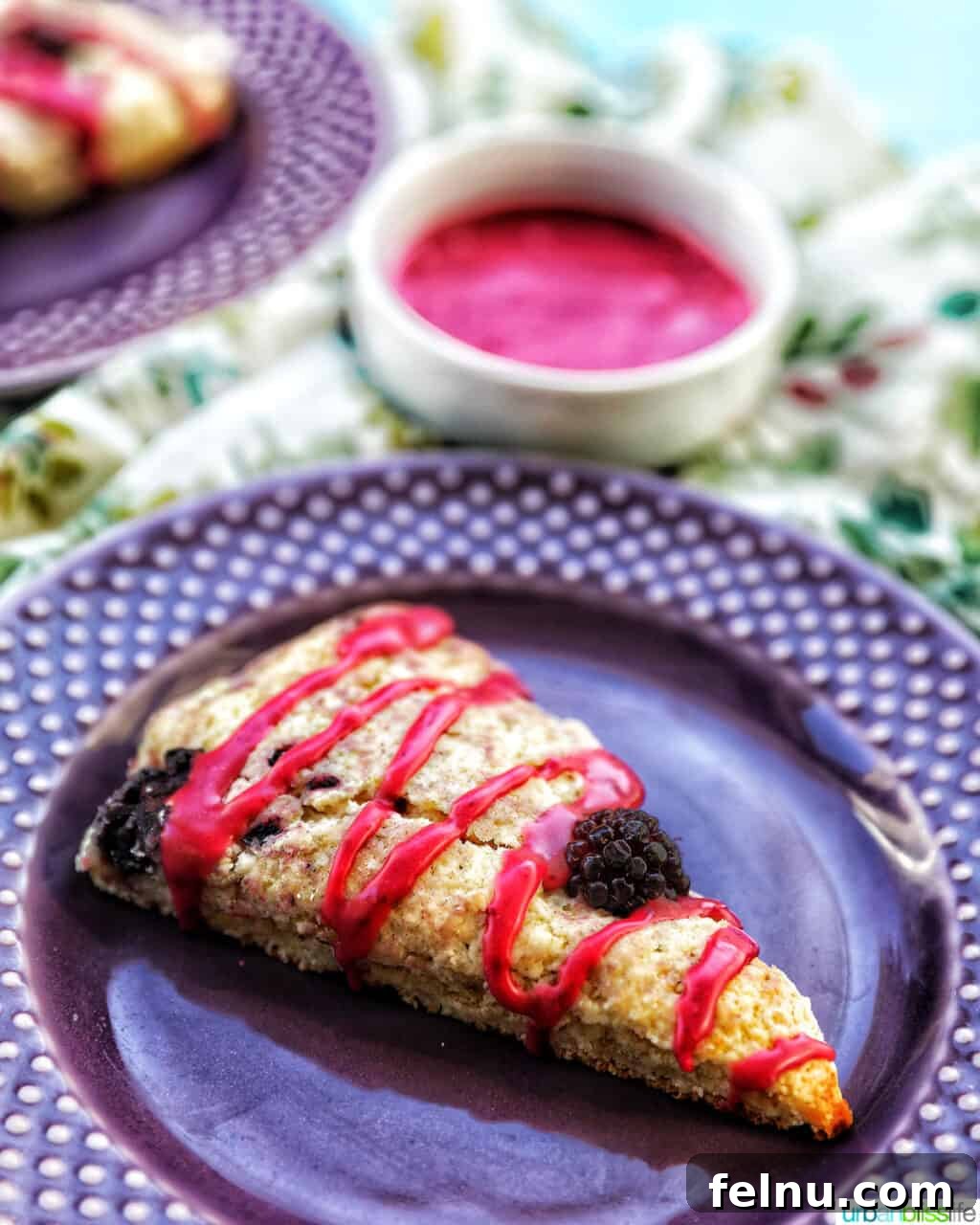
I love enjoying these scones with my morning coffee or an afternoon cup of tea. They are a delightful complement to a hot beverage!
These blackberry scones are also perfect for brunch, bridal showers, baby showers, Easter, and other mid-day celebrations! They’re versatile and fit right in! Consider serving them with these spring and summer dishes:
- Toast with Eggs and Spring Vegetables
- Banana Blackberry Oatmeal Muffins
- Mini Cheese and Spinach Frittatas
- Ham and Spinach Quiche
- Crispy Air Fryer Bacon
- Air Fryer Strawberry Turnovers
More Easy Baking Recipes: Expand Your Baking Repertoire
Hungry for more easy baking recipes? Try one of these yummy baked goods that are easy to make!
- Baked Apple Cinnamon Donuts
- Our Favorite Chocolate Chip Banana Bread
- Strawberry Crinkle Cookies
- Chocolate Chip Almond Biscotti
Blackberry Scones with Blackberry Glaze

Pin
Equipment
- Baking Sheet
Ingredients
2x
3x
For the blackberry scones
- 2 cups all-purpose flour
- ½ cup granulated sugar
- 2 teaspoons baking powder
- ½ teaspoon kosher salt
- ½ cup (1 stick) unsalted butter, cold and sliced into thin slices
- ½ cup coconut cream
- 1 large egg, at room temperature
- 1 teaspoon vanilla extract
- 1 Tablespoon grated lemon zest
- ½ teaspoon lemon juice
- ¾ cup (or one 6-ounce container) blackberries
For the blackberry glaze
- 1 cup blackberries
- ¼ cup granulated sugar
- 1 Tablespoon lemon juice
- 2 cups sifted powdered sugar
Instructions
Make the blackberry scones
- Preheat oven to 400°F. Line a baking sheet with parchment paper.
- In a large bowl, whisk together the flour, granulated sugar, baking powder, and salt.
- Using your hands, mix in the slices of cold butter until the dough is crumbly.
- In a separate bowl, whisk together the coconut milk, egg, vanilla, lemon zest and lemon juice.
- Add the wet ingredients to the dry ingredients, whisking and then using a silicone spatula to fold together until just combined.
- Gently fold in the blackberries.
- On a lightly floured surface, turn out the dough and form a round disc about 9 to 10 inches in diameter.
- Slice the disc into 8 equal triangles, and place onto the prepared lined baking sheet, about 2 inches apart from each other.
- Bake at 400°F for 15 to 20 minutes. While the scones are baking, make the glaze.
Make the blackberry glaze
- In a small saucepan, add the blackberries, lemon juice and bring to a boil. Boil for 2 minutes, until the blackberries start to soften.
- Remove from the heat and pour into a blender. Blend for 1 to 2 minutes, then strain through a sieve over a large bowl.
- To the remaining blackberry liquid in the large bowl, whisk in the powdered sugar, 1/2 cup at a time. Whisk until the glaze reaches your preferred thickness. If you want a thinner glaze, use less powdered sugar. If you want thicker glaze, add a little more powdered sugar.
Assemble the scones
- Allow the scones to cool on the pan for 10 minutes then transfer to a cooling rack and once cool, glaze with the blackberry glaze and sprinkle sanding sugar over each scone.
Video
Notes
Nutrition
Calories: 472kcal, Carbohydrates: 76g, Protein: 5g, Fat: 18g, Saturated Fat: 12g, Polyunsaturated Fat: 1g, Monounsaturated Fat: 3g, Trans Fat: 1g, Cholesterol: 51mg, Sodium: 263mg, Potassium: 128mg, Fiber: 2g, Sugar: 49g, Vitamin A: 423IU, Vitamin C: 6mg, Calcium: 79mg, Iron: 2mg
Nutrition information is automatically calculated, so should only be used as an approximation.
Pin it for Later