
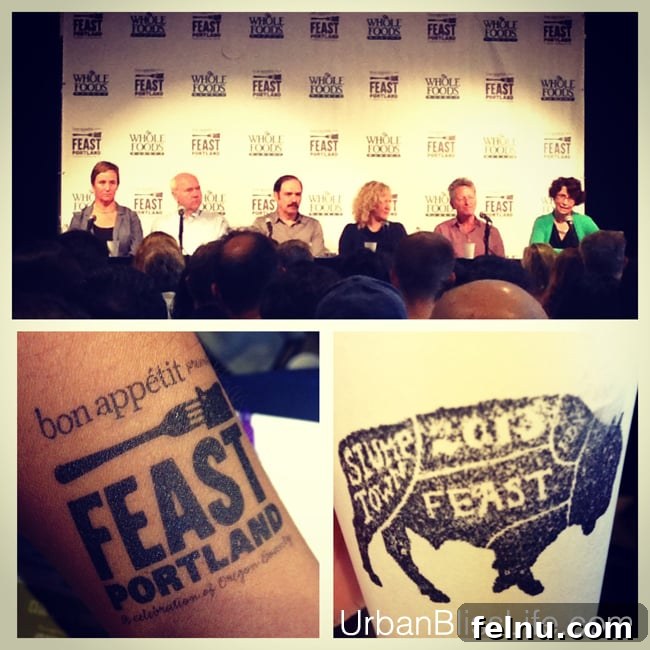
In the vibrant tapestry of culinary events, Feast Portland has long distinguished itself as a beacon for food lovers, a celebration of Oregon’s abundant produce, innovative chefs, and craft beverages. For many, the tantalizing aroma of gourmet dishes, the clinking of glasses filled with artisanal wines and beers, and the sheer joy of communal dining are the primary draws. Indeed, from the bustling energy of the Grand Tasting to the competitive spirit of the Sandwich Invitational, the gastronomic offerings are nothing short of phenomenal. Yet, for me, the true essence, the profound heart of the Feast Portland experience, resided not merely in what I tasted, but in what I learned, debated, and reflected upon during the thought-provoking Speaker Series.
While the epicurean delights served as an irresistible appetizer, setting the stage for a feast of the senses, the Speaker Series unveiled the deeper narrative behind our food culture. Over four eventful days, Feast Portland presented six compelling topics, each designed to stimulate discussion and challenge perspectives. Though time constraints prevented me from attending every single one, the three sessions I did experience left an indelible mark, knocking my rain-soaked, food-laden socks off with their profound insights and urgent calls to action. These discussions continue to resonate, fueling a persistent contemplation long after the last dish was cleared.
Hunger Bites: Let’s End It – Confronting Food Insecurity in America
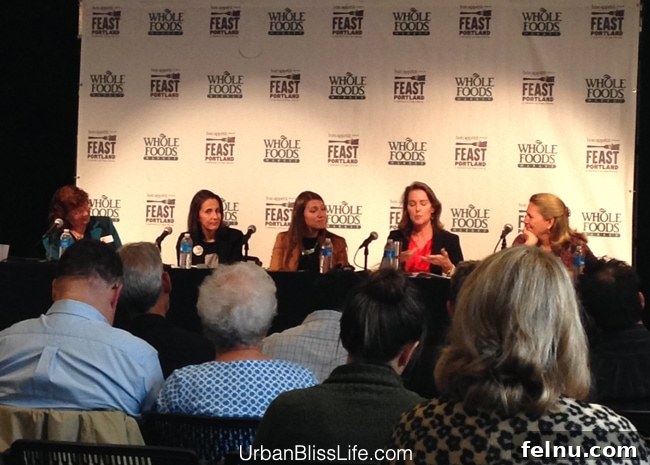
The Speaker Series at Feast Portland courageously kicked off with a session that pulled back the curtain on one of the most pressing societal challenges: hunger and poverty in America. Titled “Hunger Bites: Let’s End It,” this discussion served as a powerful reminder that beneath the surface of culinary abundance lies a stark reality for millions. Recent, sobering data indicates that close to 47 million individuals are currently living in poverty across the nation. Furthermore, in 2012 alone, a staggering 49 million Americans found themselves in food-insecure households, comprising 33.1 million adults and a heartbreaking 15.9 million children. These are not just abstract numbers; they represent families, neighbors, and communities struggling daily to put food on the table.
An exceptional panel of speakers gathered to dissect the multifaceted issues contributing to hunger and poverty, exploring current legislative landscapes, potential future trajectories, and viable solutions. Their collective expertise provided a comprehensive overview of the systemic challenges and the urgent need for action.
Distinguished Panelists Driving the Conversation
The panel comprised influential leaders from various organizations dedicated to combating hunger and promoting food security:
- Nona Evans, Whole Kids Foundation (Austin, TX): Representing an organization focused on improving children’s nutrition and wellness.
- Cylvia Hayes, First Lady of Oregon (Salem, OR): Offering a critical perspective from state leadership and policy-making.
- Lucy Melcher, Share Our Strength (Washington DC): From a national campaign dedicated to ending childhood hunger in America.
- Ellen Teller, Food Research and Action Committee (FRAC) (Washington, DC): An expert voice on federal food assistance programs and policies.
- Patti Whitney-Wise, Partners for a Hunger-Free Oregon (Portland, OR): Providing local insights and solutions to regional food insecurity.
A significant portion of the discussion centered around the recent passage of a bill proposing to slash $40 million from the Supplemental Nutrition Assistance Program (SNAP) over the next decade. The gravity of this decision lay in its devastating potential impact: the majority of those affected by these cuts would be children. Projections suggested that nearly four million individuals would be cut off from the food stamp program in the upcoming year, with an additional three million losing access annually thereafter. This highlighted a stark disconnect between policy decisions and the lived realities of millions of vulnerable Americans.
Key Insights and Calls to Empathy
The panel offered several poignant insights that underscored the human element behind these statistics:
- One speaker powerfully articulated the challenge: “Elected officials are so disconnected from low-income clients. It’s very easy to make those cuts when they don’t have a face. It’s easy to vote against statistics; it’s not easy to look a client in the face and say, ‘Yeah…I’m cutting your lot.’” This statement served as a stark reminder of the need for empathy and direct understanding in policy-making, emphasizing that abstract numbers become deeply personal struggles for those impacted.
- Another profound point made was: “We will not maintain greatness if one quarter of our kids are living in poverty.” This insight linked national prosperity and moral standing directly to the well-being of its youngest citizens, arguing that a nation cannot truly thrive when so many children lack basic necessities.
- The critical importance of nutrition education was also highlighted. Panelists discussed wonderful programs designed to teach families how to maximize their limited budgets, effectively stretch every dollar, and prepare nutritious meals using readily available, affordable ingredients. Such initiatives empower individuals with the knowledge and skills to make healthier choices, even under severe financial constraints.
The concept of the “SNAP challenge,” where individuals attempt to live on the average daily food stamp benefit (approximately $4 per person per day), was brought up. Several elected officials nationwide have undertaken this challenge, aiming to better understand the daily struggles of food-insecure families. Reflecting on this, I must confess my own doubts about whether I could manage such a feat. The thought of supporting a family, especially with children, on merely $4 per person per day, is heart-wrenching. It frankly makes me question the wisdom behind the significant cuts our Congress has made to SNAP. The rationale remains elusive to me, much like many other decisions currently unfolding in the political landscape.
Transparency and GMOs: Decoding Our Food’s Future
The second Speaker Series session I had the privilege of attending delved into the complex and often contentious world of Genetically Modified Organisms (GMOs). This is an issue that, for me, has always been overwhelming, fraught with scientific claims, ethical dilemmas, and deeply personal concerns about health and environmental impact. There’s a persistent fear that we might have reached a point of no return, a critical juncture where actions taken in the name of progress have irreversible consequences. This discussion, however, proved incredibly valuable in demystifying the debate surrounding GMOs and the crucial imperative of mandatory labeling, breaking down these grand issues into how they directly affect each and every one of us.
Expert Voices on Genetic Modification
The esteemed panel brought together diverse perspectives, fostering a nuanced and informative discussion:
- Delana Jones, Yes on 522 (Seattle, WA): Representing a campaign advocating for mandatory GMO labeling, offering a grassroots and consumer-focused viewpoint.
- Robyn O’Brien, AllergyKids Foundation (Boulder, CO): A former food industry analyst turned advocate, focusing on the link between food and children’s health.
- Errol Schweizer, Whole Foods Market (Austin, TX): Providing an industry perspective from a major natural and organic food retailer.
- Arran Stephens, Nature’s Path (Richmond, British Columbia, Canada): From a leading organic food company, offering insights into sustainable and non-GMO practices.
- David Steves, EarthFix (Portland, OR): A journalist and environmental reporter, contributing a media and ecological lens to the debate.
I have been a long-time follower of Robyn O’Brien on Twitter, admiring her tireless advocacy. As a former food industry analyst and a mother of four, she has dedicated herself to the formidable task of “restoring the integrity of our food supply and the health of our children.” Her work is a constant source of inspiration, and her words at this speaker series event had a profound impact on me. She articulates the very questions that resonate with so many of us – mothers, fathers, children, and friends alike: Why are we consistently producing genetically modified “food” that seems to contribute to the increasing rates of illness in our country? Her insightful observation, “Correlation is not causation; but, correlation of that magnitude justifies examination,” struck a chord. This statement encapsulates the urgent need for deeper scientific scrutiny and transparent dialogue, rather than dismissing significant correlations out of hand. I wholeheartedly agree.
Critical Takeaways from the GMO Debate
The panel discussion offered several illuminating points that helped clarify the complexities of the GMO issue:
- The debate was framed as fundamentally: “It’s a battle against nature or a battle for nature.” This underscored the philosophical divide regarding humanity’s role in altering natural biological processes.
- A crucial distinction was clarified: Non-GMO does not automatically mean organic, but critically, organic products always guarantee they are non-GMO. This helps consumers navigate labeling and understand different certifications.
- A common industry argument against mandatory labeling—that it would significantly increase food costs—was directly refuted: “Mandatory labeling will NOT increase your food costs.” This addressed a major consumer concern and challenged industry messaging.
- The origins of the widespread adoption of GMOs were traced back to the mid-1990s, with pioneering efforts focused on flavor-saving tomatoes and subsequently, GMO corn. This historical context provides a timeline for understanding the growth of genetically engineered crops.
- Panelists highlighted active legislative efforts, noting that Washington state currently has a labeling law, Senate Bill 633, on the table. The fact that close to 200 companies in Washington are supporting GMO labeling indicates growing industry and consumer momentum for transparency.
- An actionable call to empowerment was shared: What can we do? The advice was to not only challenge powerful corporations like Monsanto but also to actively thank and support large companies like Target, which are beginning to launch non-GMO product lines. This emphasizes the power of consumer demand in driving market change.
- The practical realities of agricultural transition were discussed: It takes three years for genetically engineered crops to be converted to certified non-GMO crops, highlighting the time and effort required for farmers to shift practices.
- The immense financial power of corporate giants was also brought to light: Monsanto was described as a “beast with a 62 million dollar war chest,” willing to invest millions into fighting food labeling laws and, in some cases, pushing non-GMO farms out of business. This illustrated the uphill battle faced by advocates for labeling and sustainable farming.
- Finally, the panel explored why farms adopt GMOs in the first place, citing the difficulty of refusing attractive subsidies, insurance programs, and marketing support offered by seed companies. This shed light on the economic pressures influencing farmers’ choices.
Robyn O’Brien concluded with a sobering thought, stating, “This truly will be the legacy of our time.” This profound statement prompts us to reflect on the long-term consequences of our current food system decisions. What kind of legacy are we actively choosing to leave behind for future generations? What world do we envision for our children and their children? In my view, it is not a world where the very food we consume makes us sick, nor one where we remain ignorant about the origins or contents of our meals. I aspire to a better world—a safer, healthier, and more transparent one. Don’t you?
Create an Awesome Food Business Without Selling Your Soul: Entrepreneurship with Integrity
The final speaker series I attended resonated deeply with the serial entrepreneur within me. The allure of the food industry is undeniable, yet building a successful food business, especially one that upholds ethical principles, presents a unique set of challenges. This panel offered an invaluable opportunity to hear directly from accomplished business owners and executives about the realities, triumphs, and essential truths of navigating the culinary entrepreneurial landscape. Their candid discussions provided a refreshing perspective on achieving commercial success while staying true to one’s core values.
Leaders Forging Ethical Paths in Food
The esteemed lineup featured founders and leaders from some of my favorite local and national brands, each renowned for their commitment to quality and integrity:
- Piper Davis, Grand Central Bakery (Portland, OR): A visionary behind a beloved bakery chain known for artisanal breads and community engagement.
- Chuck Eggert, Pacific Foods (Tualatin, OR): Founder of a pioneering brand in organic and natural broths and plant-based beverages, celebrated for sustainable practices.
- Allison Frost, Think Out Loud (Portland, OR): A representative from a prominent public radio show, offering insights into media, communication, and community engagement within the food scene.
- A.C. Gallo, Whole Foods Market (Austin, TX): Co-President of a global leader in natural and organic foods, sharing insights from a large-scale, values-driven retail perspective.
- Kim Malek, Salt & Straw (Portland, OR): Co-founder of an innovative ice cream company famous for its unique flavors and commitment to local sourcing.
- Steve Smith, Smith Teamaker (Portland, OR): The legendary tea master behind a company dedicated to crafting exceptional, ethically sourced teas.
“We can make change happen,” declared Chuck Eggert of Pacific Foods, “and we can make a positive change.” This powerful sentiment encapsulated the overarching theme of the panel. Beyond offering invaluable nuggets of wisdom on the practicalities of financing, managing, and marketing a business, each company representative passionately spoke to the driving forces behind their success: deeply embedded core values centered on sustainability, localization, and integrity. These principles, they asserted, were not mere buzzwords but fundamental pillars guiding their operations, product development, and engagement with both customers and suppliers.
Lessons in Passion, Persistence, and Purpose
The speaker series offered a wealth of inspiring and practical highlights for aspiring entrepreneurs:
- Chuck Eggert of Pacific Foods shared a counterintuitive piece of advice: “Sometimes it’s better to be stubborn, than smart.” He elaborated that this ‘stubbornness’ refers to an unwavering commitment to one’s vision and values, especially when faced with conventional wisdom or short-term pressures. His favorite entrepreneurial quote, fittingly from Winston Churchill, reinforces this: “Don’t you ever, ever, ever give up.” This resonated as a call for relentless persistence in pursuing one’s passion.
- Kim Malek of Salt & Straw revealed the personal sacrifices often involved in starting a business, admitting to cashing out her 401K to fund her initial venture. Her story highlighted the immense personal risk and deep commitment required, later augmented by crucial investments from friends and family who believed in her vision.
- Piper Davis of Grand Central Bakery emphasized the strategic importance of aligning with the right financial partners. She advised entrepreneurs to seek “investors who share your same values and who have similar visions for your rate of growth.” This underscored that capital alone isn’t enough; shared principles are vital for long-term, harmonious growth.
- For A.C. Gallo of Whole Foods Market, the essence of his business lies in fostering genuine connections between customers and their food. He articulated, “It’s always important to create connections for the customer to understand where their food comes from, how it was made.” This highlights the growing consumer demand for transparency, storytelling, and an understanding of the provenance of their food.
- An interesting revelation was that two of the panelists, A.C. Gallo and Steve Smith, were college dropouts, demonstrating that traditional academic paths are not the sole routes to entrepreneurial success. Conversely, Chuck Eggert held numerous degrees, including an MBA and a food science degree, while others boasted various college qualifications. This showcased the diverse educational backgrounds that can lead to innovation in the food industry.
- Steve Smith offered a practical insight into the financial realities of product launches, stating, “It takes a year in the market, sometimes more, to recoup the initial money you’ve invested in your product.” This provided a realistic timeline for profitability and underscored the need for patience and robust initial funding.
I sincerely wished all my fellow entrepreneurs could have attended this deeply enriching panel. Given the thriving ecosystem of food businesses in the Portland area, I strongly advocate for the inclusion of a similar panel topic in future Feast Portland events. Such discussions are invaluable for fostering innovation, encouraging ethical practices, and empowering the next generation of food industry leaders.
Why We Feast: A Deeper Meaning Beyond the Plate
Throughout the entirety of Feast Portland, alongside the specific speaker series title hashtags, a powerful, unifying trend emerged: #WhyWeFeast. This simple yet profoundly resonant hashtag struck a deep chord within me, encapsulating a meaning far richer than mere culinary enjoyment.
Why we feast. Take a moment to truly ponder that question.
The significance extends far beyond the commendable fact that Feast Portland served as a direct benefit for Share Our Strength’s No Kid Hungry campaign and Partners for a Hunger-Free Oregon. While donating a portion of proceeds is undeniably noble and impactful, the true essence of why we feast delves into something much more fundamental, something that touches the very core of our shared human experience.
We care deeply about the nourishment we provide for our own bodies, and even more so, for the developing bodies of our children. This concern drives choices, influences purchasing decisions, and fosters a desire for wholesome, unadulterated food.
We care intensely about the journey of our food: how it is cultivated, how it is processed (or thoughtfully left unprocessed), and how transparently it is labeled. This reflects a desire for knowledge, a right to informed choices, and a demand for ethical production practices.
We care passionately about the origins of our food: who are the dedicated individuals who grow or create it, what are its roots, and what philosophical principles guide their approach to food? This connects us to the land, to the labor, and to the stories behind every ingredient.
We care profoundly about ensuring that healthy, nutritious food is accessible to everyone, especially those who struggle to afford as much as we can, and that they are equipped with the knowledge to make wise, healthy eating choices even on the most limited budgets. This speaks to social justice, equity, and the universal right to adequate nutrition.
Ultimately, we care about continuously striving to make the entire food system better—not just for our immediate benefit, but for the collective well-being of everyone around us, fostering a healthier, more sustainable world. This is a commitment to progress, to innovation, and to a shared future.
I was truly moved by the depth and breadth of the Speaker Series events I attended. They inspired me to embark on a journey of introspection, compelling me to dig deep and confront uncomfortable, challenging questions about my own understanding and role within the food system. I left those sessions with a humbling realization: how very little I truly know about the intricate workings of our food supply, its impact, and its future. Yet, this realization was powerfully counterbalanced by an overwhelming sense of care, a burning desire to engage more deeply. And that, I firmly believe, is a monumental start.
This experience has ignited within me a potent motivation to do more, to be more informed, to offer more assistance, and to advocate more vigorously for positive change. The specific actions this profound introspection will lead me to are not yet entirely clear. However, I departed the speaker series events with an undeniable certainty: I must DO something. And when that ‘something’ crystallizes into a defined path, trust me when I say: you will know it. And I sincerely hope that you, too, will choose to share in that unfolding journey with me, as we collectively strive for a better food future.
My sincere gratitude goes to Feast Portland for not only masterfully nourishing its attendees and casting a glorious spotlight on Oregon’s exceptional bounty but, more importantly, for accomplishing what all truly great events should aspire to do: provoke profound thought and powerfully move people to meaningful action.