
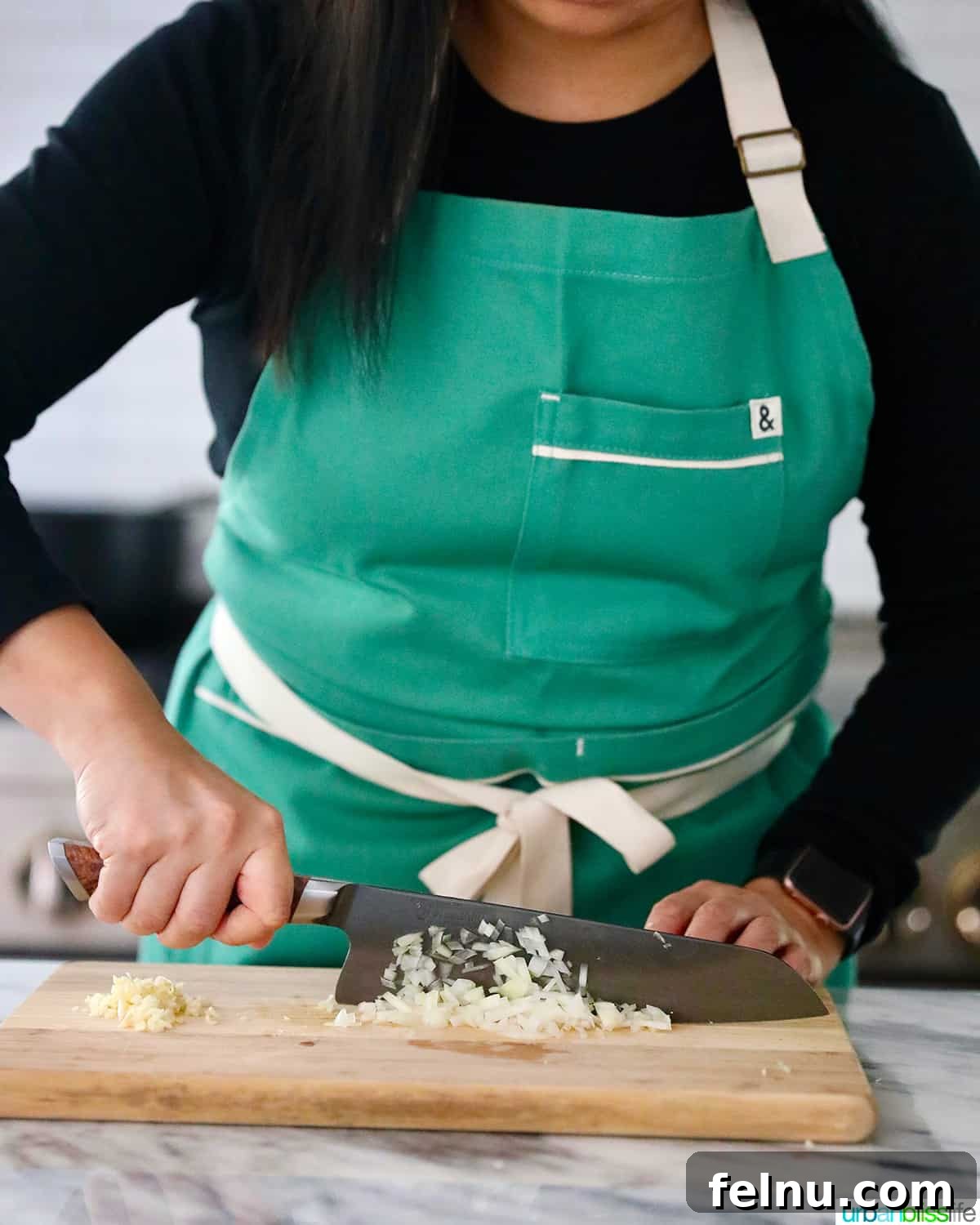
For both aspiring home chefs and seasoned culinary professionals, selecting the right kitchen knives is paramount to crafting dishes that are not only delicious but also visually appealing. However, the sheer variety of options available can be overwhelming. This comprehensive guide will illuminate the 9 essential types of kitchen knives you should consider investing in, alongside expert advice on how to properly care for them, ensuring they remain peak performers in your kitchen arsenal.
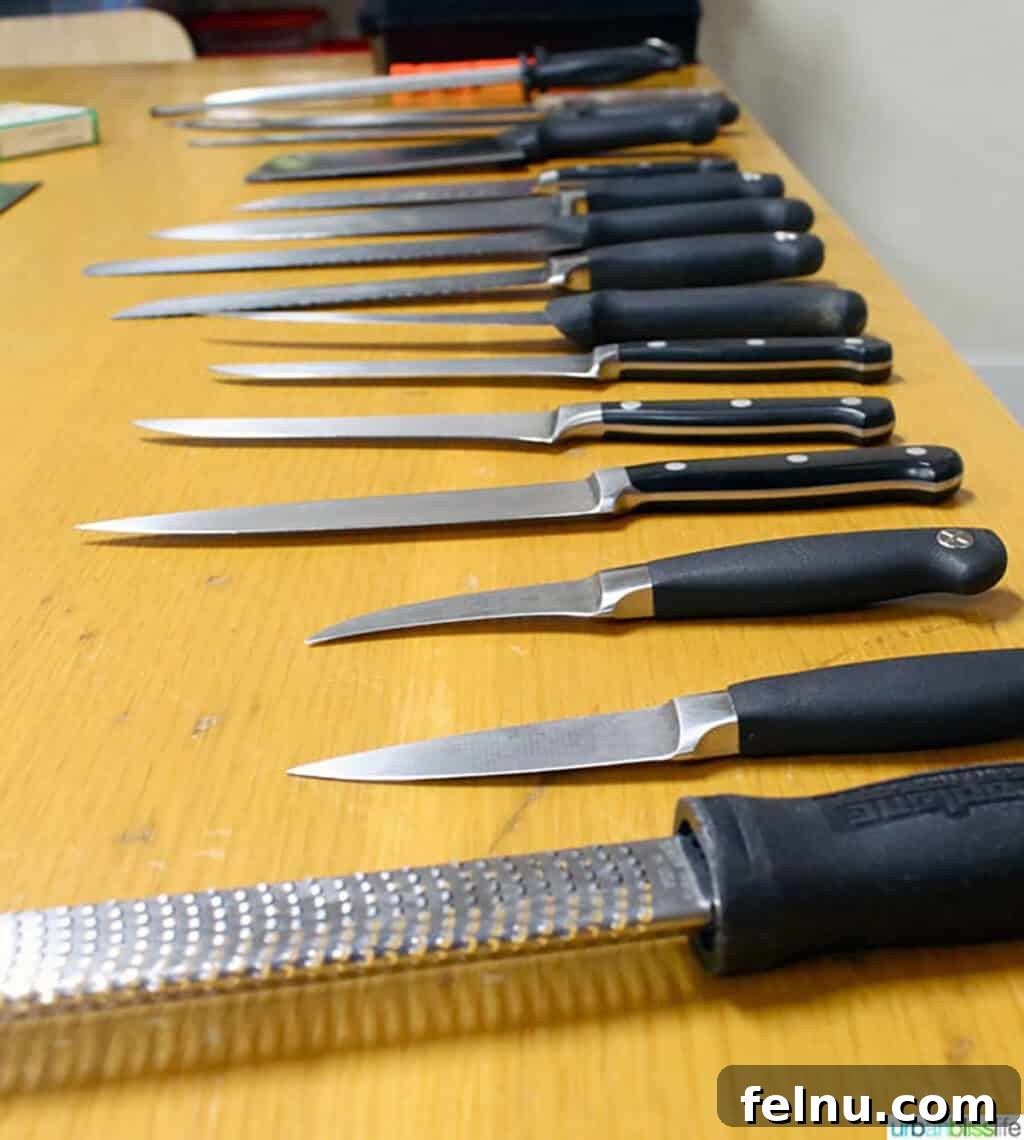
I distinctly recall the excitement and slight intimidation when I received my first “grown-up” set of kitchen knives. It was an impressive collection of fifteen knives, neatly presented in a substantial wooden block. My partner, Marlynn, and I received it as a wedding gift, and that heavy block became a steadfast fixture on various kitchen counters as we navigated through different apartments and our first couple of homes.
Despite owning this extensive set, it took us considerable time to truly understand the specific purpose of each knife for food preparation. The common outcome: we often defaulted to the chef’s knife for virtually every task, leaving the other specialized blades untouched in their secure wooden abode. This common scenario highlights a missed opportunity for many home cooks.
The revelation came when we discovered that a deeper understanding of the different types of kitchen knives and their proper usage can drastically cut down on preparation time and effort, while also enhancing precision and safety. This insightful guide will walk you through the 9 most common and indispensable types of kitchen knives, empowering you to approach your culinary endeavors with confidence and efficiency. Mastering your knives isn’t just about cooking; it’s about transforming your entire kitchen experience.
1. Chef’s Knife: The Unrivaled Kitchen Workhorse
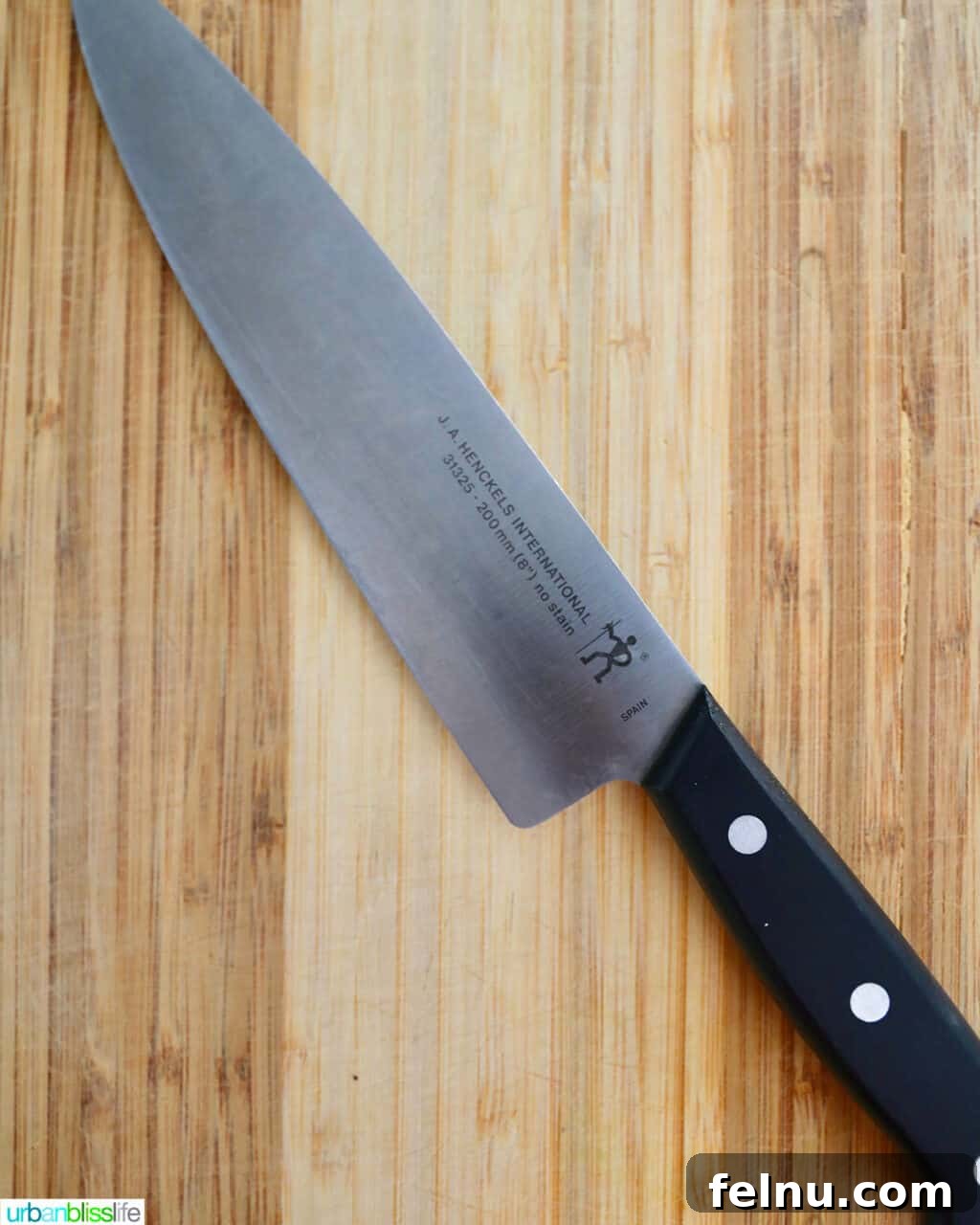
Without a doubt, the Chef’s Knife stands as the single most critical and versatile implement in any cooking toolkit. This dynamic blade is engineered to handle an astonishing array of tasks, making it the primary go-to for chopping, dicing, slicing, and carving. From preparing vibrant fruits and crisp vegetables to robust meats and delicate herbs, its capabilities are extensive.
Characterized by its long, slightly curved blade, the chef’s knife is expertly designed to facilitate a smooth, rocking motion during chopping, which significantly eases the strain and increases efficiency. These blades typically range in length from 8 inches to 12 inches. While longer blades are exceptionally useful for tackling substantial items like a whole watermelon or large roasts, an 8 or 10-inch blade generally proves most practical and manageable for daily cooking tasks in the average home kitchen. Choosing the right length will depend on your hand size and the typical volume of food you prepare.
When selecting your chef’s knife, prioritize balance and comfort. It should feel stable in your hand, neither too blade-heavy nor handle-heavy, allowing for precise control. The grip is equally important; ensure it’s ergonomic, secure, and won’t slip, even when your hands are wet. Most crucially, invest in a knife that is sharp right out of the box. A dull knife is not only less effective but also more dangerous. For insights into maintaining that razor-sharp edge, refer to our detailed section below on how to properly sharpen your knives.
2. Santoku Knife: The Japanese All-Rounder for Precision
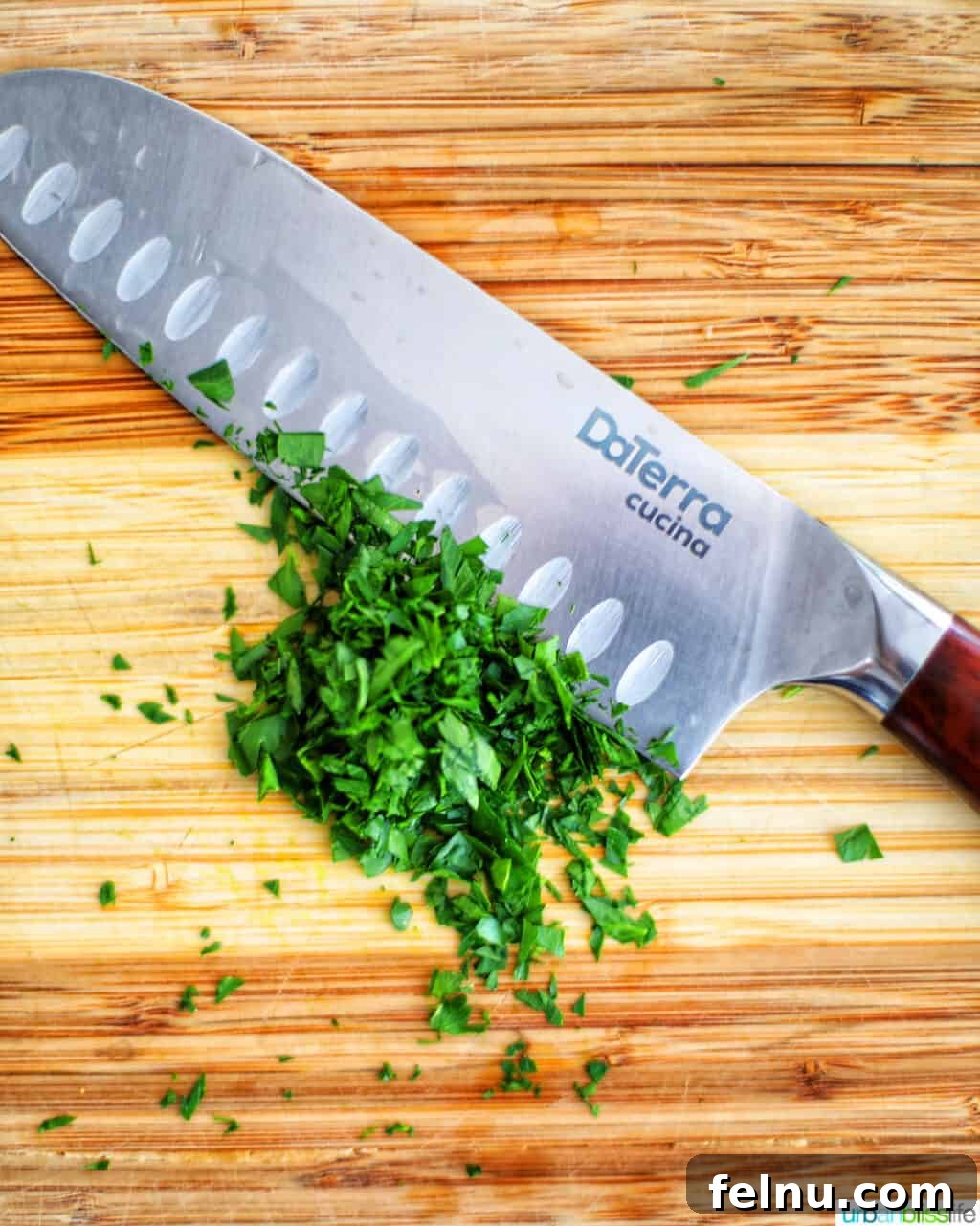
Often considered the Japanese counterpart to the Western chef’s knife, the Santoku Knife is another excellent and highly versatile option for a wide range of food preparation tasks, particularly those involving chopping and dicing. The term “Santoku” itself translates to “three virtues” or “three uses,” typically referring to its proficiency with meat, fish, and vegetables.
Distinguishing itself from a chef’s knife, the Santoku typically features a wider, straighter blade profile and is generally thinner. This unique design offers superior stability and control, making it exceptionally adept at executing smaller, more intricate cuts – think delicate mincing or fine julienning. The flatter blade allows for a clean, single-downward chop rather than the rocking motion preferred with a chef’s knife.
Commonly found with an 8-inch blade, Santoku knives frequently incorporate small indentations or scallops, known as a ‘Granton edge,’ along the sides of the blade. These divots create air pockets that reduce friction and prevent food from sticking to the blade as you slice. This feature makes the Santoku an outstanding choice for efficiently processing moisture-rich foods such as crisp cucumbers, juicy tomatoes, pungent onions, aromatic garlic, as well as various meats and cheeses. Its precision and non-stick capabilities make it a favorite for those who value clean, effortless cuts.
3. Boning Knife: For Effortless Meat Preparation
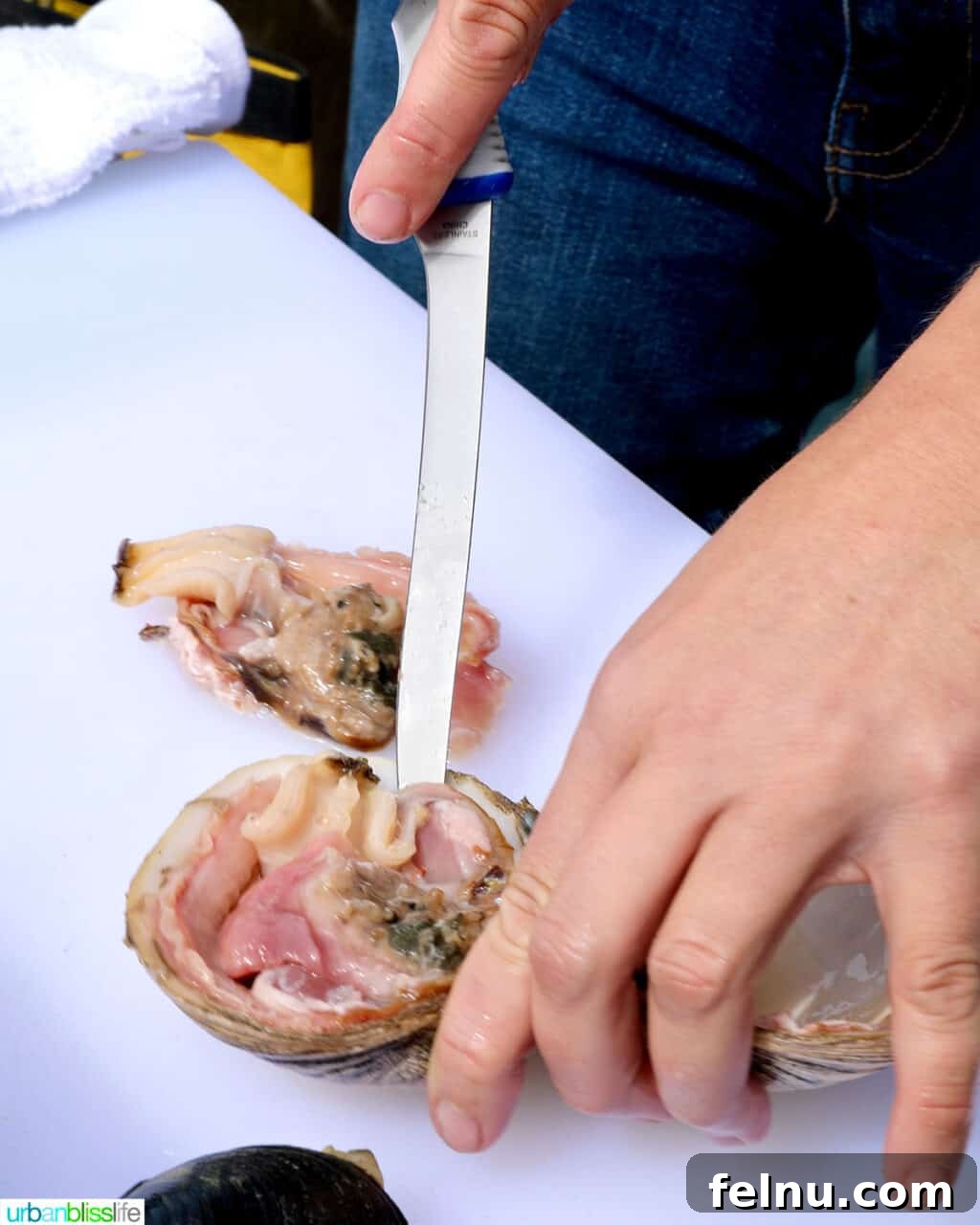
While the chef’s knife and Santoku knife serve as the foundational, most versatile blades in any kitchen, a dedicated Boning Knife is an invaluable addition for serious cooks, particularly those who frequently work with various cuts of meat. This specialized tool dramatically enhances efficiency and precision when preparing poultry, pork, beef, and even fish.
A boning knife is characterized by its narrow, often flexible blade, which is specifically engineered to navigate the intricate contours of bones and joints. Its primary function is to efficiently debone different types of meat, separating the flesh from the skeletal structure with minimal waste. While it’s technically possible to debone meat with a chef’s knife, a boning knife’s thin, tapered tip and slender profile are designed for far greater accuracy and effortless maneuvering. This allows for cleaner, more professional-looking cuts and ensures that more valuable meat remains attached to the portion rather than the bone.
Beyond deboning, this knife is also excellent for trimming excess fat, silverskin, or connective tissue from meat. The flexibility of many boning knife blades (though some prefer stiffer blades for larger cuts) allows it to bend around bones without damaging the meat, producing pristine fillets and portions. For anyone keen on refining their butchery skills or simply reducing food waste when preparing fresh cuts, a quality boning knife is a highly recommended investment.
4. Fillet Knife: The Specialist for Fish Perfection
A close relative to the boning knife, the Fillet Knife takes specialization a step further, focusing exclusively on the delicate art of fish preparation. While a boning knife can handle both meat and fish, the fillet knife is meticulously crafted for the unique demands of processing various types of fish, from small trout to large salmon.
Distinctly thinner and often longer than a boning knife, the fillet knife features a pronounced upward curve towards the tip of the blade. This design is crucial for its specialized tasks. The thin, flexible blade allows it to glide effortlessly along the backbone of a fish, meticulously separating the flesh from the bones. Its flexibility is also perfect for deftly removing skin, adapting to the natural contours of the fish without tearing the delicate meat.
The characteristic curved tip is not just for aesthetics; it plays a vital role in creating precise fillet cuts, enabling the user to easily maneuver around intricate bone structures and produce clean, boneless, and skinless portions. For avid anglers or seafood enthusiasts who frequently prepare fresh fish, a high-quality fillet knife is indispensable. It transforms what can often be a challenging task into a smooth, efficient, and enjoyable process, resulting in beautifully prepared fish fillets ready for cooking.
5. Paring Knife: The Master of Detail and Delicacy

Not every culinary task demands the robust power of a chef’s knife or the specialized strength of a boning knife. Sometimes, food preparation calls for a more nuanced, delicate touch, and this is precisely where the Paring Knife shines. Despite its small stature, it’s an indispensable tool for intricate and precise work in the kitchen.
The paring knife features a small, yet remarkably sharp, blade typically ranging from 2.5 to 4 inches in length. This compact size and keen edge make it the ultimate knife for tasks requiring fine motor control and precision. It is exceptionally well-suited for peeling various fruits and vegetables, efficiently removing skins without wasting precious flesh. Beyond peeling, it excels at fine dicing, mincing garlic or shallots, and performing delicate garnishing work.
Its pointed tip and straight edge are perfect for a multitude of detailed jobs, such as deseeding certain foods, deveining shrimp, hulling strawberries, or creating decorative cuts. Many chefs prefer to hold a paring knife in hand for these tasks, allowing for superior control and agility compared to working on a cutting board. For any kitchen where detailed preparation, intricate garnishes, or small-scale precision is a regular occurrence, a good paring knife is an absolute essential.
6. Utility Knife: The Versatile “Tweener”
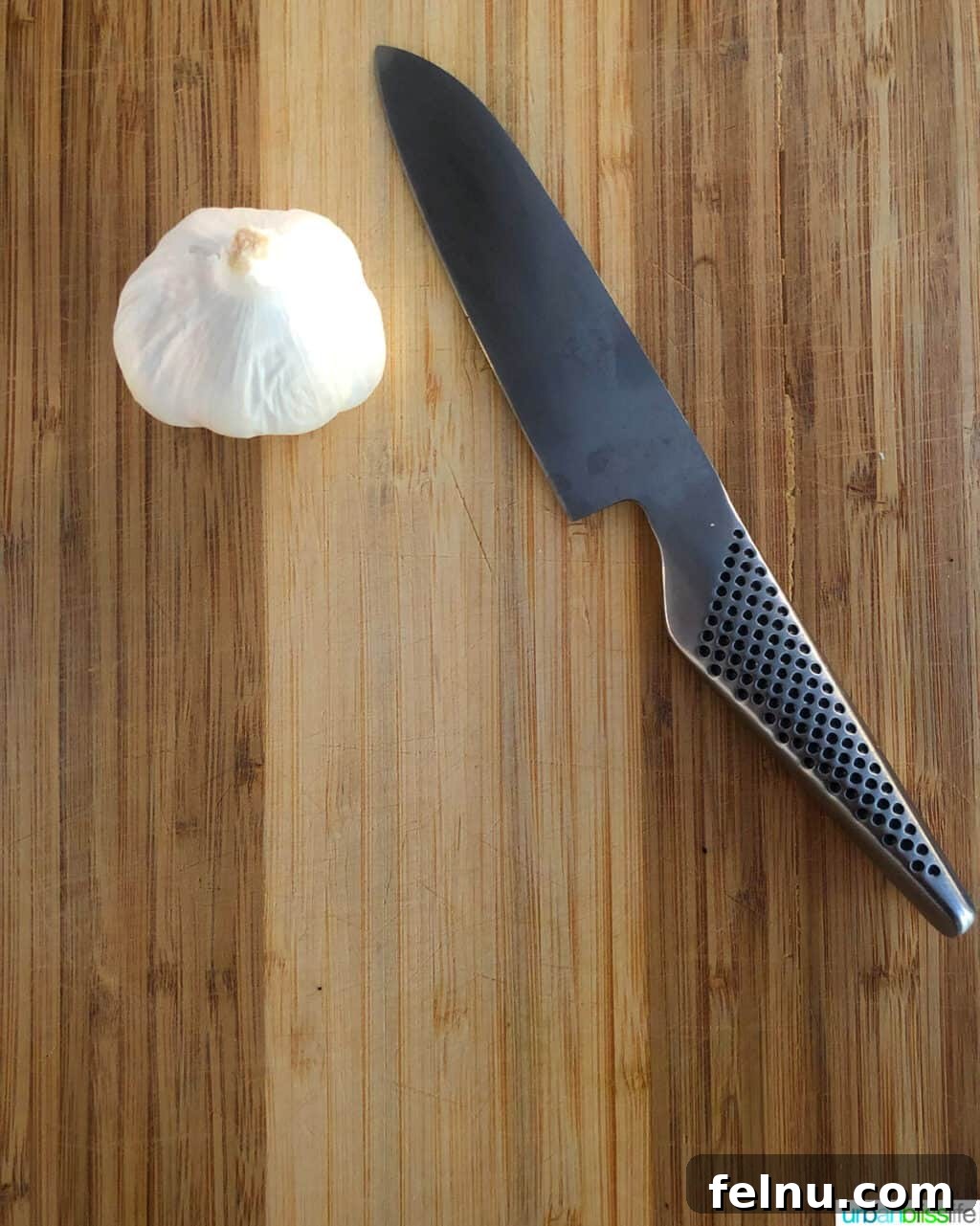
I often affectionately refer to the Utility Knife as the “tweener” of the kitchen knife world. In terms of size, it comfortably sits between the larger chef’s knife and the smaller paring knife, typically featuring a blade length between 4 and 7 inches. This mid-range size gives it a degree of versatility, aiming to fill the gap for tasks that are too substantial for a paring knife but don’t quite warrant the full heft of a chef’s knife.
Utility knives can indeed be employed for various kitchen tasks. They are capable of chopping mid-sized fruits and vegetables, such as apples, onions, or smaller potatoes, and can even handle some lighter meat preparation. Moreover, they prove useful when you need to prep smaller food items, offering a bit more leverage than a paring knife. However, it’s worth noting that while they *can* perform these tasks, they often don’t excel at them in the way a specialized knife does. For heavy-duty chopping, a chef’s knife is superior, and for delicate precision, a paring knife often offers better control.
Essentially, the utility knife serves as a general-purpose blade, a decent all-rounder for simpler tasks or as a backup. It’s less about specialized excellence and more about broad capability. For this reason, it often falls into the category of a “nice-to-have” rather than a “must-have” for most home cooks who already possess a good chef’s and paring knife. However, for those with limited space or a desire for a single knife for light, varied tasks, it can still be a valuable asset.
7. Bread Knife: The Serrated Slicer for Crusts and Cakes
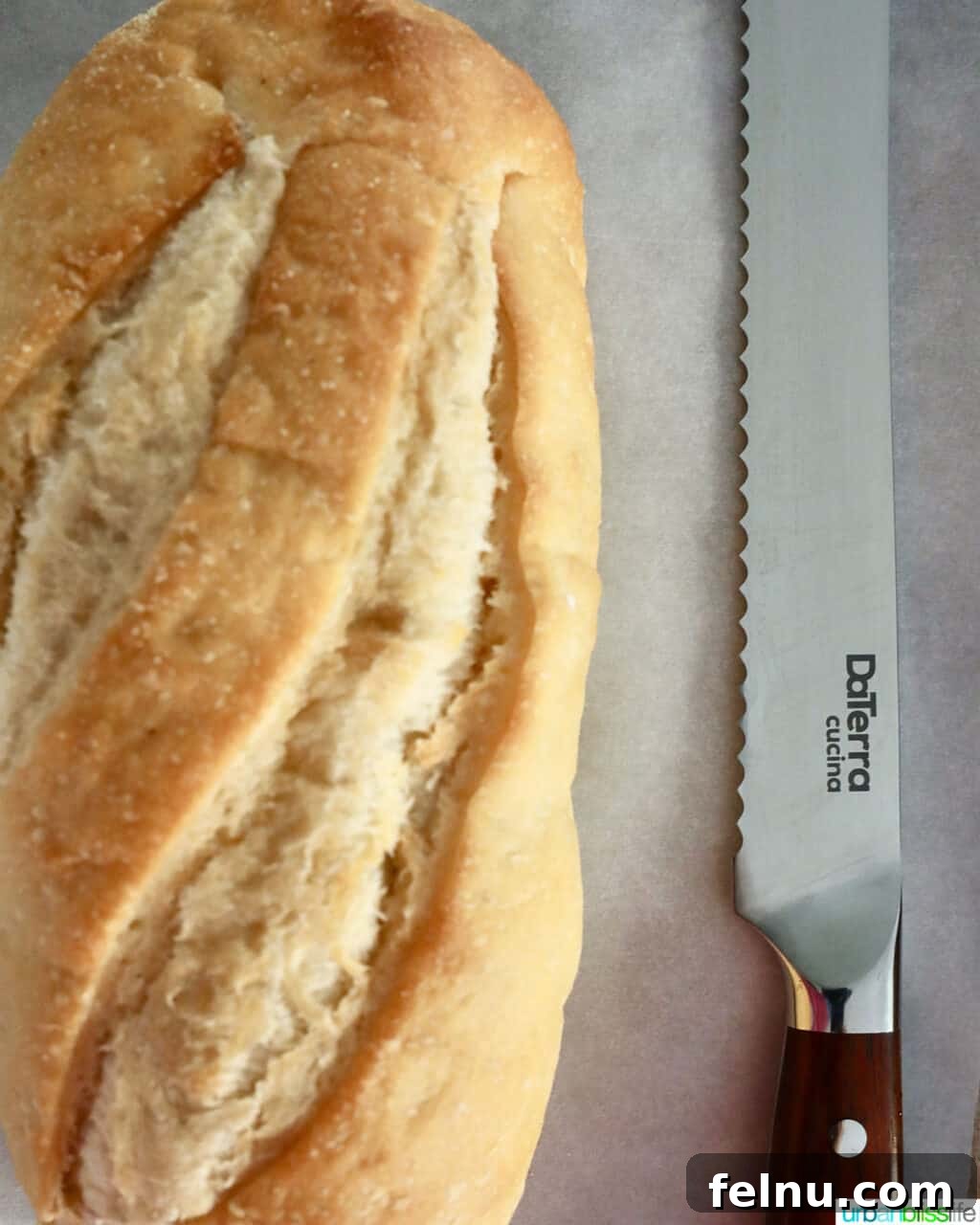
As its name clearly suggests, the Bread Knife is primarily designed for one crucial task: effortlessly cutting through bread. Specifically, it excels at slicing through loaves that boast a hard, crispy outer crust while maintaining the integrity of the soft, airy interior. Its distinctive serrated edge is the key to this performance, acting like a series of small saws that grip and tear through tough exteriors without compressing or damaging the delicate structure of the bread inside, preventing messy crumbs and uneven slices.
Beyond its obvious use for freshly baked bread, a bread knife proves surprisingly versatile for several other kitchen tasks. The serrated edge is exceptionally handy for cleanly slicing through delicate yet firm items, such as the tricky skins of ripe tomatoes, where a smooth blade might just slip or crush the fruit. It’s also the ideal tool for expertly leveling off and slicing through cakes, ensuring even layers for frosting and filling, without tearing or dragging crumbs. For anyone who bakes regularly or simply enjoys a good loaf of artisanal bread, a dedicated bread knife is a practical and highly effective addition to their knife collection.
8. Cleaver: For Power and Precision in Heavy-Duty Tasks
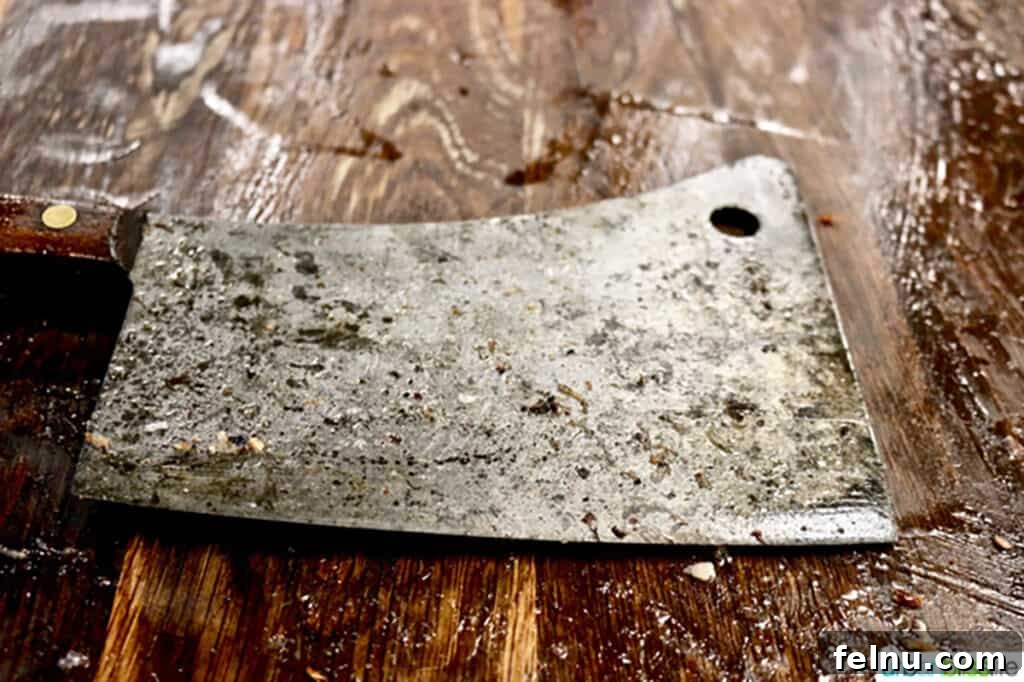
While not a conventional “knife” in the slender sense, the Meat Cleaver is an indispensable tool for those involved in serious meat preparation and butchery. Its robust construction and distinctive broad, rectangular blade set it apart, making it uniquely suited for the toughest culinary challenges. The cleaver’s significant weight and thick, often blunt, blade are specifically designed to provide maximum force and momentum, making light work of tasks that would damage other knives.
Primarily, a cleaver is used for chopping through dense bones, gristle, and tough cuts of meat, such as whole chicken carcasses or ribs. Its heft allows for clean, powerful cuts with minimal effort, distinguishing it from general-purpose knives. For most home cooks, who typically purchase already separated poultry and pre-cut meats, a cleaver may fall into the “nice-to-have” category rather than an essential. However, for those who regularly process whole animals or large cuts, it’s a game-changer.
Beyond butchery, the large, flat side of a cleaver can also be surprisingly useful for crushing garlic or ginger, or even for scooping chopped ingredients off a cutting board. While its size might suggest it’s suitable for chopping larger vegetables, its blunt edge typically isn’t designed for precision slicing. In most cases, a chef’s knife would be a more appropriate and effective tool for vegetable prep. Nevertheless, for sheer power and durability in the kitchen, nothing quite compares to a well-used cleaver.
9. Kitchen Shears: The Multi-Purpose Culinary Scissors
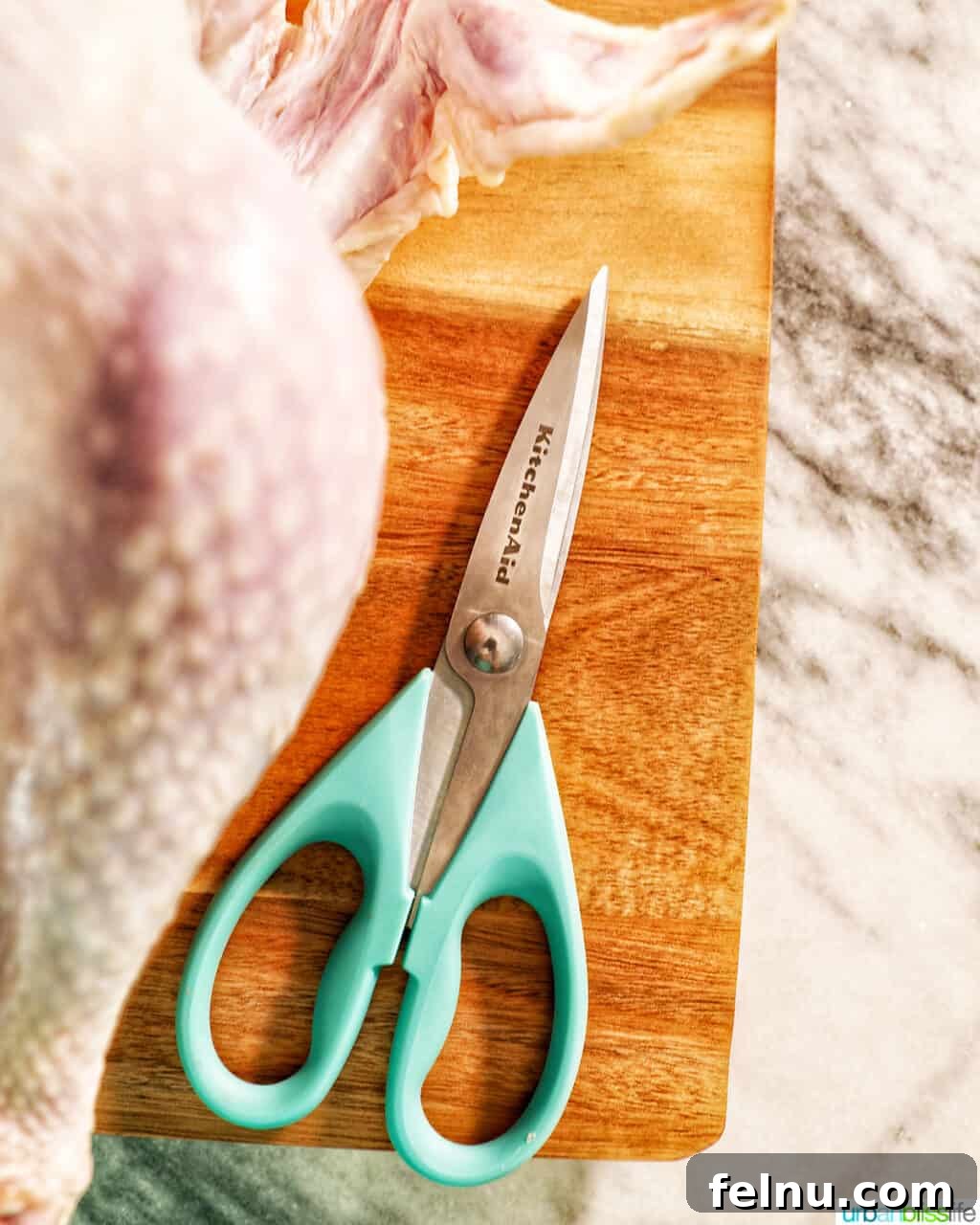
Like the cleaver, Kitchen Shears aren’t strictly classified as knives, but they are an indispensable, multi-purpose tool that deserves a permanent spot in any well-equipped kitchen. These robust, heavy-duty scissors offer a level of convenience and efficiency that traditional knives often cannot match for certain tasks, proving themselves to be a significant aid in food preparation and beyond.
One of our favorite applications for kitchen shears is effortlessly cutting bacon into lardons or smaller pieces directly into a pan, ready for use in stews, pasta dishes, or even as a pizza topping, without the need for a cutting board and knife. They are also incredibly adept at snipping fresh herbs directly over a dish, offering quick and precise portioning. Beyond these, kitchen shears excel at opening stubborn food packaging, slicing through twine, or even trimming pastry dough.
Their strength and sharp blades also make them invaluable for poultry preparation. They can easily cut through chicken bones to break down a whole chicken, and are particularly effective for tasks like spatchcocking a turkey, making the process much faster and safer than using a knife. Many modern kitchen shears also feature additional functionalities, such as bottle openers or nutcrackers, further enhancing their utility. For versatility, safety, and sheer convenience, a good pair of kitchen shears is an absolute must-have.
Essential Knife Care: Keeping Your Blades Razor Sharp
Having a selection of excellent kitchen knives is only half the battle; ensuring they perform at their best requires diligent care, especially keeping them consistently sharp. A sharp knife is not only more efficient, making clean cuts with less effort, but it’s also safer, as it’s less likely to slip. Here, we delve into the three primary methods to maintain the optimal sharpness of your prized kitchen knives.
1. Manual or Electric Knife Sharpeners: Convenience at Your Fingertips
For many home cooks, manual or pull-through knife sharpeners offer an accessible and user-friendly solution for maintaining blade sharpness. The process is straightforward: simply insert the blade into the designated sharpening slot and pull it through, repeating the motion several times until you achieve the desired level of sharpness. These sharpeners often feature multiple slots with different grit levels—coarse for dull blades and fine for honing or finishing.
Electric sharpeners operate on a similar principle but automate the process, providing a more consistent and often quicker sharpening experience. While incredibly convenient, a key drawback of both manual and electric pull-through sharpeners is their tendency to remove a significant amount of steel from the knife blade with each use. For everyday knives, this might not be a major concern, but it’s a critical consideration if you own high-end, expensive knives, as repeated use can alter their blade profile and shorten their lifespan. Always refer to your knife manufacturer’s recommendations before using these types of sharpeners.
2. The Whetstone: The Traditional Art of Knife Sharpening
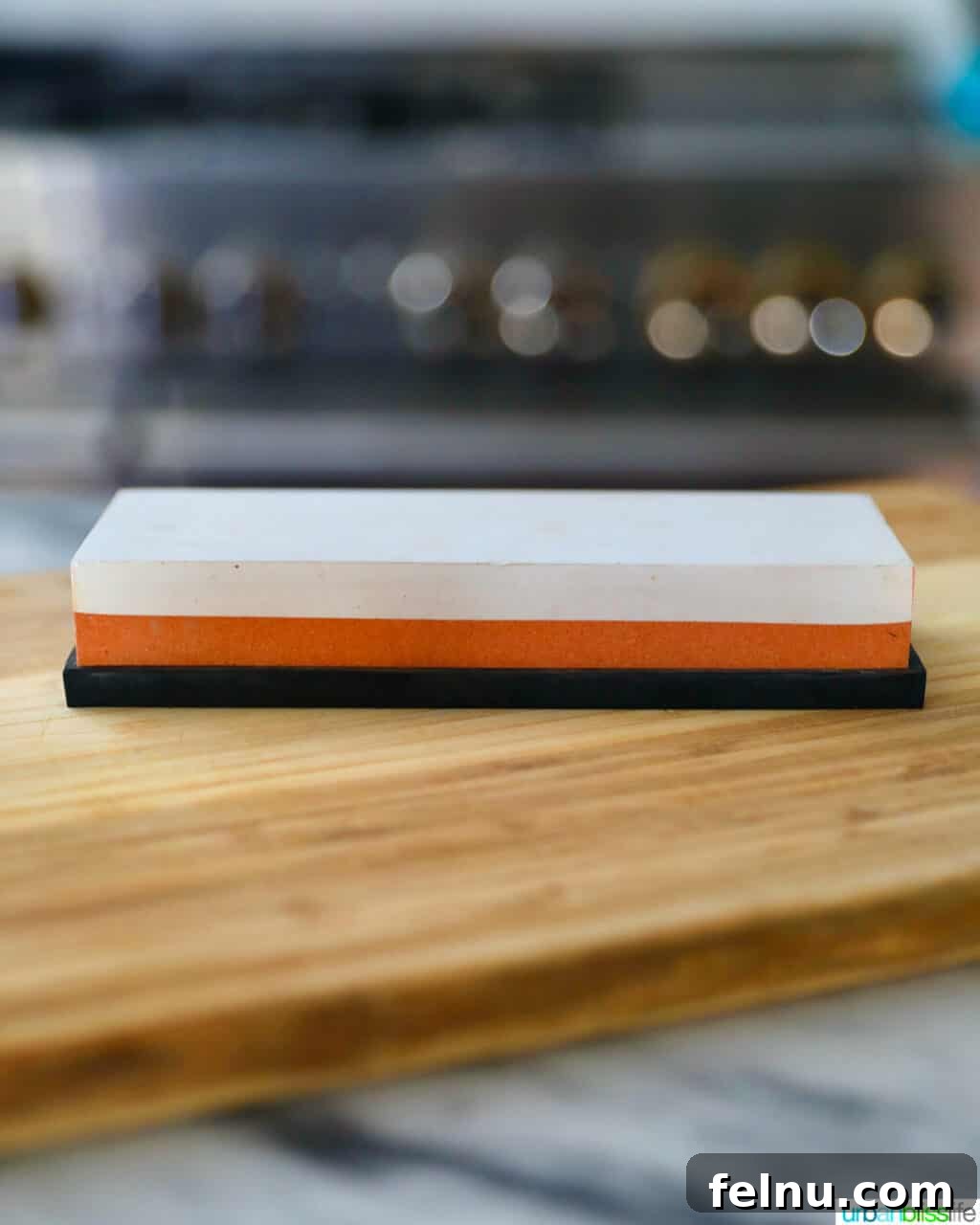
For those seeking a more traditional and precise sharpening method, the whetstone (also known as a sharpening stone or water stone) is an invaluable tool. A whetstone is a flat, rectangular abrasive block used to manually grind and refine the knife’s edge. Most whetstones come with two distinct grit levels: a coarser side, typically used for repairing dull or damaged edges, and a finer side for honing the blade to a razor-sharp finish.
To use a whetstone effectively, you typically start by soaking it in water (if it’s a water stone) until it stops bubbling. Begin with the coarser grit side, holding your knife blade at a consistent angle (generally between 15 to 20 degrees for most kitchen knives) against the stone. Gently draw the blade across the stone in long, sweeping motions, covering the entire edge from heel to tip, ensuring even pressure. Repeat this on both sides of the blade until a slight “burr” (a tiny wire-like edge) forms. Once the desired sharpness is achieved on the coarse side, flip the whetstone to the finer grit side and repeat the process. This refines the edge, removing the burr and polishing the blade to a mirror finish. A truly sharp knife should effortlessly slice through a sheet of paper without resistance.
Mastering the whetstone takes practice and patience, especially maintaining a consistent angle. Marlynn and I recently attended a knife sharpening class at Steelport Knife Co., which provided invaluable hands-on experience. While it offered a solid foundation, truly honing this skill (pun intended!) comes with persistent practice and a keen feel for the blade. The reward is a perfectly sharpened knife and a deeper connection to your tools.
3. Professional Sharpening: Expert Care for Your Blades
If the thought of sharpening your knives yourself seems too daunting, or if you own a particularly expensive and cherished set of knives, consider entrusting them to a professional knife sharpening service. This option removes the guesswork and ensures that your blades receive expert care, preserving their edge and integrity.
Many culinary stores, specialty knife shops, and even places that offer knife sharpening classes, such as Steelport Knife Co., also provide professional sharpening services. These experts possess the specialized equipment and knowledge to restore even the dullest blades to their former glory, often using precision machinery or advanced whetstone techniques.
We’ve personally utilized the services of the Oregon-based company Knife Flight, and were exceptionally pleased with the results. While professional sharpening comes at an additional cost, the peace of mind of knowing your valuable knives are handled by experts and returned in optimal condition is often well worth the investment, extending the life and performance of your tools.
4. Honing Steel: Maintaining Your Edge Between Sharpening
Wait, I mentioned three ways to *sharpen* your knives, yet here’s a fourth point – about a honing steel! This is an important distinction to make. A honing steel is a long, rigid rod, typically made of steel, ceramic, or diamond-coated material, that does not actually *sharpen* a knife in the traditional sense. Instead, its primary function is to realign and straighten the microscopic burr or folded edge of a blade. Over time, with regular use, the incredibly thin edge of a knife can bend or roll over, making it feel dull even if the steel itself hasn’t lost its sharpness.
You typically use a honing steel after sharpening your knife, or frequently during extended cooking sessions involving a lot of chopping and dicing. Giving your knife a few strokes along the honing steel every few minutes or before each use can help to keep the edge perfectly aligned. This simple act dramatically extends the time between full sharpening sessions, ensuring your knife remains effective and smooth-cutting for much longer. It’s a quick, maintenance step that is crucial for optimal daily knife performance.
Choosing Your Blade Material: Stainless Steel vs. High Carbon Steel
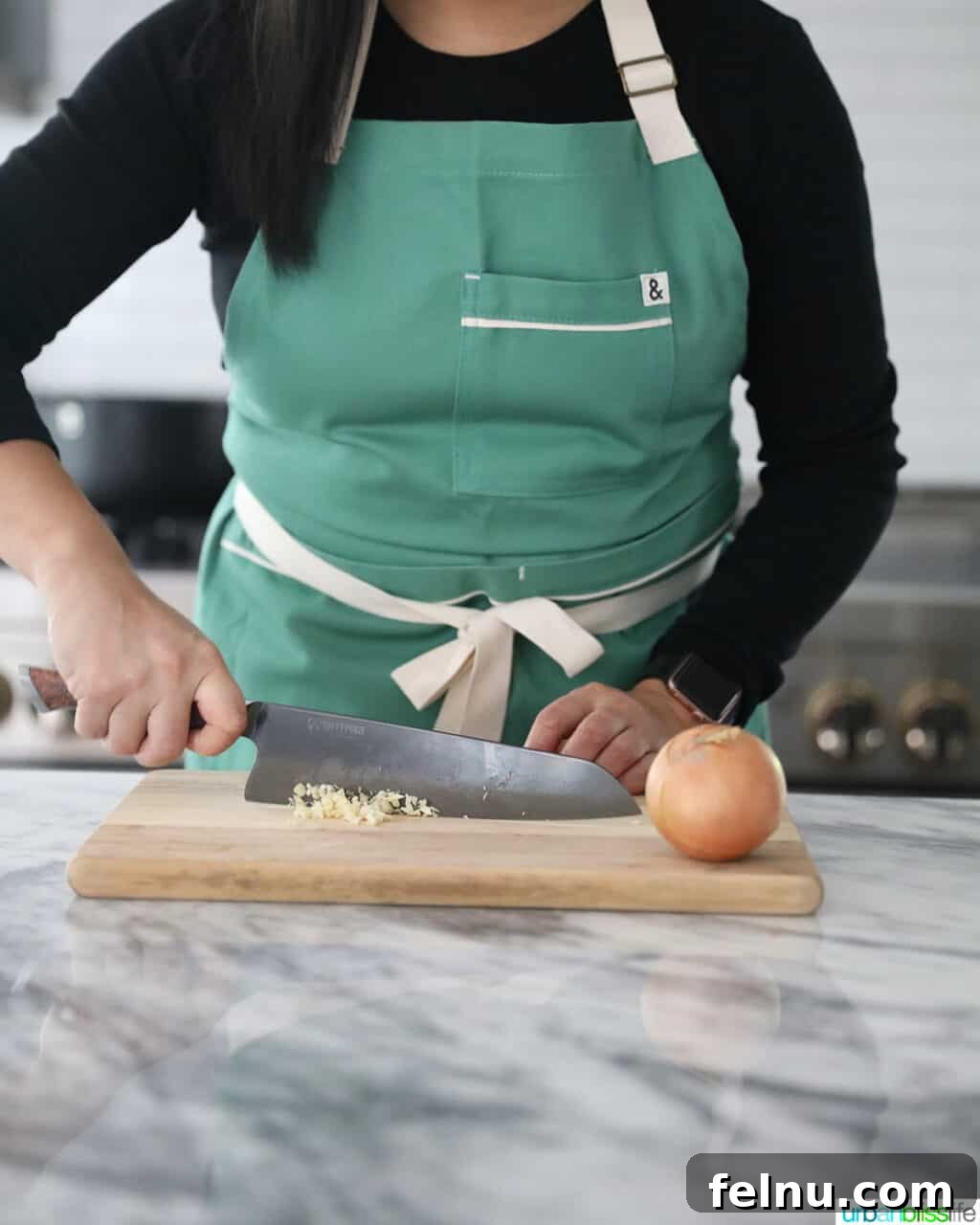
Now that we’ve explored the essential types of kitchen knives and their proper maintenance, it’s equally important to understand the fundamental differences between two prominent blade materials: stainless steel and high carbon steel. This choice significantly impacts a knife’s performance, durability, and required care.
Stainless Steel Knives: Durability Meets Low Maintenance
The vast majority of entry-level and mid-range kitchen knives, particularly those commonly found in household sets, are crafted from stainless steel. This material is an alloy of steel and chromium, with the chromium content being crucial for its defining characteristic: corrosion resistance. Stainless steel knives are highly resistant to rust and staining, making them an excellent choice for busy home cooks who prioritize convenience and easy maintenance. They are generally less reactive to acidic foods, and their forgiving nature makes them suitable for everyday cooking without fear of immediate discoloration or degradation. A good quality stainless steel knife can serve you reliably for many years if cared for properly, though its edge retention is typically lower than its carbon steel counterparts.
High Carbon Steel Knives: The Professional’s Edge for Unmatched Performance
If your passion for cooking runs deep, and you find yourself frequently engaged in extensive slicing, dicing, and intricate food preparation, then a high carbon steel chef’s knife might be your ultimate culinary companion. The Steelport Knife Co. Chef’s Knife, notably featured in the images above and below, exemplifies the superior qualities of carbon steel blades. These knives are made from steel with a higher carbon content, which grants them distinct advantages and a unique character.
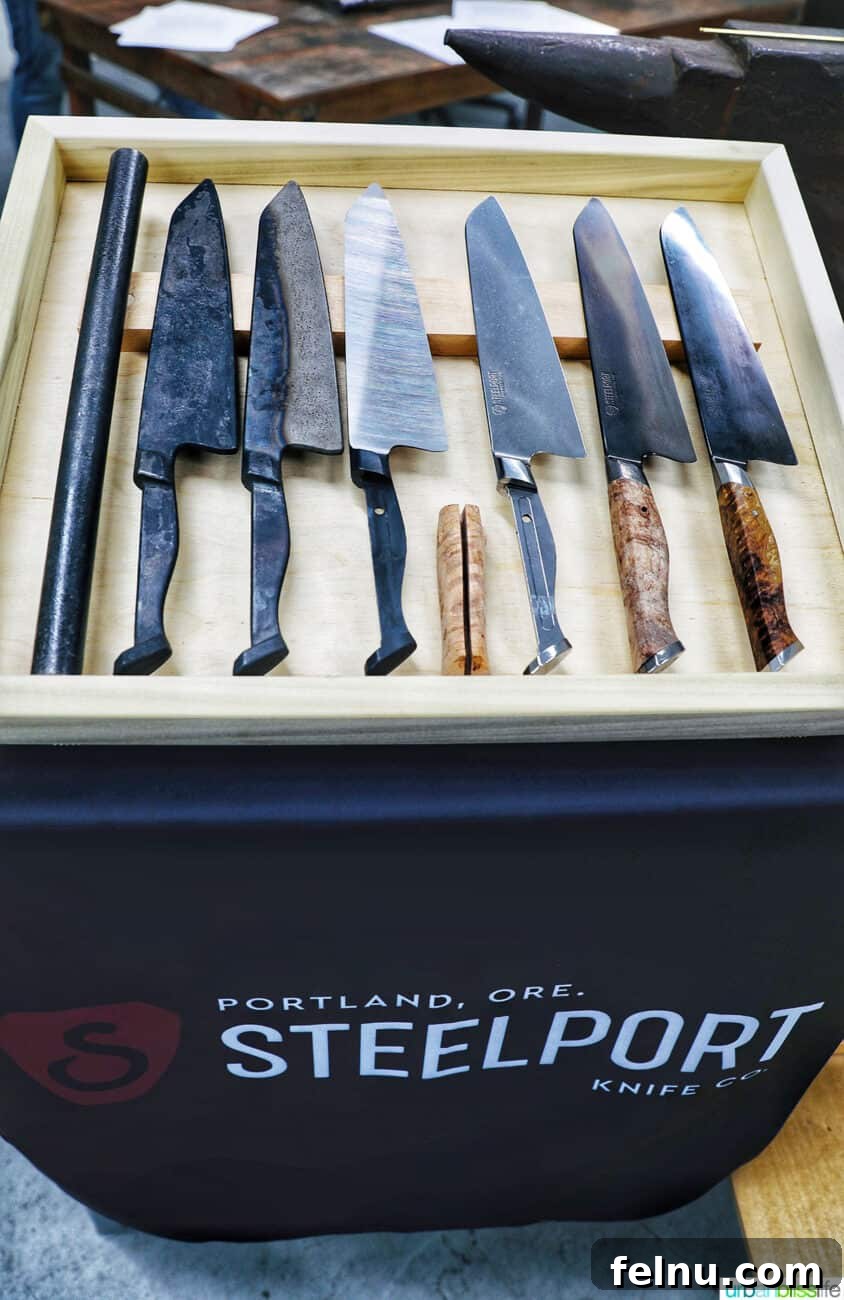
The most compelling advantage of carbon steel knives is their exceptional ability to hold a sharp edge for significantly longer periods. This translates to less frequent sharpening and more consistent performance during demanding tasks. Furthermore, they are typically harder than stainless steel knives, making them less prone to bending or warping if accidentally dropped. However, this increased hardness also comes with a trade-off: carbon steel can be more brittle, meaning a significant impact could result in chipping. Additionally, carbon steel is reactive; over time, it will develop a unique patina (a natural discoloration) that varies in shades of blues, grays, and browns, adding character to the blade. This reactivity also means they are more susceptible to rust if not meticulously cleaned and dried immediately after each use. Proper care is essential to prevent corrosion and maintain their pristine condition.
The Bottom Line: If you aspire to professional-grade sharpness, superior edge retention, and appreciate the unique character and maintenance ritual, a high carbon steel knife represents an unparalleled choice for dedicated chefs and serious home cooks alike.
Optimal Knife Storage: Protecting Your Investment and Ensuring Safety
Properly storing your kitchen knives when not in use is just as crucial as sharpening them. Effective storage protects your valuable blades from damage, maintains their sharpness, and, most importantly, ensures safety in your kitchen. With a myriad of options available, from traditional wooden blocks to magnetic wall strips, understanding the pros and cons of each will help you make the best choice for your kitchen and your knife collection.
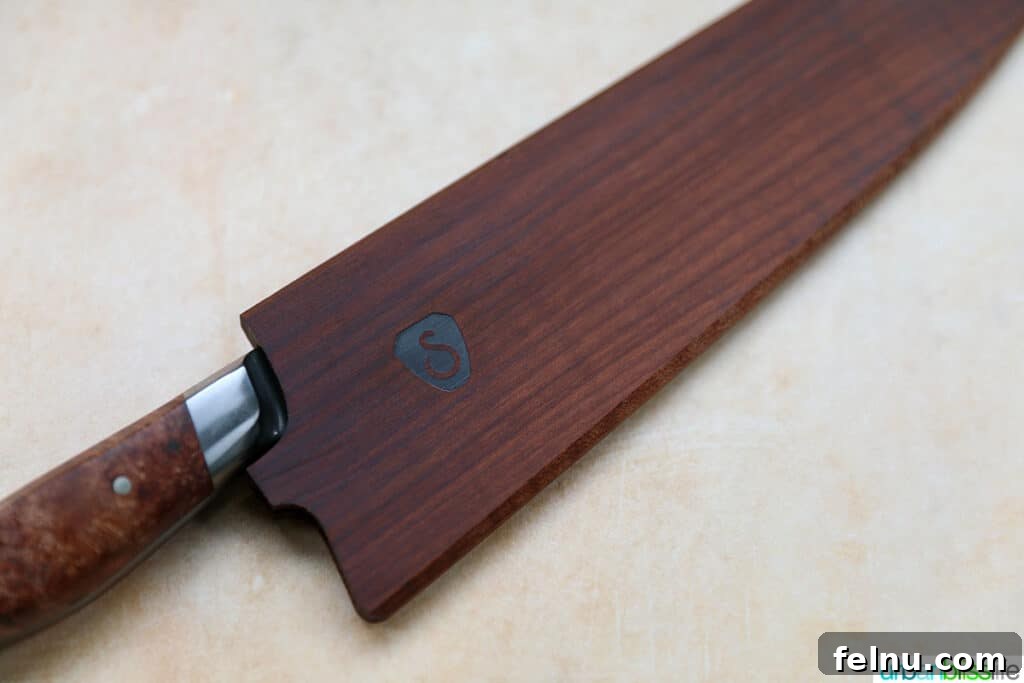
Our top recommendation for protecting kitchen knives involves the use of simple yet highly effective knife guards. These guards come in various forms. Some are individual sleeves, typically made of plastic or wood, that slide snugly over the blade, encasing it entirely. This method is ideal for storing knives in a drawer, preventing them from clanking against other utensils and dulling their edges. The Steelport Knife Co. knife guard pictured above is a perfect example of this protective solution.
Another excellent form of in-drawer storage is a knife block insert. These specialized trays fit inside your kitchen drawer and feature individual slots where knife blades can be inserted safely. We personally use and highly recommend this solution for its practicality and space-saving benefits. It keeps knives organized and protected without occupying counter space.
Beyond guards, other popular storage methods include:
- Knife Blocks: These classic counter-top blocks offer convenient access and often come with knife sets. Ensure the slots are clean and dry before storing.
- Magnetic Strips: Mounted on a wall, these strips display knives prominently and keep them easily accessible. Ensure knives are placed carefully to avoid damaging the edge.
- Knife Rolls/Bags: Primarily used by professional chefs for transport, these are also great for protecting knives during storage if space is an issue or if you prefer keeping your knives out of sight.
What you absolutely want to avoid: simply throwing your knives unprotected into a drawer alongside other kitchen tools. This practice almost guarantees nicks, dings, and scratches on the blades, leading to premature dulling and potential damage. Furthermore, an unprotected blade in a drawer poses a significant safety hazard, increasing the risk of cuts when reaching for utensils. Proper storage is a small effort that yields significant returns in terms of knife longevity and kitchen safety.
Do you have any favorite kitchen knives, unique sharpening methods, or clever ways to store your knives? Share your insights and experiences in the comments below! We love learning from our community.
Explore More Essential Kitchen Guides
Enhance your culinary skills and make your time in the kitchen more enjoyable with our extensive collection of food and wine guides. From mastering baking fundamentals to selecting the perfect wine, we’ve got you covered!
- Basics of Baking
- Dairy Free Guide: The Best Dairy Free Products for Cooking & Baking
- Kid-Friendly Kitchen Tasks
- The Ultimate Well-Stocked Food Pantry List
- Dairy Free Guide: My Favorite Dairy Free Cooking and Baking Products
- Our Favorite Kitchen Appliances
- Wine Guide: Choosing the Best Wine Openers
- How to Set Up a Home Bar