
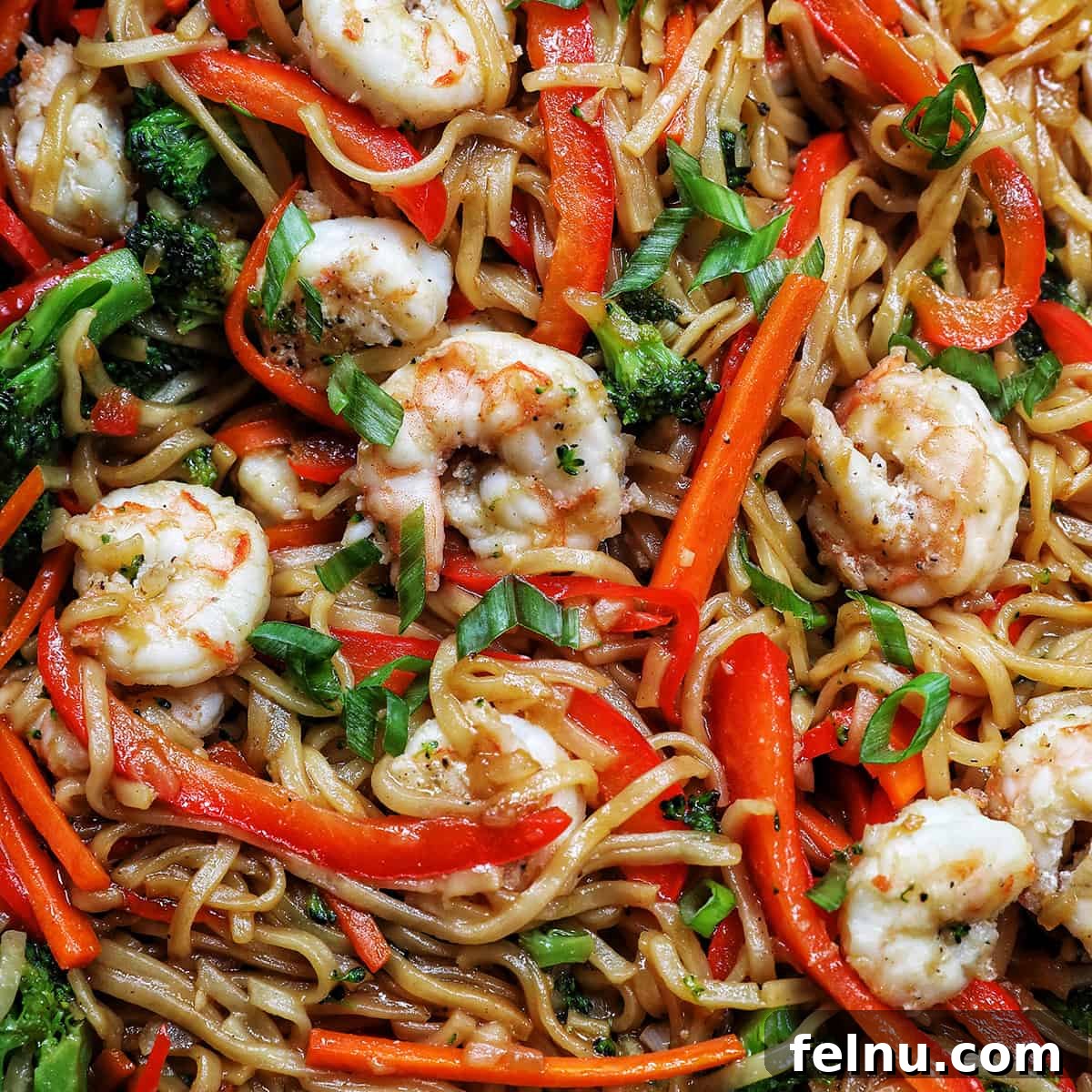
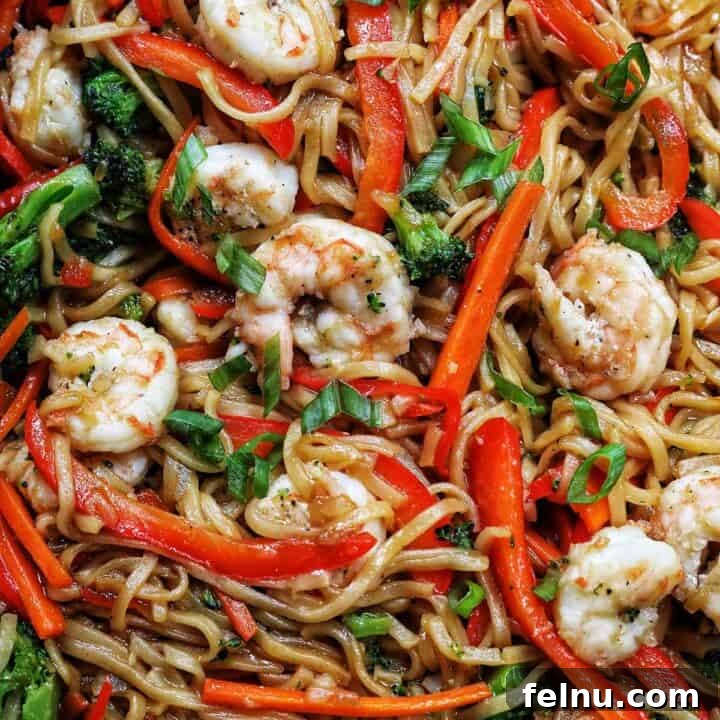
This Prawn Chow Mein recipe offers a quick, effortless, and incredibly flavorful meal, ready to serve in under 30 minutes. It’s a culinary delight that consistently surpasses your favorite take-out!
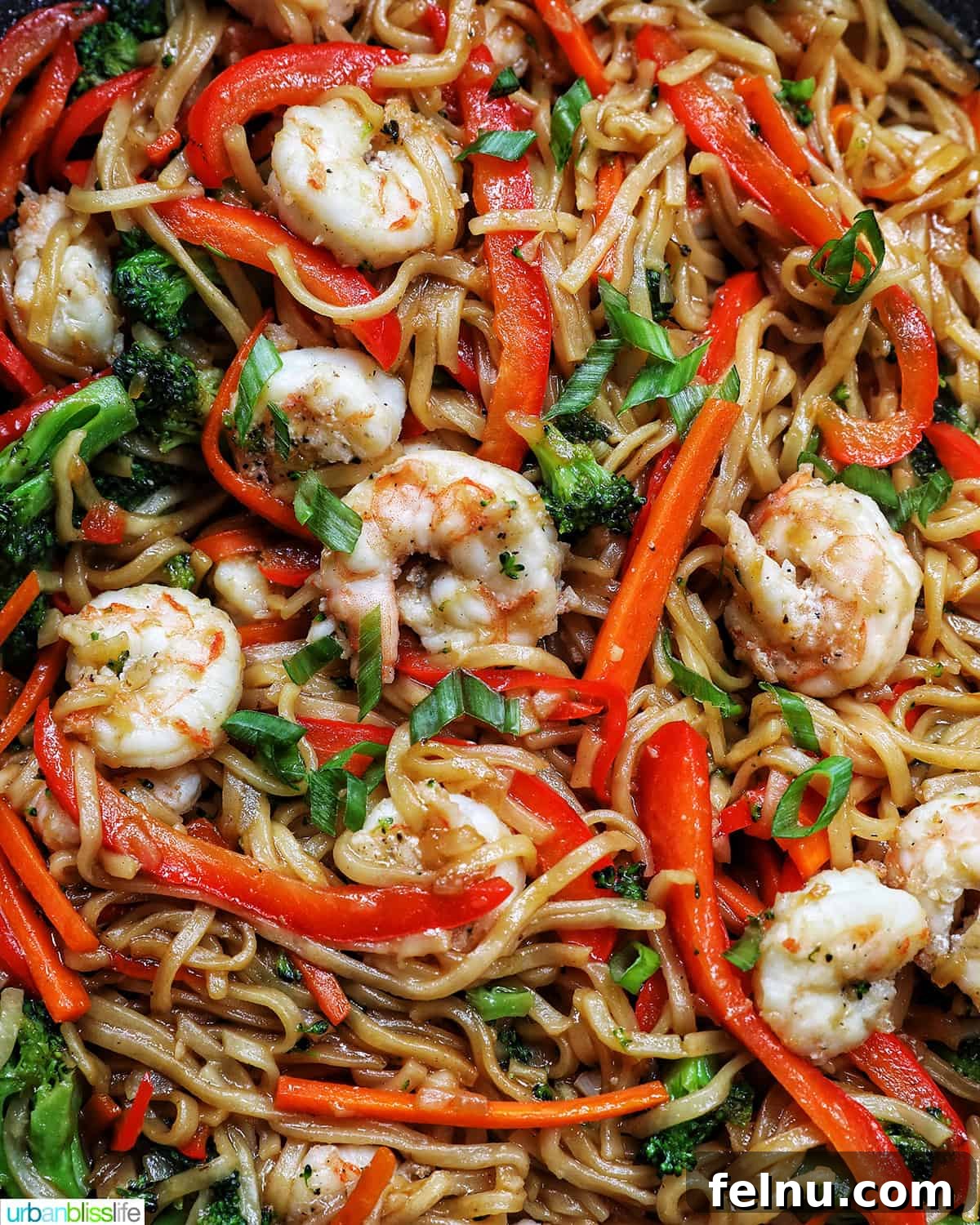
There’s something uniquely comforting about Chinese cuisine. Its rich flavors and satisfying textures make it a staple comfort food for many families around the world. While we cherish the convenience and taste of ordering from our beloved local Chinese restaurants, there are times when preparing these dishes at home is not only quicker but also more rewarding.
Our kitchen often buzzes with activity, recreating popular “fakeaway” recipes that bring joy to everyone at the dinner table. Among our family’s top picks are classics like Kung Pao Chicken, the irresistibly crispy Air Fryer Crab Rangoon, and the warming Wonton Soup. However, when it comes to dishes that truly captivate every palate, noodle recipes invariably steal the show. This particular Prawn Chow Mein recipe stands out as a personal favorite, often whipped up for a speedy, satisfying lunch or a delightful weeknight dinner.
🌟 Why This Prawn Chow Mein Recipe Shines

Chow mein noodles, a culinary icon, trace their origins back to northern China before making their way to the US in the mid-1800s. Since then, they have firmly established themselves as a beloved Chinese food dish across both the United States and the United Kingdom, evolving into countless regional variations. This particular recipe captures the essence of this popular stir-fried noodle dish, tailored for home cooks seeking both speed and authentic flavor.
You’ll absolutely fall in love with this effortless noodle stir-fry recipe for several compelling reasons:
- Uncomplicated & Approachable: The recipe is designed with simplicity in mind, featuring clear, step-by-step instructions that anyone can follow. We even provide a helpful photo guide further down to assist you visually throughout the cooking process, ensuring a stress-free experience even for novice cooks.
- Remarkably Fast: Forget waiting for delivery! This entire, satisfying meal comes together in under 30 minutes. It’s the perfect solution for busy weeknights when you crave a homemade, flavorful dinner without spending hours in the kitchen. The efficient preparation and rapid cooking method make it a true time-saver.
- Explosively Delicious: At the heart of this dish is a meticulously crafted stir-fry sauce. Despite its simple ingredients, it delivers an incredible depth of flavor that coats every strand of noodle, every succulent prawn, and every crisp vegetable. This balanced sauce transforms ordinary ingredients into an extraordinary culinary experience, leaving you wondering if you’ll ever need take-out again!
- Customizable & Versatile: This recipe isn’t just fast and easy; it’s also incredibly adaptable. Feel free to swap in your favorite stir-fry vegetables or adjust the spice level to your preference. It’s a fantastic way to utilize whatever fresh produce you have on hand, making it a truly flexible meal.
- Better Than Take-Out: With fresh ingredients, precise cooking techniques, and a carefully balanced sauce, this homemade prawn chow mein offers a freshness and vibrant taste that often surpasses commercially prepared versions. You control the quality, the oil, and the seasoning, resulting in a healthier, more delicious meal.
🛒 Key Ingredients for Authentic Prawn Chow Mein
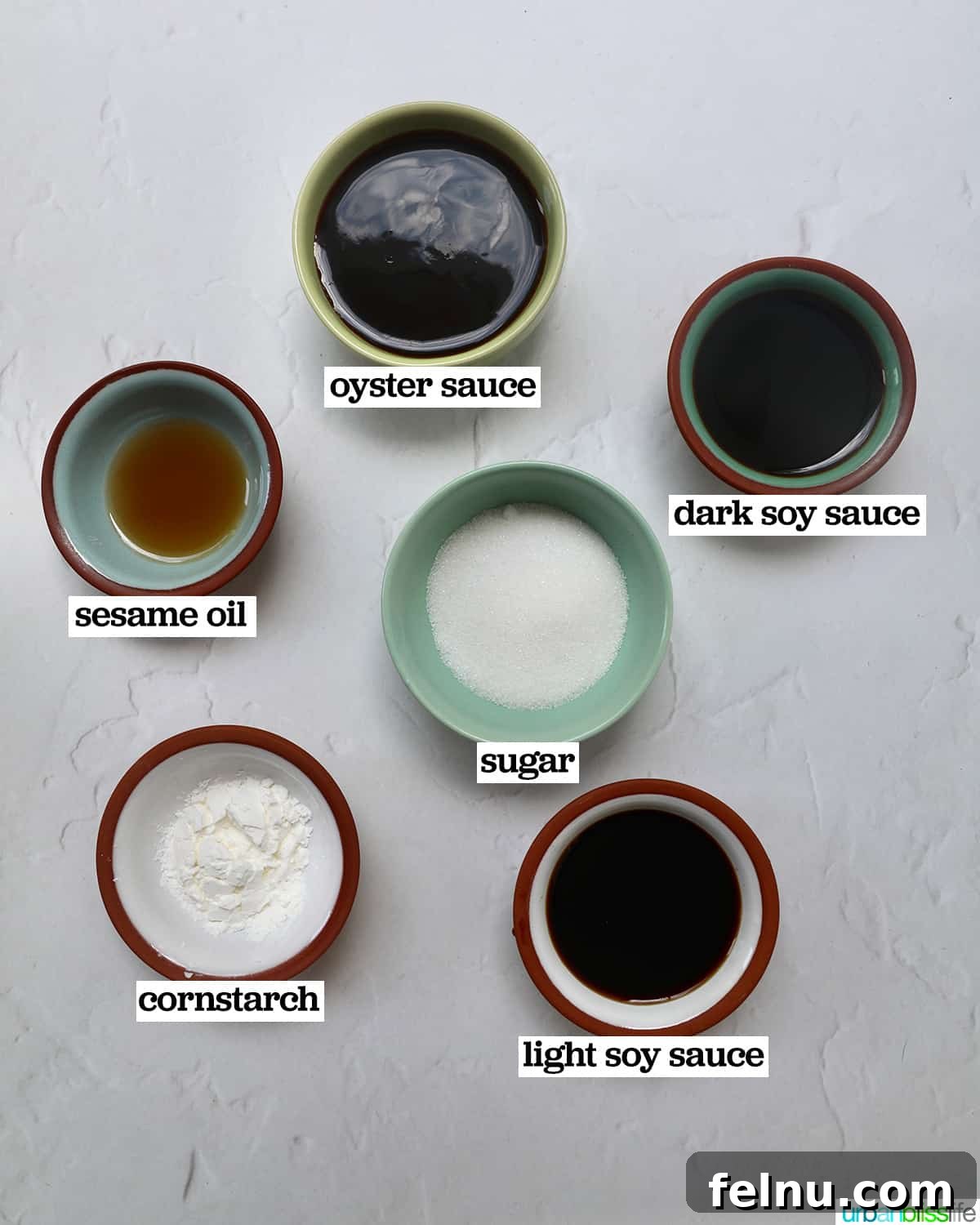
The secret to an exceptional Prawn Chow Mein lies in the quality of its ingredients and the balance of its flavors. Here’s a detailed look at what you’ll need to create this amazing dish:
The Signature Chow Mein Sauce
The sauce is the soul of any stir-fry, and ours is no exception. It’s a harmonious blend of sweet, savory, and umami notes that bring all the elements of the dish together. You’ll need:
- Granulated Sugar: A touch of sweetness helps balance the savory soy sauces and oyster sauce, creating a well-rounded flavor profile.
- Cornstarch: This acts as a thickening agent, giving the sauce a glossy sheen and ensuring it coats the noodles and vegetables beautifully.
- Sesame Oil: A drizzle of fragrant sesame oil at the end adds an unmistakable nutty aroma and depth, characteristic of many Asian dishes.
- Oyster Sauce: This rich, savory condiment is a powerhouse of umami flavor, essential for an authentic chow mein taste.
- Light Soy Sauce: Used primarily for its salty and savory notes, contributing to the overall flavor of the sauce.
- Dark Soy Sauce: Distinct from light soy sauce, dark soy sauce is thicker, less salty, and primarily used for its deep, rich color and subtle sweetness, giving your chow mein that classic dark hue.
Substitution Tip: If dark soy sauce is hard to find in your local grocery store, don’t fret. You can successfully substitute it with hoisin sauce or teriyaki sauce for a similar depth of flavor, or simply increase the amount of light soy sauce and oyster sauce to compensate.
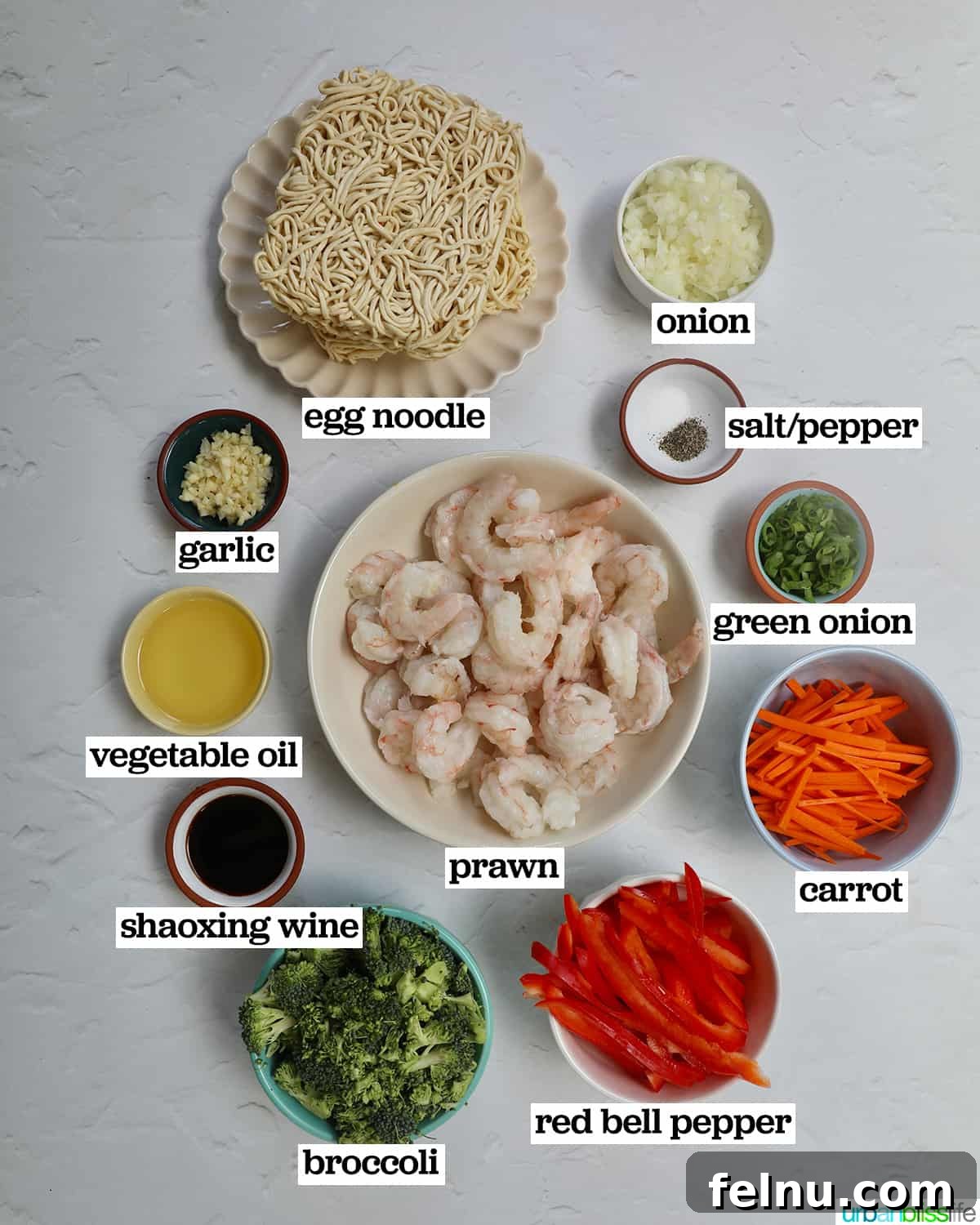
For the Prawns and Noodles
These are the stars of our Prawn Chow Mein:
- Prawns (or Shrimp): Always opt for high-quality prawns for the best flavor and texture. In the UK, you might easily find “king prawns,” which are excellent for this dish, often larger and meatier. If you’re in the US or elsewhere, don’t hesitate to use jumbo, large, or even medium shrimp – they are perfectly interchangeable with prawns in this recipe and will yield equally delicious results. Ensure they are shelled and deveined for ease of cooking and eating.
- Noodles: The choice of noodles is critical for achieving the right chow mein texture. We recommend thin fresh egg noodles, which cook quickly and absorb the sauce beautifully. Dried egg noodles are also a great option; just make sure to follow the package instructions for parboiling to achieve an al dente texture.
- Fresh Vegetables: This is where you can truly customize your chow mein. A colorful medley not only adds crunch and nutrients but also visual appeal. Our favorites include thinly julienned carrots for sweetness and crunch, vibrant red bell peppers for a touch of sweetness and color, and crisp chopped broccoli for added texture and nutrition. Other fantastic options include snap peas, bok choy, green beans, or shredded cabbage.
- Aromatics: These ingredients build the foundational flavor of your stir-fry. Freshly minced garlic and finely diced yellow onions are sautéed to release their sweet and pungent aromas. To finish the dish, a generous sprinkle of thinly sliced spring onions (also known as green onions or scallions) adds a fresh, peppery bite and a beautiful green garnish.
- Shaoxing Wine: This essential Chinese cooking wine imparts a unique, complex flavor that is hard to replicate. It adds a depth and aroma that elevates the dish significantly. You can typically find Shaoxing wine in the Asian section of well-stocked grocery stores, most Asian supermarkets, or online.
Shaoxing Wine Alternatives: If Shaoxing wine is unavailable, dry sherry or mirin can serve as suitable substitutes. While they offer slightly different flavor profiles, they will still contribute a similar alcoholic depth to the dish.
✅ Step-by-Step Guide to Crafting Your Prawn Chow Mein
Below, you’ll find a visual, step-by-step cooking guide to help you as you prepare this delicious prawn noodle dish. A full ingredient list and detailed instructions are also available in the recipe card at the bottom of this post, designed for easy printing and reference.
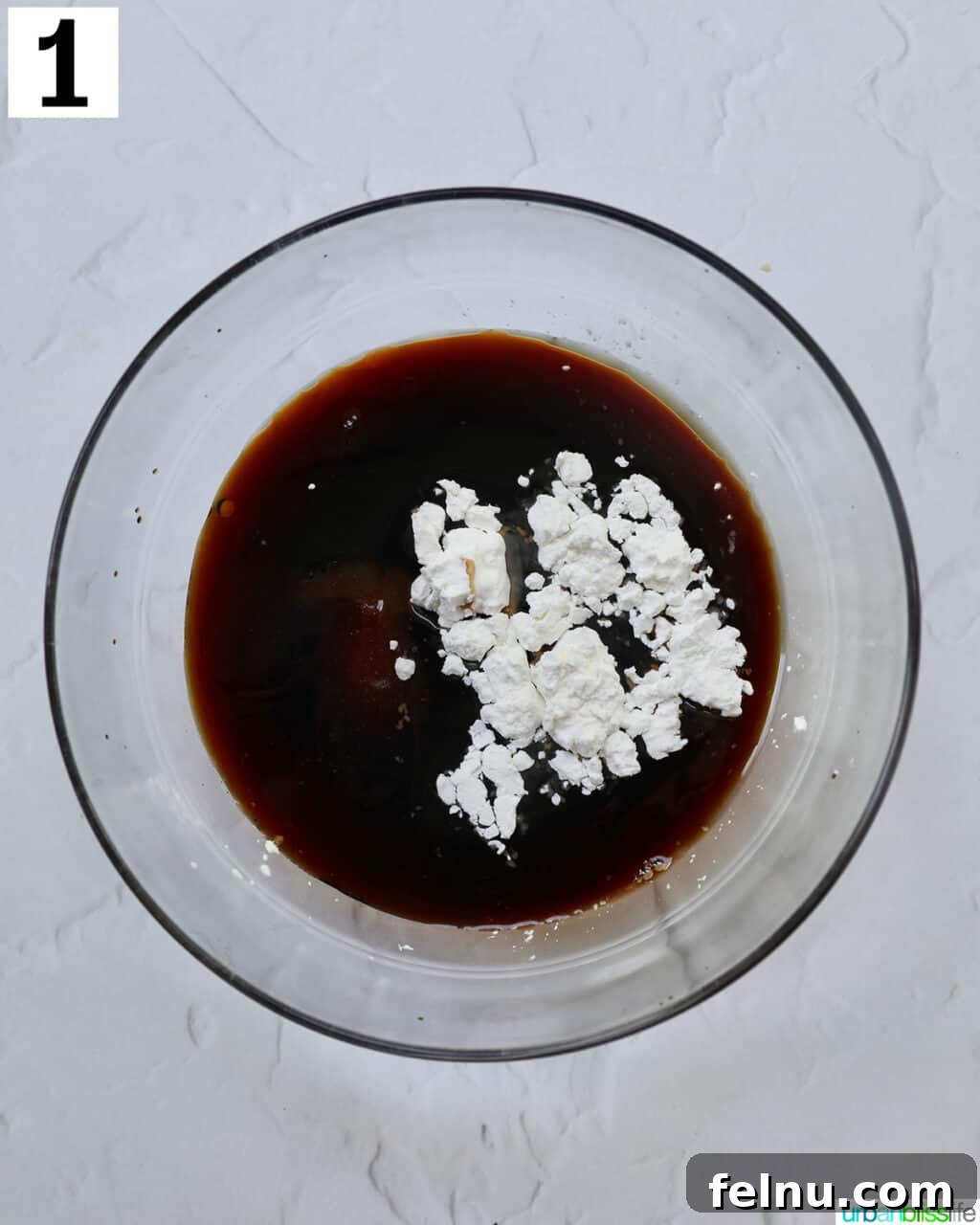
- Prepare the Sauce: In a medium bowl, whisk together all the ingredients for the chow mein sauce until well combined. Set this mixture aside, as it will be added at the final stages of stir-frying.
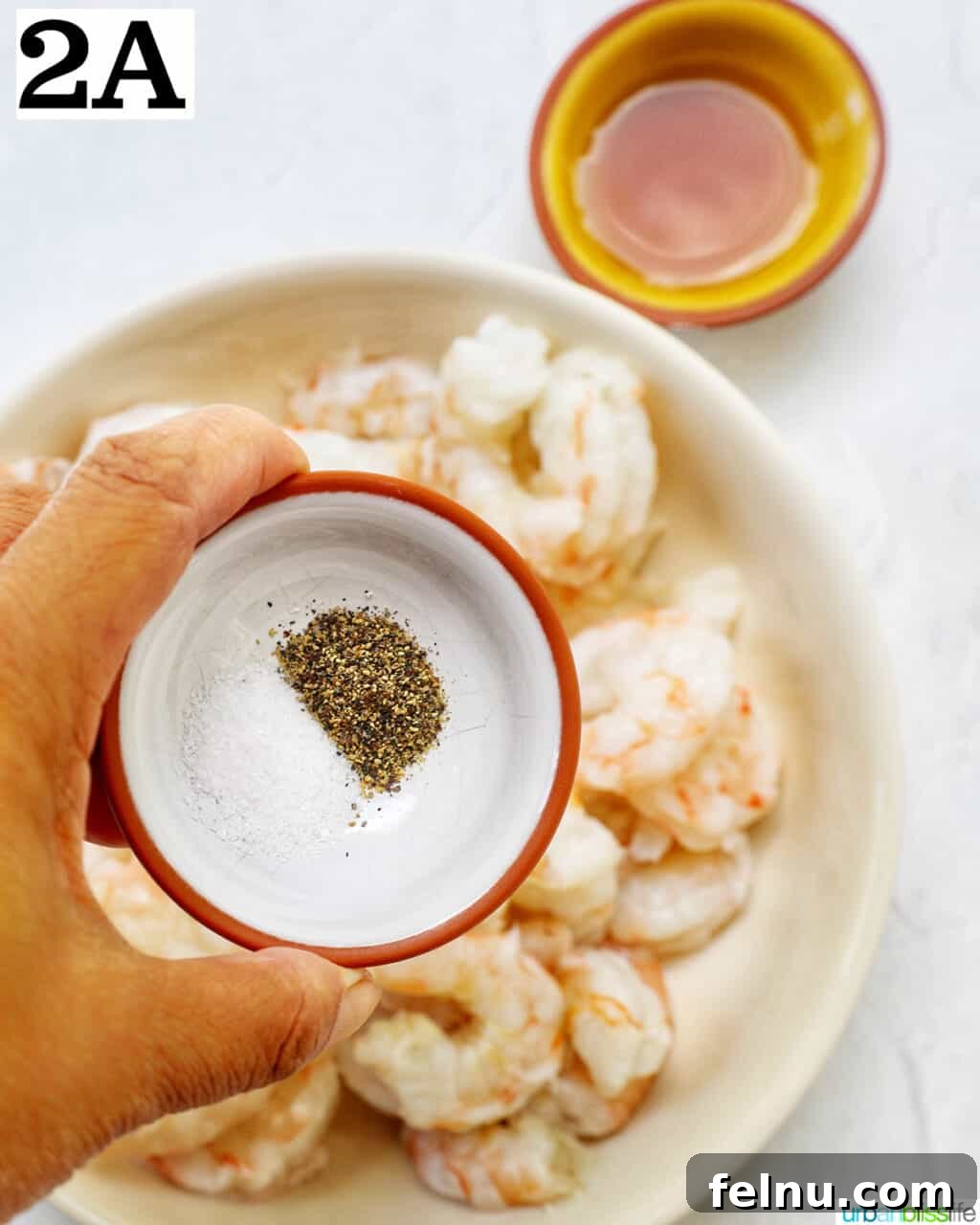
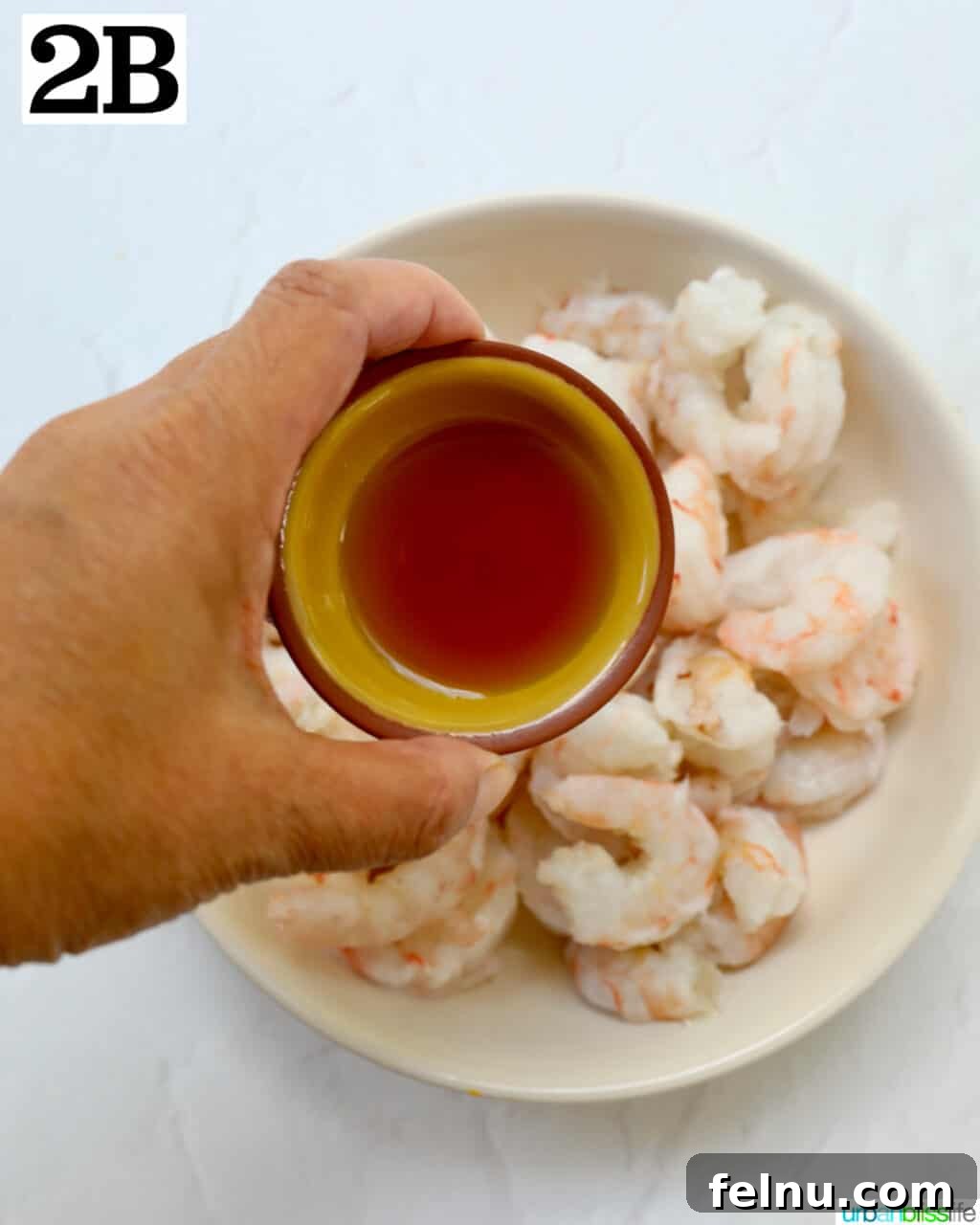
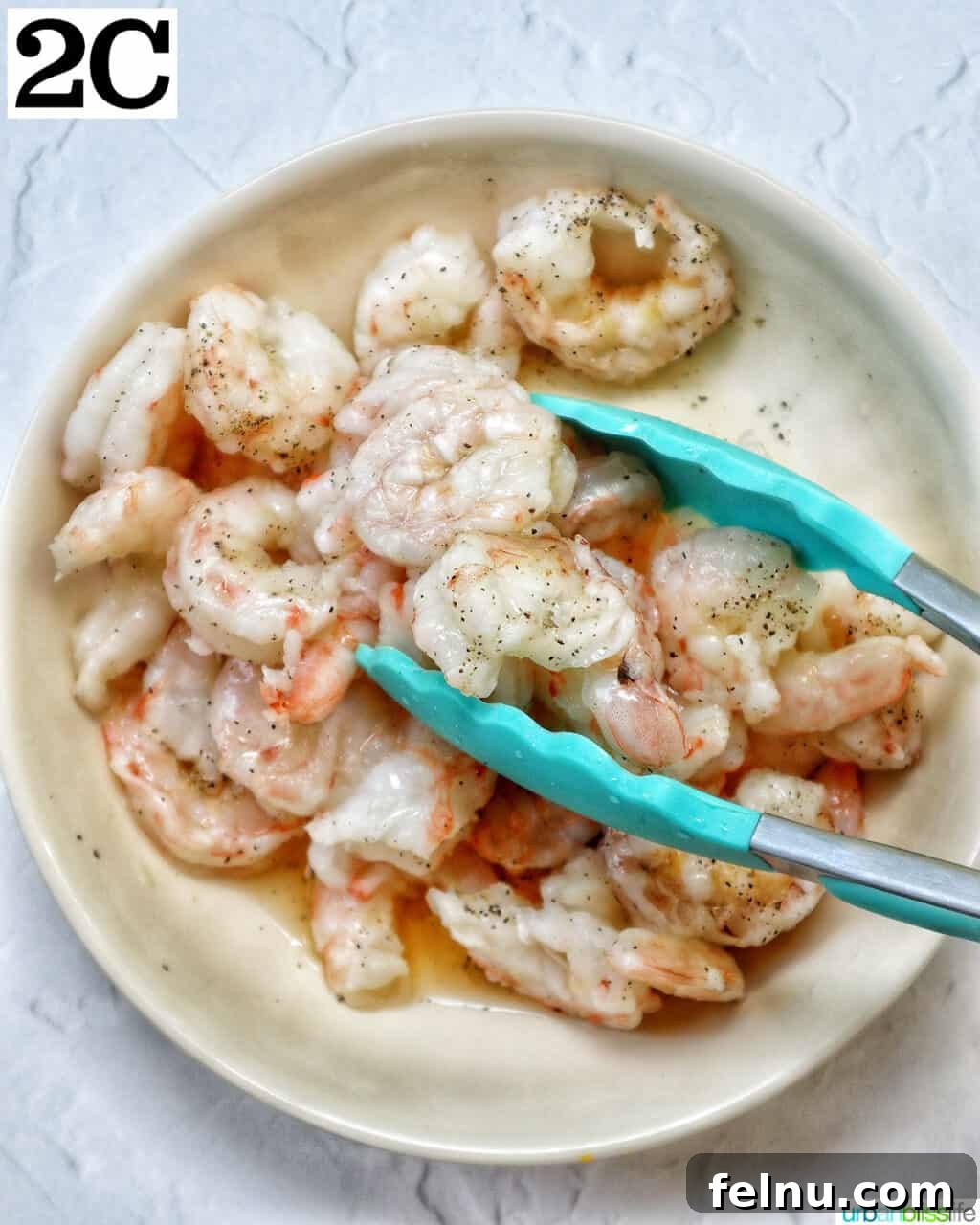
- Season the Prawns: Place the shelled and deveined prawns in a bowl. Season them generously with kosher salt, freshly ground black pepper, and the Shaoxing wine. Toss gently to ensure each prawn is evenly coated. This step adds flavor and helps tenderize the prawns.
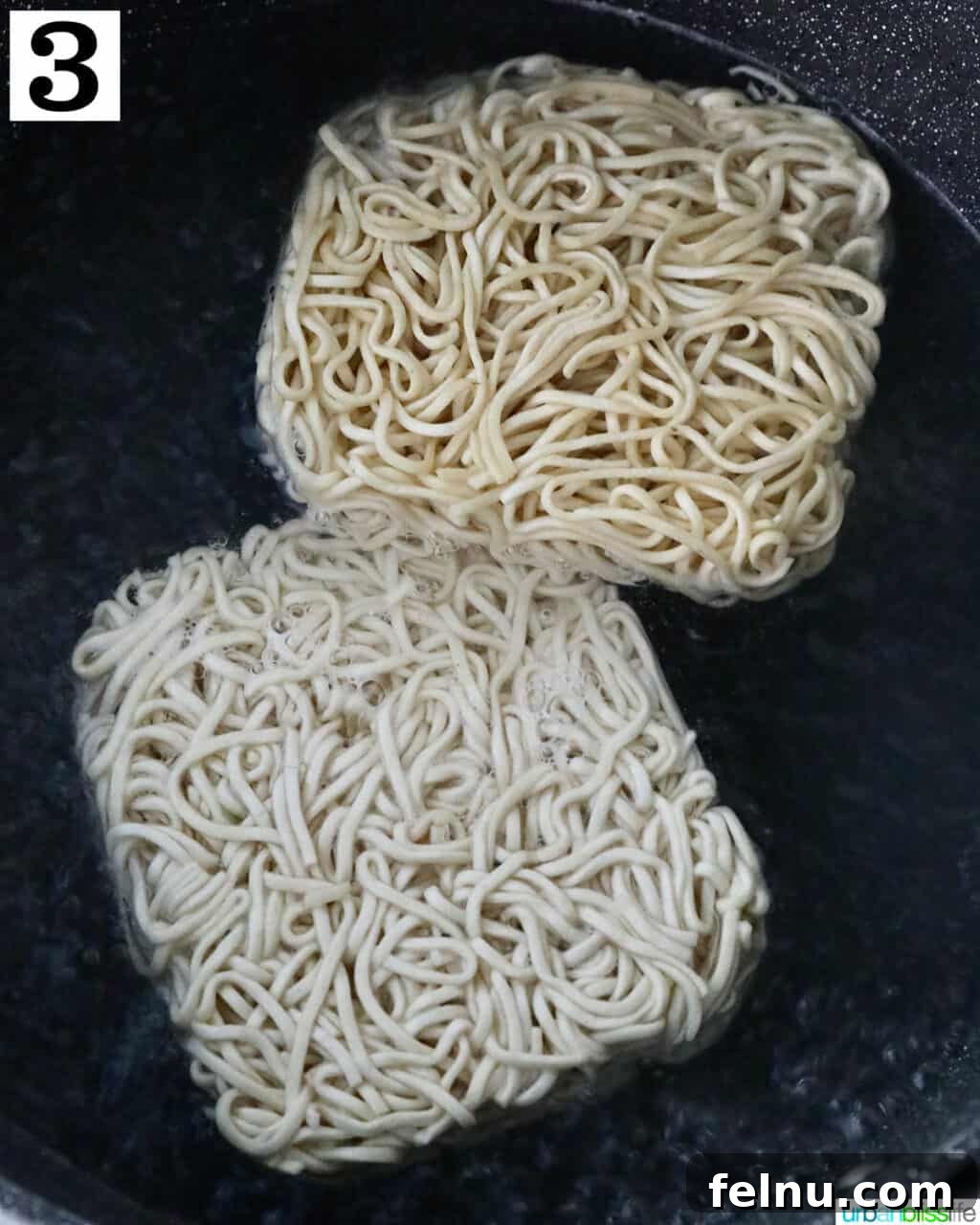
3. Cook the Noodles: Follow the package instructions to parboil the egg noodles. They should be cooked until al dente – slightly firm but cooked through. Drain them thoroughly and set aside. Overcooked noodles can become mushy in a stir-fry, so aim for a slight bite.
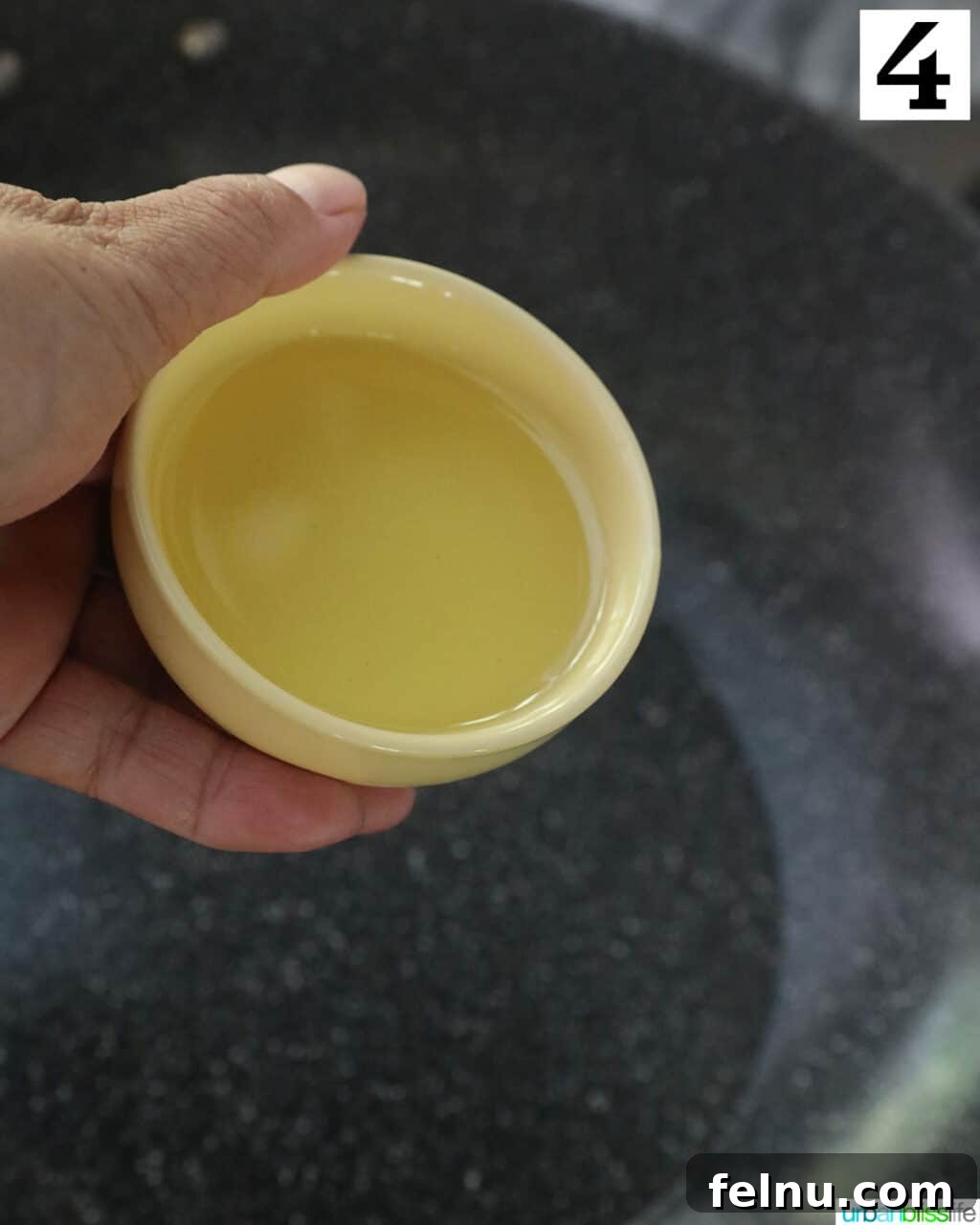
4. Heat the Wok: Place a wok or a large skillet with high sides over medium-high heat. Allow it to heat thoroughly until a drop of water sizzles and evaporates instantly. Once hot, add the vegetable oil, ensuring it coats the bottom and sides of the wok.
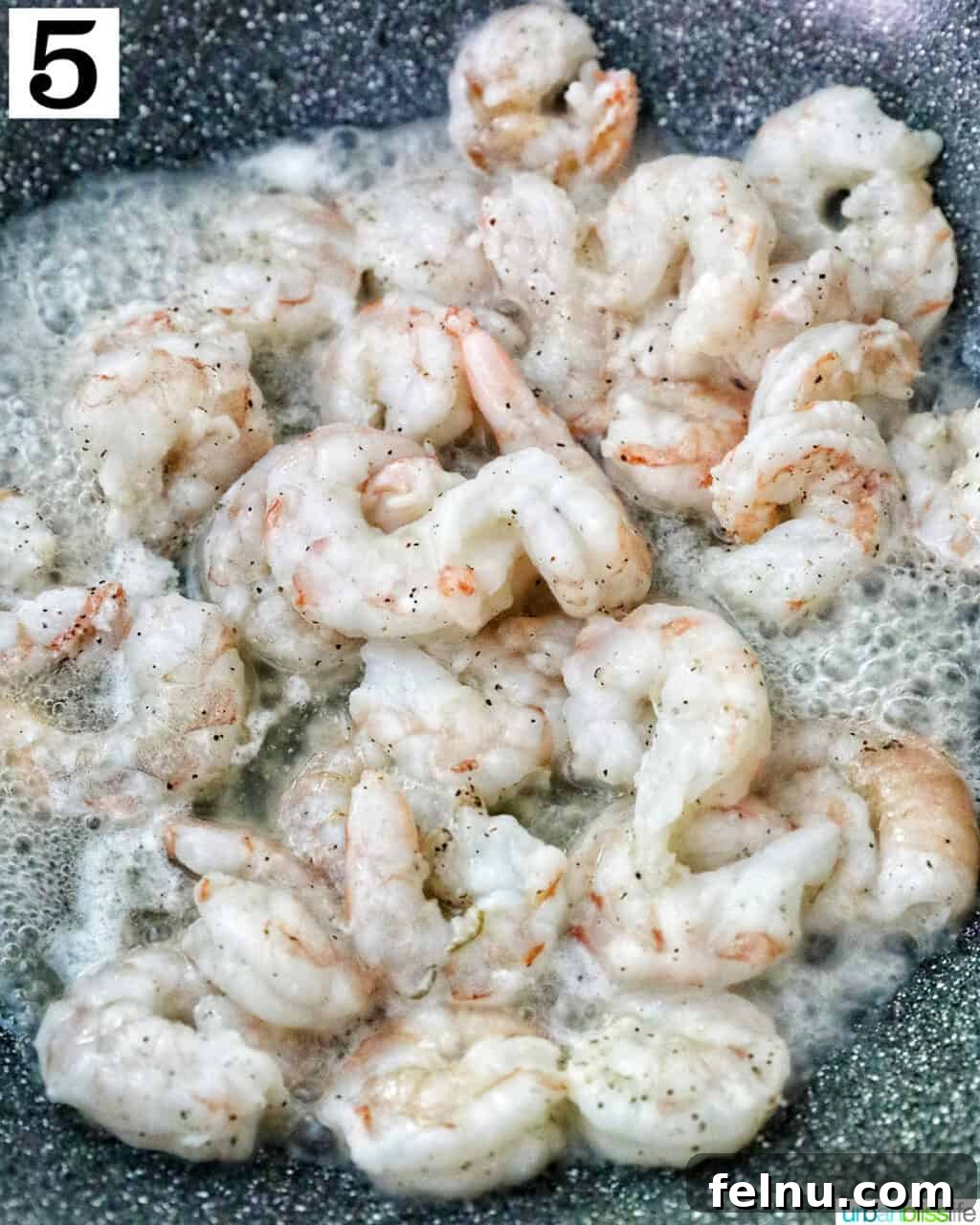
5. Cook the Prawns: Add the seasoned prawns to the hot wok. Stir-fry them quickly for 1-2 minutes until they turn pink and are just cooked through. Prawns cook very fast, so be careful not to overcook them, or they will become tough. Remove the cooked prawns from the wok and transfer them to a separate bowl or plate, setting them aside for later.
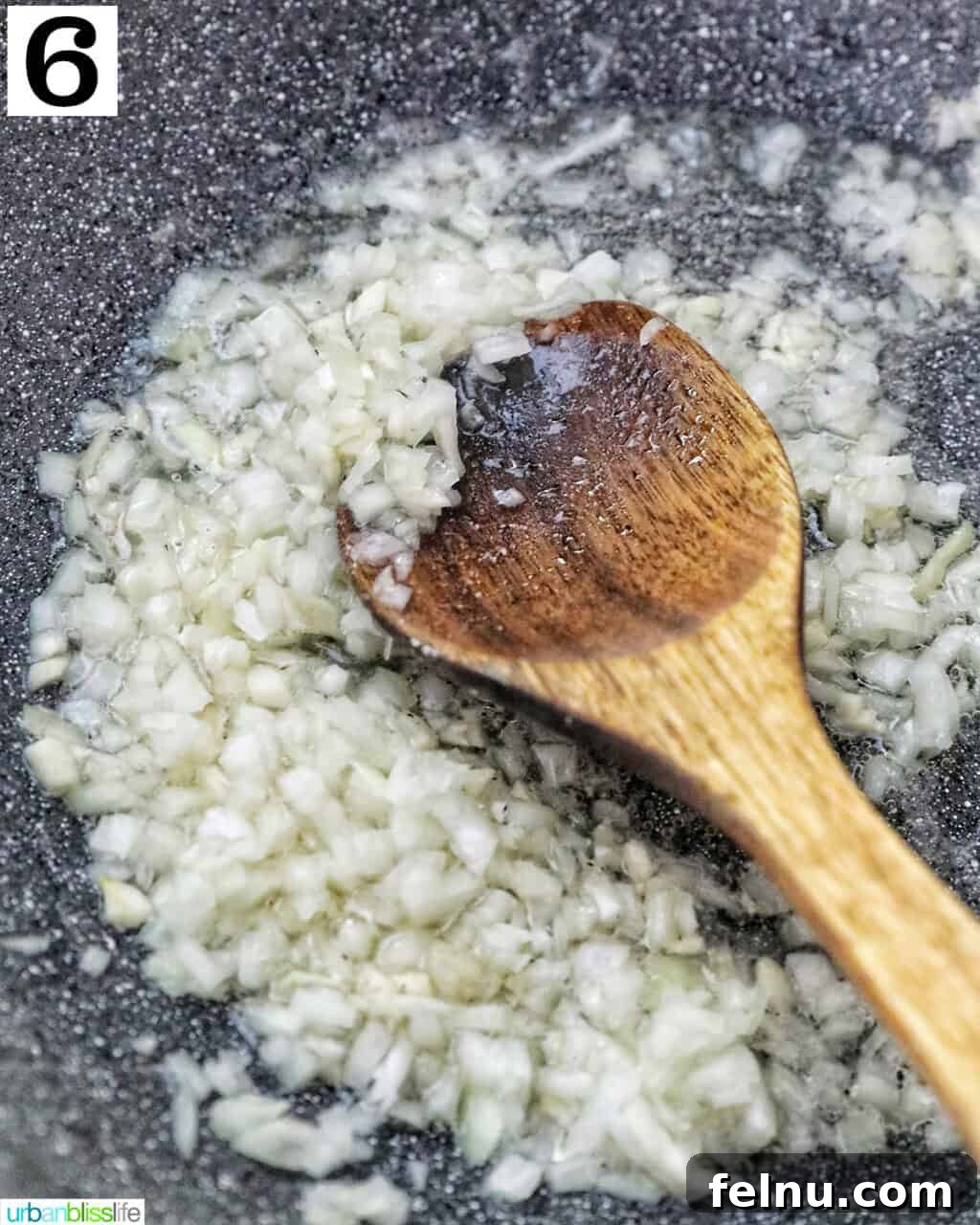
6. Sauté Aromatics: If needed, add a touch more oil to the wok. Add the minced garlic and diced onions. Stir-fry for about one minute until they become fragrant and slightly softened. Be careful not to burn the garlic.
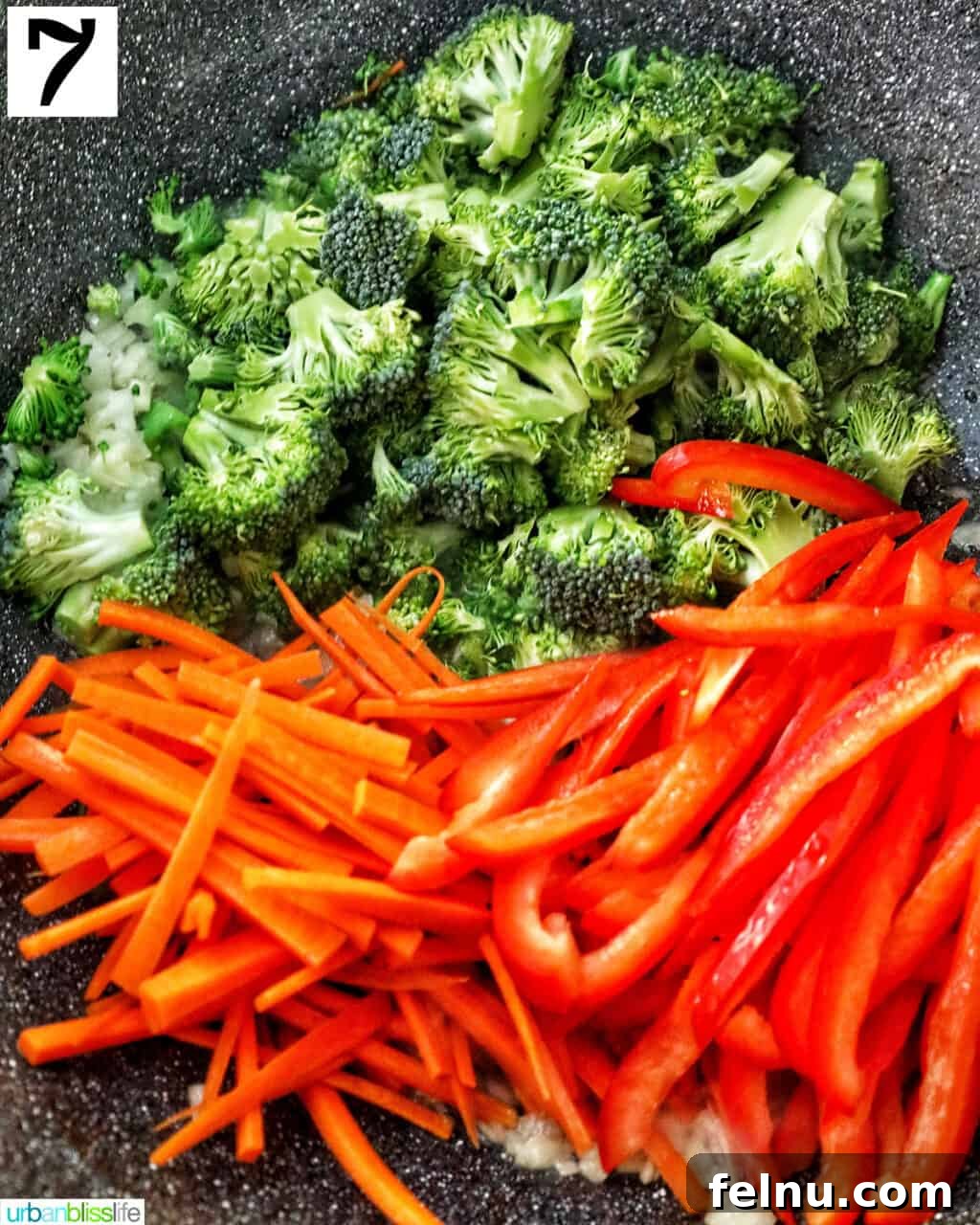
7. Add Vegetables: Introduce your chosen fresh vegetables (such as broccoli florets, julienned carrots, and diced red bell pepper) to the wok. Stir-fry for 2-3 minutes, aiming for them to be tender-crisp – cooked but still retaining a pleasant crunch.
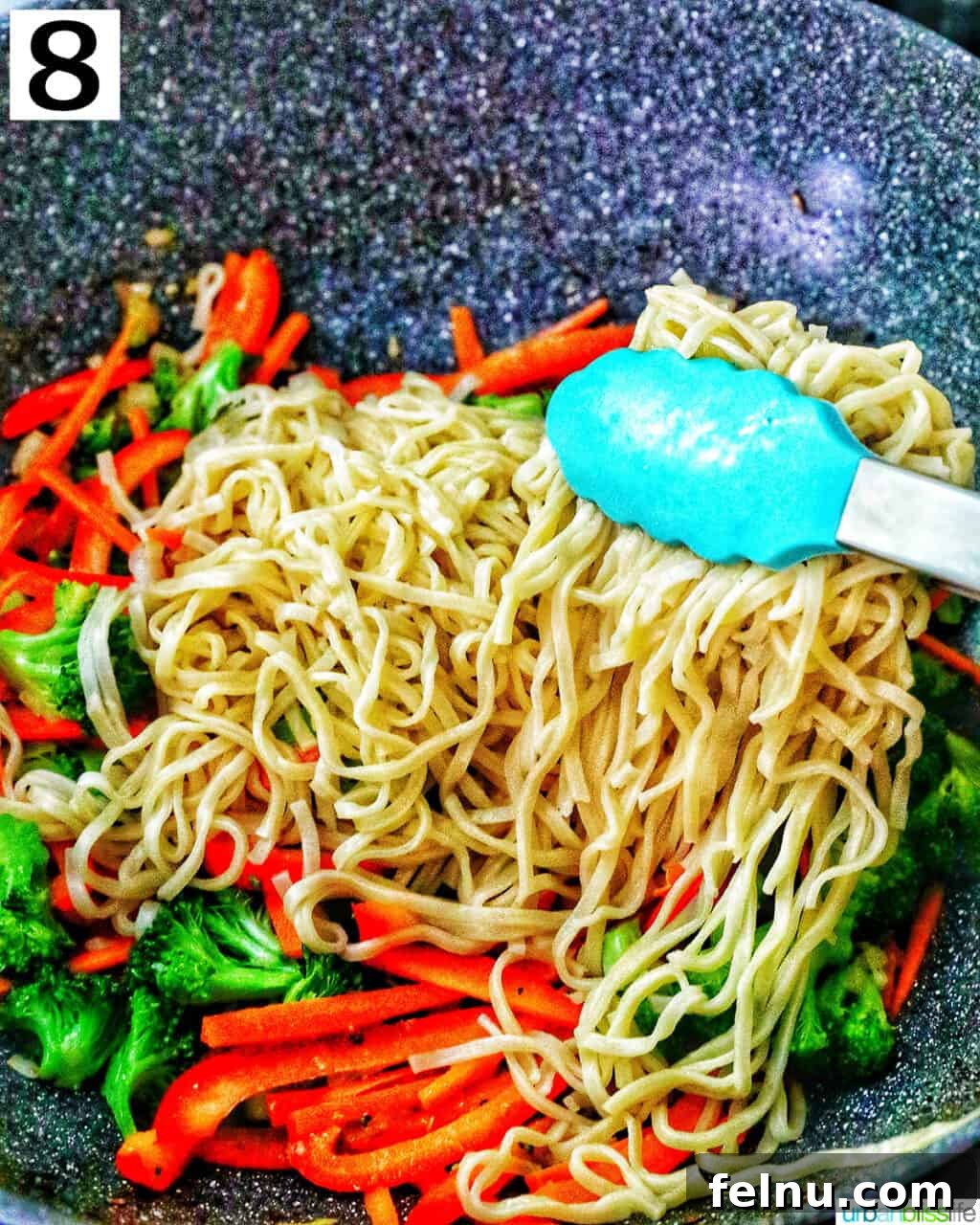
8. Combine Noodles: Add the parboiled noodles to the wok with the vegetables and aromatics. Using tongs, toss everything together vigorously to combine all the ingredients evenly.
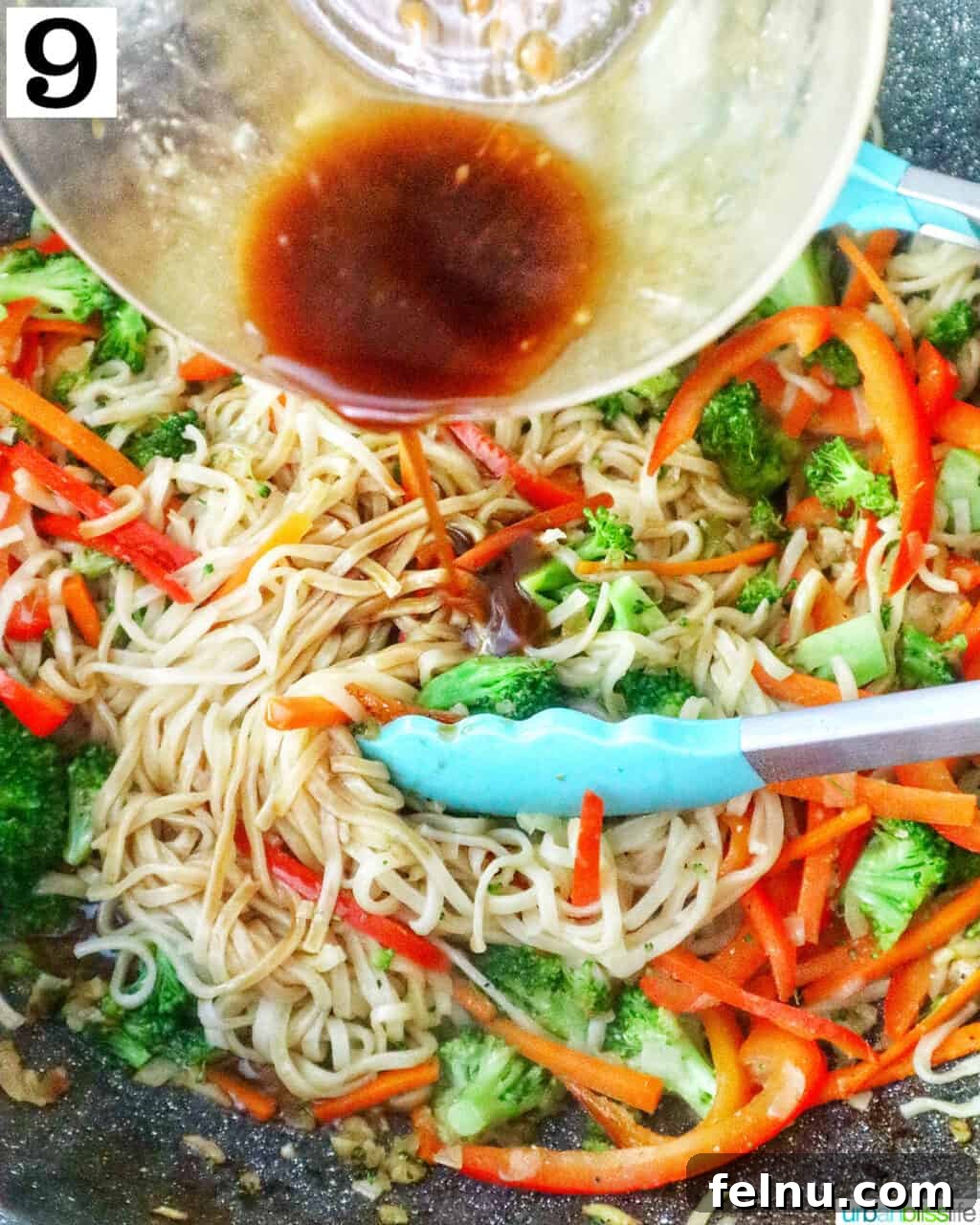
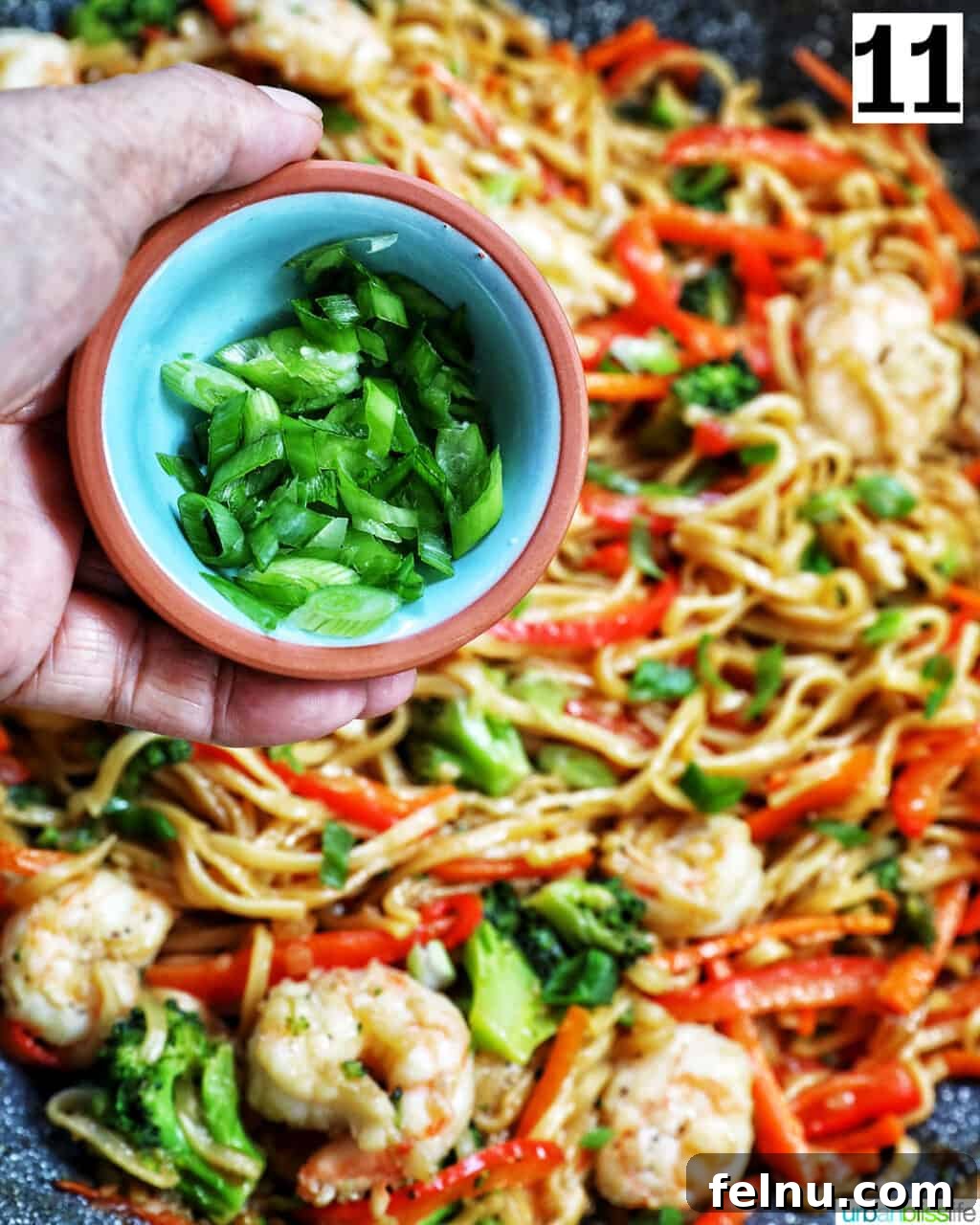
9. Add the Sauce: Pour the prepared chow mein sauce over the noodles and vegetables in the wok. Continue to toss and stir-fry for another minute or two, ensuring that all the ingredients are thoroughly coated with the delicious, glossy sauce.
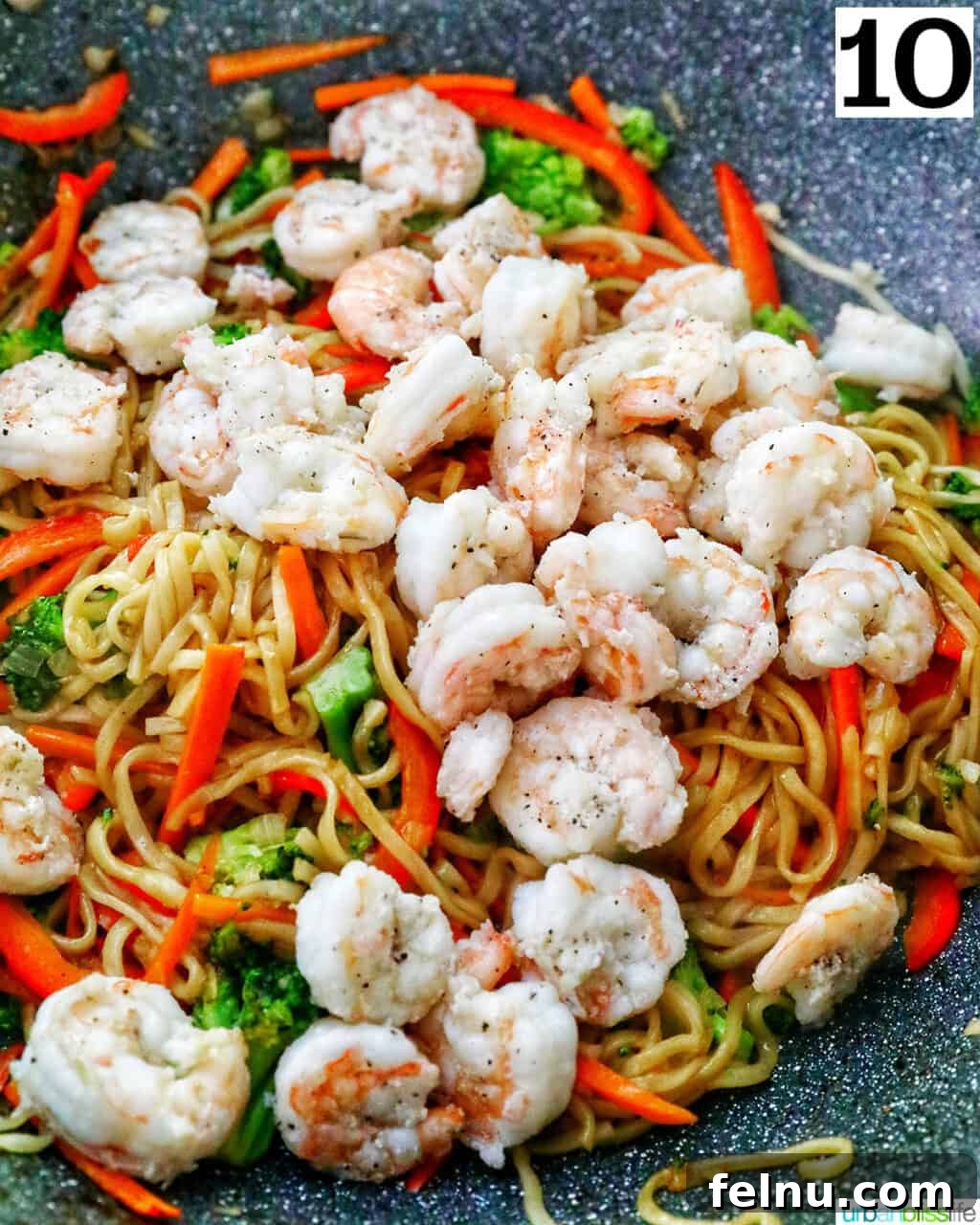
10. Return Prawns: Add the cooked prawns back into the wok. Toss gently with the noodles and sauce, allowing them to heat through and meld with the flavors. Sauté for just a couple more minutes.
11. Garnish and Serve: Remove the wok from the heat. Sprinkle generously with freshly sliced green onions (scallions) for a burst of freshness and color. Serve your homemade Prawn Chow Mein immediately while hot and fresh. Enjoy!
✨ Expert Tips for the Best Homemade Chow Mein
To ensure your Prawn Chow Mein is truly exceptional, keep these professional tips in mind:
- High Heat is Key: Stir-frying thrives on high heat. Ensure your wok or skillet is screaming hot before adding oil and ingredients. This creates that desirable “wok hei” (breath of the wok) flavor and ensures ingredients sear quickly without steaming.
- Mise en Place: “Everything in its place.” Have all your ingredients prepped, chopped, and measured before you even turn on the stove. Stir-frying is a rapid process, and you won’t have time to chop a carrot once the wok is hot.
- Don’t Overcrowd the Wok: Cook in batches if necessary, especially if you’re making a larger quantity. Overcrowding lowers the temperature of the wok, leading to steamed rather than stir-fried ingredients, which can result in a soggy dish.
- Cook Prawns Separately (Initially): Prawns cook very quickly. By cooking them first and setting them aside, you prevent them from becoming rubbery while the vegetables and noodles are stir-fried. They are reintroduced at the very end just to heat through.
- Al Dente Noodles: Parboil your noodles just until they are al dente. They will continue to cook slightly in the wok. Overcooked noodles will break apart and become mushy.
- Customizable Veggies: Don’t be afraid to experiment with vegetables! Snap peas, baby corn, water chestnuts, bean sprouts, or even different colored bell peppers can all be fantastic additions.
👩🏻🍳 Frequently Asked Questions
While often confused and both featuring noodles, chow mein and lo mein have distinct preparation methods and resulting textures. Chow mein, which literally means “fried noodles,” typically uses thinner, parboiled noodles that are then stir-fried until they achieve a slightly crispy texture. The sauce is often lighter and coats the noodles rather than submerging them. Lo mein, meaning “tossed noodles,” usually features thicker, softer, fresh egg noodles that are boiled until fully cooked, then tossed with the sauce and other ingredients at the end, resulting in a saucier and softer noodle dish. As Maggie Zhu of Omnivore’s Cookbook aptly puts it, “Lo mein uses fresh noodles that are boiled for a few minutes, while chow mein uses dried noodles that are parboiled for five to six minutes.”
Although they are very similar in appearance and can generally be used interchangeably in most recipes, prawns and shrimp are indeed two different species. Both are decapod crustaceans, meaning they have ten legs. However, they differ in their gill structure and claw distribution. Prawns typically have branching gills and claws on three pairs of their legs, while shrimp possess plate-like gills and claws on only two pairs of their legs. Prawns are often perceived as larger than shrimp, but their size can vary significantly depending on the specific species and the waters they inhabit. For culinary purposes, especially in stir-fries like chow mein, their textures and flavors are close enough that you can confidently substitute one for the other.
To maintain the freshness and safety of your leftover chow mein, allow it to cool completely to room temperature first. Once cooled, transfer the noodles to an airtight container. This will help prevent bacterial growth and keep them fresh. Store the container in the refrigerator, where the noodles will remain delicious for up to 3 days.
Yes, chow mein freezes quite well! For optimal preservation, ensure the dish is completely cooled before transferring it to airtight freezer-safe containers or heavy-duty freezer bags. Properly stored, it can be kept in the freezer for up to 2 to 3 months. When you’re ready to enjoy it again, the best method for thawing is to transfer it to the refrigerator overnight. For quicker thawing, you can use the defrost setting on your microwave. For the best reheating results and to restore some of its original texture, we recommend reheating the thawed chow mein in a wok or large skillet with a small amount of oil over medium-high heat, stirring frequently until heated through.
Absolutely! This chow mein recipe is incredibly versatile. To make it vegetarian, simply omit the prawns and oyster sauce (substituting with a vegetarian oyster sauce or a combination of more soy sauce and a pinch of mushroom powder for umami). You can add extra vegetables like shiitake mushrooms, tofu, or tempeh for protein. For other meat options, sliced chicken breast, beef, or pork can be used in place of prawns. Just ensure the meat is thinly sliced and cooked through before adding it back with the noodles and sauce.
🍽 Perfect Pairings: Serving Suggestions
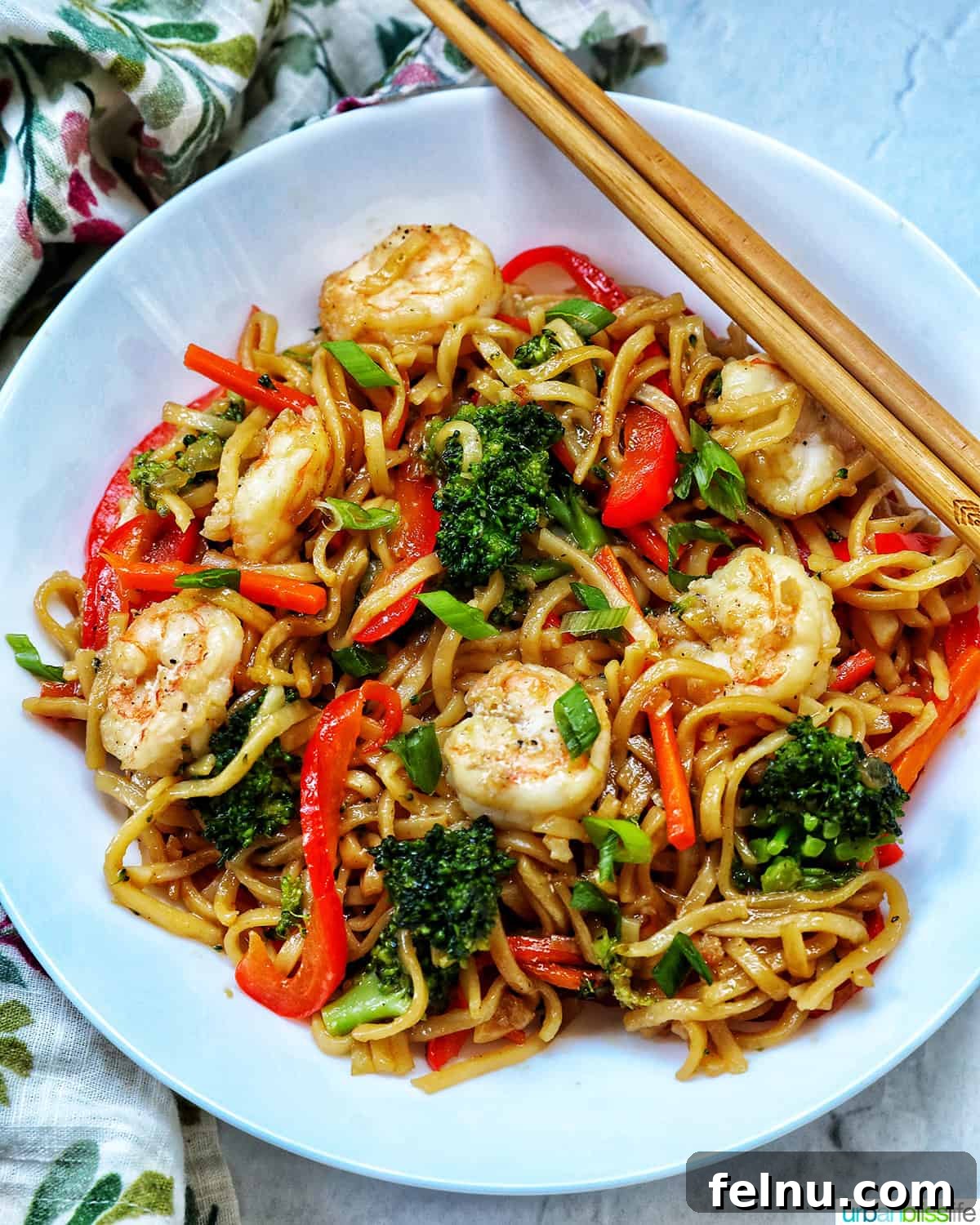
This delightful shrimp chow mein dish is so satisfying and packed with vegetables that it truly stands alone as a complete and fulfilling meal. Its balanced flavors and diverse textures mean you might not need anything else!
However, if you’re looking to expand your feast or simply enjoy a wider array of flavors, here are some excellent side dishes that complement the chow mein beautifully:
- Fresh Asian Carrot Cucumber Salad: A light, tangy, and refreshing salad like our Asian Carrot Cucumber Salad provides a crisp contrast to the savory noodles. Its bright flavors cleanse the palate and add a healthy crunch to your meal.
- Soft Filipino Pandesal: For a comforting bread option, consider serving the chow mein with Pandesal. These soft, slightly sweet rolls are perfect for soaking up any extra sauce or simply enjoying alongside the savory main course.
- Crispy Filipino Lumpia: If you love fried appetizers, a side of Lumpia (Filipino spring rolls) offers a wonderful textural contrast and an extra layer of savory indulgence. The crispy exterior and flavorful filling make them an irresistible addition.
- Steamed Rice: A simple bowl of fluffy steamed white or brown rice can always be a great companion, especially if you prefer a milder base to soak up the chow mein sauce.
- Clear Soup: A light, clear broth-based soup can also complement the meal, offering a gentle start or a palate cleanser between bites.
For even more inspiration and ideas, be sure to explore our comprehensive recipe collection of Asian Side Dishes – you’re sure to find something new and exciting to try!
🍷 🥂 Wine & Beverage Pairings
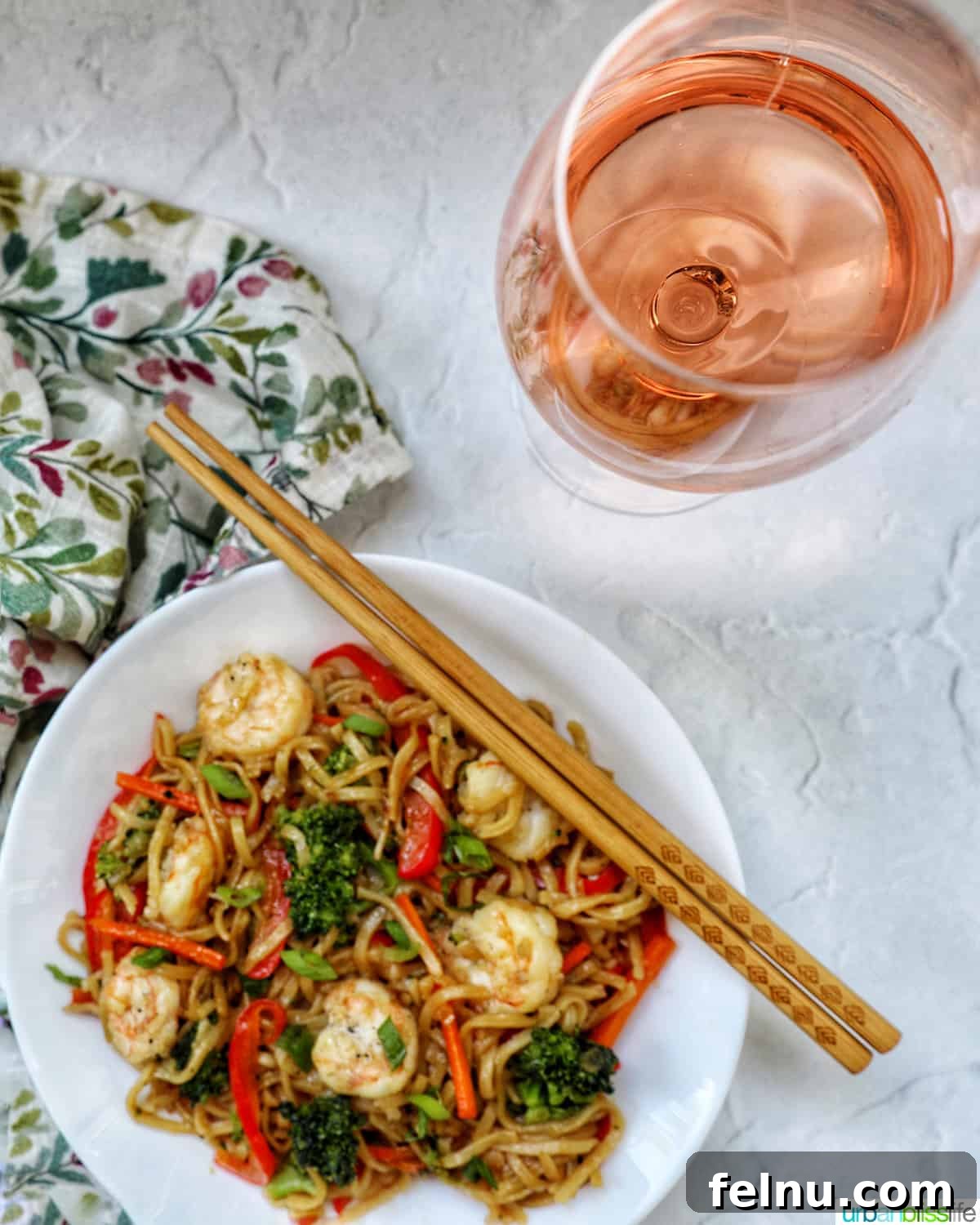
Finding the right beverage to complement Prawn Chow Mein can elevate your dining experience. Given the dish’s savory, slightly sweet, and umami-rich profile, alongside the delicate flavors of prawns and crisp vegetables, certain wines and non-alcoholic drinks pair exceptionally well.
For wine enthusiasts, Prawn Chow Mein is an ideal match for rosé wine or crisp, dry white wines with good acidity. These options offer a refreshing contrast that cuts through the richness of the stir-fry and highlights its nuanced flavors:
- Riesling: Opt for a dry or off-dry Riesling. Its bright acidity and often subtle notes of green apple or citrus can beautifully complement the savory sauce, while a hint of sweetness in an off-dry style can balance any spice.
- Sauvignon Blanc: Known for its vibrant acidity and herbaceous notes, Sauvignon Blanc offers a zesty counterpoint to the chow mein, refreshing the palate with each sip.
- Gewürztraminer: If you enjoy something a bit more aromatic, a Gewürztraminer with its floral and spicy notes can be an intriguing pairing, especially if your chow mein has a touch of heat.
- Sparkling Wine (Prosecco, Cava, or Champagne): The effervescence and crisp acidity of a sparkling wine are fantastic with stir-fries. The bubbles act as a palate cleanser, making each bite of chow mein taste fresh.
- Rosé Wine: A dry rosé, with its fruity yet savory characteristics and balanced acidity, is a wonderfully versatile choice that pairs well with seafood and the complex flavors of the dish.
For non-alcoholic options, consider chilled green tea, which offers a clean and slightly earthy complement, or a refreshing ginger ale or sparkling water with a squeeze of lime to cut through the richness.
🍳 Essential Kitchen Tools for Stir-Frying
To successfully execute this Prawn Chow Mein recipe and achieve that perfect stir-fry texture, having the right kitchen tools is essential. Here’s a list of equipment you’ll need:
- Wok or Skillet: A wok is ideal for stir-frying due to its sloped sides and ability to retain high heat, allowing for quick and even cooking. If you don’t have a wok, a large, heavy-bottomed skillet with high sides will work as a good substitute, ensuring ingredients stay contained during vigorous tossing.
- Mixing Bowls: You’ll need a small bowl for whisking the stir-fry sauce ingredients together and another bowl for seasoning the prawns. Having these prepped bowls for your mise en place makes the cooking process much smoother.
- Whisk: A whisk is perfect for ensuring your sauce ingredients are thoroughly combined and any cornstarch is fully dissolved, preventing lumps.
- Wooden Spoon or Spatula: A sturdy wooden spoon or a heat-resistant spatula is indispensable for stirring and scraping the bottom of the wok while sautéing the prawns, garlic, onion, and vegetables.
- Kitchen Tongs: A pair of long kitchen tongs is incredibly helpful for tossing and flipping the noodles and other ingredients in the wok, ensuring everything is evenly coated and cooked.
- Cutting Board and Sharp Knife: For efficiently preparing your vegetables and prawns, a reliable cutting board and a sharp chef’s knife are essential.
More Chinese Food Recipes & Asian Delights
If you’ve enjoyed making this Prawn Chow Mein, you’ll be thrilled to discover the extensive collection of Asian recipes available on our blog! From vibrant stir-fries to comforting soups and delightful appetizers, there’s a world of flavor waiting to be explored.
Dive into other family favorites that promise to bring the authentic taste of Asia right into your home:
- Wonton Noodle Soup
- Air Fryer Crab Rangoon
- Easy Kung Pao Chicken
- Chicken Pineapple Fried Rice
Did you make this recipe? Don’t forget to leave a 5-Star 🌟🌟🌟🌟🌟 rating in the recipe card below, and if you really loved it, please leave a comment further down on the page. We love hearing from you! Thank you!
Prawn Chow Mein
★
★
★
★
Equipment
-
1 Large Wok or Large Skillet with High Sides
Ingredients
For the sauce
- ¼ cup oyster sauce
- 2 Tablespoons light soy sauce
- 2 Tablespoons dark soy sauce
- 1 Tablespoon granulated sugar
- 1 teaspoon sesame oil
- 1 teaspoon cornstarch
For the prawns and noodles
- 10 ounces egg noodles
- 1 pound prawns, shelled and deveined
- ½ teaspoon kosher salt
- ¼ teaspoon ground black pepper
- 1 teaspoon Shaoxing wine
- 3 Tablespoons vegetable oil, divided
- 2 garlic cloves, minced
- ½ cup finely diced yellow onion
- 1 large carrot, peeled and julienned
- 1 cup snap peas
- 1 red bell pepper, diced
- 3 green onions, sliced
Instructions
-
In a large bowl, whisk together all of the ingredients to make the chow mein sauce. Set aside.
-
Cook the noodles according to package directions until al dente.
-
Meanwhile, season the prawns with salt and pepper, then toss with the Shaoxing wine. Set aside.
-
Heat two tablespoons of oil in a wok or large pan over medium-high heat. Sauté the prawns until they turn pink and are cooked, then remove from the pan and transfer to a plate; set aside.
-
Add one more tablespoon of oil to the pan, then sauté the minced garlic and diced onions for one minute, just until soft and fragrant.
-
Add the carrots, snap peas, and red bell pepper to the wok and sauté for 2-3 minutes, until tender-crisp.
-
Drain the cooked noodles thoroughly and add them to the wok along with the prepared sauce. Toss all of the ingredients together using tongs to coat the noodles and vegetables evenly with the sauce. Return the cooked prawns to the wok and toss everything together to heat through. Sauté for a couple more minutes then serve immediately.
Notes
Vegetable Variations: Feel free to customize your chow mein by adding or substituting other stir-fry friendly vegetables such as broccoli florets, bok choy, green bell pepper, green beans, shredded cabbage, or mushrooms.
Storage Tips: Allow the Prawn Chow Mein to cool completely before transferring it to an airtight container. It can be stored safely in the refrigerator for up to 3 days. For longer storage, see freezing instructions in the FAQs.
Nutrition
Nutrition information is automatically calculated, so should only be used as an approximation.